Writers International Edition

Health & Spirituality

The 10 Pranas in Indian Philosophy & Post-Mortem Dissolution Explained

The Architecture of Vital Energy: The Ten Pranas and the Dynamics of Post-Mortem Dissolution

In Classical Indian thought, life is neither a mere mechanical function of cellular biology nor an accidental byproduct of chemical assembly. It is an expression of Prana, the fundamental, subtle vital force that permeates the cosmos and animates all living matter. Within human existence, this universal force organizes itself into ten distinct operational streams—the Mukhya Pranas (primary vital energies) and the Upapranas (subsidiary vital energies). Together, they sustain metabolic functions, enable sensory perception, govern neurological impulses, and anchor the subtle body (Sukshma Sharira) to the physical vessel (Sthula Sharira).
Death, viewed through the lens of Vedic, Upanishadic, and Yogic literature, is not an instantaneous extinction of life, but a systematic, multi-tiered process of withdrawal. It is the sequential unbinding of these ten vital energies from the tissues, centers, and pathways of the physical frame. The traditional sixteen-day funerary and post-funerary rites (Antyeshti and Shraddha) in Hinduism are rooted in this precise understanding of bio-energetic dissolution. These rituals serve as a structured framework to assist the departing soul (Jiva) as its vital energies systematically disengage from the physical earth plane.

Part I: The Anatomy of the Ten Pranas

The subtle energetic infrastructure of the human body comprises thousands of energetic conduits known as Nadis. Traversing these channels are ten primary modifications of Prana, categorized into five principal currents (Mukhya Pranas) and five minor or secondary currents (Upapranas). Each stream governs a specific region, direction of movement, and physiological or psychological domain.

The Five Primary Energies (Mukhya Pranas)

1. Prana (The Inward and Ascending Current)

Though the term Prana refers broadly to the universal vital impulse, as a specific function within the fivefold classification, it represents the primary inward and upward force.
  • Seat and Sphere: Centered primarily in the heart, chest, and thoracic cavity, extending up to the nostrils.
  • Function: It governs inhalation, the absorption of vital force from the atmosphere, swallowing, and the reception of sensory inputs. It is the principle of intake and energy dynamic reception.
  • Direction: Moves inward and upward.

2. Apana (The Downward and Eliminative Current)

Apana acts as the counterforce to Prana, providing the grounding energy necessary for stabilization and elimination.
  • Seat and Sphere: Centered in the pelvic floor, lower abdomen, kidneys, anus, and reproductive organs.
  • Function: It governs all downward excretory functions, including urination, defecation, ejaculation, menstruation, and the physical expulsion of the fetus during childbirth.
  • Direction: Moves downward and outward.

3. Samana (The Equalizing and Assimilating Current)

Samana acts as the balance point between the inward movement of Prana and the downward movement of Apana.
  • Seat and Sphere: Centered in the epigastric zone, specifically the navel (Manipura Chakra) and digestive organs.
  • Function: It powers the digestive fire (Jatharagni), governing digestion, assimilation of nutrients, metabolic regulation, and the distribution of nutritional essence throughout the subtle and gross channels.
  • Direction: Moves side to side, concentrating at the center.

4. Udana (The Upward and Expressive Current)

Udana is the qualitative, ascending force that governs physical projection, vocal expression, and higher states of consciousness.
  • Seat and Sphere: Centered in the throat (Vishuddha Chakra), head, and central nervous system.
  • Function: It controls speech, vocalization, swallowing, physical erectness, and mental clarity. It is the primary vehicle through which memory, willpower, and higher intellectual faculties function. Importantly, Udana is the specific current responsible for elevating the subtle body out of the physical frame at the moment of transition.
  • Direction: Moves vertically upward.

5. Vyana (The Pervasive and Circulatory Current)

Vyana is the expansive, integrative force that coordinates all other vital energies.
  • Seat and Sphere: While originating in the heart, it permeates the entire nervous and circulatory system, extending to the peripheral skin and limbs.
  • Function: It regulates blood circulation, nerve impulse transmission, joint movement, sweat secretion, and muscular contraction. It acts as the reserve energy pool, ensuring overall structural balance and cohesion across the entire physical structure.
  • Direction: Moves from the center outward to the perimeter.

The Five Secondary Energies (Upapranas)

While the Mukhya Pranas govern major organ systems and metabolic processes, the five Upapranas regulate specific somatic reflexes, involuntary actions, and localized physical adjustments.
                  ┌─────────────────────────────────────────┐
                  │               THE TEN PRANAS            │
                  └────────────────────┬────────────────────┘
                                       │
           ┌───────────────────────────┴───────────────────────────┐
           ▼                                                       ▼
┌─────────────────────┐                                 ┌─────────────────────┐
│    Mukhya Pranas    │                                 │      Upapranas      │
│  (Primary Energies) │                                 │ (Secondary Energies)│
└──────────┬──────────┘                                 └──────────┬──────────┘
           ├─ Prana   (Inward / Absorption)                        ├─ Naga    (Belching / Pressure)
           ├─ Apana   (Downward / Excretion)                      ├─ Kurma   (Blinking / Protection)
           ├─ Samana  (Centering / Digestion)                      ├─ Krikara (Sneezing / Hunger)
           ├─ Udana   (Upward / Exits Body)                        ├─ Devadatta (Yawning / Fatigue)
           └─ Vyana   (Pervasive / Circulation)                    └─ Dhananjaya (Post-Mortem Integrity)

1. Naga

  • Function: Responsible for belching, hiccuping, and the relief of abdominal pressure. It assists in releasing trapped gas from the upper gastrointestinal tract and acts as a minor reflex for emotional or energetic decompression.

2. Kurma

  • Function: Controls the blinking of the eyelids and guards the physical eyes against external debris, glare, or damage. It regulates moisture levels across the ocular surfaces and governs subtle visual stability.

3. Krikara (or Krikila)

  • Function: Induces sneezing and coughing, clearing foreign particles from the nasal passages and upper respiratory tract. It also stimulates the hunger and thirst reflexes, alerting the conscious mind to metabolic requirements.

4. Devadatta

  • Function: Triggers yawning and drowsiness. It acts as a protective reflex that introduces surge oxygen when the system experiences fatigue, carbon dioxide accumulation, or lethargy.

5. Dhananjaya

  • Function: Governs physical tissue cohesion and structural resilience. Unlike all other nine Pranas, which depart the physical body prior to or immediately during the death event, Dhananjaya remains in the physical corpse long after clinical death. It persists to oversee the decomposition and breakdown of physical tissues, returning the body’s elements back to the primary environment.

Part II: The Sequence of Death: Dissolution of the Pranas

In classical Texts such as the Prashna Upanishad, Chhandogya Upanishad, and the Garuda Purana, death is described not as a sudden cessation of biological life, but as a systematic gathering and withdrawal of energetic vectors.

Phase 1: The Gathering of Minor Reflexes (Upapranas)

Prior to the final disengagement of the primary organs, the secondary currents begin to collapse:
  1. Kurma ceases its function, causing the eyelids to grow heavy, droop, or remain fixed.
  2. Krikara collapses, stopping the cough and sneeze reflexes, leading to a build-up of pulmonary secretions (often noted clinically as the terminal respiratory rattle).
  3. Devadatta and Naga fade, ending yawning, vocal groans, and involuntary upper-tract pressure adjustments.

Phase 2: Metabolic and Circulatory Withdrawal (Samana and Vyana)

As biological collapse progresses, the major functional currents begin to retract from the extremities toward the center:
  • Vyana collapses first among the primary energies. Peripheral circulation fails, hands and feet become cold, skin loses elasticity, and sensation retreats from the limbs toward the chest.
  • Samana follows, causing metabolic fire (Jatharagni) to extinguish. The core temperature drops, digestion ceases completely, and the body loses its internal balance.

Phase 3: The Primary Axis Disengagement (Apana and Prana)

  • Apana loses its holding power in the pelvic region. As its containment fails, sphincter muscles relax, often resulting in final involuntary excretions. The lower energetic channels disconnect completely.
  • Prana retracts from the lungs and heart, concentrating in the chest area. Respiration becomes irregular, shallow, and eventually ceases as the final exhalation expels the remaining thoracic air.

Phase 4: The Ascent of Udana and Final Exit

Once all other primary and secondary energies—save for Dhananjaya—have collapsed into the central channel (Sushumna Nadi), Udana becomes active.
                                [EXIT GATEWAYS]
                   Brahmarandhra (Crown) / Eyes / Nostrils
                                       ▲
                                       │
                         [ASCENT VIA UDHANA PRANA]
                                       ▲
                                       │
                        [CONVERGENCE IN HEART CENTER]
                                       ▲
                   ┌───────────────────┴───────────────────┐
                   │                                       │
          [MUKHYA PRANAS]                          [UPAPRANAS]
    Retract from Periphery to Core            Cease Local Reflexes
   (Vyana → Samana → Apana → Prana)      (Kurma, Krikara, Devadatta, Naga)
                   │                                       │
                   └───────────────────┬───────────────────┘
                                       │
                            [PHYSICAL BODY DECAY]
                       (Dhananjaya remains temporarily)
Udana gathers the subtle impressions (Samskaras), the mind (Manas), intellect (Buddhi), and the remaining vital residue into the heart center (Hridaya). It then propels this subtle composite upward through the Sushumna Nadi toward one of the nine physical openings (Navadvara) or the tenth subtle portal (Brahmarandhra at the crown of the head).
The point of exit varies according to the karmic disposition and spiritual state of the individual:
  • The Crown of the Head (Brahmarandhra): Considered the highest exit, utilized by yogis and realized individuals, leading to liberation (Moksha) or higher spiritual spheres (Higher Lokas).
  • The Upper Orifices (Eyes, Nostrils, Mouth): Associated with virtuous or balanced individuals returning to higher refined existences.
  • The Lower Orifices (Anus, Genital organ): Associated with heavy attachments, unfulfilled desires, or downward-oriented karmic tendencies.
Once Udana exits, clinical death is complete. However, Dhananjaya remains in the physical frame, causing rigor mortis, abdominal swelling, and the initial stages of post-mortem decay, only fully departing when cremation or natural decomposition disintegrates the physical elements.

Part III: The Sixteen-Day Post-Mortem Rites (Antyeshti and Shraddha)

In the Hindu tradition, the death of the physical body does not immediately grant the subtle entity (Preta) complete freedom or a new vessel. The sudden severance from the gross frame leaves the departed soul in an intermediate, disoriented state. The sixteen days of post-mortem rituals serve as an energetic bridge, facilitating the transition from the physical realm (Bhuloka) to the realm of the ancestors (Pitruloka) or beyond.

Rationale Behind the Timeline and Ritual Mechanics

1. Cremation (Dahana) and the Release of Dhananjaya

Cremation is the final offering (Antyeshti, or “last sacrifice”) of the physical body to the sacred fire (Agni). The heat of the funeral pyre serves an energetic purpose: it immediately dislodges Dhananjaya Prana, which would otherwise linger as long as the physical structure remains intact. Fire instantly reduces the physical body to its constituent elements (Panchabhuta—earth, water, fire, air, and space), cutting the strong magnetic attachment of the subtle body to its former vessel.

2. The Intermediate State (Preta Avastha)

For the first ten days following death, the departed entity exists in a delicate, liminal state known as Preta (a subtle entity without a solid physical or subtle body). The gross body is gone, but the mind and vital impressions retain memories of human physical needs—hunger, thirst, warmth, and location. Because it lacks organs to process these impulses, the disembodied entity can experience intense disorientation and distress.

3. Construction of the Pinda Deha (Days 1 to 10)

To provide the disembodied spirit with a temporary vehicle to process its transition, the family performs daily offerings of Pinda (cooked rice balls mixed with sesame seeds, water, milk, and honey). Over ten consecutive days, each day’s ritual offering symbolically constructs a specific limb and system of an intermediate subtle body (Pinda Deha):
  • Day 1: Generates the head and cranial region.
  • Day 2: Forms the neck, shoulders, and upper chest.
  • Day 3: Constructs the heart, thoracic organs, and back.
  • Day 4: Develops the abdomen, stomach, and internal digestive tract.
  • Day 5: Forms the pelvis, hips, and excretory organs.
  • Day 6: Builds the thighs, knees, and lower limbs.
  • Day 7: Creates the feet, ankles, and structural nerve channels.
  • Day 8: Generates hands, fingers, and motor capabilities.
  • Day 9: Establishes internal fluids, blood vessels, and metabolic capacity.
  • Day 10: Imparts full vitality, hunger, thirst, and sensory capacity to the newly formed intermediate body.
       POST-MORTEM RITUAL TRANSITION (16-DAY TIMELINE)

  Day 1 ────────────────────────────── Day 10 ──── Day 11-13 ───────── Day 16
    │                                     │            │                  │
    ▼                                     ▼            ▼                  ▼
[CREMATION]                        [PINDA BODY]  [PURIFICATION]     [SAPINDAKARANA]
Cuts physical connection;          Fully formed;  Shraddha rites;   Entity departs
releases Dhananjaya Prana.         hunger/thirst  severing family    Earth sphere to
                                   satisfied.    attachements.     Pitruloka/beyond.

4. Separation and Satisfying the Intermediate Vessel (Days 11 to 13)

  • Day 11 (Ekadasha): The family performs deep purification rituals (Shuddhi). Offerings are made to Vishnu and the deities presiding over the death realm (Yama) to ensure safe passage for the newly constructed subtle vehicle.
  • Day 12 (Dwadasha): The pivotal ritual of Sapindakarana is performed. Here, the offering representing the newly departed individual (Preta) is symbolically combined with three rice offerings representing the past three generations of ancestors (Pitra—father, grandfather, great-grandfather). This signifies the formal transformation of the soul from an isolated, wandering state (Preta) into an ancestor (Pitra), welcoming them into the ancestral lineage.
  • Day 13 (Trayodasha): A public feast (Subhochana or Brahmana Bhojana) is held, gifts are distributed in charity, and the home undergoes spiritual cleansing. This marks the end of the strict mourning period (Sutaka) for the family, allowing them to return to regular worldly and religious activities.

5. The Extended Journey to the 16th Day

While major household rites wrap up around day 13, classical texts like the Garuda Purana specify that the transition of the subtle vehicle across the subtle planes continues through the sixteenth day.
By the sixteenth day, the soul undergoes its final severance from its immediate earthbound domestic sphere. The energy field surrounding the home, which remained unstable and permeable during the initial period, stabilizes completely. The Pinda Deha, now fully energized and aligned through the Sapindakarana process, begins its journey across the subtle realm (Vaitarani) toward its destined plane of existence, powered by the karmic reserves and ritual merit (Punya) directed to it by the surviving lineage.

Comparative Structural Overview of the Ten Pranas

Name of Prana Category Primary Physical Seat Core Physiological/Reflex Function Post-Mortem Trajectory
Prana Mukhya Heart, Thorax, Nostrils Inhalation, sensory intake, swallowing Retracts inward to heart; exits via Udana
Apana Mukhya Pelvic Floor, Lower Abdomen Excretion, elimination, reproduction Fails prior to death; sphincter relaxation
Samana Mukhya Navel Center (Manipura) Digestion, assimilation, heat generation Extinguishes; body loses core temperature
Udana Mukhya Throat (Vishuddha), Head Speech, memory, upward elevation Collects subtle body; drives exit upward
Vyana Mukhya Whole Body, Heart origin Circulation, nerve impulse, coordination Retracts from limbs; peripheral cooling
Naga Upaprana Upper GI tract, Throat Belching, hiccups, upper pressure release Dissolves during early unconsciousness
Kurma Upaprana Eyelids, Eyes Blinking, ocular moisture maintenance Fades; causes fixed or heavy eyelids
Krikara Upaprana Nasal channels, Throat Sneezing, coughing, hunger impulse Fades; leads to loss of airway clearing
Devadatta Upaprana Respiratory system, Brain Yawning, drowsiness, oxygen intake Fades; leads to deep lethargy and coma
Dhananjaya Upaprana Entire physical tissue matrix Tissue cohesion, structural maintenance Persists after death; governs decay
The traditional Indian understanding of life and death offers a detailed, holistic view of human physiology and consciousness. By viewing the human being as a structured network of vital energies rather than just physical matter, the transition of death becomes a systematic process rather than an abrupt end.
The ten Pranas show how life forces are carefully integrated into the physical body, while the sixteen-day post-mortem rites provide a practical method to support this transition. Through these traditional rituals, the family helps guide the disembodied spirit (Jiva), providing a structured way to honor the departed, complete their earthly connection, and support their journey forward into the subtle realms.
The Architecture of Vital Energy: The Ten Pranas and the Dynamics of Post-Mortem Dissolution Read More »

the story of Dr. C. P. Mathew the father of integrative medicine

When an Oncologist Began Looking Beyond Medicine: The Story of Dr. C. P. Mathew

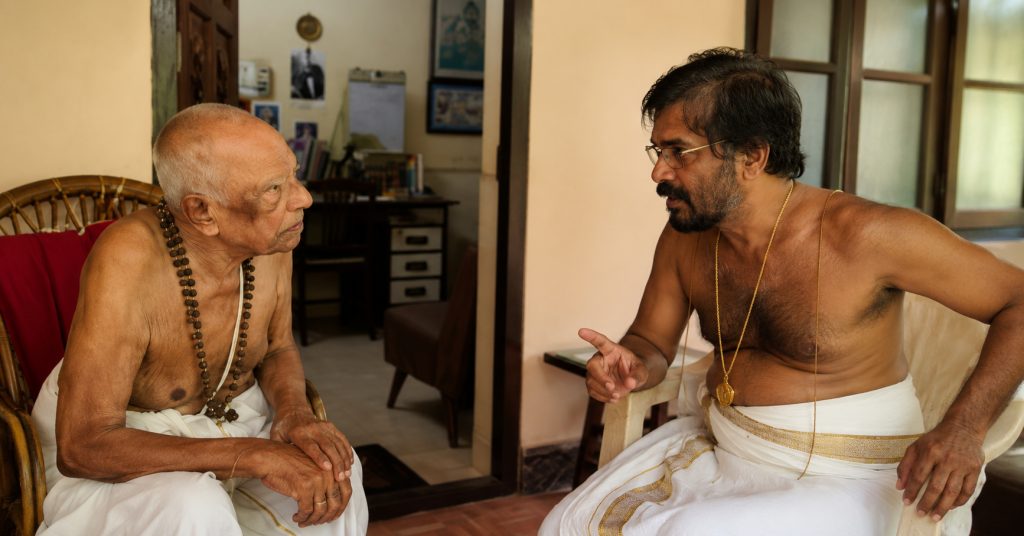
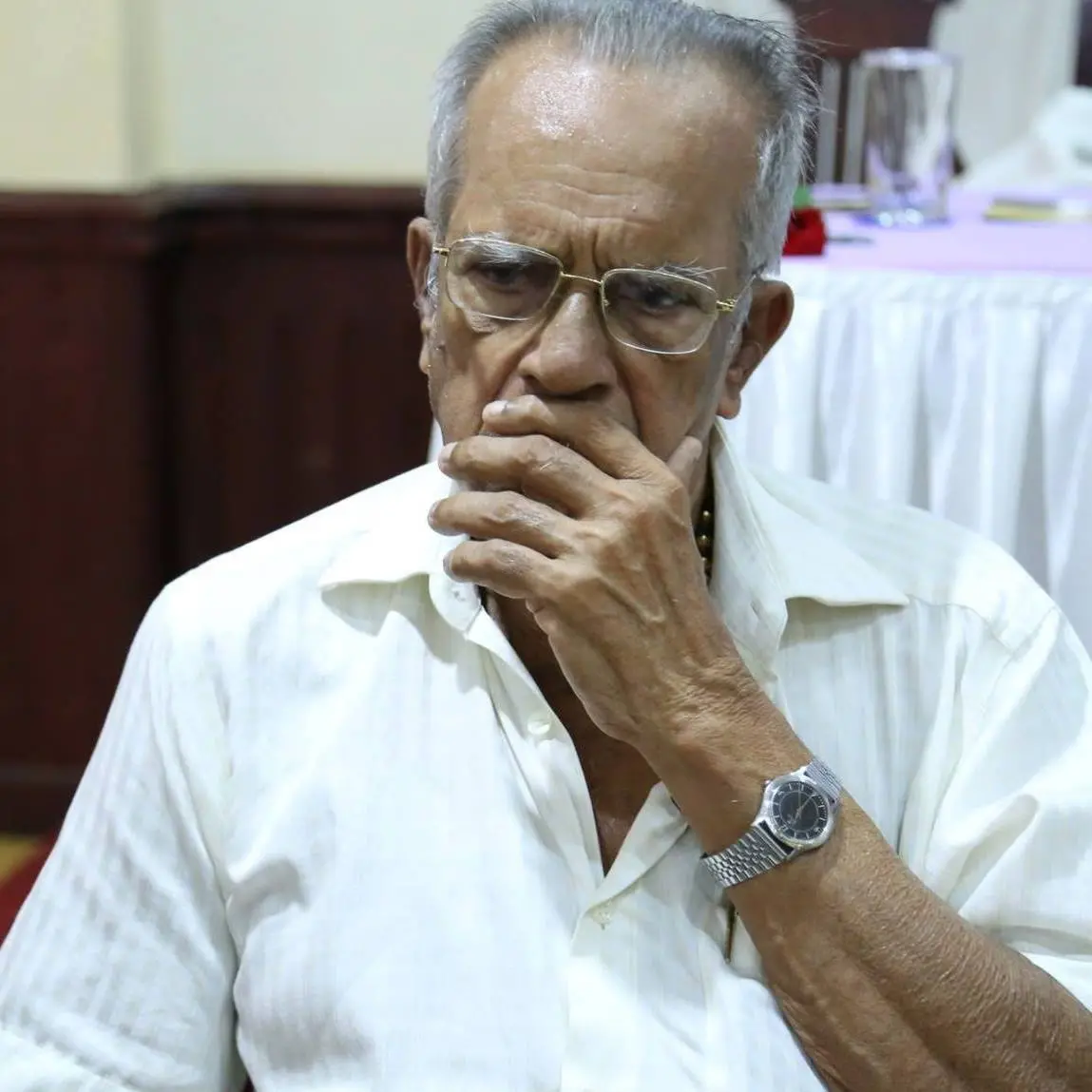
Medicine is often defined by its advances in science, yet its deepest purpose has always been the healing of human beings. Few physicians embodied this truth more profoundly than Dr. C. P. Mathew, one of Kerala’s pioneering medical oncologists, whose lifelong quest for healing eventually led him beyond the boundaries of conventional medicine and into the rich philosophical and therapeutic traditions of India.

Dr. Mathew graduated from Madras Medical College in 1954 before undertaking advanced medical training at the Government Medical College, Thiruvananthapuram. At a time when cancer treatment in Kerala was still in its formative years, he emerged as one of the state’s earliest medical oncologists, devoting his professional life to patients confronting one of the most formidable diseases known to medicine.

His distinguished career reached its pinnacle at Government Medical College, Kottayam, where he served as Head of the Department of Oncology and later as Vice Principal. For decades, he stood at the forefront of cancer care, witnessing not only the triumphs of medical science but also its limitations. Every patient carried a story beyond laboratory reports, scans, and prescriptions. Beneath every diagnosis lay a human life shaped by fear, hope, relationships, habits, and the quiet resilience that illness often reveals.

These experiences gradually transformed his understanding of healing.

Retirement, for Dr. Mathew, did not signify the conclusion of a career but the beginning of an entirely new intellectual pilgrimage. Instead of withdrawing from medicine, he expanded its horizons. Convinced that health could not be reduced to the treatment of diseased organs alone, he immersed himself in the study of Siddha medicine, Ayurveda, Yoga, Indian philosophy, the Vedas, and the Upanishads.


His objective was never to replace modern medicine with ancient traditions, nor to dismiss scientific advances in favour of inherited wisdom. Rather, he sought a meeting point where the precision of contemporary medicine could coexist with the holistic insights preserved within India’s classical systems of healing. This philosophy, now widely recognised as integrative medicine, became the defining framework of his later years.

At the heart of his approach lay a simple yet profound conviction: healing extends beyond pharmacology. Nutrition, daily habits, emotional well-being, stress management, meditation, physical discipline through yoga, and a meaningful engagement with life all contribute to the body’s capacity to recover and to live with dignity. Where appropriate, he believed these elements could complement evidence-based medical treatment, creating a broader and more compassionate model of patient care.

Many patients and their families later spoke of the comfort, confidence, and renewed quality of life they experienced under his guidance. Their recollections testify not merely to a physician’s clinical knowledge but to his ability to see the individual beyond the illness.

Yet Dr. Mathew’s work also invites thoughtful reflection. While many aspects of lifestyle modification, nutrition, stress reduction, and supportive care continue to receive growing scientific attention, some of the therapeutic methods he explored have not been validated through the level of rigorous clinical evidence required for widespread acceptance within evidence-based medicine. His legacy therefore deserves to be viewed with intellectual honesty, recognising both the lived experiences of patients and the continuing importance of scientific inquiry.

Perhaps this openness to inquiry was itself his greatest contribution. He refused to believe that learning had an endpoint. Even after decades in clinical practice, he remained a student, willing to question established assumptions and to seek wisdom wherever it could be found. In his later years, his studies increasingly embraced Indian philosophy, the Upanishads, the Vedas, and the Siddha tradition, through which he explored the intimate relationship between physical health, consciousness, and the inner life.

Dr. C. P. Mathew passed away on 20 October 2021, but the questions he pursued continue to resonate within contemporary discussions on healthcare. As medicine increasingly recognises the influence of lifestyle, mental health, nutrition, and emotional well-being on clinical outcomes, many of the themes that occupied his later years have assumed renewed relevance.

His life reminds us that the physician’s responsibility extends beyond the eradication of disease. It calls for an understanding of the person who bears the illness, of the circumstances that shape health, and of the dignity that every patient deserves throughout the journey of care.

Dr. Mathew’s enduring legacy lies not in advocating a single system of medicine, but in challenging us to think more deeply about healing itself. His journey stands as a testament to intellectual humility, lifelong learning, and the conviction that medicine, at its finest, is an act of compassion informed by both knowledge and wisdom.

He believed that a physician’s task was not merely to fight disease, but to care for the human being living through it. In that belief, his life’s work continues to inspire.

When an Oncologist Began Looking Beyond Medicine: The Story of Dr. C. P. Mathew Read More »

Death Is Not the End: Finding Peace After Loss

Death Is Not the End: Finding Peace After Loss

There are moments in life that arrive without warning, moments that do not ask whether we are ready, and when they come, they do not leave anything unchanged. The loss of someone we love is one such moment, where a presence that once felt inseparable from our life suddenly becomes unreachable, and what remains is not silence alone, but a space filled with memories that continue to speak.

It is in this space that grief begins, not as a single emotion, but as a movement that touches every part of our being, where the mind struggles to accept, and the heart struggles to release what it has held so closely. There are times when it feels as though the person is still here, where a voice, a gesture, or a familiar place brings them back so vividly that for a brief moment, nothing seems to have changed. And then, in the very next moment, reality returns, and the absence becomes more intense, because it reminds us that what we are holding cannot be reached again in the same way.

This is the nature of grief, where love continues, yet the form through which it was expressed is no longer present. The pain that arises in such moments does not stand apart from love, but extends from it, because we grieve deeply only when we have loved deeply. It is not weakness, and it is not something to be dismissed or hurried, because it carries within it the truth of what was shared.

Within this space, questions begin to arise, often without clear answers. The mind seeks to understand where they have gone, whether something of them continues, and why something so meaningful could come to an end. These questions have moved through generations, not because they can be resolved easily, but because they emerge from a depth that seeks to understand what lies beyond what we can see.

If we pause and look carefully, something begins to reveal itself. What we loved was never limited to the physical form alone. It was not merely the body, but the presence that animated it, the awareness that expressed itself through it, and the way that presence entered and shaped our life. When the body is no longer here, it creates a sense of finality, yet the question remains whether what we truly loved can be reduced to something that simply ends.

Life itself offers a quiet reflection. What we call death is not something that occurs only once at the end of life. It exists within every moment, where countless cells within the body come to an end while new ones arise. This process unfolds continuously, not as loss, but as renewal, where what appears to end at one level continues at another. Life moves through this constant transformation without interruption.

Seen in this way, death does not stand apart from life, but is woven into its movement, where forms dissolve and re-emerge in ways that are not always visible. When this is understood, even in a simple way, the idea of death as a sudden and absolute ending begins to soften, because it becomes clear that life has always included this silent transformation within it.

Across many traditions, life is not understood as something that begins at birth and concludes at death, but as a continuous movement where forms arise and dissolve while something deeper remains beyond these changes. This cannot be proven in the same manner as material facts, yet it has been reflected upon across centuries as a lived possibility.

When this possibility is allowed, even gently, the nature of death begins to change. It is no longer seen as a complete ending, but as a transition that is not fully understood, where what was once visible moves into a dimension that is no longer accessible in the same way. This does not remove the pain, because the heart continues to long for what it has known, yet it introduces a different quality into grief, where sorrow is accompanied by a quiet openness.

Within that openness, something begins to soften. The need to hold on begins to loosen, and the resistance to what has happened begins to diminish, not because the loss becomes smaller, but because the relationship with it begins to change. It becomes clear that holding them in pain does not bring them closer, and resisting their departure does not alter what has already unfolded.

In this recognition, a different way of relating becomes possible. One begins to remember not only through sorrow, but through gratitude, where each memory carries the essence of what was shared. Their presence is no longer felt as something that has vanished, but as something that has moved beyond the form that was once familiar.

Slowly, a deeper understanding begins to take shape. Just as they have moved forward in this movement of life, we too are moving in the same direction, moment by moment. What feels distant now is part of a journey that we are also travelling, not as an idea that creates fear, but as a recognition that life is shared in its entirety, including its transitions.

When this is seen, even gently, the sense of separation begins to shift. Loss does not disappear, yet it begins to carry within it a quiet continuity. From this space, a different kind of farewell becomes possible. Instead of holding with sorrow alone, one begins to release with peace, wishing them well in whatever lies beyond, allowing them to move forward without the weight of our grief.

If there is any continuation beyond what we see, then what we hold within our heart matters. To hold them in pain deepens our suffering, yet to release them with love creates a space where both the one who has departed and the one who remains can rest in a certain quietness.

Perhaps this is the most graceful way to say goodbye. Not through resistance, not through the feeling that something has been taken away, but through a quiet acceptance that carries both love and understanding, where what was is honoured, what is is accepted, and what will be is allowed to unfold.

Because death does not erase what has been lived. It does not take away what has been shared. It does not end what was real. It simply changes the way it continues.

And in that understanding, grief does not disappear, but transforms, where sorrow and love begin to exist together, not as opposing forces, but as expressions of the same connection that remains, even when the form is no longer present.


Topics Explored in This Article

This article reflects on the experience of loss and the nature of grief as it unfolds within the human heart. It explores the emotional movement that follows the absence of a loved one and examines the deeper questions that arise concerning life, death, and continuity.

The reflection extends into the nature of existence itself, observing how transformation is already present within life, and how death may be understood not as a complete ending but as part of a continuous movement. It also considers the role of memory, gratitude, and inner acceptance in reshaping the way grief is experienced, allowing a quiet transition from pain toward a more peaceful understanding.


Keywords

death is not the end, finding peace after loss, grief and healing, coping with loss, life after death understanding, spiritual view on death, overcoming grief naturally, meaning of death and life, dealing with loss of loved one, inner peace after loss

Death Is Not the End: Finding Peace After Loss Read More »

Was Jesus in India? The Hidden Story They Never Told You

Was Jesus in India? The Hidden Story They Never Told You

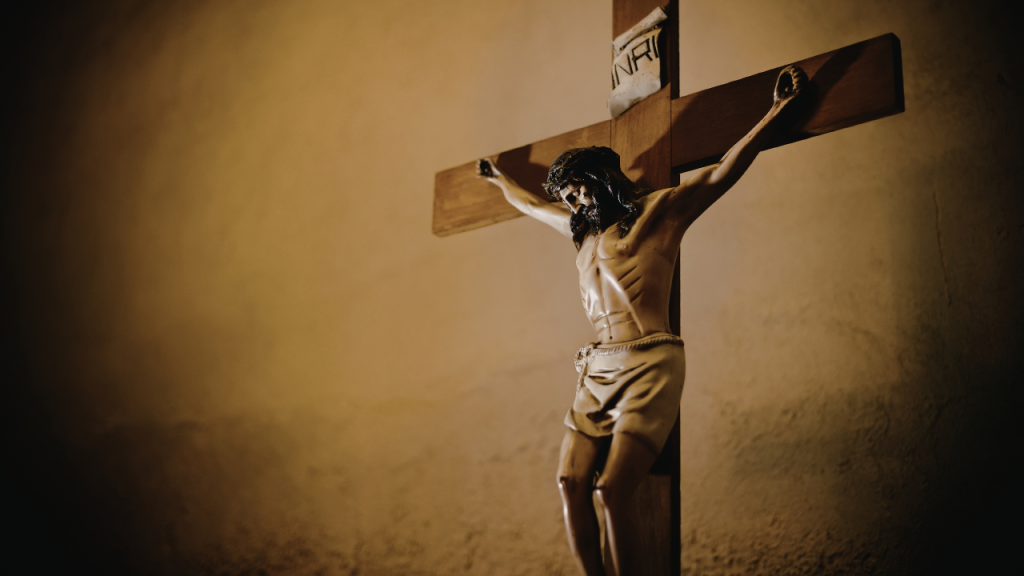
There are questions that do not belong to the surface of history but remain suspended within its silences, returning again and again with a quiet persistence, not because they seek sensation, but because they touch something unresolved in the way we understand the past. One such question concerns the life of Jesus, not within the familiar contours of his birth and ministry, but within the long, unspoken years that stand between them, and within the possibility that his journey may not have remained confined to the lands we have long associated with his story.

The narrative that is widely accepted offers a structure that appears complete, yet it carries within it an absence that invites inquiry. The years between his early life and the beginning of his public presence remain largely undocumented, and it is within this absence that alternative possibilities begin to emerge, not as assertions that demand immediate acceptance, but as openings that call for careful attention.

In recent times, scientific examination of the Shroud of Turin has introduced a dimension that extends beyond theological reflection into the realm of material investigation. Studies associated with the University of Padova have suggested the presence of genetic traces that indicate connections extending toward regions of the Indian subcontinent. These findings do not establish a definitive narrative, yet they disturb the assumption that the life of Jesus unfolded entirely within a limited geography, and in doing so, they create space for questions that were once set aside.

Alongside these scientific considerations, there exists a narrative that has persisted across decades, one that moves beyond implication into a direct and controversial claim. In Srinagar, within the valley of Kashmir, there stands a site known as the Roza Bal Shrine, associated with a figure called Yuz Asaf. Certain interpretations identify this figure with Jesus, proposing that he survived the crucifixion and journeyed eastward, eventually living and dying in India. This idea has been articulated by figures such as Mirza Ghulam Ahmad and later explored by authors like Holger Kersten, who sought to assemble historical references and cultural parallels into a coherent argument.

Mainstream historical scholarship does not accept this identification, and it approaches such claims with skepticism, often regarding them as speculative. Yet the persistence of the narrative invites attention, not because repetition establishes truth, but because endurance suggests that something within the idea continues to resonate. Claims that lack depth tend to dissolve with time, while those that endure often carry within them a question that remains unresolved.

To approach this inquiry with clarity, one must move beyond the immediacy of physical claims and enter the domain of teaching, where the essence of a spiritual figure reveals itself with greater continuity. When one turns toward the teachings attributed to Jesus, a distinct orientation becomes evident, one that directs attention inward, toward transformation that arises within the individual rather than through external structures of belief.

The statement that the kingdom of God is within does not describe a distant promise but points toward a reality that demands direct realization. This movement toward inner awareness finds a profound resonance within the philosophical traditions of India, particularly within the Upanishads, where the ultimate reality is not conceived as separate from the self but as something to be discovered within one’s own being. This alignment does not arise from superficial similarity but from a shared movement of understanding, where authority emerges from insight rather than institution.

A similar resonance appears in the emphasis on compassion, detachment, and freedom from the constructs of the ego, themes that find deep expression within Buddhist thought. Here, the path unfolds through awareness and insight, leading toward liberation from the illusions that shape human perception. When these parallels are observed with attention, they begin to form a pattern that extends beyond coincidence, raising a question that invites deeper contemplation.

Is this convergence the result of independent discovery, arising from the universal nature of human inquiry, or does it reflect a deeper interaction that has not been fully recorded within conventional history? The possibility that Jesus may have traveled east during the undocumented years offers one way of engaging with this question, suggesting that he may have encountered traditions that had already developed refined approaches to understanding existence. While such accounts remain outside the boundaries of mainstream acceptance, they persist because they attempt to articulate a connection that is experienced at the level of teaching rather than merely asserted through evidence.

The narrative associated with Kashmir extends this possibility further, transforming the question from one of influence to one of presence. Whether or not this claim is ultimately verified, its significance lies not in its conclusion but in its capacity to challenge the limits within which historical narratives are often confined. It calls attention to the possibility that history, as it is commonly presented, may not encompass the full extent of what has occurred.

At the same time, such exploration requires a grounded approach, one that resists the impulse to replace one fixed belief with another. The value of this inquiry lies not in premature acceptance or dismissal, but in sustained observation, where each element is examined with clarity and without the need for immediate resolution.

What begins to emerge through this process is not a definitive answer, but a shift in perspective. The life of Jesus, rather than appearing as an isolated narrative bound to a single tradition, begins to reveal itself as part of a broader movement of understanding, one that may have found expression across different regions and cultures. Scientific inquiry, historical narratives, and philosophical resonance together create a field that resists closure, not because it lacks substance, but because it invites continued exploration.

Perhaps this is where the deeper significance resides, not in establishing where Jesus was, but in recognizing how the question itself opens a space for reflection that extends beyond geography. It draws attention to the nature of truth, to the ways in which it is preserved, interpreted, and sometimes limited by the frameworks through which it is viewed.

When a question returns across time, it does so with a quiet insistence, not to disturb what is known, but to reveal what remains unseen. It does not demand belief, nor does it require denial. It asks only for attention, for a willingness to remain present with uncertainty, and for the patience to allow understanding to unfold without force.

And in that stillness, the question remains, not as a problem to be solved, but as a doorway that continues to open.


Topics Explored in This Article

This article reflects on the lesser-known dimensions of the life of Jesus, particularly the undocumented years that remain absent from conventional narratives. It examines the scientific discussions surrounding the Shroud of Turin and the interpretations that suggest possible links beyond the traditionally accepted geography. It also engages with the enduring narrative of the Roza Bal Shrine in Kashmir and the figure of Yuz Asaf, along with the perspectives presented by Mirza Ghulam Ahmad and Holger Kersten.

The exploration extends into the philosophical domain, where the teachings attributed to Jesus are observed alongside the inward-looking vision of the Upanishads and the meditative insights of Buddhist thought. It further considers the presence of historical gaps, the emergence of alternative narratives, and the broader possibility that spiritual understanding may have moved across cultures in ways that history has not fully recorded.


Keywords

Was Jesus in India, lost years of Jesus, Jesus in Kashmir, Roza Bal mystery, Shroud of Turin India connection, Yuz Asaf Jesus theory, hidden life of Jesus Christ, Jesus and Hindu philosophy, Jesus and Buddhism similarities, unknown history of Jesus

Was Jesus in India? The Hidden Story They Never Told You Read More »

Nothing to Do, Nothing to Gain: A Teaching from the Ribhu Gita

Nothing to Do, Nothing to Gain: A Teaching from the Ribhu Gita

The search for meaning often begins with a quiet feeling that something is missing, and from that feeling arises the idea that life must be shaped, corrected, or improved in order to reach a state of completeness. This movement of seeking expresses itself in many ways, through action, through discipline, through devotion, and through the continuous effort to understand and become.

Within this landscape of seeking, there exists a teaching that does not follow the familiar path of gradual progress, but instead invites a direct shift in the way one looks at life. This teaching is found in the Ribhu Gita, a text that is not widely discussed, not because it lacks importance, but because of the clarity with which it speaks.

Most spiritual teachings guide the seeker step by step, offering methods, practices, and stages that give a sense of movement and direction. The Ribhu Gita does not move in this way. It does not begin with what we experience as individuals, but with what it presents as the fundamental truth of existence, and in doing so it removes the usual support that the mind depends on.

At the heart of its teaching lies a statement that can feel unsettling at first. It says that one should be firm in the understanding that there are no charitable acts, no sacred places, no gain or loss, no doer and no receiver, no karma, no devotion, no knowledge, and no knower or known. It further states that all these are only thought-forms which arise and dissolve within the Brahman-Self, which alone remains as the sole existence.

When this is first encountered, it can appear as though everything that gives structure to life is being set aside. Our daily experience is built upon action and result, where we feel that we must do something in order to reach something. We believe that effort leads to progress, that knowledge leads to understanding, and that devotion leads to fulfilment.

The Ribhu Gita does not deny that these experiences appear in life. It draws attention to the way we understand them. It invites us to look carefully at whether these ideas exist on their own, or whether they arise within something deeper that we have not examined.

If one observes closely, it becomes clear that everything we experience is in constant change. Thoughts arise and pass. Emotions shift. Actions begin and end. Situations change continuously. Even the sense of who we are seems to move with these changes.

At the same time, there is something that remains present through all of this. There is an awareness through which all experiences are known. This awareness does not come and go in the same way as the thoughts and emotions that appear within it. It remains present as the background of all experience.

The Ribhu Gita points towards this awareness as the Self. It says that everything else, including the sense of being a doer, the idea of action and result, and even the path of seeking, are appearances within this awareness. Because these arise within the mind, and the mind itself is not constant, they do not have an independent existence of their own.

A simple way to understand this is through the experience of a dream. While the dream is happening, everything within it feels real. There are people, events, emotions, and actions. Yet when we wake up, it becomes clear that all of it existed within our own awareness. The Ribhu Gita invites us to look at our waking experience in a similar way, not to dismiss it, but to understand its nature more deeply.

When this is seen, even in a small measure, the way one relates to life begins to change. The constant pressure to achieve something begins to reduce. The fear of losing something begins to soften. This is because what we truly are is not something that is gained or lost through experience.

Even ideas such as devotion, knowledge, and practice are included within this understanding. They may guide a seeker at a certain stage, but they belong to the movement of the mind, and they do not define what is ultimately true.

This is why the Ribhu Gita is less discussed. It does not offer a path in the usual sense. It does not give the mind something to achieve or hold on to. Instead, it invites recognition of what is already present.

For a sincere seeker, this can bring a quiet shift. The search that was always directed outward begins to turn inward. Life continues in the same way on the surface, with actions, responsibilities, and relationships, but there is a different clarity within.

The significance of the Ribhu Gita lies in this directness. It does not keep the seeker engaged in endless concepts. It points towards a recognition that is immediate and always available.

It reminds us that what we are looking for is not something that lies elsewhere or in the future. It is what is already present as the very basis of our experience.

When this begins to be understood, even slightly, the movement of seeking starts to settle. Not because something new has been found, but because what was being searched for was never absent.


Key Takeaways

The Ribhu Gita presents a direct teaching that does not rely on gradual steps, but points towards what is already true.

It explains that ideas such as doer, action, gain, loss, knowledge, and devotion are thought-forms that arise within awareness and do not have an independent existence.

What remains unchanged through all experiences is the Self, described as Brahman, which is the sole reality.

For a seeker, this teaching shifts the focus from becoming something in the future to recognising what is already present.


Topics Covered

Ribhu Gita explained
Advaita Vedanta teaching
Self inquiry
Nature of the Self
Consciousness and awareness
Non duality explained


Frequently Asked Questions

What is the Ribhu Gita?
The Ribhu Gita is a text within the Advaita Vedanta tradition that presents a direct teaching on the nature of the Self and reality.

Why is the Ribhu Gita not widely discussed?
It speaks in a very direct manner and does not provide gradual steps, which makes it less accessible for general discussion.

What does “nothing to do, nothing to gain” mean?
It points to the understanding that the true Self is already complete and is not something that needs to be achieved through action.

Nothing to Do, Nothing to Gain: A Teaching from the Ribhu Gita Read More »

The Timeless Relevance of Mahavir’s Teachings: Emphasizing Non-Violence, Compassion, and Self-Discipline

Mahavir, also known as Vardhamana Mahavira, was an Indian sage and the founder of Jainism. Born in the 6th century BCE in the kingdom of Vaishali, Mahavir renounced his royal privileges at the age of 30 and spent the next 12 years meditating and seeking enlightenment. He attained enlightenment at the age of 42 and spent the rest of his life preaching his philosophy to the people of India.

The teachings of Mahavir are relevant in the world today because they emphasize the importance of non-violence, compassion, and tolerance towards all living beings. Mahavir believed that all living beings, whether humans or animals, had a soul and that the purpose of life was to achieve liberation from the cycle of birth and death. He preached that the path to liberation lay in living a life of non-violence, truthfulness, celibacy, and detachment from material possessions.

The principle of non-violence, or ahimsa, is perhaps the most important of Mahavir’s teachings. He believed that all life was sacred and that one should not harm any living being, including animals and insects. This principle has inspired countless individuals and movements throughout history, including Mahatma Gandhi’s nonviolent resistance movement in India and Martin Luther King Jr.’s civil rights movement in the United States.

Mahavir’s teachings on non-violence and compassion towards all living beings also have relevance in today’s world, where violence and cruelty towards animals is often rampant. The Jain philosophy of ahimsa extends not just to humans but to all living beings, and it advocates for a vegan lifestyle that avoids harm to animals in any form. This is an important message in a world where animal agriculture and exploitation are major contributors to climate change and other environmental problems.

Another important teaching of Mahavir is his emphasis on the importance of self-discipline and detachment from material possessions. In a world where consumerism and materialism are often prioritized over spiritual and moral values, Mahavir’s teachings remind us of the importance of living a simple and humble life, free from the distractions and temptations of material wealth.

Mahavir’s teachings also emphasize the importance of self-reflection and introspection, and the idea that true liberation comes from within. His philosophy encourages individuals to look inward and cultivate self-awareness, rather than relying on external sources of happiness and fulfillment.

In conclusion, the teachings of Mahavir are still relevant in today’s world, where violence, consumerism, and materialism are all too common. His emphasis on non-violence, compassion, self-discipline, and self-reflection can provide a much-needed guidepost for individuals seeking to live a more meaningful and purposeful life. As we continue to grapple with the challenges of our time, we can draw inspiration and guidance from Mahavir’s timeless teachings.

The Timeless Relevance of Mahavir’s Teachings: Emphasizing Non-Violence, Compassion, and Self-Discipline Read More »

Our Body is a mirror of our Emotions and our Soul

Our Body is a mirror of our Emotions and our Soul

Have you ever wondered what your soul would look like if it took a human form?
We know it all so well, as proven scientifically, that our emotions cause changes in our body and, ultimately, our health.
Scientists and health advisors, as well as everyday people, have realized by experience that:
 Whenever you ignore or do not “listen” to your discontentment or discomfort, your body will respond to you
with a headache.
 Whenever you oppress your anger, then it will respond with gastritis.
 Whenever you don’t deal with your fears but only try to bury them, they will cause you constipation.
 Whenever you don’t express some “No’s” that have to be said, then your body will respond with stomach
disorders.
 If you don’t follow your passion, it might bring on a sort of cell poisoning (skin diseases, heart disorders, etc.)
 If you don’t listen to your creativity and your talents, this will result in weight gain.
 If you don’t address negative influences by external causes, it will bring on a rash (dermatitis).
 If you don’t speak out your truth, then your thyroid will show you symptoms of malfunction.

We need not only feed our body but the soul and spirit as well. Therefore, if we don’t feed all three aspects of our essence and neglect our spirituality, inevitably we will have a body prone to getting sick.
We are not taught so, but we can find a way to “listen” to our own needs. Every unaddressed and neglected feeling leaves a scar on our body and organs, which is undeniable.
Our body is a mirror of our emotions and our soul. Let us cherish and protect it.

Olga Acheimastou
©Olga Acheimastou

Our Body is a mirror of our Emotions and our Soul Read More »

Practicing and working on emotional regulation

Practicing and working on emotional regulation

Are we happy all the time or do we stay healthy? Does being healthy all the time imply that someone is happy?

“Mental health is not a destination, but a process. It’s about how you drive, not where you’re going.”

We take care of our physical health by taking exercise and eating the right food at right time. But we fail to realize that taking care of our emotional well-being is as important as taking care of our physical bodies. People who are able to balance their emotions and control their thoughts, feelings, and behavior can cope with one’s life’s setbacks.

Emotions get the best and the worst out of us, but gradually learning to handle them effectively through coping stratergies can help in the long run. This can be performed by means of Emotion-Focused and Problem-Focused strategies: Problem-based coping helps in altering the situation by removing a stressful thing from your life and Emotion-based helps in taking care of the feelings when you either don’t want to change your situation or when circumstances are out of your control.

Mindfulness is being completely aware of what’s happening in the present and going inside and around you. Practice deep breathing regularly and inculcate the habit of walking which helps to refresh the mind and prevent unwanted thoughts from entering your mind. Be aware of practicing mindful eating as well. Good relationships with others can have powerful effects on our health-both emotionally and physically.

How people in the past lived healthily is a matter that is open to debate, which will help the coming generation. They used to be more aware of their lifestyle and health. Therefore, getting an in-depth screening of your mental health will aid you in exploring the areas you need to work on.


Practicing and working on emotional regulation Read More »

Vision and Mission of Life

We are living in a world afflicted by insecurity, fear, dishonesty, corruption, immorality, and other vices. Therefore, the question arises, how to lead a meaningful life amid all these vices? Before we examine to answer this question that haunts every human being, let us first deal with the world we have created. It is a mistake to view it as a problem for a group of people. It is everybody’s problem. We have to first accept the world we have made. There is no escape from it since everyone is a part of it and has contributed to its making. It is absurd to blame a particular group or a nation, or an individual. Accepting the world as we see is the first step toward leading a meaningful life. It will bring a drastic change to the content of our consciousness, not the consciousness. Consciousness is the underlying principle and we cannot change it. It is static. Only the content is dynamic. We can change only the content that we have created and imposed on it. Not accepting it is contradicting it and it will cause conflict and waste of energy. But we do not accept the reality and therefore, we are in constant conflict with it.

Our vision, therefore, is to create a meaningful life in a world filled with all vices. We need to create a mission to realize this vision. We should work out this mission at the individual level, not at the collective level, since every one of us has contributed to the making of world filled with vices in one way or the other. Seeking solutions collectively will not work out. What is the mission to realize our fundamental vision being how to lead a meaningful life?

The first sutra in Patanjali’s Yoga Sutras has been just this, “…Now, an exposition on Yoga” (I.1 Atha Yogansusanam). This half-sentence or rather incomplete sentence sums up what has gone before now in our life and the present state of the world in which we are, and therefore, the urgency of the practice of Yoga. What has gone before from now in our life is not worthy to be considered. It does not, however, mean that we can ignore the present state of the world. The present world is a reality, and it is right before us and we are all living in it. We cannot retrieve or undone what has gone before. But we can alter the condition in which we are now. Therefore, the urgency of Yoga is conveyed in this half cryptic sentence. It is a strange way of starting the remaining Sutras, what is yet to follow in one’s life, signalling or warning that life has been incomplete because one has not lived through Yoga. Hence, the urgency of the practice of Yoga. It also shows the complexity of the practice of Yoga because of the complexity of life that we have made for ourselves. Human science has not thought of such a dimension. And this science is the science of the self—body and mind, and nothing else, not about the matter outside.

            “Now” in the half-sentence also indicates that if Yoga is not practiced, now and here, it is forever never.  It is now and here, and not tomorrow. It also cups the complexity of life and its seriousness – now or never.  Why Patanjali had warned humanity of the seriousness and urgency of looking at human life two thousand years ago.  This complexity is not today’s phenomenon, but it had existed in Patanjali’s times.  If we cannot realize who and what we are, if we cannot solve our own crisis, now and here, no one else will rescue us, some danger ensues – the body may get diseased, the mind may turn neurotic and thereby life becomes crippled and useless.

             “Now” also suggests that Patanjali is directly warning us to look at our life and the world – the way we have created and the way we have lived through pain and suffering.  All through life this pain and suffering have persisted, the insecurity and fear caused by vices have haunted us.  And how long can we go on with this pain and suffering, insecurity and fear?  Is there no way out?  Are we condemned to live with pain and suffering?  Are we condemned to live in this world afflicted with insecurity, fear, dishonesty, and corruption? Therefore, the urgency to overcome pain and suffering, insecurity and fear in life has risen through Yoga.  If we still believe that finding a comfortable job with a fat salary or starting a new venture that makes us fabulous in living, or finding a new wife or husband, or building a palace-like house and going for a luxurious car, or getting our daughter married will settle our life, or multiplying wealth by expanding business ventures, it is not yet time for Yoga, then we have mistaken.  But, if we have seen money, power, wealth, and pleasure, we have tasted everything in our life and at the end of it, we have realized that all this has worked out nothing for us in the real sense and fulfilled us nothing ultimately, then it’s time for Yoga.  This is the implication of half-sentence.

          Patanjali brushes aside all that human undertakes and undergoes in life with half a sentence.  Life is incomplete and unfulfilled.  That is why the first Sutra is “… And now, an exposition on Yoga”.  That means we realize at the end nothing works and we do not have a clue about what the hell this is, the pain and suffering tear us apart and the ignorance too.  Then Yoga happens to us.  Now, there is a way to know and learn and practice.

  To lead a meaningful life (this is our vision), our mission should start with our bodies and move to our minds. Why should we give so much importance to the body? The body is a form without which we are nothing. We have no existence. Therefore, the body has gained prime importance in the yoga sadhana. When we are alone, what is with us? Who is with us? It is the body, visible, like the shadow, which is our companion, not our kith and kin. The body is a fundamental thing in understanding our own life. We need to accept this; the body is with us and without it we are nothing. In this body dwells the mind, which is invisible. If there is no body, there is no mind. Therefore, we should first deal with the body. The body is intelligent and has its own language. It feels and communicates every sensation. It answers and resists. It accepts that which is acceptable and rejects that which is not acceptable. But in our day-to-day living, we have paid scant attention to it. We hardly listen to it, its music, its complaints, its resistance, and so on. As we neglect, the body grows in its own way, disproportionately. We should keep this body in perfect order, being in good health and condition so that we can carry on our actions and activities in the world. We can proceed in our Yoga sadhana without hindrances from the body. If the body falls ill, we can hardly do any sadhana. Hence, the health of the body has gained serious attention.

          We maintain the health of the body with physical exercise and the right food. Why do we need exercise for the body? The answer is to keep it in good condition so that no disease enters it. We can do any form of physical exercise, say walking, jogging, running, swimming, or playing games to maintain our fitness. But what makes the difference between the said physical exercises and performing asanas and pranayama? The former is an outdoor activity whereas the latter an indoor activity. The physical exercises activate the external parts of the body, while the asanas the internal parts. Each cell is activated and rejuvenated. As we direct each asana to a particular part of the body, it activates the muscles around, eliminates the toxins from the cells and tissues. Pranayama activates the nadis (nerves) and purifies blood by pumping more oxygen. When the toxins are removed, the body becomes elastic, and such a supple body can withstand any illness or disease.

But we cannot achieve the health of the body only by doing exercise. Food also plays a vital role. If the right food does not properly accompany physical exercise, the body cannot maintain its good health. So, health arises not only from exercise but also from consuming right food. What is the right food? The right food is that which nourishes the body and checks the influence of negative emotions which cause serious disturbances in our sadhana and mental agitations besides hampering our health. Consuming sattvic food containing fresh greens, raw vegetables, fruit, dried nuts, dates, milk, and millets will go a long way in making the body healthy and preparing for Dharana and Dhyana. 

  Next comes Dharana and Dhyana. Dharana can happen by the withdrawal of the sense organs from unnecessarily indulging in sensual pleasures. This is known as Pratyahara, the fifth limb in Astanga Yoga. Pratyahara can, however, happen if the body is in good condition, which can be achieved by asana, pranayama, and food. As we maintain moderation in our pleasures, it leads us automatically to Pratyahara and Dharana (concentration). Dhyana can easily happen. Since our body is free from disease and negative emotions, it is ready to sit in one posture without moving, steadily and comfortably, and meditate. So, each limb is connected to the other limb. This way we can achieve the vision of life, making life meaningful, and mission of life, creating a semblance of order, in the world afflicted with diabolical vices.

Dr. K.V. Raghupathi
©kvraghupathi

Dr. K.V. Raghupathi is an ardent Yoga Sadhaka in Patanjali’s tradition, having over four decades of sadhana. He has been writing and transmitting his experiences born out of his uninterrupted sadhana in books and articles. He has so far published five books on Yoga that include, Yoga for Peace (2006/2019), Yoga and Zen (2007), My Tryst with Yoga and Other Essays (2018), Hastha Yoga: Theory and Practice (2018), and Dispersing Clouds: Discourses on Yoga (2022) and many articles both online and print journals. His other radical book on Yoga, Think with Heart and Feel with Mind: (from the Yoga Diary of…) is in the pipeline. An outspoken speaker, he holds radical views on life and spirituality. In addition, he is a creative writer, having twelve books in poetry, two novels, two short story collections, and eight critical/edited books to his credit.

Vision and Mission of Life Read More »

Creating a Meaningful Life in Digital World through Yoga

What is a Digital World?

We are living in a digital world. Technology is all around and our life is completely mechanised. We have witnessed several revolutions such as the industrial revolution, the green revolution, the white revolution, and so on. The Information Technology revolution is what we are facing with its serious implications.  The world is becoming more and more digital. Today we can do many things without human assistance, sitting at home which we could not have dreamt of a few years ago.  ‘Work from home’, ‘learn from home’, and ‘online examinations at home’ have become norms of the day. The influence of digital technology is overwhelming and inescapable.  

We are ruling the world through ideologies and fighting wars for supremacy. But technology is ruling imperceptibly both the world and us. No nation can afford to ignore it and no society can survive without it. Similarly, there is no human area that is not affected by technology. Even art, literature, and music are inescapably in the grip of technology. The danger of it is that our actual intellectual faculty is replaced by artificial intelligence. In this way, a human can be reduced, controlled, and manipulated into a human-machine. Those who oppose it have to do so through technology. It has become an integral part of our lives. It is imperceptibly expanding its regime entrapping everyone. It is increasingly becoming impossible for us to escape from its fold. It is the rule of technology, called ‘technocracy’, coined by Theodore Roszak, an American academic. The horrific danger of it encompassing all human life has been beautifully captured by Wallace Shawn and Andre Gregory who observed: “And there will be nobody left almost to remind them that there was once a species called a human being, with feelings and thoughts.  And that history and memory are right now being erased, and that soon no one will really remember that life existed on the planet” (Rosak xi).

What is a digital world or society? A society that uses digital methods increasingly in their daily life, i.e., online communications, is called a digital society. The users are called digital citizens. Digital technology includes common technologies such as a smartphone or computers but also encompasses a large range of other products or services such as home security or home automation. The digital world is about fast connections between us and the world. We get more easily connected with our families wherever they are on the globe, our communities, our nation, and the rest of the world. Every big city, medium-sized city, or smaller town is increasingly adopting technologies like Big Data, the Internet of Things and sensors. More devices are connected to the internet than humans. Approximately three billion people now use the internet. About five billion people use mobile phones. This number may go up as the population increases. According to a survey conducted in America, on average, a mobile user spends five hundred hours sending messages and using the net per month. It is estimated that 26 billion “things” are connected to the internet. This number is expected to increase by 125 billion just by 2030. These internet things have transformed the operations of many industries, both consumer and enterprise including that energy, transportation, healthcare, etc., in addition to shaping every sphere of human life. There is no doubt, therefore, that digital technologies probably are seriously affecting more aspects of our lives than we are aware of…

Positive Consequences of Digital Technology

Digital technologies are playing such a large part in our lives. They have advanced more rapidly than any innovation in our history – reaching the developing world’s large population in only two decades and transforming societies. It promises to provide everything for the fulfilment of desires except feelings and emotions. By enhancing connectivity, financial inclusion, access to trade and public services, technology has become a great equaliser. These visible changes are welcome because no one can stop the probing human mind. As universities and colleges in the world are multiplied, knowledge coming from the hands of professors and researchers also increases astronomically. 

New digital tools have allowed us to write, compose, draw, to communicate in ways we could never have dreamed of doing before. With 3D printing, we can print houses more creatively. Prosthetic limbs are printed making them cheaper and therefore more accessible, more colourful, and more personalized.  The Internet of Things can connect anything from the soil on a farmer’s land to a space station and can share information.

We can use our digital connectedness against us. As the global population is becoming much more digitally connected, most firms have adjusted their marketing strategies to maximize their consumer engagement. These new media and communication technologies have made a significant impact on the advertising industry with the rapid advancement in technology such as mobile phones and the internet. In the past, companies relied on traditional media outlets such as radio and print in order to attract customers and build a reputation for themselves. They can now use digital technology to achieve this instantly, target customers, and can easily exploit them. Sometimes, this targeted advertising is found intrusive and quite creepy.

Maia Haworth, a fellow writer for the Digital Society publication, has discussed “programmatic” advertising in the business world and it has become a buzzword that many people use but few really understand. According to her, it uses the data to develop algorithms and automate the buying, placement, and optimization of advertising. (https://medium.com/digital-society/programmatic-advertising-131556a79174) Since the rise of the internet in the early 2000s, there has been a great shift from traditional advertising media (television, newspaper, and radio) to digital media (computers, mobile phones, etc.). Television commercials are extremely competitive, expensive, and dominated by big companies. With the growing use of the internet, new doors have opened for advertisers to reach smaller, niche markets and appeal to consumers through online cyberspace. This has helped to disperse ads across multiple platforms, thus lowering the costs of traditional media outlets. Programmatic advertising has helped create a sense of trust by utilizing consumer behaviour data to predict which audiences are most likely to be interested in a product.

Negative Consequences of Digital Delusion

So, what are the catastrophic consequences of using these digital technologies? Apart from the wasted money spent on unsuccessful or unnecessary products, even using ‘successful’ technologies can have far-reaching implications. These can be positive when they enable us to manage our life more efficiently, but how smart technologies we use in the home can also lead to much more sinister side effects. Someone can easily hack our emails and the data stored in WhatsApp and other Apps without our knowledge. The information can be easily passed off to third parties for processing before responding with natural language responses. Technology has ushered in a new service called Artificial Intelligence (AI).  Talking about it, Shoshana Zuboff says, “We thought that we search google, but now we understand that google searches us. We assumed that we used social media to connect, but we learned that connection is how social media uses us… we have begun to understand that ‘Privacy’ policies are actually surveillance policies” (Malhotra xxii).

Human is losing the sense of originality so much that we have integrated new media into our daily life and our agenda and our goals are shaping, shifting, and transforming every moment. The notions of relationship, connection, and friendship are changing rapidly. The digital world is transforming homo sapiens into mere living robots, connecting always with digital media and technology. As mentioned in The Routledge Companion to Digital Consumption, “…Our flesh and blood are now mixed with circuits and devices.  We have become wired and wireless selves, homo connectus, always logged on.” (4)  Greengard states, “We’re seeing people so absorbed in digital media that I’s becoming their primary reference point for life” (17-19).  Hunter prophesies, “Credible predictions suggest that within a generation, we may have computers a million times more intelligent than every human combined.  Artificial intelligence will far surpass human beings as the most capable lie forms on the earth: ‘machines’ will calculate, communicate and act so quickly that humans would not even comprehend what they are achieving.  Integrated with advances in non-biological intelligence, we will surely witness revolutionary changes in energy sources, nano-technology, bio-technology and robotics” (Prabuddha Bharata. May 2021).

Digital technology is a tool and we can use it both for constructive and destructive purposes. Using technology depends on the user. If he uses it with heart, it is for the betterment of society. The real worth of technology lies in its proper use.  Its widespread misuse results in more harm than help. While narrating a woman with a smartphone being knocked down in the middle of the road, which was shocking, Nancy Colier, a psychotherapist, interfaith minister, author, and public speaker observes: “Technology is the powerful tool for the communication and yet the way we are using and the authority we are awarding it are also making it into a powerful impediment to our sense of presence and awareness” (xiv).

When we become slaves to technology, human life becomes absurd and irrelevant.  As a result, one loses love and respect for life and looks upon everything and every creature with contempt and cynicism. The lack of respect, love, and warmth are the root cause of many mental maladies prevalent in society at present. Though we are close physically we are distanced emotionally. We are closer to the persons behind the screen than to the ones beside us. If we are separated from one another by spending hours with technology, where else we are supposed to learn to be humans? “Biophilia hypothesis,” as developed by Emrys Westacott, suggests that “human beings have a deep-seated impulse to affiliate with other life forms” (131).

The Absurdity of the Spiritualists’ Concerns

No doubt digital technology has made our lives easier, or more efficient. There are, however, many side effects of digital technology such as technology addiction, time loss, isolation, lower academic performance with students, depression, stress, loss of creativity, physical diseases such as hypertension, back pain, spondylitis, low sugar level, and neurotic disorders. Against the backdrop of these ill effects, spiritualists raise the following pertinent questions: isn’t it time we consider to what extent its use of it is ethical? What is more astonishing and shocking is that we as digital consumers develop a self that is distinctly different from our real nature, resulting in chaos and misery in our lives. So, how to make our lives meaningful in a digital society?

These questions may sound meaningful to the people, particularly the people who claim themselves as spiritualists. But certainly, look absurd.  The spiritualists always voice their deepest concerns as they see that society is moving in one direction of self-destruction. The materialists who are wedded to the pleasure principle will see no such dangers in the vicinity. Both people are wrong in their perceptions. The spiritualists’ perceptions are sided with the esoteric knowledge they have gained by reading books and listening to their gurus who always guided them.

The solution does not lie in blaming the technology nor in the values the spiritualists preach, mostly taken from the Vedas and scriptural texts as defence mechanism. The author of this discourse, however, is not questioning the credibility and authenticity of such values.  He is questioning about parroting blindly such values without facing the actual ground realities. Seeking instant solutions by following such values and ideals will create hiatus between the situation, the created values, and us resulting in conflict. The problem is with their asserting that a solution lies in following and upholding Vedic values. To say that these values are ideal for society to create harmony and peace among people is wrong.

How to Create a Meaningful Life?

Keep these values and ideals aside for a while and consider the following discussion. It is important to recognize that we can’t stop human progress and the development of technology. Change is inevitable and we can hardly stop it. There is an inherent will in us to know, invent, and develop. Without it, we would not have witnessed the enormous development in science and technology, the benefits of it the human world is now reaping. Digital technology has united the world and made it into a global village. It has brought the entire world to everyone’s doorsteps. It has yielded innumerable benefits which provided a comfortable and well-informed living. Without it, our life will be miserable.

We need to face this change. Fighting against the inherent human will and tendencies to know, invent, and develop as some conservative spiritualists and religious forces have been trying does not work. First, accept this change. It is a reality. It is not a fantasy or a virtual reality. The so-called spiritualists have invented all these fanciful words for their own convenience and for the sake of their own survival. In this world, each group of people is teaching and preaching their own philosophy, not born out of their own experiences, but parroting that which has already been codified and documented in the scriptural texts. To say the digital world is only digital, not real, is totally absurd. This specious argument is much more dangerous than talking about values and ideals. The awareness of this helps us deal with the digital society as it is. Without facing the reality, talking about values and ideals is like putting the cart before the bullock.

As we first accept the reality that is right before us, we will notice the benefits and the ill effects. This act of seeing both will bring a slow transformation into us. This transformation happens within us with no volition and outside forces.  Values follow automatically, but these values are not from outside. Anything that comes from outside, we strongly resist. They will not stay with us long. We may follow such values because we do not know what actually they are. But values that spring within will stay longer with us because they happen naturally, and certainly, they are in consonance and not in conflict with the values codified in the Vedas and the other scriptural texts.

This act of seeing is called awareness. Awareness of what the machine is doing, what we are looking for, true happiness or falsified pleasures, our uncontrolled desires, our feelings, and our emotions. This awareness is a big presence. We can say that it belongs to the spiritual realm, though it is simply awareness without naming it. It cannot be simulated or inherited but has to be cultivated. It is this awareness that is unique in a human, which distinguishes us from the other creatures. Because of this awareness, we can check every malfunctioning of our body and mind, everything that happens in our being. Whereas in technology, every happening is a process without having awareness, however, is endowed with Artificial Intelligence. So, to be human, we need to cultivate this awareness, this big presence in us.

Yoga and Digital Society

How does Yoga help us face the fast-changing world? We have already noticed the ill effects of the digital society, particularly the ill effects that manifest in physical diseases such as stress, strain, depression, hypertension, backpain, spondylitis, arthritis, and rheumatism. What we require here is wellness of our body and mind to get along with the digital changes that affect our lifestyles. The fact that body is with us when we are alone cannot be denied.  Unless this body is made fit and viable, nothing can be done in the world.  Therefore, our next priority is to make our body a fit vehicle to survive and face any number of challenges. First, we must make the body fit to withstand the pressure of the work, technology, and the mindboggling changes.

In Yoga, we strive to achieve a uniform state of body and mind regardless of any challenges or hurdles that engulf us. Simple asanas such as vajrasana, sastanganamaskarasana, balasana, and parvathasana in sitting forming one cycle; and saptavajrasana, dandasana, garudasana, adhomukha svanasana, and urdhva mukha svanasana forming the second cycle can be repeated three times. Similarly, in standing, asanas such as tadasana, ardhvakrasana, vrikshasana, padahastha asana, and trikonasana can be practiced repeating three times. We can combine these sitting and standing asanas with Surya Namasakaras in nine or twelve cycles. Simple Pranayama comprising anuloma and pratiloma, deep breathing, and kapalabhati can be followed at the end of performing the asanas.

An uninterrupted practice will yield maximum results, rectifying abnormal tensions, stress, and many diseases such as obesity, headache, diabetes, hypertension, osteoporosis and heart ailments caused by digital society. Yoga is an ancient way of life. Though the sages of India gave it, it became universal as it has viability and adaptability in any geographical condition. Through Yoga, we can develop awareness (the big presence) and keep the body and mind healthy and energetic, maintaining beauty, peace and balance in the digital world.

Conclusion 

In the preceding paragraphs, I have discussed what a digital world or society is, and its positive and negative implications. In addition, I have shown through this discussion that as technologies are becoming more commonplace in our lives, the lines between the physical world and the digital world are blurred, and differentiating between the two is becoming more difficult. It becomes hard to distinguish between what is human and digital.  We have also noticed that we are as much ‘united’ as ‘divided’ in the digital society and that we need to balance the two to lead a harmonious life. Complete awareness of our body and mind teaches us to face the challenges and problems of digital society. Yoga helps us realize and develop this awareness. Half an hour of the everyday practice of Yoga does not come in conflict with our everyday duties. Instead, it elevates our minds and increases our consciousness. It will lead us to a peaceful life free from stress and strain, even amid our many commitments and responsibilities. However, it is increasingly crucial for digital citizens to be self-aware and take responsibility for their own actions in order to stay safe online.


Works Cited:

Colier, Nancy (2016). The Power of Off. Colorado: Sounds True.

Greengard, Samuel. “Living in a Digital World.” Communications of the ACM. 54/10, October  

                 2011.

Hunter, Alan. “New Era, New Dimensions”. Prabuddha Bharata, May 2021.

https://medium.com/digital-society/programmatic-advertising-131556a79174. Accessed on 

                April 27, 2022.

Malhotra, Rajiv (2021). Artificial Intelligence and Future of Power. New Delhi: Rupa 

                Publications.

Rosak, Theodore (1995). The Meaning of a Counter Culture. Oakland: University of 

                California.

The Routledge Companion to Digital Consumption (2013). Eds. Russell W. Belk and Rosa                  

                 Llamas. UK: Routledge.

Westacott, Emrys (2016). The Wisdom Frugality. Princeton University Press, Princeton.


*****************************

  • Dr. K.V. Raghupathi is an ardent Yoga Sadhaka in Patanjali’s tradition, having over four decades of sadhana. He has been writing and transmitting his experiences born out of his uninterrupted sadhana in books and articles. He has so far published five books on Yoga that include, Yoga for Peace (2006/2019), Yoga and Zen (2007), My Tryst with Yoga and Other Essays (2018), Hastha Yoga: Theory and Practice (2018), and Dispersing Clouds: Discourses on Yoga (2022) and many articles both online and print journals. An outspoken speaker, he holds radical views on life and spirituality. In addition, he is a creative writer, having twelve books in poetry, two novels, two short story collections, and eight critical/edited books to his credit.

Creating a Meaningful Life in Digital World through Yoga Read More »