Writers International Edition

weadmin

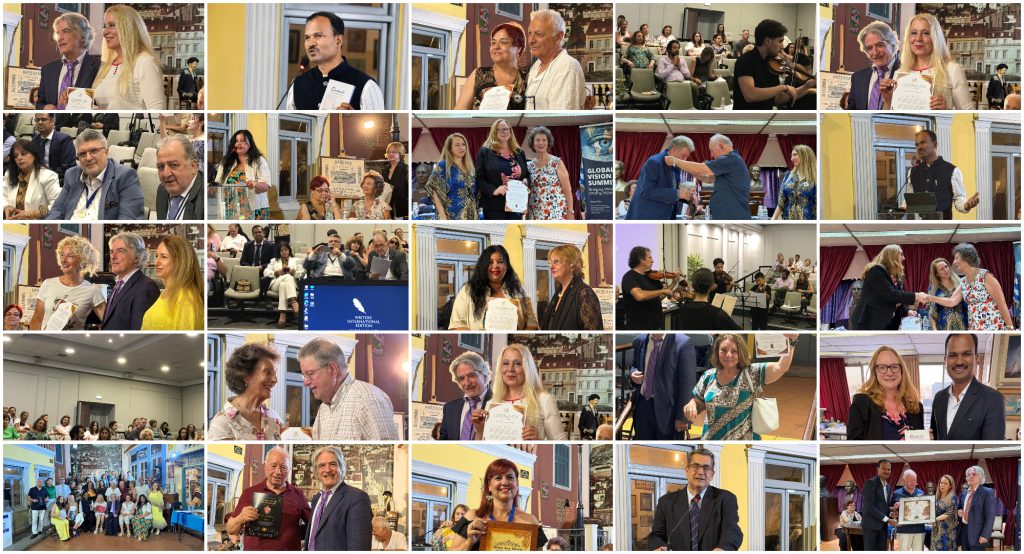
official cover launch of Bruises and Butterflies by Dr Anamika Nath

Bruises and Butterflies by Dr. Anamika Nath Receives Official Cover Launch at Global Vision Summit 2026 in Athens

Athens, Greece | 4 July 2026

The official cover of Bruises and Butterflies, the forthcoming poetry collection by Dr. Anamika Nath, was ceremonially unveiled during the Global Vision Summit 2026 held in Athens, Greece, marking a significant milestone in the book’s international publishing journey.

The cover was formally launched by Irene Doura Kavadia, Editor-in-Chief of Writers International Edition, in the presence of an international audience comprising writers, poets, scholars, artists, publishers, diplomats, and cultural ambassadors representing numerous countries. The unveiling formed part of the summit’s literary celebrations, highlighting new voices and significant forthcoming publications from around the world.

Published by Writers International Edition, Bruises and Butterflies is a deeply reflective collection of poetry that explores themes of vulnerability, resilience, healing, memory, and hope. Through lyrical expression and emotional depth, the collection invites readers to discover how life’s deepest wounds often become the source of inner transformation.

Dr. Anamika Nath, a faculty member in Forensic Medicine from Agartala, Tripura, presently based in Tezpur, Assam, brings together the precision of medical science and the sensitivity of poetry. Her writing reflects a profound understanding of the human condition, offering readers intimate reflections on the body, memory, inheritance, and everyday resilience.

Speaking on the occasion, Irene Doura Kavadia remarked that the launch of the cover symbolises the beginning of the book’s journey towards readers across the world. She noted that Bruises and Butterflies represents a thoughtful and emotionally engaging contribution to contemporary poetry and expressed confidence that the collection would resonate with an international readership.

The cover launch at the Global Vision Summit provides the book with an international introduction several months ahead of its official publication. The event also reflects the commitment of Writers International Edition to promoting literary works on global platforms and creating opportunities for authors to present their work before diverse international audiences.

With its elegant cover now officially unveiled in Athens, Bruises and Butterflies embarks on its literary journey with the promise of reaching readers across geographical and cultural boundaries. The book is scheduled for publication by Writers International Edition and will be made available through major international distribution platforms in both print and digital formats.

Bruises and Butterflies by Dr. Anamika Nath Receives Official Cover Launch at Global Vision Summit 2026 in Athens Read More »

Global Vision Summit 2026 – European Edition Concludes Successfully in Athens

Athens, Greece | 4 July 2026

The Global Vision Summit 2026 – European Edition concluded successfully in Athens after three inspiring days of international dialogue, cultural exchange, academic engagement, and the celebration of excellence. Organised by the Writers Capital International Foundation, the Summit brought together an international community of leaders, educators, researchers, authors, artists, entrepreneurs, diplomats, policymakers, and changemakers committed to building meaningful global partnerships.

Held from 2–4 July 2026, the Summit continued its steady growth as an international platform dedicated to promoting collaboration across disciplines while encouraging dialogue that transcends geographical and cultural boundaries.

Across the three-day programme, the Summit welcomed an estimated 600 participants and visitors, representing one of its strongest attendances to date. The opening day attracted approximately 100–120 delegates and guests, followed by an even larger gathering of around 150–160 participants on the second day. The concluding day witnessed an exceptional turnout of nearly 300 attendees, many of whom joined specifically for the closing sessions, international awards ceremony, and cultural programmes.

What made this achievement particularly significant was the diversity of the audience. In addition to registered delegates, speakers, award recipients, authors, artists, and invited guests, the Summit also welcomed numerous visitors who learned about the event through personal recommendations and local networks, demonstrating the growing public interest and recognition the Summit is beginning to enjoy in Greece.

The programme featured keynote addresses, interdisciplinary discussions, international book launches, cultural presentations, networking opportunities, and the prestigious Global Icon Awards together with the Starlit Award Night, during which outstanding individuals and institutions from different parts of the world were honoured for their contributions in literature, arts, education, culture, humanitarian service, and leadership.

One of the major milestones of this year’s Summit was the official launch of the dedicated Global Vision Summit website, providing the initiative with a permanent international digital presence and further strengthening its identity as a growing global movement.

Reflecting on the success of the event, the organising team noted that the strong attendance on the concluding Saturday reaffirmed the value of scheduling major public sessions during the weekend, allowing greater participation from local audiences alongside international delegates. The organisers also expressed their sincere appreciation to the partner association in Greece whose support made it possible to secure one of Athens’ distinguished cultural venues for the Summit.

The Global Vision Summit was envisioned and founded by Prof. Preeth Padmanabhan Nambiar, Founder and President of the Writers Capital International Foundation, as a long-term international platform for dialogue, collaboration, education, culture, innovation, and humanitarian values. While Mysore, India, serves as the permanent Global Headquarters of both the Foundation and the Summit, Athens, Greece, continues to host its annual European Edition, strengthening an enduring bridge between two historic centres of civilisation, learning, and culture.

The European Edition has been coordinated under the leadership of Irene Doura Kavadia, Vice-President of the Global Vision Summit, whose continued dedication has played an important role in the successful development and expansion of the Summit’s activities in Greece.

With another successful European Edition now concluded, the focus of the organisation shifts to the Global Vision Summit India Edition, which will be hosted from its Global Headquarters in Mysore, India. Building upon the momentum created in Athens, the India Edition aims to further expand the Summit’s international reach while creating new opportunities for dialogue, research, education, innovation, cultural exchange, and global cooperation.

As delegates departed Athens carrying new friendships, collaborations, and ideas, the Global Vision Summit once again demonstrated its growing role as a platform where people from different nations come together to learn from one another and contribute towards a more connected and compassionate world.

Global Vision Summit 2026 – European Edition Concludes Successfully in Athens Read More »

The Silver Rill: A Poetic Journey of Resilience, Reflection, and the Art of Living

In a world often overwhelmed by noise and haste, a new voice emerges to remind us of the quiet strength found in introspection and the enduring beauty of the human spirit. The Silver Rill, the forthcoming poetry collection by Ambikadevi M.A., promises to be a luminous addition to contemporary Indian literature. Published globally by Writers International Edition, this collection invites readers into a serene yet profound world where emotions flow with the gentle persistence of a silver stream through rugged terrain.

As the book prepares for its global release, anticipation grows among poetry enthusiasts and literary circles. The Silver Rill is more than a compilation of verses; it is a deeply personal exploration of life’s impermanence, the ache of separation, the resilience required to heal, and the quiet determination to embrace existence as an art form. Through her poetry, Ambikadevi M.A. offers solace and insight to those navigating their own emotional landscapes.

A Life Dedicated to Literature and Human Values

Ambikadevi M.A. was born on 14 April 1963 in Thrissur, Kerala, India. From an early age, she developed a deep appreciation for literature and education. She pursued her academic studies with dedication, completing her Bachelor’s Degree in English Language and Literature from the University of Calicut, followed by a Master’s Degree in English Language and Literature from the University of Kerala. Her strong academic foundation in English studies laid the groundwork for a distinguished teaching career that spanned several educational institutions across South India.

Her professional journey began as an English teacher at Christu Jyothi Matriculation School in Erode, Tamil Nadu, where she experienced the profound respect traditionally given to educators in the community. She later taught at MVM Residential School in Malappuram, Darussalam English School in Malappuram, Vallathol Arts College in Malappuram, and Wisdom College in Palakkad. Throughout her career, Ambikadevi M.A. went beyond imparting academic knowledge. She sought to instill essential human values such as honesty, generosity, compassion, empathy, and mutual respect in her students through the study of literature.

Her greatest inspiration came from her father, Mandapathinkal Andy, a government school teacher, versatile artist, and strict disciplinarian whose commitment to education profoundly shaped her life and career. Her mother, Devaky, a homemaker, created a family environment rooted in simplicity and strong values. Inspired by her father’s example, Ambikadevi embraced teaching as a vocation rather than merely a profession.

Reflecting on her years in education, she considers the character and integrity shown by her former students as her most meaningful achievement. Many of them have grown into responsible and compassionate members of society, bringing her profound satisfaction.

Alongside her teaching career, Ambikadevi M.A. maintained a lifelong passion for writing. Her literary talent was first recognized in sixth grade by her teacher, Ms. Padmavathy, who identified her aptitude for poetry and encouraged her creative pursuits. Over the years, she continued to hone her craft, drawing inspiration from her experiences, observations of nature, and the complexities of human relationships.

Beyond the classroom and her writing desk, Ambikadevi finds joy in gardening, evening walks amidst nature, and performing small acts of kindness. Her outlook on life is guided by a belief in a universal spiritual power, the importance of overcoming discrimination in all forms, and the continual effort to become a better human being.

The Essence of The Silver Rill

The Silver Rill draws its name from the image of a sparkling stream that flows steadily despite obstacles, mirroring the journey of the human soul. The collection brings together poems that explore themes of love and loss, memory and forgetting, the passage of time, and the search for inner peace. Readers will find verses that resonate with quiet dignity and emotional honesty.

In poems such as “The Art of Life,” Ambikadevi reflects on heartbreak, resilience, and the decision to learn from life’s hardships. The speaker confronts rejection and chooses to embrace the wisdom of those who continue living despite imperfections:

How many times, how many times I scrawled a few lines! I saw they were deformed. I couldn’t complete it for you.

Having discarded the scribbles, I sat a few minutes in vacant psyche, Looking afar through the grove.

… I decide to join among them. I am going to learn the art of life From my destitute dears.

Another powerful piece, “Under the Universe We Subdue,” contemplates the cycles of war and peace, birth and death, joy and sorrow. It acknowledges the inevitability of loss while celebrating nature’s regenerative power and humanity’s persistent search for pleasure amid hardship:

This war is going on, It will end, sooner or later.

… Though the mainstream is misery, We seize pleasure at any cost.

These poems exemplify the collection’s central strength: its ability to address universal human experiences with sincerity and grace. Ambikadevi’s language is accessible yet rich with imagery drawn from nature, seasons, and everyday life. Her verses move fluidly between personal reflection and broader philosophical observation.

Themes That Resonate Across Time

The Silver Rill explores several interconnected themes. The impermanence of life and relationships forms a recurring motif. The poet acknowledges pain and loss without bitterness, instead transforming them into sources of wisdom and compassion. There is a gentle acceptance of life’s dualities: joy and sorrow, birth and death, memory and oblivion.

Nature serves as both backdrop and metaphor throughout the collection. Seasons change, rivers flow, trees stand resilient, and the moon watches silently. These elements remind readers of the larger rhythms of existence that continue regardless of individual struggles.

Another significant theme is the “art of life” – the conscious choice to live with dignity, to find corners for healing, and to create beauty even in difficult circumstances. Ambikadevi celebrates the quiet courage of ordinary people who continue their journey despite physical, emotional, or societal challenges.

The collection also reflects the poet’s spiritual perspective. There is a deep reverence for a universal power and an emphasis on ethical living, compassion, and self-improvement. Her poetry encourages readers to look inward, to question, and to grow.

A Literary Voice Worth Discovering

Ambikadevi M.A. brings a unique sensibility to contemporary poetry. Her work stands apart through its sincerity and lack of pretension. She writes not to impress with complexity, but to connect with honesty. Her verses possess a musical quality that makes them both readable and memorable.

As an educator with decades of experience, she understands the power of words to shape minds and hearts. The Silver Rill extends her classroom beyond physical boundaries, reaching readers who seek reflection, comfort, or simply beautiful language.

The collection is particularly relevant in today’s fast-paced world. In an age of constant distraction, these poems invite readers to pause, to feel, and to find meaning in both celebration and sorrow. They offer a space for emotional processing and gentle healing.

As The Silver Rill prepares for its global release, readers can look forward to a collection that speaks directly to the heart. Whether one is a longtime poetry lover or new to the genre, Ambikadevi’s work offers something valuable: the companionship of a thoughtful, compassionate voice.

The book will soon be available on major platforms including Amazon. Its publication by Writers International Edition ensures it will reach poetry enthusiasts across different countries and cultures.

For those who appreciate poetry that combines emotional depth with philosophical reflection, The Silver Rill promises to be a rewarding experience. It stands as a testament to the enduring power of literature to illuminate the human condition and to remind us of our shared journey between the shores of birth and death.

Ambikadevi M.A. has poured years of observation, feeling, and wisdom into this collection. As the release date approaches, the literary community eagerly awaits the opportunity to immerse itself in the flowing verses of The Silver Rill.

The Silver Rill: A Poetic Journey of Resilience, Reflection, and the Art of Living Read More »

AI for creators course in GATE

GATE Announces AI for Creative Expression – 10-day course for creators to enhance creativity using AI

Global Academy for Transformative Education (GATE) announces the launch of a structured, premium virtual programme designed for writers who seek to integrate artificial intelligence into their creative process without compromising originality or authorship.

This course is part of the GATE International Learning Series and is intended for writers who wish to remain relevant, productive, and competitive in a rapidly evolving creative landscape.


Why This Course Is Important for Writers

  • Writing environments have changed; AI now influences ideation, drafting, and editing
  • Writers who do not adapt face limitations in speed, scale, and consistency
  • Unstructured use of AI often leads to loss of voice and originality
  • There is a clear need for a disciplined approach where AI supports, not replaces, the writer

This programme addresses that need through a structured creative framework.


Core Advantages of the Programme

  • Enhanced Creativity
    Expand ideation capacity and explore multiple creative directions efficiently
  • Improved Writing Quality
    Strengthen structure, coherence, and clarity across different forms of writing
  • Faster Output Without Compromise
    Reduce time spent on drafting and editing while maintaining depth
  • Stronger Narrative Development
    Build characters, themes, and flow with greater precision
  • Refined Style and Voice
    Use AI to polish writing while retaining individual expression
  • Structured Creative Process
    Move from idea to final output through a defined, repeatable method

What Participants Will Learn

  • How to use AI for idea generation and concept expansion
  • Methods to develop plots, themes, and narrative direction
  • Techniques to refine language, tone, and stylistic consistency
  • Approaches to edit and improve writing efficiently
  • Ways to integrate AI into daily writing practice without dependency

Course Structure (10 Days)

  • Ideation and creative expansion
  • Narrative development and structuring
  • Character and thematic depth
  • Writing refinement and stylistic control
  • Editing, polishing, and final presentation

Each stage is practical and outcome-oriented.


Final Outcome

By the end of the programme, participants will:

  • Produce a complete, refined piece of writing
  • Develop a clear and repeatable AI-assisted writing workflow
  • Increase creative output with improved efficiency
  • Maintain originality while using AI as a creative tool
  • Gain confidence in working within the evolving creative environment

Who Should You Join

  • Writers, poets, authors, and content creators
  • Aspiring writers seeking structured creative development
  • Professionals working with written communication
  • Individuals interested in enhancing creative output using AI

Certification

Participants who successfully complete the programme will receive a premium certificate under the GATE International Learning Series, reflecting structured learning and demonstrated creative output.


Programme Positioning

This is not a technical course on AI tools.
It is a creative advancement programme designed to help writers use AI with control, clarity, and purpose.


Writers who understand how to integrate AI into their process will produce more, refine better, and adapt faster. This programme provides the method to do so.

GATE Announces AI for Creative Expression – 10-day course for creators to enhance creativity using AI Read More »

Meet the Legends Sankha sen

Sankha Sen: Between Sound, Word, and the Search for Meaning

Some journeys unfold across clear, defined paths. Others move through multiple worlds, gathering depth through experience rather than direction. Sankha Sen belongs to the latter. His life does not remain confined within a single discipline. It moves between engineering, music, and literature, carrying continuity through inquiry and expression.

Born in Kolkata, a city shaped by intellectual and artistic traditions, Sankha Sen grew within an environment where culture did not remain separate from daily life. Music and literature existed not as pursuits, but as extensions of awareness. This early grounding continued to inform his journey even as his academic path took him toward Electrical Engineering and later to Germany for higher studies and professional engagement.

His professional life developed within structured systems, shaped by precision, logic, and discipline. At the same time, a parallel space remained active. Music sustained that space. As a guitarist, influenced by the legacy of his father, the renowned musician Swapan Sen, he engaged with performance across stages, studios, radio, and television. His work does not remain bound to a single tradition. It draws from Indian classical forms, extends into Western compositions, and continues to evolve through lived experience across cultures.

This movement across geographies did not fragment his identity. It expanded it. Exposure to different cultural environments refined his artistic perception. He observes that human responses remain fundamentally similar, while cultural forms shape how they are expressed. This understanding informs both his music and his writing.

In recent years, his literary voice has taken a more defined form. Writing in English, Bengali, and German, Sankha Sen approaches language as a medium through which experience is examined rather than described. His works, including Sonkhomonjori and Collection of Feelings, engage with themes of existence, nature, and identity. These are not treated as abstract ideas. They emerge through observation and reflection, often positioned from a distance that allows clarity.

His writing process reflects this orientation. It does not begin with an intention to produce. It begins with a question. An attempt to understand one’s place within a larger order. This questioning becomes the basis for both poetry and narrative. He has indicated that the act of creation, for him, lies in preserving certain thoughts and experiences that may hold relevance beyond the immediate moment.

Balancing multiple roles remains an ongoing discipline. Professional commitments require structure. Creative work requires openness. He navigates this through time management and consistency rather than separation. Early hours, reflective space, and the ability to shift between modes of thinking allow these dimensions to coexist.

Recognition has followed his work, including awards for his contributions to culture and literature. Yet, his reflections indicate that achievement does not conclude the process. It extends it. Each phase becomes part of a larger continuum rather than a final point.

Sankha Sen’s journey holds relevance within a context where individuals often feel compelled to choose a single identity. His life demonstrates that multiple pursuits can remain coherent when they are grounded in a shared inquiry. The relationship between science and art, between profession and expression, does not require resolution. It requires integration.

His recent conversation in Meet the Luminaries, hosted by Prof. Irene Doura Kavadia, presents this journey with clarity and restraint. The discussion moves through his early influences, his transition across countries, and the development of his creative voice. It offers a view into how experience shapes expression without imposing a singular narrative.

Watch the full interview here:

Presented by:

Writers Capital International Foundation
Meet the Luminaries – In conversation with the greatest minds of our times.

Sankha Sen: Between Sound, Word, and the Search for Meaning Read More »

Dream Keepers: Poem by Snježana Mayer

Where has he gone?

Where has the keeper of my dreams hidden?

I search for him in the dark corners of the room,

I open drawers, turn out pockets.

Everything is empty. I leaf through yellowed pages.

The clock ticks, the end is near.

Dreams have long since

ceased to be an escape from the present.

The keepers, silent and hidden somewhere, await a spark,

A spark to ignite the sky.

Snježana Mayer 

About the Poet

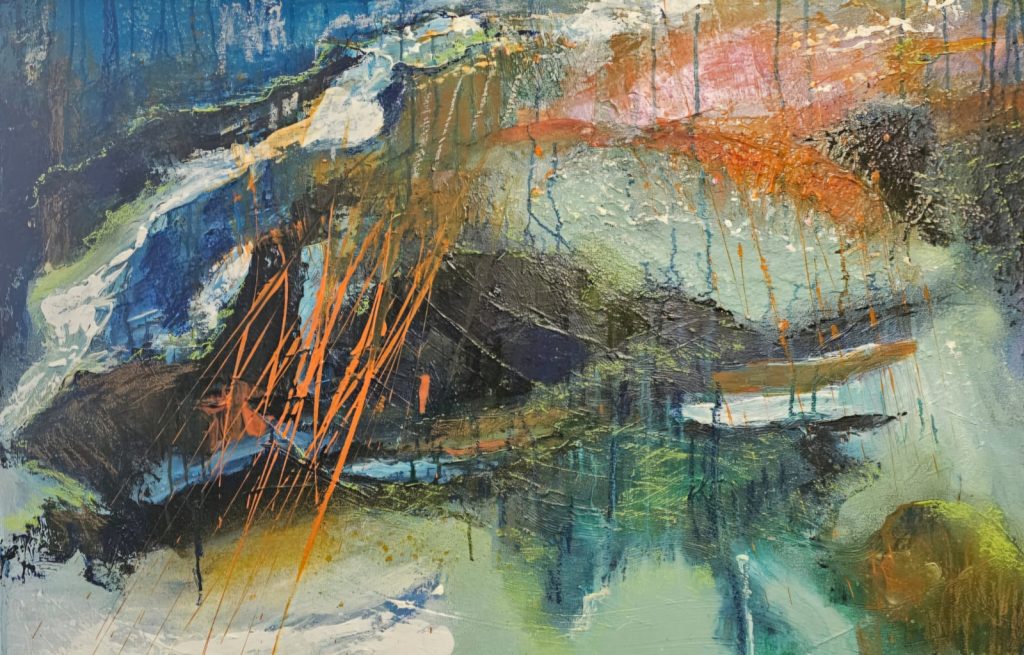
Snježana Majer PIAFSnježana Mayer, born in 1963, is a distinguished Croatian artist and poet whose creative odyssey began with her graduation in Painting and Graphic Design from the School of Fine Arts in Split. From her early days restoring the Croatian National Theatre in Split, she developed a profound reverence for art as both a spiritual and cultural inheritance. Over the decades, Snježana has showcased her works in numerous international exhibitions, including four solo shows that chronicle her evolving aesthetic vision. Her oeuvre ranges from spiritually resonant paintings adorning churches to murals, graphic designs, and customized works created to reflect the individuality of her patrons. A passionate preserver of cultural heritage, she is deeply involved in associations such as the Society for the Protection of Cultural Assets “Radovan” – Trogir and the Trogir Art Association, and holds memberships in esteemed global bodies including UNOTA, IAC, Artcom Expo, and Writers Capital Foundation, reflecting her global artistic presence.

Beyond her prolific artistry, Snježana is a mentor devoted to nurturing young talents through creative workshops, inspiring children to explore their imagination through the language of art. Her works have received widespread recognition, earning prestigious awards and being housed in museums and collections across Europe, Asia, and America, including South Korea, Portugal, and the United States. Though celebrated primarily as a visual artist, Snježana’s poetic essence pervades all her creations—her verses, much like her paintings, mirror a soul attuned to beauty, faith, and the timeless human spirit that binds art and life into one harmonious whole.


Dream Keepers: Poem by Snježana Mayer Read More »

The Representation of Balkan Peoples in the History Curriculum of Compulsory Education in Greece

Introduction

The nature of a detailed curriculum is not easily defined, as its constituent elements and the relationships among them depend largely on the sections it comprises and the content it encompasses (Matsangouras, 1997, p. 53). The syllabus reflects the selection and organization of official school knowledge, as well as the underlying educational philosophy that shapes it (Reppas, 2007, p. 17). Specifically, the term syllabus refers to the lesson plan, the instructional content, and the activities that students are expected to undertake (Flouris, 1983, p. 9).

Curriculums 

 The educational objectives of the curriculums are divided into three categories: cognitive, emotional and psychomotor. Cognitive objectives include the categories of knowledge, understanding, application, analysis, synthesis and evaluation (Krathwohl, 2002:212-213). Emotional goals cannot be precisely defined, because there are overt behaviors, but also feelings that are not visible. Consequently, types of behavior that correspond to specific goals cannot be defined (Bloom & Krathwohl, 1986:27). Finally, the psychomotor objectives have to do with the skills that each student develops in the various activities that he must develop at school.

Each curriculum is created according to the imperatives and needs of its time and, naturally, expresses the economic, social, spiritual, cultural and political realities of life itself. It also moves in this reality, and in essence, the curriculum expresses the goals that society sets for the formation of people, which it aims to achieve through education (Pinar, 2004 ref. Koutselinis-Ioannidou, 2013:19 -20).

The structure of the analytical programs is also expressed through their study, which reveals the social, philosophical and political influences they received, both locally and globally (Koutselinis-Ioannidou, 2013:22).

Modern curriculums are a mixture of philosophical and sociological discourse, follow the findings of psychology and seek to humanize cold rationality. For this reason, they can be easily changed and adapted appropriately, so that they are efficient for the students, while they are not closely related to the textbook (Koutselinis-Ioannidou, 2013:19).

The construction of an analytical program is based on a schematic diagram which provides a basis for philosophical, sociological, technological, scientific, political, cultural, as well as economic criteria (Hatzigeorgiou, 1998 ref. Koutselini-Ioannidou, 2013:19; Chrysafidis, 1997: 77). Thus, each branch of science contributes in its own way to their efficient design.

In more detail, philosophical criteria unite education with life, knowledge and society, extending the work of education. Sociological criteria focus their interest on the connection that society has with the school as well as on the role of the individual in its development. The psychological criteria in which way and in which areas education can be efficient, for students to develop their skills. Technological criteria encourage the use of new technologies in teaching as they improve learning and strengthen the possibility of information exchange. The scientific criteria show the structure of the programme, i.e. its themes and ideas. Political criteria reflect real life and present-day conditions, while emphasizing the goals aimed at by the education process. The cultural criteria incorporate elements of culture (values, customs, institutions, etc.), on which the educational system is based (Koutselinis-Ioannidou, 2013:20-20).

A syllabus can be closed or open. Regarding the first category (teacher proof curriculum), a syllabus is drawn up that follows the traditional approach, “the sequence of contents”, or a pattern provided by a “logical” approach to the subject (module). However, in this way it weakens and hinders the teacher’s ability to interact with the subject. The concept of closed syllabi has been heavily criticized as they devalue the teacher while limiting their ability to organize their planning around the content or knowledge they want to impart. In addition, in this way the school cannot shape the teaching package of the particular class. In contrast, the open curriculum is favorably received because it meets the needs of the students. At the same time, it provides the teacher with the possibility to shape the content of the teaching subjects, as well as to set and implement the objectives of the teaching unit according to the needs and interests of the students (Chrysafidis, 1997:79-83; Vrettos & Kapsalis 2001: 79-84).

 In the history syllabuses, the arrangement of the material follows the spiral method. In this way, knowledge is enriched and gradually broadened by level but based on the previous knowledge background. Thus, the interaction between different levels is possible since the student initially knows concepts and ideas and can then delve into them. Based on this method, the history taught in 5th Primary and 2nd High School focuses on the Byzantine period, while that of 6th Primary and 3rd High School focuses on modern Greek history.

The current syllabus in our country has the logic of closed syllabuses and the final course is determined by the way the teacher will take advantage of the practical guide (the teacher’s book) through which the final stage of the transformation is implemented.

This process is due to a series of general and specific factors, which, depending on the case, exert a catalytic influence on the formation of the syllabi. The general factors include the culture, civilization and tradition of each state, its historical course, natural resources, the regime that prevails at the political level, religion as well as economic and technological development. It is readily apparent that broad objectives can have a great influence because of the wide scope they cover. For example, in a state that has a particular official religion it is reasonable that the majority of the syllabus will be focused on it, even if there are references to other religions as well. The special factors include those responsible for drawing up and planning the educational policy, the teachers, the students themselves, and even the influence exerted by their parents (Flouris, 1983:52). For example, if a syllabus includes elements to which public opinion, including parents, reacts strongly, then this can have a significant influence on the shaping of the syllabus in order to avoid backlash.

Detailed History programs

The history lesson for primary and secondary school students aims to enable students to ask questions and think analytically, but at the same time to be interested in the past of their country (Palikidis, 2009:52-53). In addition, extra-educational factors intervene in the teaching of History. Alongside the direct influence of political thought, the History course is heavily influenced by the ideas advocated by religion, but also by social and cultural norms, while the role of the state in the selection of authors and the writing of textbooks remains decisive.

The technical part of the publication of the textbooks until 2012 was held by the Organization for the Publication of Teaching Books (OEBD) until it was abolished (Law 3966/2011). Subsequently, this role was taken over by the Institute of Computer Technology and Publications “DIOFANTOS” (ITIE – Diophantos) and in particular the Publications Directorate established in the summer of 2011. However, the planning of the analytical programs was done by the Pedagogical Institute in accordance with Law 1566 /85 while the content of the textbooks was shaped by the Pedagogical Institute until 2012 and then by the Institute of Educational Policy (I.E.P.).

The Greek education system attaches special importance to national history. This is also the reason why references to the Balkan peoples in history textbooks are limited to events related to Greece only. Throughout school education, historical material is organized on the basis of the tripartite scheme (“ancient”, “Byzantine” and “newer history”) established at the end of the 19th century by Konstantinos Paparrigopoulos, without essentially changing the purpose and distribution of material in school classes (Mavroskoufis, 1997:62). What is valid to this day is the spiral repetition of the historical material in the three school levels (Elementary – Middle – High – High). In other words, the same thematic periods, such as the Byzantine period, are studied for the first time in elementary school, but their teaching continues in the following school levels in a more expanded way (Palikidis, 2009:33).

In the last grades of elementary school (E’ & 6′), the subject matter of the detailed history programs is different from each other, i.e. different periods are taught in each grade. In the 5th grade, starting with the Roman Empire, he follows the course of Christianity until its establishment as an official religion, expands to the study of the Byzantine state, its relations with other peoples and especially the neighbors and follows its prosperity and decline ( Analytical Curriculum/Interdisciplinary Unified Curriculum Framework, 2003).

In the 6th grade, the program focuses on the modern era, starting with the fall of Constantinople. Starting from there, he traces the fate of Hellenism up to the revolution of 1821, in an attempt to determine the factors that led to the establishment of the Greek national state. It also includes references to the important events and developments that took place in Greece but also worldwide during the 19th and, mainly, the 20th century (Analytical Curriculum/Interdisciplinary Unified Framework of Study Programs, 2003).

While elementary school curricula, as can be seen from their content, examine historical events more generally and summarily, the same is not true of high school curricula. This is because of the spiral method. In elementary school, the facts are listed in general and summary, while in the other school levels, they are more detailed so that the student can delve even deeper based on the initial knowledge he has acquired. The detailed program of the 2nd grade of the Gymnasium also focuses on Byzantium, but in more detail, dividing the Byzantine period into three periods: first centuries, heyday, and decline. In addition to Byzantium, however, it examines the other powers that began to develop worldwide, such as the Islamic East and the European West, reaching the modern times of Europe (Analytical Curriculum/Interdisciplinary Unified Framework of Study Programs, 2003).

 Accordingly, in the syllabus of the 3rd grade of the High School, the history of Greece is examined in the general context of approaching European history. According to the syllabus, the beginnings of modern times are placed in the French revolution and the new ideas it brought, influencing in this way developments throughout Europe, including Greece, from the Greek revolution onwards. The same happens in the rest of the content of the syllabus covering the 20th century, according to which the developments in Greece and Europe are examined interrelatedly and not separately (Study Syllabus/Interdisciplinary Unified Framework of Study Programs, 2003).

The modern Analytical Curriculum/Interdisciplinary Unified History Curriculum Framework of History

According to the Analytical Curriculum/Interdisciplinary Unified History Curriculum Framework, the history course seeks to develop historical thinking and consciousness. The teaching of history at every educational level expects the continuous renewal of the students’ attention to the historical past and to historical memory, so that through the teaching the student can shape a personality of conscientious citizens while strengthening their judgement. With the same logic, the axes, the overall goals and the cross-curricular concepts for each class of Primary and Secondary Education, the purpose, the units, the activities proposed as well as the programs for all classes are presented.

Then, the principles of the teaching methodology of the course are described, according to which the History course is considered as a necessary means that contributes to the successful formation of children and to learning (Analytical Curriculum/Interdisciplinary Curriculum Framework, 2003). According to the authors of the Analytical Program, this course provides important knowledge for the student to understand and learn how society works. The authors argue that the process followed in each teaching unit helps students to learn alongside the historical events and some concepts and principles that they can compare and then draw useful conclusions (Analytical Curriculum/Interdisciplinary Common Curriculum Framework, 2003).

In the course students interact and participate more and do not just expect the guidance of the teacher. This process requires the use of modern teaching methods. These include working with a research plan on an individual or group level, the formulation of research questions, the experiential method, the research of sources, the systematization with exercises of representing historical events, etc. (Analytical Curriculum/Interdisciplinary Unified Framework of Study Programs, 2003). In each chapter, the students are taught the historical events and at the same time learn the following (Analytical Curriculum/Interdisciplinary Curriculum Framework, 2003):

  • Understand serious historical concepts, such as colony, invasion, conquest, conflict, slavery, enslavement, civil war, myth, etc.
  • Have the ability to connect concepts, incidents, situations and be able to draw general conclusions.

  In the elementary school history syllabus it is noted that students, in addition to everything else, must:

 “To be informed about the social, cultural, religious and national differences of the societies they study.

 To understand and accept cultural, religious or other differences as a fundamental right of people in a democratic society and as a positive factor in its development.

 To acquire national consciousness, love for their country and a disposition for peaceful coexistence, cooperation and mutual understanding with the neighboring peoples” (Analytical Curriculum/Interdisciplinary Unified Framework of Study Programs, 2003: 188).

  The same applies to the high school curriculum where one of its goals is:

 “To form, through the study of individual cultures and their contribution to world culture, a spirit of moderation, tolerance and respect for the different” (Analytical Curriculum/Interdisciplinary Unified Framework of Study Programs, 2003:214).

  From the above it is reasonable to conclude that the presentation of the Balkan peoples in school textbooks must be within the framework and objectives set by the syllabus. However, this is not entirely accurate, since as will be shown below, the image of the Balkan peoples in the textbooks is not only not positive, but on the contrary, it moves towards highlighting the superiority of the Greeks.

The Balkan peoples in the current curriculum

In the current comprehensive history curriculum for both Primary and High School, there is limited reference to the Balkan peoples. More specifically:

In the detailed history program of the 5th grade of the Primary School in a total of 51 teaching units, the Balkan peoples are mentioned only in the following seven units: The Byzantine state and the neighboring peoples, The “neighbors” of the Byzantines, Byzantium Christianizes the Slavs, Friendly relations and conflicts with the Bulgarians and the Russians, The Ottoman Turks conquer Byzantine lands, The Turks besiege Constantinople, The fall of Constantinople by the Turks.

In the detailed history program of the 6th grade in a total of 60 teaching units there are several references to the Balkan peoples. This is because it examines, firstly, the Ottoman era, secondly, the peoples conquered by the sultans and, thirdly, the decline and dissolution of the Ottoman Empire. The sections dealing with Balkan peoples are as follows: The Ottoman Empire, Its Strength and Weaknesses, Ottoman Conquerors Granting “Privileges” to Ragiades, Rigas and His Balkan Vision, The “Eastern Question” in the Balkan Peninsula , The Macedonian Struggle, The movement of the Young Turks (1908) and the movement in Goudi (1909) change the political scene, The Balkan wars, a great Greek success, Greece in the First World War (Analytical Curriculum/ Interdisciplinary Unified Framework of Programs Studies, 2003).

In the syllabus of the 2nd grade of the High School, reference is also made to the Balkan peoples. In the section “Peoples around the Byzantine state during the Middle Ages”, reference is made to the Slavs and the Bulgarians, as well as to the relations of these peoples with Byzantium. It is interesting that the syllabus provides the possibility for the teacher to ask the students to write a work plan on the topic: The Christianization of the Balkan peoples and the Russians (Syllabus/Interdisciplinary Curriculum Framework, 2003).

The detailed curriculum of the 3rd grade of the High School and, in particular, the section “The crisis of the ‘old regime’ and the formation of the New Europe (18th – 19th century)”, provides the opportunity for children to study the genesis of nation-states of Serbia, Romania and Bulgaria, as well as Greece’s contacts and interconnections with the Balkan states (Analytical Curriculum/Interdisciplinary Unified Framework of Curricula, 2003). In the section “Europe and the world in the first half of the 20th century”, the detailed program foresees the reference to the diplomatic contacts and alliances of the Balkan states, as well as to the negative results that the Young Turks movement had for Greece. The aim is for the students to be informed and get to know the most important events of the Balkan Wars. Also, the children are informed about the diplomatic activities and initiatives of the Greek Prime Minister El. Venizelos and the Balkan alliances he concluded, seeking the maximum benefits for Greece (Analytical Curriculum/Interdisciplinary Unified Framework of Curricula, 2003).

In the section “The post-war world” students are invited to study contemporary historical events, but also to learn to consider with great care all the elements, consequences and results of the socio-political and territorial changes that occurred in the Balkan Peninsula after the fall of the socialist regimes. Finally, it is planned that they will be taught the internal and external policy of Greece during the same period (Analytical Curriculum/Interdisciplinary Unified Framework of Study Programs, 2003).

Conclusions

The Greek education system remains ethnocentric. Syllabus, no matter how contested, monopolize the presumption of validity, if not authority, in the minds of the majority of educators. Based on this, almost all of their educational activity is planned and prepared. Especially the analytical programs of History are considered to be, or at least should be, carriers of the “official” narrative, that is, the one that responds to national stereotypes and ideologies and should not “destroy” them, but instead reinforce them. History is perhaps the only subject in the Greek school, which stubbornly refuses to integrate the achievements of the last decades in the fields of historical research, Greek and international, as well as the Teaching of History.

Adam Papakonstantinou

Bibliography

  1. Bloom, B.S. & Krathwohl, D.R. (1986). Classification of teaching objectives. Athens: Kodikas.
  2. Chrysafidis, K. (1997). The Greek school and the debate around open and closed curricula. In Bagakis G. (ed.). The teacher and the syllabus. Athens: Metaichmio.
  3. Flouris, G. (1983). Detailed programs for a new era in education. Athens: Grigoris.
  4. Koutselini-Ioannidou, M. (2013). Detailed programs and teaching. Athens: Pedio.
  5. Krathwohl, D.R. (2002). A Revision Bloom’s Taxonomy: An Overview. Theory into Practice, 41(4), 212-218.
  6. Matsangouras, G.H. (1997). Intersubjectivity in curricula: theory and practice. In Bagakis G. (ed.). The teacher and the syllabus. Athens: Metaichmio.
  7. Mavroskoufis, D. (1997). School History in secondary education (1975-1995). Thessaloniki: Kyriakidis Brothers.
  8. Law 3966/2011. Institutional framework of the Model Experimental Schools, Establishment of the Institute of Educational Policy, Organization of the Institute of Computer Technology and Publications “DIOFANTOS” and other provisions. Gazette A 118/24.5.2011.
  9. Palikidis, A.A. (2009). The Role of Image in Secondary School History Textbooks (1950-2002). Thessaloniki: Kyriakidis.
  10. Reppas, X. (2007). For the unified interdisciplinary study framework: An attempt to critically evaluate the new programs. In Katsikas, X. & Therianos, K. (eds.). New syllabuses and books at school. Athens: Gutenberg.
  11. Vrettos, I.E. & Kapsalis, A. (2001). Analytical Program. Planning – evaluation – reformation. Athens: Greek Letters.


The Representation of Balkan Peoples in the History Curriculum of Compulsory Education in Greece Read More »

Opening Gateways to Global Excellence: The Vision of the Global Academy for Transformative Education

The Global Academy for Transformative Education (GATE) is a distinguished autonomous educational wing of the Writers Capital International Foundation, committed to leading transformative and holistic educational reform on a global scale. Represented by its powerful acronym, GATE symbolizes a gateway to innovation, opportunity, and academic excellence, uniting a network of International Centres under a unified vision of redefining education for a diverse, interconnected world. Under the leadership of Prof. Preeth Padmanabhan Nambiar, President of GATE, the academy aspires to become one of the most reputed groups of institutions, fostering unparalleled learning, interdisciplinary collaboration, and global impact.

GATE serves as the central framework for the Foundation’s educational initiatives, currently including the International Centre for Foreign Languages and Literature, led by Prof. Nambiar, and programs such as INSPIRE (Innovative Strategies for Progressive Instruction and Educational Reform). With plans to establish additional International Centres in fields such as science, technology, medicine, and humanities, GATE is strategically positioned to achieve global preeminence. Designed for deliberate, authentic growth, it upholds a secular, inclusive identity, ensuring universal accessibility and the potential to evolve into a world-renowned university-like entity.

Mission and Vision

GATE’s mission is to empower educators, students, and communities worldwide through transformative educational practices that integrate holistic development, innovation, and global perspectives. By promoting student-centered pedagogies, interdisciplinary research, and equitable learning environments, GATE aims to set new standards for educational excellence. Its vision is to establish itself as a preeminent global institution, recognized as one of the most reputed groups of educational centers, driving systemic reform and preparing learners to address the challenges of a dynamic world.

The holistic principles envisioned by Prof. Preeth Padmanabhan Nambiar guide GATE’s philosophy, emphasizing the integration of intellectual, emotional, and social dimensions of learning. These principles ensure education is inclusive, culturally responsive, and empowering, fostering well-rounded individuals equipped for global citizenship. Through initiatives like INSPIRE, GATE translates this vision into practical strategies, equipping educators with innovative tools to transform classrooms worldwide.

Key Objectives

  1. Drive Educational Reform: Develop and disseminate innovative, holistic teaching methodologies that prioritize critical thinking, creativity, and global awareness.
  2. Establish a Prestigious Network: Create a constellation of International Centres in fields such as science, technology, medicine, and humanities, each contributing to GATE’s reputation as a global leader.
  3. Promote Global Collaboration: Build a worldwide network of educators, researchers, and institutions to share knowledge and advance interdisciplinary innovation.
  4. Ensure Universal Inclusivity: Design secular, inclusive programs that transcend cultural and regional boundaries, welcoming diverse learners and educators.
  5. Achieve Global Repute: Position GATE as one of the most respected educational groups, with a scalable framework that supports future university status while maintaining authenticity.

Leadership and Structure

GATE is led by Prof. Preeth Padmanabhan Nambiar, President, who provides strategic vision and oversight, ensuring alignment with the Writers Capital International Foundation’s mission. As the top authority, the President guides the development of GATE’s network of International Centres, each managed by a dedicated Director responsible for operational leadership and program execution. This hierarchical structure fosters cohesion while allowing each center to innovate within its field, contributing to GATE’s collective prestige.

Current and planned International Centres include:

  • International Centre for Foreign Languages and Literature: Directed by Prof. Nambiar, this center advances linguistic diversity, literary scholarship, and cross-cultural dialogue through research, publications, and educational programs, serving as a cornerstone of GATE’s interdisciplinary mission.
  • INSPIRE (Innovative Strategies for Progressive Instruction and Educational Reform): A flagship program launched on May 22, 2025, at KNC Innovative Global School, Mysuru, INSPIRE empowers educators with holistic, student-centered strategies. The inaugural session, attended by Principal Joseph Frank and Chairman Dr. K.N. Chandrasekhar, featured workshops on phonetic training, lesson planning, and social-emotional learning, exemplifying GATE’s commitment to practical reform.
  • Planned International Centres: GATE envisions establishing centers in key fields, including:
    • International Centre for Science and Innovation: Advancing research and education in physics, biology, and environmental sciences.
    • International Centre for Technology and Artificial Intelligence: Promoting ethical digital learning and transformative technologies.
    • International Centre for Medicine and Public Health: Fostering medical education and global health solutions.
    • International Centre for Humanities and Social Sciences: Exploring cultural, historical, and societal perspectives to enrich holistic education.

GATE’s organizational framework is designed for flexibility and scalability, enabling the integration of new centers under the President’s leadership. Directors report to the Director – General of Operations (DGO) who reports to the President, ensuring strategic alignment while fostering innovation within each center. Governed by the Writers Capital International Foundation, GATE leverages the Foundation’s global resources to enhance its impact and reputation.

Commitment to Holistic Education

GATE’s educational philosophy is grounded in the holistic principles envisioned by Prof. Preeth Padmanabhan Nambiar, which advocate for a balanced approach to learning that nurtures intellectual growth, emotional resilience, and social responsibility. These principles are operationalized through:

  • Personalized Learning: Tailoring education to individual learner needs, ensuring inclusivity and engagement.
  • Cultural and Global Relevance: Adapting pedagogies to diverse contexts, fostering cross-cultural understanding.
  • Interdisciplinary Synergy: Encouraging collaboration across fields to address complex global challenges.
  • Educator Empowerment: Equipping teachers with innovative tools and training, as demonstrated by INSPIRE’s focus on transformative practices.

This holistic approach ensures GATE’s programs elevate academic standards while cultivating ethical, empathetic leaders prepared for global impact.

Global, Secular, and Prestigious Identity

GATE is steadfastly committed to a secular, universally accessible identity, free from cultural, religious, or regional affiliations. Its name, devoid of specific connotations, reflects its role as a neutral platform for global education. By drawing participants from diverse backgrounds and fostering international partnerships, GATE ensures its programs resonate worldwide. The ambition to become one of the most reputed groups of institutions is driven by strategic leadership under Prof. Nambiar, a relentless pursuit of excellence, and a commitment to inclusive, transformative education.

Scalability and Path to Global Repute

GATE is engineered for sustainable, organic growth, balancing ambition with authenticity. Its current structure as an autonomous wing allows it to innovate and refine educational models, building a foundation for lasting prestige. Strategies to achieve global repute include:

  • Developing World-Class Centres: Establishing International Centres in science, technology, medicine, and humanities, each led by a Director and contributing to GATE’s reputation for innovation and excellence.
  • Forging Strategic Partnerships: Collaborating with leading universities, research institutions, and global organizations to enhance credibility and reach.
  • Promoting Thought Leadership: Publishing research, hosting conferences (e.g., leveraging the Foundation’s Global Nexus Series), and contributing to global educational discourse.
  • Scaling Toward University Status: Positioning GATE as a precursor to a future Global University for Transformative Education, with a phased approach that prioritizes quality and authenticity.

This scalability ensures GATE remains agile, innovative, and globally competitive, poised to redefine educational standards.

Synergy with Writers Capital International Foundation

GATE amplifies the Foundation’s mission to advance creativity, knowledge, and societal progress, complementing its programs in arts, literature, humanitarian projects, and the Global Nexus Series. By integrating education into the Foundation’s portfolio, GATE creates synergies with initiatives like the Nexus Review Journal and publishing efforts, leveraging the Foundation’s global network to enhance its impact and reputation. Prof. Nambiar’s dual leadership of GATE and key Foundation initiatives ensures strategic alignment and maximizes impact.

The Global Academy for Transformative Education (GATE), under the visionary leadership of Prof. Preeth Padmanabhan Nambiar, President, stands as a transformative force in global education. By uniting a prestigious network of International Centres—starting with the International Centre for Foreign Languages and Literature and expanding into science, technology, medicine, and beyond—GATE is dedicated to becoming one of the most reputed groups of institutions. With its holistic, inclusive, and innovative approach, GATE opens gateways to learning that empower communities, transcend boundaries, and shape a future of global progress, all while advancing the Writers Capital International Foundation’s commitment to a better world.

Contact Information

For more information about GATE and its International Centres, please contact:

Writers Capital International Foundation
Memorial office
Gambolina 42/3, Cap, Vigevano, Lombardia, Italy
Headquarters
#5050, Vijayanagar Stage 2, Mysore, Karnataka, India
Regional Office
40 Ichous Street – P. Phaliron, Athens, Greece

www.writerscapital.org
care@writerscapital.org 

Opening Gateways to Global Excellence: The Vision of the Global Academy for Transformative Education Read More »

A Soaring Elegy of Love and Transcendence: An Elaborate Review of Johanna D.S. Chittranjan’s Turtledove of Sundered Skies

Turtledove of Sundered Skies, a poignant collection of 58 poems by Johanna D.S. Chittranjan, published by Writers International Edition in 2025, is a masterful tapestry of grief, resilience, and spiritual aspiration. Written in the wake of her husband Devadayavu Sanjeevi Chittranjan Lawrie’s passing, this anthology transforms personal loss into a universal meditation on love’s endurance, the sanctity of nature, and the quest for eternal peace. Rooted in the poet’s South Indian context and infused with her Swiss heritage and Christian faith, the collection employs the turtledove—a symbol of fidelity and divine presence—as a guiding motif, soaring through “sundered skies” of sorrow toward hope. With its multilingual flourishes, vivid imagery, and emotional authenticity, Turtledove of Sundered Skies emerges as a significant contribution to contemporary poetry, offering readers a luminous journey through the human spirit.

Thematic Foundations: Grief, Love, and Cosmic Unity

The thematic core of Turtledove of Sundered Skies revolves around the interplay of personal mourning and transcendent hope, with the turtledove serving as a multifaceted symbol. As noted in Johanna’s self-authored study, the turtledove, previously a marker of love and peace in her earlier works (The Call of the Turtledove for Universal Peace, Flight of a Turtledove, Hope beyond Perplexity), here becomes a solitary figure navigating a fractured cosmos after her husband’s death. The title encapsulates this duality: “Turtledove” evokes continuity and fidelity, while “Sundered Skies” reflects the poet’s inner fragmentation, a world torn by loss.

Grief permeates the collection, most vividly in poems like “Fare well my Dear” and “Memoirs.” In “Fare well my Dear,” Johanna bids a prophetic goodbye to her husband, envisioning his ascent “into hues of a perpetual morning sky” and promising his nearness through “the cooing turtledove somewhere near.” The poem’s tender repetition of “fare well” underscores the inevitability of parting, yet the turtledove’s presence bridges the earthly and eternal. “Memoirs” recounts their shared life—dancing under stars, weathering storms—before confronting the stark reality: “But now you have died.” The abrupt shift mirrors the sundered skies, yet the assertion “Death can’t hold you in this grave” offers defiant hope, aligning with the collection’s theme of love’s permanence.

Beyond personal loss, Johanna explores universal themes of peace, faith, and cosmic unity. In “Peace we need,” she likens peace to a “magical rainbow” and a “pomegranate,” sensory metaphors that ground her vision in tangible beauty. The poem’s synesthetic imagery—peace as sight, taste, sound, smell, and touch—invites readers to experience harmony holistically. Similarly, “Laniakea” elevates the turtledove’s flight to a cosmic realm, depicting souls “gliding up ladders of light rays” to a “dazzling city” where “today will never end.” This metaphysical soar reflects Johanna’s Christian belief in eternal reunion, framing the sundered skies as a liminal space of transcendence.

Johanna’s social consciousness also shines through in poems like “Smoking Cottages” and “What does it mean,” which critique global turmoil—war, environmental destruction, and societal decay. “Smoking Cottages” decries “roaring missiles” and “psychopaths scheming,” urging readers to “turn all your roaring missiles into ploughshares.” “What does it mean” questions natural and human disruptions—volcanoes awakening, bombs drowning out conscience—posing existential queries that resonate with contemporary crises. These poems position Johanna as a poet of witness, balancing personal grief with a call for global healing.

Emotional Resonance: Solitude and Resilience

The emotional heartbeat of Turtledove of Sundered Skies pulses with the raw solitude of widowhood, tempered by resilient faith. The preface poignantly details Johanna’s final years with her husband, marked by his declining health and their soul-deep connection: “Our union was a soul connection. Often no words were needed.” This intimacy informs poems like “If you were gone…,” where she clutches jasmine petals scented with his memory, her equilibrium “thrown off balance astonished” by his absence. The poem’s resolution—his sudden return, perhaps a dream—captures her oscillation between despair and consolation, a hallmark of the collection’s emotional authenticity.

Resilience counters this loneliness, often rooted in faith and nature. In “Persistence,” Johanna battles “heavy current” to reclaim “the wings of hope,” trusting in “the healing powerful energy of true Love.” The turtledove’s arduous flight mirrors her struggle, culminating in triumph: “Suddenly I know – I can – I won!” Similarly, “Bleak Nights” confronts the “harsh climate of ageing days” but urges readers “‘to spread our wings” toward “blossoms of Love and Hope.” These poems transform the sundered skies from a void into a canvas for renewal, reflecting Johanna’s strength as a widow and poet.

Her husband’s legacy anchors this resilience. Dedicatory poems like “A precious Journey,” written for his 70th birthday, and “You” celebrate their shared odyssey—crossing “turbulent oceans,” climbing “hills of mirth”—and his enduring presence as “the hero of my dreams and lover of my life.” “A letter to my Love” pledges unwavering support (“If you were drowning… I’d be your life jacket”), culminating in the mantra “Love is stronger than death.” These tributes make the collection a dual act of mourning and memorialization, honoring Devadayavu Lawrie’s musical and philanthropic contributions while affirming love’s transcendence.

Stylistic Craftsmanship: Form, Imagery, and Multilingualism

Johanna’s stylistic range enhances the collection’s emotional and thematic depth, blending structured forms with free verse to mirror its complexity. Her command of traditional forms—Trochee in “O the Love,” Iambic Tetrameter in “Amazing Grace,” Harrisham in “Elation”—provides rhythmic stability, evoking the turtledove’s steady flight. “O the Love” employs a litany-like refrain (“O the Love,” “O the”) to underscore love’s constancy, its cadence soothing amid grief. Conversely, free verse in introspective poems like “Memoirs” allows emotions to flow unconfined, with enjambments (“We danced – we embraced / We walked – we talked”) mimicking memory’s rush, and the stark break—“But now you have died”—cutting like a fractured sky.

Imagery is Johanna’s most striking tool, rendering the sundered skies vivid and visceral. Nature—birds, flowers, stars, storms—doubles as setting and symbol. In “Heart of a Flower,” a bloom in “God’s garden” sings “mellifluous notes” of love, its fragility akin to the turtledove’s vulnerable soar. Cosmic vistas in “Stars are moving” depict a universe in upheaval—“Darkness shrouded all light”—yet pierced by hope: “golden rays” in “A precious Journey,” “dazzling city” in “Laniakea.” These images suggest that even fractured skies shimmer with grace, aligning with the collection’s optimistic undertone.

Multilingual flourishes—German in “Closing the Cleft,” Tamil and Telugu in “Divine Love”—reflect Johanna’s Indian roots and global reach. As Prof. Silla Maria Campanini notes in the foreword, this polyphony is “not ornamental but essential,” echoing India’s syncretic literary traditions (e.g., Kabir, Mirabai). The German translation of “Closing the Cleft” amplifies the turtledove’s universal call, its cooing transcending linguistic divides. This inclusivity enhances the collection’s accessibility, inviting readers across cultures to engage with its themes.

Cultural and Spiritual Significance

Turtledove of Sundered Skies is deeply rooted in Johanna’s South Indian context, particularly Laharinagar, Tamil Nadu, where she and her husband founded the Laharinagar Charitable Trust in 1992. The foreword praises the “sensory richness” of her lines—jasmine blossoms, doves at dawn, monsoon’s touch—grounding her poetry in the rhythms of Tamil life. Yet, as Campanini observes, Johanna’s gaze is “never parochial,” lifting these specificities into a dialogue with the infinite. Poems like “Edelweiss,” which imagines a Swiss flower thriving in India’s desert, reflect her Swiss-Indian identity, symbolizing resilience across cultural boundaries.

Johanna’s Christian faith infuses the collection with spiritual depth, aligning her with devotional poets like John Donne and George Herbert. In “Divine Love,” love descends “down and down and down” to embrace “mortal grains of sand all forlorn,” a Christ-like act paralleling her husband’s lasting presence. “Trust in the LORD” casts the sundered skies as a forge for redemption, urging the soul to rely on divine truth. This spirituality is inclusive, embracing nature and humanity, as seen in “Poetry – Language beyond Restrictions,” which envisions poetry uniting “peaceful humanity in unified liberation.”

The collection’s historical context—written from 2023 to 2025—grounds it in a world of pandemics, conflicts, and ecological crises. References to “roaring bombs” and “violent hurricanes” reflect these realities, yet Johanna counters darkness with light, crafting a vision of peace that feels “hard-earned,” as Campanini notes. Her role as an executive board member of the Writers Capital International Foundation and her charitable work underscore her commitment to global harmony, making Turtledove of Sundered Skies a poetic extension of her humanitarian ethos.

Structural and Editorial Observations

The collection is thoughtfully organized, with 58 poems plus dedicatory pieces, as outlined in the contents. The study suggests distilling 20-30 poems for narrative coherence, with sections on grief (“If you were gone…,” “Memoirs”), resilience (“Persistence,” “Bleak Nights”), and transcendence (“Homecoming,” “Laniakea”). The current structure, however, effectively traces Johanna’s emotional arc, from the farewell in “Fare well my Dear” to the resolution in “Eternal peace” and “Soul Bonds.” Dedicatory poems like “A precious Journey” and “You” frame the collection as a tribute to her husband, while the preface provides intimate context, enhancing reader empathy.

Global and Literary Impact

Turtledove of Sundered Skies is a luminous contribution to world literature, weaving personal, cultural, and universal threads into a cohesive poetic narrative. Johanna’s optimism, rooted in faith and love, positions the collection as a beacon of hope amid global turmoil. Her environmental and social advocacy, as in “Smoking Cottages,” aligns with sustainability and peace-building goals, while her Tamil Nadu perspective adds a distinctive voice to the global canon, alongside poets like Kamala Das and A.K. Ramanujan.

The collection’s musicality, influenced by her husband’s musicianship, enhances its emotional resonance. References to his accordion’s “whispering hope” in “My Love” suggest a collaborative legacy, making the poems a symphony of love and loss. Its accessibility—layered yet inclusive—invites diverse readers, from scholars to those seeking solace. As Campanini urges, readers should approach it “with an open heart,” letting Johanna’s words “wash over you like the monsoon.”

Conclusion

Johanna D.S. Chittranjan’s Turtledove of Sundered Skies is a radiant testament to poetry’s power to heal and transcend. Through evocative imagery, structured lyricism, and unwavering faith, Johanna transforms personal grief into a universal hymn of hope. While minor editorial refinements could elevate its presentation, the collection’s emotional depth, cultural richness, and spiritual vision make it a vital addition to contemporary poetry. For readers seeking solace, inspiration, or a bridge between earthly sorrow and cosmic hope, this book is a soul-stirring companion. As Johanna writes in “Soul Bonds,” love forms “cordless connections of the soul… stronger than impervious copper,” a truth that resonates through her turtledove’s soaring flight.

A Soaring Elegy of Love and Transcendence: An Elaborate Review of Johanna D.S. Chittranjan’s Turtledove of Sundered Skies Read More »

A Luminous Tapestry of Soul and Nature: Review of Punya Devi’s My Echoing Heart and Its Vision for Global Harmony

My Echoing Heart, a poetry collection by Punya Devi, published by World Literature India in May 2024, is a profound and evocative exploration of the human spirit, the sanctity of nature, and the enduring quest for universal peace. Comprising 61 poems, this anthology, penned in English by an Assamese poet, resonates with a mystical and philosophical depth, weaving together personal introspection, cultural heritage, and a passionate call for social and environmental justice. Dedicated to “The Peacemakers of the World,” Punya’s work stands as a testament to the transformative power of poetry, offering readers a meditative journey through her echoing heart.

Thematic Richness and Universal Appeal

At its core, My Echoing Heart explores themes of self-discovery, reverence for nature, resistance to societal injustices, and an unwavering commitment to peace. The opening poem, “I Search Me Within Me,” establishes Punya Devi’s contemplative voice, as she grapples with existential questions: “For why I am here I don’t know / To where I am going that is unknown.” This introspective inquiry, which Anand describes as “quasi-mystical,” positions Punya as a seeker navigating the infinite boundaries of the self. Her imagery of fostering an “olive tree” to attract a “flying dove” symbolizes her yearning for peace, a recurring motif that binds the collection.

Punya Devi’s profound connection to nature is a cornerstone of her work, aligning her poetry with ecopoetic traditions. In “I Dream to Be a Green Dense Forest,” she envisions herself as a forest, “exhaling a flock of love birds” to sow “seeds of peace for new creation.” This anthropomorphic empathy reflects her belief in nature’s redemptive power, urging readers to harmonize with the earth. Similarly, “A Plantlet of Love” elevates tree-planting to a metaphor for cultivating virtues like tolerance and generosity, with Punya advocating that “every man should be a tree” in a world fractured by conflict. Her Assamese roots infuse these poems with vivid imagery of rivers, forests, and fields, grounding her universal messages in a regional context.

The poet’s critique of societal ills—war, gender oppression, environmental degradation, and economic disparity—lends urgency to her work. In “Standing Against War,” Punya Devi condemns the “maneater man” who transforms “earthly heaven” into “hell,” proposing words as “the most powerful and sharpest” weapons against violence. Her feminist perspective is poignantly articulated in “My Letter to Nora,” where she laments the ongoing subjugation of women in “the jungle of so-called civilization,” drawing on Henrik Ibsen’s A Doll’s House to underscore the incomplete journey toward gender equality. Poems like “The Working Class” and “The Destitute Children” highlight her empathy for marginalized communities, portraying laborers and homeless children with a call for social justice that resonates globally.

Stylistic Craftsmanship and Cultural Significance

Punya Devi’s poetic style is marked by simplicity, vivid imagery, and a rhythmic flow that Anand compares to the “cosmic breath” of Walt Whitman and the romantic joy of William Wordsworth. Her use of natural metaphors—rivers, mountains, forests, and skies—creates a universal language that bridges her Assamese heritage with a global readership. In “Ode to the River Brahmaputra,” dedicated to Bhagirath Chaudhary, Punya celebrates the river as a “priest of humanity” and a symbol of “unity in diversity,” weaving Assamese mythology (e.g., references to Umananda and Sonitpur) into a broader message of integrity. This poem exemplifies her ability to root universal themes in regional identity.

Writing in English, despite her native Assamese, Punya Devi demonstrates remarkable fluency, as Anand notes: “She appears to be quite at ease with English poetry, her words moving with elemental power.” This linguistic choice enhances the accessibility of her work, allowing her to engage a global audience while preserving the emotional authenticity of her cultural heritage. Her diction, though occasionally marked by minor grammatical irregularities (e.g., “I am to go doing well always”), adds a raw, heartfelt quality, reflecting the sincerity of her voice. Her use of free verse, as in “Heroic Journey Lovlina,” mirrors the spontaneity of her emotions, while rhythmic patterns evoke the oral storytelling traditions of Assam, enriching her poetry with cultural resonance.

Punya Devi’s imagery is tactile and sensory, immersing readers in her emotional and natural landscapes. In “Rhetoric Songs of Rain,” clouds wear a “maroon color veil and golden garland,” and rivers embrace fields with “silvery feathers,” creating a vivid, almost cinematic experience. Her metaphors often carry philosophical weight, as in “The House of God,” where she envisions faith as the foundation, holiness as the pillar, and humanity as the dome, culminating in the striking assertion: “God himself makes idol for His worship / His idol is man.”

Structural and Editorial Observations

The collection is thoughtfully organized, with a table of contents grouping poems thematically to trace Punya’s evolving concerns—from personal introspection to societal critique and spiritual aspiration. The foreword by Anand provides a scholarly framework, situating the work within global literary traditions and highlighting its philosophical depth. The dedication to peacemakers and acknowledgments to literary figures like Anand and Chaudhary underscore the collaborative spirit of the project.

However, the book would benefit from editorial refinements. Typographical errors (e.g., “philomel” instead of “Philomela” in “Echoing Heart”) and inconsistent formatting (e.g., erratic page numbering) occasionally disrupt the reading experience. Some poems, such as “Beyond the Imagination,” could be condensed to maintain intensity, as their expansive length slightly dilutes their impact. The cover design by Ashutosh Borthakur, implied to be evocative, complements the book’s thematic richness, though a more detailed description in the front matter could enhance its visual appeal. Also, overall design of the book could be disappointing.

Global and Cultural Impact

My Echoing Heart is a luminous contribution to world literature, weaving personal, cultural, and universal threads into a cohesive poetic tapestry. Punya’s optimism, as Anand observes, shines through her vision of “a happy world based on love and understanding,” making the collection a beacon of hope in turbulent times. Her emphasis on environmental stewardship, as in “A Plantlet of Love,” aligns with global sustainability goals, while her advocacy for peace and justice resonates with the United Nations’ Sustainable Development Goals. Her Assamese perspective, enriched by references to the Brahmaputra and regional figures like Lovlina Borgohain, adds a distinctive voice to the global literary canon.

The collection’s focus on poetry as a transformative force, articulated in “Poetry is My Prayer,” positions Punya as a literary activist. She writes, “If my poetry is not planting / A garden of love in the soil of my heart / How I could be able to give you / A fresh white rose every morning?” This commitment to using verse for social good underscores her role as a peacemaker through words. Her tributes to Indian icons like Gandhi and Kalam, alongside her critique of global issues like war and gender violence, make the collection relevant to both Indian and international audiences.

Conclusion

Punya Devi’s My Echoing Heart is a radiant testament to the enduring power of poetry to heal, unite, and inspire. Through her evocative imagery, philosophical insights, and unwavering commitment to peace, Punya crafts a collection that speaks to the heart of humanity. While minor editorial polish could elevate its presentation, the anthology’s emotional depth, cultural richness, and universal appeal make it a vital addition to contemporary poetry. For readers seeking a blend of mysticism, social commentary, and ecological reverence, this book is a soul-stirring companion. As Punya declares in “I Live Only for My Words,” her poetry is a gift to the world, illuminating the path toward a more compassionate future.

To embark on this poetic odyssey, My Echoing Heart is available at www.amazon.com, www.amazon.in, and www.flipkart.com. It is highly recommended for poetry enthusiasts, advocates of global harmony, and those captivated by the interplay of culture and conscience.

A Luminous Tapestry of Soul and Nature: Review of Punya Devi’s My Echoing Heart and Its Vision for Global Harmony Read More »