Writers International Edition

Articles

The New Value of Imperfection

“Why am I like this?”

I used to ask myself this often. Was it OCD, I wondered, looking at my own struggle to make everything perfect. A piece of writing had to be compelling. A painting had to be flawless. A room had to stay dust free and precisely arranged, every single time. The comfort I felt after getting these things exactly right was unlike anything else. But that same need slowly turned into a hindrance, in my personal life and in my professional one. “It is not OCD, it is perfectionism,” someone told me once.

Not long after, quite by coincidence, I came across a short film that stayed with me. It was set in some near future, where a garden had been designed entirely by artificial intelligence, every leaf and stone placed with total precision, nothing out of order anywhere. The owner of that garden did something I did not expect. He called in a human being and asked him to make it imperfect. To let a branch grow crooked, to leave a stone slightly out of line, to bring in whatever a machine would never think to leave behind. Later, when guests walked through that garden, it was not the AI’s precision they noticed or spoke about. It was the human touch, the small, deliberate imperfections, that they kept returning to. Watching that story, something clicked that had nothing to do with gardens at all. If perfection could now be manufactured on command, then perfection was never really the achievement I had built my whole sense of worth around. It made me ask a much older, much more personal question. Why had I spent so many years treating my own imperfection as something to hide, apologise for, or fix, instead of simply something to live with.

I think most of us carry some version of this without ever naming it. A mother who cannot let a birthday be anything less than exactly planned. A man who redoes a piece of work three times because the first two were good but not good enough. A student who would rather submit nothing than submit something imperfect. We tell ourselves this is discipline, or high standards, or care. Sometimes it is. But often it is fear wearing the costume of excellence, the fear that anything less than flawless will finally reveal that we were never quite enough to begin with.

I have watched this need cost people things that mattered more than the outcome they were protecting. A relationship strained because one partner could not let a disagreement stay unresolved and untidy for even a night. A parent’s evening lost to redoing a child’s school project until it looked adult rather than nine years old. My own years spent polishing a sentence past the point where the polishing was serving anyone but my own unease. None of it made the writing better. It only made the waiting longer, and the person doing the waiting more tired.

There is an old Japanese idea, wabi-sabi, that has stayed with me since I first came across it. It holds that beauty lives precisely in what is incomplete, impermanent, imperfect. A bowl with a visible crack, mended in gold instead of hidden, becomes worth more than the bowl that was never broken, because the crack tells a true story the unbroken bowl cannot. For a long time this felt like a nice idea about pottery and little else. I understand it differently now. The crack was never the failure of the bowl. It was evidence that the bowl had lived, been used, been dropped, survived, and was still standing.

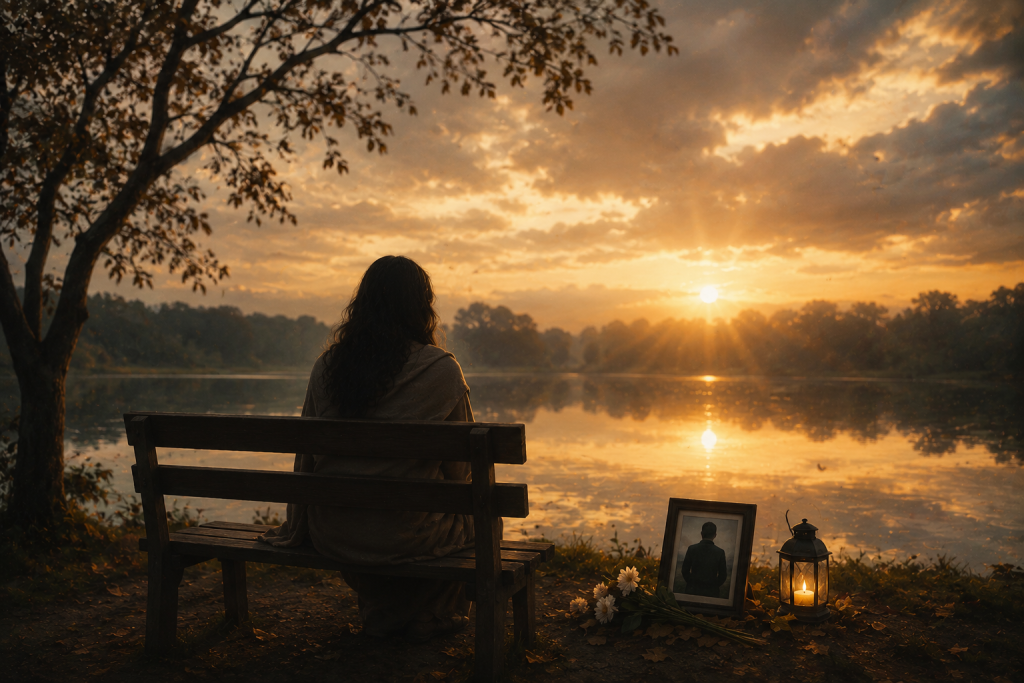
I think of my own life this way now, more often than I used to. The years I could not manage to finish something I had started. The plans that fell apart despite every careful step I had taken to protect them. The moments I said the wrong thing to someone I loved and could not take it back cleanly. For a long time I treated each of these as evidence against myself, proof that I had failed to be careful enough, disciplined enough, whole enough. I am slowly learning to read them differently. Not as failures I need to explain away, but as the actual texture of a life that was lived rather than merely managed.

This matters most, I think, in what we pass on to our children. A child raised to believe that anything short of flawless has no value will learn to hide the parts of themselves that are still becoming, instead of letting anyone witness the becoming at all. A child’s early attempts at writing, at drawing, at speaking in front of a room, have always been clumsy. That clumsiness was never a flaw waiting to be corrected out of them. It was proof of a mind actually growing, and growth was never supposed to look finished.

None of this is an argument for carelessness, or for giving up on trying to do things well. There is a real difference between a mistake that carries meaning and simply not trying. The point was never to abandon effort. The point is to stop confusing effort with the total absence of error, and to stop mistaking our own unfinished edges for something shameful that needs to be corrected before we can be loved, respected, or at peace.

We are not, and were never meant to be, perfect. We forgot, somewhere in our long rush to smooth every rough edge, that the roughness was often the only part of us that was truly ours. Maybe the task now is not to keep correcting ourselves into some flawless version we were never going to reach anyway, but to let our own unevenness stand, unhidden, and to finally stop apologising for it. To embrace imperfection, not as defeat, but as proof that a person actually lived here.

Preeth Padmanabhan Nambiar

In short: This is a personal reckoning with perfectionism, the compulsive need to make every piece of writing, every room, every effort flawless, and the toll that took over the years. A short film about an AI-designed garden, made imperfect again by a human hand and appreciated most for that very imperfection, becomes the moment that reveals something deeper: chasing perfection was never really the point, and our unevenness, the mistake, the crooked branch, the imperfect edge, is often the most honest and human part of us. Drawing on the Japanese idea of wabi-sabi, the piece makes the case for accepting imperfection in our own lives rather than treating it as something to constantly correct.

The New Value of Imperfection Read More »

Yash portrays Ravana in Nitesh Tiwari's Ramayana film trailer

Ramayana Trailer: Is Ravana the Real Hero?

A few days ago, the trailer of Ramayana was released. Like millions of others, I watched it with fascination. Magnificent visuals, familiar characters, and a story that has shaped the moral imagination of this land for centuries. Yet, what caught my attention was something else. Ravana was portrayed by Yash, one of Karnataka’s most celebrated actors, a man who has carried Kannada cinema onto a national and now global stage. Watching him command the screen as the demon king, I found myself thinking less about the special effects and more about a question that has followed me for years, one I do not raise as a historian, because I am not one, but as someone who has travelled this country enough to notice things that do not sit easily together.

In India, there is a pattern I have watched repeat itself across regions and centuries. A mighty personality, a king who conquers, a reformer who challenges an old order, a ruler remembered for his justice or his cruelty, eventually stops being remembered as a man at all. Over generations, he becomes something closer to god, folded into the language of incarnation, until asking whether he was once simply a powerful human being starts to sound almost disrespectful. I have wondered, more than once, whether Lord Ram belongs to this pattern. I do not ask this to diminish him. I ask it because I want to understand him. Was he a king whose reign was so significant, whose sense of duty so total, that the memory of him slowly rose beyond the reach of ordinary history and into the register of the divine?

If you allow yourself to read the epic that way, even briefly, other parts of the story begin to look different too. Rama, after a dispute within his own household, leaves his kingdom and travels south, into unfamiliar territory. There he encounters a people the text calls Rakshasas, described in many retellings as dark skinned, as meat eating, as fundamentally other. I have found myself asking, quietly, whether these Rakshasas were not demons in any literal sense at all, but a description, filtered through many centuries of retelling, of the Dravidian peoples native to the southern part of this subcontinent. And Ravana himself is not drawn, even in the original text, as a simple villain. He is described as deeply learned, a Brahmin by birth, a scholar of the Vedas, a ruler whose kingdom by several accounts was prosperous and orderly. Some regional and folk traditions, particularly across the south, have long portrayed him with genuine sympathy, even reverence.

That reverence is not just a matter of old folk memory either. It is still practiced today, in temples that stand as living evidence of it. Close to my home in Kerala, there is a place called Ravaneshwaram, in Kanhangad, in the north of the state, where a temple stands that is believed to have been established by Ravana himself. Local legend holds that he stopped there on his way back to Lanka, installed a Shiva Linga, and spent time in deep penance. There is even a cave nearby where he is believed to have meditated, and a pond he is said to have bathed in daily. This is not an isolated curiosity either. Ravana is worshipped in a temple in Kakinada, Andhra Pradesh, the only place in that state where he receives such reverence. In Vidisha, Madhya Pradesh, there is an entire village called Ravangram built around his memory, tied to the belief that his wife Mandodari came from that region. In Mandsaur and in Mandore near Jodhpur, he is remembered as a son in law rather than a demon, since both places claim ties to Mandodari’s family, and in Kanpur, thousands gather every Dussehra at the Dashanan temple to honour him even as effigies of him burn elsewhere in the same country on the same night. A man remembered by most of India as pure evil is, in these places, remembered as a scholar, a devotee of Shiva, and a king worth invoking rather than burning.

Read a certain way, the epic starts to resemble something other than a story of good defeating evil. It starts to resemble the story of a northern power moving into southern land already governed by a sophisticated, settled civilisation, and a victory that later generations were taught to understand only as the triumph of dharma over darkness.

I want to be honest about where this idea comes from, because it did not begin with me. This reading has a real history in Indian political thought, most visibly in the Dravidian movement of the twentieth century, where thinkers like Periyar E. V. Ramasamy argued openly that Ravana was a wronged southern king and that the Ramayana, as popularly told, was a story written by the victors. That argument shaped decades of politics in Tamil Nadu and continues to surface, in one form or another, whenever the north south question resurfaces in this country.

And that question does resurface, often in small, ordinary moments rather than grand political ones. Travelling across India, speaking with people from different regions, I have often felt as though I were moving between two countries that happen to share a passport. The food is different, the languages are unrelated to one another in ways that Hindi and Bengali, say, are not, the rhythms of daily life feel differently paced, and yes, even something as simple as the average complexion of the people around me shifts as I move from north to south. None of this is imagined. It is felt, repeatedly, by anyone who travels this country with open eyes. Whether that felt difference has anything to do with an ancient migration of Sanskrit speaking peoples into a subcontinent already inhabited by others is a much harder question, and one that historians, linguists, and geneticists continue to argue about without full agreement even today. The idea of a full scale Aryan invasion, in the dramatic sense the term once suggested, has been substantially revised by scholars in recent decades toward a slower, more layered picture of migration and mixing rather than conquest. I raise this not to settle the question, because I cannot, but to be honest that it remains genuinely unsettled, and that for the vast majority of Indians, north and south alike, Rama is not primarily a historical puzzle at all. He is a living figure of devotion, and Diwali itself, the festival timed deliberately to this film’s release, exists because of what his return home has meant to people for a very long time.

I do not write any of this to unsettle anyone’s faith, and I suspect it will unsettle some regardless, which is a risk I accept in asking the question honestly rather than not asking it at all. What I find genuinely moving is that a film built with such scale and reverence, casting a son of Karnataka as the story’s most towering antagonist, has landed at exactly the moment when this old, unresolved argument about who this land’s true heroes and villains were is quietly alive again, in comment sections and family dinner conversations and, now, in a trailer millions of people have already watched more than once. Yash plays Ravana with a magnetism that, by every account so far, threatens to outshine the hero of the story itself. Perhaps that is simply excellent casting. Perhaps it is also, without either the actor or the makers quite intending it, the story finding its way back to an audience that has never fully stopped asking whether the man in the golden crown was really the villain, or simply the king who lost.

I do not have an answer to give you at the end of this, and I am not sure one exists that would satisfy everyone who has ever asked the question. What I have is what I started with. A trailer, a familiar story told at extraordinary scale, and a country that is still, after all these centuries, trying to decide what to make of the distance between its north and its south, and between the histories each side of that distance chooses to remember.

Ramayana Trailer: Is Ravana the Real Hero? Read More »

The Rope We Do Not See

“Take a picture of this with your inner eyes,” I told my daughters, standing at the edge of the open ground where the nomads had pitched their tents for the past few weeks, a handful of canvas shelters leaning against the wind, smoke rising thin and grey from a fire someone had lit for the morning tea. “Frame it and keep it somewhere inside your mind, and whenever you feel like postponing your studies or wasting your time, look at it again.” They looked at the donkey I was pointing to, then at me, and burst into laughter, the easy laughter of children who assume their father has said something funny rather than something he means.

The women of the camp were already at their morning’s work, gathering dry twigs for the fire, cooking over it in blackened pots, tending to children who ran between the tents with the particular fearlessness of a childhood spent outdoors, and milking the donkeys that stood tethered along the length of the clearing. The milk goes quickly in the localities nearby, carried away each morning by buyers who have convinced themselves, on the strength of rumour more than evidence, that it holds something close to a miracle inside it, a promise of skin that will not age and a body that will not fail. I have never had the heart to ask whether the belief is true. It hardly matters to the donkeys, tied as they are to their small allotted patch of earth regardless of what their milk is imagined to cure.

It was one particular donkey that held my eyes longer than the rest that morning, one of its legs bound by a rope to a wooden stump driven into the ground, so that its whole world had shrunk to the exact radius that length of rope permitted, no further, no matter how far the good grass might have grown just beyond its reach. Every so often it lowered its head and searched, with a patience that had long ago stopped looking like suffering and started looking like habit, for another blade within the circle it was allowed. It did not strain against the rope. It did not seem, any longer, to notice that the rope was there at all, and that, more than anything else that morning, was what I could not stop looking at.

I turned back to my daughters, who were still laughing, still waiting for the joke they assumed was coming. “Do you know why I asked you to remember this?” I asked them, and before they could answer I told them myself, because some lessons are better given than discovered. “It is not because this is a donkey. It is because freedom is life’s greatest blessing, and it is also the easiest thing to lose without ever noticing the losing.” I watched their faces settle slowly into something more serious than the morning had asked of them yet. “If you do not study, if you do not work hard, if you do not build your own identity, one day someone else will decide the boundaries of your life for you, where you work, how you live, what choices remain open to you and which have quietly closed. The rope may not be visible. It will still be there, and you will still learn its length the same way that donkey has, by reaching for something and finding, again and again, exactly how far you are permitted to go.”

I think often, watching my own daughters grow, of how many ropes we accept in a lifetime without ever calling them by that name, a job taken not from ambition but from fear of the gap in the resume, a marriage entered not from love but from the exhaustion of resisting what a family has already decided, a silence kept in rooms where speaking might have cost something. None of these arrive wearing the shape of a rope. They arrive dressed as practicality, as duty, as the reasonable thing a reasonable person does, and by the time a person notices the radius of their own life, the noticing itself has often become too costly to act on. The donkey does not strain because straining has taught it, over years, that the rope always wins. I wonder sometimes how many of us have simply had the same lesson taught to us more gently, and for that reason, learned it even more completely.

“The purpose of education is not merely to earn a degree,” I told them, and I meant it as the truest thing I could offer them that morning, more than any warning about marks or careers. “It is to ensure that you remain free, that the boundaries of your life are drawn by your own hand and not measured out by someone else’s convenience. Work hard while you have the opportunity in front of you, because the opportunity itself does not wait, and build a life in which your decisions, even the difficult ones, even the ones that cost you something, remain entirely your own to make.”

My daughters had stopped laughing by then, and something in their silence told me the picture had been taken, whether they knew it yet or not, filed away somewhere behind their eyes to be returned to on some later morning when the studying felt harder than the sleeping in. From a distance came the horn of the school bus, ordinary and insistent, pulling the morning back into its usual shape, and I kissed them goodbye as they climbed aboard, watching them find their seats and press their faces to the window to wave until the bus rounded the bend and the trees took it from view.

Preeth Padmanabhan Nambiar

Summary: A father watches a tethered donkey outside a nomadic camp and uses the image to teach his daughters about the invisible ropes that limit a life without financial independence, education, or self built identity. The article explores how freedom, though rarely named directly, is shaped early through discipline, hard work, and the courage to make one’s own decisions, drawing a parallel between the donkey’s rope and the quiet constraints many adults accept without ever recognising them as such.

The Rope We Do Not See Read More »

The Houses We Build For Others

As I was returning home after all the tests, the sound of the instruments in the hospital was still echoing in my ears, faint but persistent, the way a struck bell keeps ringing long after the hand has left it. A strange sense of silence had begun conquering me, settling somewhere beneath the noise of the traffic and the ordinary business of the evening. This was not the first time, it was the second, and the doctor’s words had followed me out of that room and into the car and now into this quiet, the plain clinical sentence that my heart had begun to fail, that years of unwatched hypertension had gone on to leave something structural, something changed in the architecture of the thing that had kept me alive without complaint for so long.

I was not afraid of dying. I want to say that plainly, because it surprised me too, how calm that thought sat inside me, almost as though some part of me had already made its peace with the idea long before the tests confirmed anything. What frightened me, in the silence of that drive home and in the weeks that followed, was a much smaller and much larger question at once. What happens to my three little girls if I am not here to stand between them and the world. Their mother will be there for them, I have no doubt of that. But a father is a father, and what he gives a daughter cannot be replaced by anyone else, however capable they are.

Life, until then, had been a long negotiation with struggle. I had built things, dismantled things, moved cities, started again more times than I could count without a certain tiredness entering the counting itself. And through all of it, one thing had remained undone. I had never managed to build a home, a shelter on the earth that my daughters could call theirs regardless of where I was or was not.

So I began, with far less money saved than the work would ever need, carried mostly by the kind of urgency that makes a man pour a foundation before he has finished the arithmetic. Kerala, close to where I had grown up, seemed the obvious place, and for a while the walls of that house rose the way walls do, slowly, stone by stone, each one a kind of promise. Then, one by one, difficulties arrived that I will not recount here in detail, only to say that they were persistent enough, and strange enough in their timing, that I eventually stopped. I left that foundation standing half formed in the earth like a sentence I had begun and could not finish. When I moved from Kerala to Mysore to begin again from nothing, I asked my mother to have even that foundation removed. I did not want a half built thing marking the place where an idea of home had failed. I wanted, if I was starting from zero, to start from an honest zero. With what my uncle gave me, I started my journey holding tight my little girls with some strange faith in the universe.

But the question that had sent me looking in the first place had not gone anywhere. My daughters still needed a home, wherever life eventually settled me, and so on my next visit to Kerala I began again, this time looking to buy rather than build, since building had already cost me more than money once. A house with land attached, I thought, would save both time and heartbreak. What I found instead was an education in something I had not expected to learn.

The first house belonged to a woman now living in Mangalore. Her father had built it for her, brick by careful brick, with the patience of a man who wanted his daughter’s whole future held safe inside walls he had raised himself, imagining perhaps her children playing in its rooms one day. He had died of a sudden cardiac arrest, and his daughter, settled elsewhere, wanted now only to be rid of the place. The house stood there, complete and empty, waiting for a buyer to give it a use its own family no longer wanted.

The second house belonged to a man who had worked at a college nearby. He had spent his entire life’s savings building it, and only a few years after its completion, he too had passed away. His family had returned to the southern part of Kerala, and now, years later, they were trying, without much urgency or hope, to sell a house none of them had any wish to return to.

The third house carried a story heavier than the first two combined. A man from a little further away had bought the land the moment his marriage was fixed, and by the time the wedding took place, the house stood ready with every comfort he could give his bride. Those were, by every account, happy days, the kind that make a whole village quietly envious of a young couple’s fortune. He had gone to work in the Gulf, taken his wife with him, and then, for the ordinary bureaucratic reason of a visa process, sent her home ahead of him. Within a week of her return, she had left with another man. He remarried eventually, but the house he had built with such hope stood closed, and he now lived far away, in the place of his work, a man visibly diminished by a betrayal he had never fully set down.

Three houses. Three men who had built, or bought, or dreamed toward the same purpose I was reaching for, and three houses that had ended up empty, unwanted, or shut against the very lives they were meant to hold. I remember sitting with that for days, feeling something close to despair. If this was where the effort led, again and again, then what exactly was I building toward. Whom was I building the house for, if a house could stand perfect and still be abandoned by the very love it was built from. I let the dream go quiet inside me. I stopped looking.

It was one of my relatives who would not let the matter rest. He called one day, almost apologetically, to say there was another place I should see before I gave up entirely. I went, mostly so as not to disappoint him, without any real expectation.

The road there left the main highway and its familiar dryness behind, and turned instead onto a narrower path that seemed to lead into a different climate altogether. The land opened into a valley, cool and green in a way that felt almost private, arecanut and coconut groves stretching in every direction, a slender tributary moving quietly through it, and a lake holding the sky’s colour without complaint. There was almost no one there. Only three old houses stood in that entire stretch of green, and something about their stillness made me ask.

The agent told me their story as though it were an old, familiar sadness he had grown used to repeating. A father had built all three houses, one for each of his three daughters, imagining them settled and returning, imagining grandchildren perhaps, imagining a valley full of the sound of a family he had raised with everything he had. All three daughters had married and moved away, each into a life of her own, none of them ever wishing to return to this valley, however beautiful it was. The father and mother had eventually passed away, and the houses had simply stood there since, going slowly to ruin, waiting for daughters who were not coming back, offered now for sale at whatever price a buyer would give.

I noticed, some distance from the houses, a small concrete structure I did not recognise, and when I asked, the agent said, simply, that it was the tomb of the father and the mother, and I do not think I can describe fully what moved through me in that moment, a man who had built three houses with his own hands, each one an act of pure, exhausting love, arriving in the end at the one structure that still belonged entirely to him, the one built to hold his own remains, and I found myself asking where they were now, those daughters, and where those dreams had gone to wait.

I think of that valley often. The grief in it is real, a father’s years of labour standing empty under the sun, and yet somewhere underneath that grief a kind of clarity has settled into me as well. A house, however carefully built, however lovingly furnished, cannot by itself carry forward what a parent hopes to give a child. Walls do not teach a person how to meet loss without breaking. Land does not teach a daughter how to recognise a good marriage from a hollow one, or a son how to survive betrayal without disappearing into a life half lived. What I have to give my daughters, I understand now, is a mind and a heart capable of building a life anywhere, out of anything, water finding its own way through even the most stubborn ground, and that matters far more than four walls waiting somewhere for them to arrive.

An education that opens doors rather than closes them. Values that hold steady when the ground beneath them shifts. A way of seeing the world that lets them recognise, early enough to matter, the difference between what looks like love and what actually is. If I can give them that, then it will not matter whether the roof over their heads was built by my hands or found by their own, because they will already carry, inside themselves, the only home that no one can ever leave empty.

My home is still a dream, and I would not mind if it remains one, for I have made up my mind to leave this place leaving nothing behind. All I would need would be a place where I am burned to ash, and even that space, after the ritual is done, would no longer be mine. Why build walls when the world itself has none. There is a road that begins at every threshold and does not announce where it ends, and I have come to think that the only inheritance worth leaving my daughters is the courage to walk it without asking.

The poet says –

The Road goes ever on and on
Down from the door where it began.
Now far ahead the Road has gone,
And I must follow, if I can,
Pursuing it with eager feet,
Until it joins some larger way
Where many paths and errands meet.
And whither then? I cannot say.

Preeth Padmanabhan Nambiar

The Houses We Build For Others Read More »

corporal punishment in schools India

Is Being Sensitive a Crime?

A few weeks ago, my five year old daughter came home from school looking unusually quiet. When I asked what had happened, she hesitated for a long time before she finally told me that her teacher had hit her. It was not the first time, she said, and she was not the only child it had happened to. I filed a complaint with the head of school who has been a good friend of mine too, and I was told the teacher had been warned. A week later, the principal called to tell me something else entirely. My daughter, she said, was very sensitive, and perhaps we as parents should work on training her to be less so.

I am an educationist myself, and a writer who has spent years working on questions of teaching and child development, and I have spent most of my working life believing that gentleness is not a weakness to be corrected in a child but a strength to be protected. So I sat with that conversation for a long time afterward, turning it over. A complaint about a teacher hitting children had somehow become a conversation about my daughter’s temperament. Nobody had told me what action had actually been taken against the teacher. Nobody had asked how my daughter was doing. What I was offered instead was a suggestion that the problem lay in how easily she felt pain, not in the fact that pain had been inflicted on her in the first place.

I have thought hard about whether I am reading too much into a single remark. But taken together with what my daughter told me weeks later, in an unrelated conversation, about believing that being hit would make her stronger, it started to look less like a stray comment and more like a quietly held belief. Somewhere in that school, and in a great many schools across this country, there is a conviction that physical pain builds character, that a child who cries after being struck is failing some test of toughness that a harder child would pass. It is an old belief, and it survives because it is rarely said aloud in those words. It hides instead behind gentler language. Discipline. Training. Correction. Being made stronger.

I want to be careful here, because sensitivity has become something of a loaded word. It gets used almost as an accusation now, as though a child who notices when something is wrong and says so is somehow deficient compared to one who has learned not to. But a child who registers pain and names it is not broken. She is paying attention. She trusts her own perception enough to report it, even when the person she is reporting it to has power over her. That is not fragility. If anything, it is a kind of honesty that a great many adults lose along the way, precisely because somewhere in their own childhood, somebody taught them that noticing pain and naming it was the wrong response. What actually gets built through repeated physical punishment is not resilience but a rehearsed silence. Children learn to stop reporting, not to stop hurting.

This is not a private grievance from one family in one school. Karnataka has spent this year confronting one account after another of what happens inside classrooms that operate outside real oversight. In July, a twelve year old boy named Guru Kiran collapsed and died during morning drills at a residential school on the outskirts of Bengaluru, and his family has alleged that the school’s physical training teacher assaulted him just before he went down, part of a pattern the boy’s classmates say was routine rather than exceptional. Around the same time, a daycare centre in the city came under investigation after videos surfaced showing toddlers confined in bathrooms and subjected to treatment that shocked even people who thought they had grown numb to this kind of news. These are not isolated cruelties by isolated adults. They are what happens when a culture of corporal punishment goes unexamined long enough that it becomes procedure rather than aberration.

None of this is new, and that may be the most damning part of it. Corporal punishment in schools has been prohibited under Indian law for more than a decade, under both the Right to Education Act and the Juvenile Justice Act, and yet case after case surfaces from every part of the country, in city schools and village ones, in elite institutions charging substantial fees and in modest government schools alike. What connects them is not geography or income. It is a shared, half spoken assumption that a certain amount of violence against children is not really violence at all, provided it comes wrapped in the language of discipline and provided the child survives it without visible injury. A bruise gets investigated. A child’s fear does not.

What troubles me most is how this assumption survives even after it is named. A parent complains, and a warning is issued, and that is treated as resolution. Nobody circles back to ask whether the behaviour has actually stopped, whether other children are safe, whether the teacher understands what was done wrong or merely resents having been reported. And when a parent persists, as I did, the conversation can quietly shift away from the adult who caused harm and toward the child who felt it, as though the correct outcome of abuse is a more tolerant child rather than a more accountable adult.

I do not think most people working in schools set out to hurt children. I think a great many of them inherited these methods from their own upbringing and have simply never been asked to examine them. But inheritance is not justification, and a profession built around the care of children carries a responsibility to interrogate its own habits rather than pass them along unchanged. A teacher’s authority in a classroom should rest on trust, not on the threat of pain. A principal’s job, when a parent raises a serious complaint, is to protect the child who was harmed, not to manage the parent who noticed.

My daughter is sensitive. I hope she stays that way. I hope she keeps noticing when something is wrong and keeps saying so, even when the room does not want to hear it. If there is a lesson in this for the adults who run our schools, it is a simple one. A child’s fear is not a flaw to be corrected. It is information. The question worth asking is never why a child felt something so strongly, but why an adult in a position of trust gave her a reason to.

Preeth Padmanabhan Nambiar

In short: When a kindergarten teacher was reported for hitting children, the school’s response was to call the complaining parent’s daughter “too sensitive” rather than hold the teacher accountable. This piece argues that a child’s sensitivity is not a defect to be trained out of her but a form of honesty, and connects one family’s experience to a wider, unresolved pattern of corporal punishment in Indian schools, including recent cases in Bengaluru, despite the practice being legally banned for over a decade.

Is Being Sensitive a Crime? Read More »

biography of Professor Obrillant Damus

A Life in the Service of Knowledge: The Academic Formation and Scholarly Trajectory of Professor Obrillant Damus

Among the sociologists and educators who have shaped contemporary Haitian intellectual life, Professor Obrillant Damus occupies a distinctive position. His career, spanning linguistics, sociology, and education, illustrates a sustained engagement with the social conditions of Haiti as well as with the broader francophone academic world in which he was trained. This article presents a biographical and academic account of Professor Damus, tracing his educational formation, the scholarships and honors that marked his early career, his doctoral and postdoctoral research, and the institutional roles he currently holds at the State University of Haiti, the University Quisqueya, and Laval University in Québec. In doing so, it situates his individual trajectory within the wider context of Haitian higher education and its historical ties to the francophone academic networks of France and Canada.

Origins and Early Educational Formation

Obrillant Damus was born in Petit-Goâve, a coastal commune in the department of Ouest, Haiti, a region historically associated with commerce, agriculture, and a strong tradition of communal life. It was in this setting that his early formation took place before he pursued higher education at the State University of Haiti, where he enrolled in the Department of Applied Linguistics. His performance within this department distinguished him early, culminating in a certificate of excellence awarded by the Haitian Students Association in recognition of his standing as laureate of the department’s admission contest.

This early distinction proved consequential for the remainder of his academic career. The recognition secured him a four-year scholarship, sponsored by the French government and spanning the years 2001 to 2005, which allowed him to pursue advanced study without the financial constraints that limit the trajectories of many Haitian students. The scholarship functioned as more than a financial mechanism; it inaugurated Damus’s long-standing relationship with French academic institutions, a relationship that would define much of his subsequent scholarly formation.

Graduate Studies Across the Caribbean and Metropolitan France

In 2006, Damus received a further grant from the French government, this time to pursue graduate study at the University of the West Indies and Guiana (Université des Antilles et de la Guyane, UAG). This stage of his education situates him within a network of Caribbean scholarship that bridges Haiti with the francophone Antilles, a region whose universities have long served as intermediaries between Haitian intellectual life and the institutions of metropolitan France.

During his time at UAG, Damus received the support of Pascal Saffache, then Dean of the College of Humanities and Social Sciences, whose backing was instrumental in Damus’s subsequent scholarship from the French Embassy in Haiti. This scholarship enabled him to complete a second master’s degree, referred to in the academic nomenclature as the M2, at the University of Paris 8, an institution recognized for its tradition of critical sociology and its historical association with post-1968 French intellectual movements.

His master’s thesis, submitted within the Master’s program in Sciences of Education and Training, specializing in Education Throughout Life, addressed questions situated at the intersection of medical ethnology and anthropology. The thesis was upheld with an honors mention, achieving a grade of 18 out of 20, a result that in the French academic grading system signifies work of exceptional distinction. The thesis was further recognized by Cancéropôle Île-de-France, an organization dedicated to cancer research within the Île-de-France region, which acknowledged both the quality of Damus’s analysis and its potential relevance to the scientific study of illness and care.

International Recognition and the Francophonie

The year 2008 marked a significant moment of public recognition in Damus’s career. During the commemoration of the International Day of the Francophonie in March of that year, the International Organization of the Francophonie (Organisation Internationale de la Francophonie, OIF) awarded him a literary prize. The ceremony was notable for the presence of Abdou Diouf, then Secretary General of the Organization, as well as the attendance of French President Nicolas Sarkozy. This recognition situates Damus not merely as an academic researcher but as a participant in the broader cultural and literary life of the francophone world, an identity that complements his sociological and linguistic scholarship.

Doctoral Research: Solidarity and Cancer in Haiti

Between 2008 and 2011, Damus undertook doctoral research in sociology, a period that represents the methodological and theoretical culmination of his earlier training in linguistics, medical anthropology, and education. His doctoral thesis, titled Solidarity and Cancer in Haiti, was defended at the University of Paris 8 on December 7, 2011, and was upheld with the mention Très Honorable, the highest distinction awarded within the French doctoral system.

The subject of the thesis, examining the social structures of solidarity that emerge around the experience of cancer within Haitian communities, reflects a broader concern that runs throughout Damus’s scholarship: the manner in which illness, vulnerability, and care are mediated by social and cultural frameworks rather than being reducible to purely biomedical categories. This orientation toward the sociology of illness, informed by his earlier work in medical ethnology, positions his doctoral research as a bridge between the fields of medical anthropology and sociology proper, and reflects an effort to understand Haitian social life through the lens of shared vulnerability and collective response to suffering.

Postdoctoral Study under Michel Maffesoli

Following the completion of his doctorate, Damus undertook postdoctoral study at the Centre d’Étude sur l’Actuel et le Quotidien (CEAQ), housed at Paris 5 Sorbonne, under the coordination of Michel Maffesoli, a sociologist whose work on the sociology of everyday life, postmodernity, and the sociology of the imaginary has exerted considerable influence on French sociology since the late twentieth century. Maffesoli’s theoretical concerns, particularly his attention to the affective and communal dimensions of social life, resonate with the themes present in Damus’s own research on solidarity, ritual, and vulnerability. This postdoctoral period consolidated Damus’s position within the intellectual lineage of French sociology while allowing him to further refine his analysis of Haitian social phenomena through frameworks developed in dialogue with Maffesoli’s school of thought.

Academic Positions and Institutional Affiliations

Damus holds professorial appointments at two of Haiti’s principal institutions of higher education. At the State University of Haiti, he serves as professor of anthropology and is assigned to the Institute of African Studies and Research of Haiti. He taught and supervised research for many years in the master’s program in history, memory, and heritage. He co-led the doctoral seminar “Epistemology of the Social Sciences” at the postgraduate studies office of the State University of Haiti. He was a member of the research laboratory LADIREP, whose full designation, Langage, Discours, Représentations, indicates a sustained institutional focus on the relationship between language, discourse, and social representation, a focus consistent with Damus’s own training in applied linguistics and his later sociological work.

At the University Quisqueya, a private institution recognized for its contributions to Haitian higher education, Damus served as coordinator of the doctoral program in education, a role that places him at the center of doctoral training and curriculum development within the field. He also served as director of the university’s educational research center. 

Beyond Haiti, he holds the position of associate professor at the University of Sherbrooke (School of Law, Center for Contemporary Religious Studies) in Québec, Canada, an appointment that reflects the continuation of his engagement with francophone academic networks beyond both Haiti and France, extending his scholarly reach into the North American francophone context. He is a member of the supervisory committee for doctoral students at the Center for Contemporary Religious Studies at the University of Sherbrooke. He is the national representative of the UNESCO Chair in Education and Health. He is a member of the Athens Institute for Education and Research. He is an associate member of the UNESCO Janus Korczak Chair in Social Pedagogy (Maria Grzegorzewska University). He is a member of the Laboratory of Linguistics, Language Engineering, and Language Teaching at the University of Rennes 2. He is a member of the Scientific Advisory Board of the Observatory of the French Language of the International Organization of La Francophonie (OIF Representation for the Americas, representative for the Caribbean).

Taken together, these appointments describe a career that operates simultaneously within multiple institutional and national frameworks: the public university system of Haiti, the private university sector represented by Quisqueya, and the international francophone academic community represented by University of Sherbrooke. This multiplicity of institutional roles is consistent with the broader pattern of his formation, which from its earliest stages was shaped by movement between Haitian, Caribbean, French, and eventually Canadian academic contexts.

Research Program and Intellectual Contributions

The range of Damus’s research interests reflects the interdisciplinary character of his formation. His documented areas of research include the rituals surrounding birth, the sociology of solidarity, disability, nursing rituals, the social and cultural dimensions of rape, local and indigenous knowledge systems, ontological vulnerability, prostate cancer, culturally specific diseases, the relationship between Creole and French within Haitian linguistic life, education oriented toward love and peace, and the social practice of breastfeeding.

He also works on exciting and innovative topics such as regenerative and restorative pedagogy, education for regenerative and restorative global citizenship, and education for global consciousness. Published by UNESCO and The University of Sherbrooke Press, his work on these topics has led him to develop the concept of regenerative and restorative Francophonie, which is featured in the International Organization of La Francophonie’s new quadrennial report on the French language around the world.

Professor Obrillant Damus has a growing body of international experience. In fact, he has served as a lecturer and visiting professor at several foreign universities (Laval University, University of British Columbia, Rennes 2 University, Maria Grzegorzewska University, Federal University of Rondônia,etc.). He has won several academic writing competitions organized by UNESCO. In particular, he has collaborated on multiple occasions with UNESCO’s “The Futures of Education” team in the education sector, as well as with the natural sciences sector (LINKS, Local and Indigenous Knowledge Systems).

He edits the journal “Anthropologie des Savoirs des Suds” published by Éditions de l’Université de Sherbrooke, as well as the “La Documentation haïtienne” series published by Éditions l’Harmattan (Paris). 

The academic trajectory of Professor Obrillant Damus illustrates the interconnections between Haitian, Caribbean, French, and Canadian institutions of higher learning, and demonstrates how individual scholarly formation can be shaped by, and in turn contribute to, these transnational academic networks. From his early distinction in applied linguistics at the State University of Haiti, through his graduate studies in the French Antilles and Paris, to his doctoral research on solidarity and cancer and his subsequent postdoctoral work under Michel Maffesoli, Damus’s career reflects a sustained inquiry into the social dimensions of vulnerability, care, and language within Haitian society. His current appointments at the State University of Haiti, the University Quisqueya, and Laval University position him as a figure whose influence extends across national boundaries while remaining rooted in the study of Haitian social life. His scholarship, taken as a whole, constitutes a significant contribution to the sociology of illness, the sociology of solidarity, and the study of language and education within the francophone Caribbean world.

A Life in the Service of Knowledge: The Academic Formation and Scholarly Trajectory of Professor Obrillant Damus Read More »

story of Wang Jibing

Wang Jibing: The “Delivery Poet” Who Earns China’s Highest Literary Prize

There is a particular kind of light that falls on a man waiting at a red signal, engine idling, food growing cold in the box behind him, and somewhere in that light a line of verse arrives uninvited. This is how Wang Jibing has written most of his poems. Not at a desk. Not in the hush of a study lined with books. But between orders, between elevators, between the small immovable delays that make up the working day of a delivery rider in Jiangsu province.

Wang was born in 1969 into a poor household in a village in Pizhou. He left school after junior high, and the years that followed him were the years that follow so many in that part of the world who are given labour instead of leisure. He dredged sand from riverbeds. He worked construction. He collected waste. He carried, in whatever sense a body can carry, the weight of a life that had no obvious place in it for poetry. And yet in the evenings, after the sand had been dredged and the day accounted for, he would find some scrap of a table, in some shed barely large enough for it, and there he continued to write. Not because anyone was waiting to read him. Because something in him needed to set the day down in words before it disappeared.

In 2019, at fifty, Wang became a food delivery rider. It was, on the surface, simply another manual trade, one more uniform to wear in a life that had already worn several. But something in that particular work, the waiting, the traffic lights, the elevators that rise and fall without hurry while a rider stands inside them thinking of nothing and everything, gave his writing a new register. He began to compose poems in these intervals, on his phone, between the ordinary tasks of delivering someone else’s dinner. In 2022, one of these poems, “People in a Hurry,” was shared by a fellow admirer of poetry and found its way to millions of readers. A man on a scooter had, without meaning to, become a voice for a generation of workers who move through cities unseen.

This month, that voice reached the country’s highest literary threshold. Wang Jibing’s poetry collection, translated as Low Flight, has been named among the winners of the ninth Lu Xun Literature Prize, one of the most prestigious honours in Chinese letters, awarded once every four years by the China Writers Association. The prize carries the name of Lu Xun, a writer remembered for looking without flinching at the century he lived through. It has, for decades, been understood as an arena for professional writers, for those whose lives were arranged around literature rather than around survival. This year, that arrangement loosened. Alongside Wang, a market vendor who has tended a general goods stall for eighteen years was nominated for a collection of essays. A shift, quiet but unmistakable, has entered the way a nation decides whose life is permitted to become literature.

What makes Low Flight more than a curiosity, more than the story of an unlikely man in an unlikely place, is the labour behind it. To complete the collection, Wang did not simply mine his own days for material. He sought out some hundred and forty fellow delivery riders, paying small sums from his own pocket so that they might answer his questions, so that their days too might be set down somewhere permanent. He wanted the book to hold not one man’s exhaustion but the shared and largely invisible exhaustion of an entire trade, the small griefs and endurances of the more than ten million riders who move through Chinese cities each day carrying other people’s meals while their own lives go mostly unrecorded. “I am one of them,” he has said. “I face pressure, and I have moments when I break down.” The poems do not ask to be admired for overcoming this. They simply ask to be read as true.

Asked what winning meant to him, Wang did not reach for triumph. He said that on the day of the announcement, what he wanted most was to return to his scooter and continue his rounds, because it is only in staying grounded, in remaining close to the actual weight of the actual day, that a clear mind for writing can be found. There is something here worth sitting with quietly. He did not treat the prize as an arrival, a door through which he might now pass into some other life. He treated it as confirmation of a discipline he had already been practising in silence for years, the discipline of noticing.

He has described the honour as something closer to a signpost than a summit. Not proof that ordinary people must now become poets, but proof that any life, however plain its surface, carries within it the possibility of being expressed and understood. This is, perhaps, the quiet argument his whole body of work has been making without raising its voice. That literature does not begin where hardship ends. That it often begins exactly there, in the gap between one delivery and the next, in the pause at a red light, in the tiredness that a man carries home and somehow transforms, before sleep, into a line worth keeping.

An English edition of Low Flight is expected to reach American readers by the end of this year. Wang is already at work on a collection of essays. Whatever comes of it, something has already shifted. A door that literature kept narrow for a long time has, for one delivery rider from Jiangsu, opened. And through it, perhaps, others will begin to see that the ordinary hours of their own lives, the waiting, the weariness, the small unremarked persistence, were never as far from poetry as they seemed.


Writers Capital International Foundation www.writerscapital.org | care@writerscapital.org

Wang Jibing: The “Delivery Poet” Who Earns China’s Highest Literary Prize Read More »

BIOGRAPHY OF DR ANAMIKA NATH

The Scalpel and the Verse: The Life and Work of Dr. Anamika Nath

There is a particular kind of courage in choosing to look at the body as both wound and testimony, and then to turn from that examination table to a blank page and write of butterflies. Dr. Anamika Nath, forensic physician and poet, has spent her life moving between these two rooms, one lit by clinical necessity, the other by something closer to grace, and in Bruises and Butterflies, her most recent poetry collection, the two rooms finally open into each other.

Dr. Anamika is a faculty member in Forensic Medicine, an active medical researcher, and the author of three books, the latest of which, Bruises and Butterflies, is her most personal collection yet. Where her earlier work, including Bones and Blossoms, explored womanhood, resilience, identity, trauma, and death, this new collection sharpens that focus further, drawing directly on the two vantage points from which she has spent her life observing the human condition: the examination table and the page.

She was born in Agartala, Tripura, and grew up in a household shaped by books, close family ties, and the unhurried rhythms of ordinary life. Monsoon afternoons, family games, and her grandparents’ recollections of a country they had left behind but never fully set down are among her earliest memories. Her family and teachers, she has said, shaped her values more than anything else in those years, instilling in her honesty, kindness, perseverance, and a lasting commitment to learning, qualities that gave her the confidence to later pursue both medicine and literature at once.

Her interest in writing began early and by accident. In the third grade, after a visit to a village fair with her grandfather, she came home and wrote her first poem, titled The Park. It was a small, unremarkable start by most measures, but it marked the beginning of a lifelong habit. Among her earliest literary influences was Rudyard Kipling, particularly his poem If, whose themes of resilience, humility, and steady character stayed with her well into adulthood. Alongside literature, her work as a doctor and the lives of the people she has encountered through it have shaped her writing just as significantly.

Her path into medicine was driven initially by an interest in crime thrillers and a wish to pursue something outside the conventional track. Forensic Medicine offered a combination of scientific rigor, investigation, and the pursuit of truth that appealed to her, along with the chance to build a distinct identity within the field. In practice, the work has done more than shape a career. It has deepened her understanding of humanity, reminding her, case after case, that every file represents a human story rather than a purely medical or legal one, and reinforcing for her the importance of empathy, dignity, and honesty.

She began writing poetry seriously during the COVID-19 pandemic. Watching the scale of loss around her at the time brought a stark question to mind: what if she died before fulfilling her own ambitions. Rather than settling into despair, that thought pushed her toward consistency, and she began writing and sharing her work in earnest from that point on. Her poems draw largely from three sources: the experiences of women, the human stories she encounters through her forensic practice, and the people closest to her, whose influence runs through her treatment of love, loss, resilience, and hope.

Bruises and Butterflies brings these threads together directly. She describes the collection as growing out of the two defining facets of her life, medicine and poetry: as a forensic doctor she witnesses pain, loss, and human resilience, and as a poet she searches for hope and beauty within those same experiences. Asked to summarize the book in a single sentence, she calls it the meeting point of the science of her profession and the soul of her poetry, the best of both. Her hope for readers is a simple one: that they recognize something of themselves in the poems, and come away with the sense that even deep wounds can coexist with beauty and hope.

Balancing a full medical career with a serious writing practice has not been easy. The greatest challenge, in her own account, has been finding the time and consistency to write around the demands of clinical work. Writing, in turn, has become her way of slowing down and reconnecting with herself outside that pressure. She names the most memorable moments of her literary career not as her awards, but as messages from readers she has never met, telling her that a particular poem reached them at a difficult moment. That kind of response, she has said, means more to her than any prize.

The recognition has nonetheless been substantial. She won the Delhi Poetry Slam Contest in 2023, placed second at the Rabindranath Tagore International Poetry Award in 2024, and received both the Verse of Silence Pamphlet Prize and the Deepti Srivastava Memorial Award in 2025. She has been longlisted for the Wingword Prize three years running, from 2023 to 2025, and was a finalist at the Lucky Jefferson Contest in 2025. She currently serves as Poetry Editor at The Boundless Press, alongside a body of national and international recognition in medical science conferred by forensic academies. The cover of Bruises and Butterflies was unveiled at the Global Vision Summit 2026 in Athens, an occasion she has described as surreal and humbling, a reminder that work rooted in personal experience can still travel far beyond where it was written.

Away from medicine and writing, she finds a similar kind of steadiness in travelling to the mountains, photographing everyday life, and spending time with her children. These are the moments, she says, that let her slow down and see the world with fresh eyes.

Her advice to poets who hesitate to share their work is direct: write honestly from lived experience rather than borrowed style, since an authentic voice is what ultimately sets a writer apart, and the only way forward is to take that first step. Asked how she would like to be remembered, she does not reach for a grand answer. She hopes simply to be remembered as an ordinary person who stood for truth, with compassion in her heart, integrity in her work, and honesty in her words, a description that, read against the collection she is now publishing, feels less like an aspiration than an accurate account of the life she has already lived.

The Scalpel and the Verse: The Life and Work of Dr. Anamika Nath Read More »

Haiti And The Greek War Of Independence: Presentation By Obrillant Damus At The Athens Institute Conference

Haiti And The Greek War Of Independence: Presentation By Obrillant Damus At The Athens Institute Conference

The Athens Institute, established in 1995 as an independent, world-wide body of academics and researchers, organizes small academic meetings while also promoting research and producing publications. Over 1000 such academic events have been organized since 1995 attended by scholars from all over the world. Besides the publication of over 200 books, a series of conference papers have also been published as well as the introduction of a series of e-journals.

For Greece’s national anniversary marking the War of Independence of 1821 against over 400 years of Ottoman rule, the Athens Institute held its 3rd Special Event under the auspices of the Athenian Academic Periodical, titled “Revolutions of National Independence and the Birth of the Nation-State during the 18th and 19th Centuries” on Monday, March 30, 2026.  The topic chosen is very appropriate as it refers to the struggle for independence that reshaped the ideas of sovereignty, citizenship and identity not only on a local scale but on a global one as well through the political, social and cultural dimension that it expressed. This transition from empires to sovereign states was filled with wars and conflicts, ideologies and international interventions as well as the influence of transatlantic revolutionary ideas. It was a time when the ‘Old World’ was coming to an end and the ‘New World’ beginning.

The date of March 25th for celebrating the Greek War of Independence is deeply symbolic as it combines both religious meaning and national identity.  It was not chosen to mark the exact beginning of the war for independence as uprisings had started much earlier in various parts of the Peloponnese, but because it symbolically blends faith and freedom. March 25th is the day of the Annunciation in the Orthodox Christian calendar, the moment when the Archangel Gabriel announces to the Virgin Mary she will give birth to Jesus Christ. This symbolizes good news and hope as well as a new beginning for humanity. By linking the war of independence to this day, the uprising was portrayed as a spiritual rebirth of Greece, unifying scattered uprisings and strengthening the connection between Greek identity and Orthodox Christianity. It turns the revolution into not just a political revolt, but a moral and spiritual mission.

The lecture by Obrillant Damus (Full Professor, State University of Haiti, Haiti, Visiting Professor, Laval University & adjunct professor, University of Sherbrooke, Quebec) threw light on another aspect of the Greek War of Independence as it referred to the benefits gained from Haiti’s ‘regenerative and restorative pedagogy’, which refers to ‘a set of methods and knowledge aimed at regenerating ourselves, regenerating others, and repairing the past and the present with a view to human, ecological and planetary sustainability.’ (Damus, 2024). This knowledge is important as it helps the oppressed to overcome the traumas that they experienced under suppressive regimes such as that of the Ottoman Empire. These traumas and experiences are passed on from one generation to the next and therefore it is important for both sides, the oppressed and the oppressor, to understand this and to come to terms with it. This is the difficult part.

Greece benefited from Haiti’s regenerative and restorative pedagogy because Haiti not only sent a shipment of coffee that could be sold for the buying of arms, but also moral support by sending 100 volunteers to fight alongside the Greeks in their fight for freedom, who unfortunately lost their lives on the way to Greece. This supportive act bolstered the self-confidence, the self-esteem, and the determination of the Hellenes to put an end to centuries of Ottoman ‘cultural genocide or ethnocide, physical genocide, the destruction of the Byzantine heritage, and the destruction of religious architectural heritage.’ (Excerpt from Obrillant Damus’s lecture titled “Towards an Analysis of Haiti’s Contribution to Greek Independence in Terms of Regenerative and Restorative Pedagogy, as well as Global Citizenship Education”, Athens Institute on March 30, 2026)

Learn more: Damus, Obrillant (2024).  Regenerative and restorative pedagogy: the foundation of new contract for cognitive justice, UNESCO-Prospects. 

Sam Zylberberg, 2019 : https://jeretiens.net/le-genocide-grec-pontique-1914-1923/.

Haiti, being the first “Black” republic, set an example for others to follow as its independence in 1804 after a 12-year fight against France marked a turning point for those under colonial rule and slavery. The success of their fight led to the support of other national struggles such as the Greek War of Independence in 1821, ” universalizing human rights and citizenship” (Excerpt from Professor Obrillant Damus’s lecture at the Athens Institute on March 30, 2026)

Although Greece was still fighting for its freedom against Ottoman rule, the 1st National Assembly convened at the township of Epidaurus, where a Decree was signed in January 1822 abolishing slavery. This made Greece the first country in modern Europe to abolish slavery on its soil and globally the second only to Haiti. Such examples of moral and material support set a standard for others to follow. 

Haiti responded to the call for help sent on August 20, 1821, by the Greek intellectual Adamantios Korais, a member of the Philhellenic Committee of Paris. The rest of Europe preferred to ignore this plea as they did not want to disturb the status quo.

On January 15, 1822 (the 19th year of Haiti’s independence), Jean-Pierre Boyer, Haitian military officer and president of Haiti from 1818 to 1843, replied to Korais’ letter.  A part of his letter was directed to the Greek citizens, giving them the moral strength to continue their struggle. 

“Citizens! Convey to your co-patriots the warm wishes that the people of Haiti

send on the behalf of your liberation. The descendants of ancient Hellenes look

forward, in the reawakening of their history, to trophies worthy of Salamis. May

they prove to be like their ancestors and guided by the commands of Miltiades,

and be able, in the fields of new Marathon, to achieve the triumph of the holy

affair that they have undertaken on behalf of their rights, religion and motherland.

May it be, at last, through their wise decisions, that they will be commemorated

by history as the heirs of the endurance and virtues of their ancestors.”

Source: https://200years.mfa.gr/en/recognitions-first-period-revolution-en/haitien/#:~:text=15%20January%201822.,leader%20of%20an%20independent%20State

It can be said that Jean-Pierre Boyer was also influenced by the ancient Greek officers and statesmen such as Leonidas, Miltiades and Themistocles, who had also given their lives for the freedom and independency of their country against the Persian invasion. Such examples are interconnected as one influences the other. 

“The regenerative and restorative pedagogy implemented by the New State of Haiti helped to curb the processes of identity destruction (identicide)—whether state-sponsored, religious, or linguistic—in Greece. The moral and political support Greece received from Haiti served as fertile ground for the country’s de-Ottomanization (strengthening of Christianity, reduction of the process of cultural mixing, particularly in the areas of language, music, and cuisine). It is worth noting here the role of the Orthodox Church in preserving the Greek language and culture in the face of centuries-long Ottoman oppression.) 

Source: Excerpt from Professor Obrillant Damus’s lecture at the Athens Institute on March 30, 2026. 

In conclusion, the political, social, and cultural dimensions of struggles for independence continue to shape nations long after formerly oppressed peoples have secured their freedom and sovereignty. The former ruling power must likewise undergo a process of adjustment to the new geopolitical reality, so that tensions between the two sides may gradually evolve toward a balanced coexistence. In the absence of such adaptation, these tensions risk escalating into renewed conflict, as evidenced in various regions of the contemporary world. At the same time, newly independent states, to preserve and fully realize their freedom, must remain vigilant and committed to its defense, demonstrating resilience in the face of emerging challenges and adversities.

Despena Dalmaris

__________________________________________________________________________

About the Author

Despena Dalmaris is an educator and literary professional serving as Chief Coordinator of Australia. She has extensive experience in English language instruction across Papua New Guinea and Sydney, with expertise in individualized teaching and preparation for international examinations, including Cambridge and Michigan certifications. She is an executive member of Writers Capital Foundation and serves as Editor of Writers International Edition, contributing to the advancement of global literary initiatives.

Haiti And The Greek War Of Independence: Presentation By Obrillant Damus At The Athens Institute Conference Read More »

When Certain Encounters Redefine a Lifetime: A reflection on Silla Maria Campanini and the journey we continue to share

In life, we come across a number of people. However, certain encounters can change the entire direction of life. The meeting with Silla Maria Campanini is one such incident. It was not an encounter that announced itself with clarity or intent. It arrived quietly, almost anonymously, and revealed its meaning only with time. Looking back now, it is evident that this meeting was not accidental. It was necessary.

The Beginning: A Foundation Born in Uncertainty

The early days of Writers Capital International Foundation were marked by uncertainty, restraint, and resolve. The foundation was not built on abundance. It began with struggle, with faith, and with the last pennies available in my savings. There was vision, but there was also vulnerability. The question was not whether the work was meaningful, but whether it could survive.

It was during these fragile initial days that Silla appeared. Even now, I cannot clearly recollect how we met. There was no planned introduction, no deliberate search for collaboration. She emerged from nowhere, as though she had always been meant to be there. It did not take long to realise how important this connection was going to be. Her presence carried with it a sense of assurance, a quiet confirmation that the path ahead, though difficult, had a direction.

With Silla entering the foundation, it felt as though something aligned naturally. What was once an effort to hold things together slowly began to find form. Not through force or ambition, but through steadiness.

Building a Cultural Bridge

Soon after, our programmes began to take shape. What followed was remarkable. A large number of talented individuals, particularly from Italy, started joining the foundation. Writers and artists came forward with sincerity and commitment. This was not recruitment in the conventional sense. It was resonance. A cultural bridge began to form organically, anchored in trust and shared values.

During this period, Alfredo Pasolino, a renowned artist and critic, joined us. Elderly in years but profound in spirit, he surprised me with a depth of affection that felt unmistakably paternal. His love was boundless, uncomplicated, and deeply human. He later became the President of the Foundation, while Silla took on the role of Vice-President. Even today, our memorial office address in Italy stands in his name. It is not merely an address. It is a reminder that the foundation was shaped as much by relationships as by ideals.

Alongside him, Pasquale Solano played a crucial role through his active presence and commitment. These individuals did not contribute from a distance. They stood within the foundation, strengthening it through participation and belief.

Silla the Artist: Depth Beyond Form

Silla Maria Campanini’s artistic journey stands independently as a significant contribution to contemporary art. Born in 1954 in a village in the province of Bologna, her early life was shaped by earth, landscape, and colour. Her journey from technical consultancy to teaching, and later to becoming a distinguished image educator, reflects an evolution rooted in discipline and intuition.

Her recognition in 2016 as a member artist of the art and culture department of the Belgrade Academy of Sciences and Arts acknowledged a body of work that was already mature in thought and expression. Her exhibitions, both personal and collective, across national and international platforms, placed her work within galleries, museums, and public spaces that continue to engage viewers deeply.

Her art does not conform to trends. It inhabits a metaphysical space where fantasy, symbolism, and the collective unconscious intersect. Her paintings move beyond time and geography, engaging with dramatized inner forms and unspoken emotional structures. As Alfredo Pasolino once observed, her works resonate with the stormy peaks of an undulating soul. They do not explain themselves. They invite presence.

Loss, Silence, and an Unseen Bond

Beyond her public journey lies a deeply personal grief. There is no greater pain for a parent than witnessing the passing of a child while they themselves remain. Silla endured such a loss when her daughter Serena passed away at a very young age. This loss left a quiet, enduring pain within her, one that never sought attention, yet was always present.

Though I never met Serena, though she would perhaps have been of my own age had she lived, I developed for her a love similar to that of my own sister. For us, she was and remains an angel. We believe she is still there, unseen yet present, blessing us. One of the most important recognitions instituted by the foundation, the Child Prodigy Award, bears her name. It stands not as a memorial of sorrow, but as a continuation of life and promise.

A Bond Beyond Definition

Our connection was never linear. There were ups and downs, moments of closeness and periods of silence. Though I often referred to Silla as a sister, her presence was deeply motherly. And like a mother, she corrected me when necessary. There were times when silence lasted for months. Yet, like a mother and son finding their way back after a disagreement, we always returned to each other. Without negotiation. Without explanation.

There are certain things that language cannot contain. Certain connections operate beyond logic. During difficult phases of my life, she would appear suddenly, as though she knew. At other times, I sensed the same pull towards her. In this life of forty-six years, I can say this without hesitation: there has been no other connection like this. And it continues still.

A Presence That Endures

Silla Maria Campanini continues to inspire the world of art through her work, her teaching, and her quiet integrity. For me, her role has been far more intimate. She has been direction during uncertainty, correction without harshness, silence without distance, and presence without demand.

Some encounters pass through our lives as moments. Others become part of our inner structure. Silla belongs to the latter. This article stands not as celebration alone, but as record. A record of a bond shaped by struggle, faith, loss, and trust. One that time has not diluted, and circumstances have not undone.

On her birthday, this reflection is offered with seriousness and gratitude. For her presence in my life. For her role in the foundation. And for a connection that continues, quietly and unwaveringly, as it was always meant to.

When Certain Encounters Redefine a Lifetime: A reflection on Silla Maria Campanini and the journey we continue to share Read More »