Writers International Edition

Articles

A MILESTONE IN OUR JOURNEY

I have immense pleasure to address you all to express my sincere gratitude for accepting the magazine close to your hearts. The number of responses that we receive from every nuke and corner of the world itself proves how well our attempt is appreciated. Thank you all for supporting us! Sincere gratitude to the directors of Writers Capital International Foundation (WCIF) from across the world, whose enthusiasm has been a great motivation for our efforts.

Although Internet is the vastest resource in today’s world, there is still a scarcity of a platform where we can find all genres of literature under a single roof. When there are some websites that offer good content, they fail to present them in an attractive way; if someone successfully brings a good design, they fail to bring the best of the content; if everything happens, they lack simplicity in accessing the content. It is considering all these aspects we have conceived the idea of a complete magazine – The Litterateur. All that we offer is a venue where under the shades of the trees we can sit for a while and fill our souls with the nectar of literature to our hearts’ content, in the best digital ambience.

The evolution of the idea of Litterateur Online was not an abrupt process! It came out of a strong drive to bring something powerful and meaningful media to bring quality works into mainstream literature. Writers, fundamentally, are innocent creatures and are often tend to be carried away by false promises by people they trust. When the selfish motives of a few self-proclaimed masters and leaders in social media work, it is often the innocence of those sensitive and sensible writers being deceived. The moment when we realise this, it would be too late and we find ourselves shattered upon the understanding of the world and its deception.

It is time to wake-up to reality and to identify what is good and sustainable for the future as a writer. For the very same we need formal platforms beyond the virtual world where certificates evolved out of the imagination of graphic designers has nothing to offer but a few hours or days of excitement. All that we need to do is to seek opportunities to refine our skills in writing, to invite more experiences in life for rich content in the works and to further expand vision globally. Who on earth, would not wish his or her name famed across the world? However, I earnestly believe that the same should not be the only aim of writing. The very moment we complete a workbrings the greatest reward of it and a great work, even if you hide it in your shelf, will come out to the limelight one or the other day.

“When you aim for perfection, you discover it’s a moving target.” Thus says George Fisher andI understand we have a long way to go before we translate the concept of a complete magazine into reality. On this occasion, I am glad to inform you all that we are ready with the print edition of Litterateur Online named The Litterateur. We have a panel of editors who would select the best works from Litterateur Online, however we regret that we are unable to publish all works in the print edition due to limited pages in it. Primary responses show that the magazine will have extensive reach across the globe and I am sure this will take your name and fame beyond the political barriers.

We have one country known as earth, we have one religion known as love and we stand for those mighty values of humanity! Let us all dedicate ourselves for the noble causes of humanity that would turn earth a better place to live!

Warm Regards,

Editor-in-Chief

A MILESTONE IN OUR JOURNEY Read More »
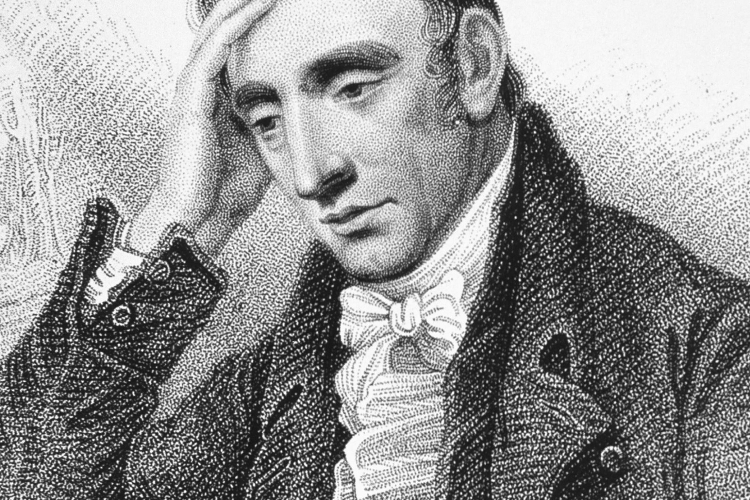
AUTHOR BIOGRAPHY: WILLIAM WORDSWORTH

William Wordsworth was born in 1770, in Cockermouth, Cumbria, to a middle-class family. He loved the beauty of the Lake District, and was close to his four siblings, particularly his sister Dorothy. But when William was seven, his mother died and the Wordsworth children were separated and lived with different relatives. William’s father then died five years later. The death of both parents at a young age had a huge impact on William, who recalled feeling lonely as a child.

While studying at Cambridge University, William spent one summer vacation travelling through the Alps, and was overwhelmed by the beauty of the mountains. He returned to France again the following year, and fell in love with a French woman, Annette Vallon. They had a daughter together, Caroline. But tensions between France and Britain meant William had to return home. He continued to support Annette and Caroline throughout his life, but his guilt at leaving them featured in many of his poems.

In 1795, William inherited some money from a friend, which helped to fund his work as a poet. He also moved to Somerset with his sister Dorothy. Dorothy was a poet, too, and wrote many diaries. She was said to have a great influence on William’s writing.

The poet Samuel Taylor Coleridge lived close by in Somerset and became great friends with William. Together they created Lyrical Ballads (1798) – featuring poems such as Coleridge’s Rime of the Ancient Mariner and Wordsworth’s Tintern Abbey. Many consider this to be the start of the Romantic era in English literature.
In autumn 1798, William, Dorothy and Coleridge travelled to Germany. William was homesick and began working on a poem about his life. The Prelude is now regarded as his greatest work – an epic poem (written in 14 books), created over several years. It deals with the experiences that shaped William’s life, and rather fittingly was only published after his death.

In 1799, William and Dorothy moved back to the Lake District, and Coleridge relocated nearby. Some of William’s best work was written in the decade that followed, including one of his most popular poems I Wandered Lonely as a Cloud (commonly called Daffodils).

In 1802, William and Dorothy returned to France. William wanted to tell Annette about his forthcoming marriage to a childhood friend, Mary Hutchinson. He and Mary had five children together, and continued to live with Dorothy who never married.

William was devastated when his brother, John, died in a shipwreck in 1805. Seven years later, tragedy struck again when two of William’s young children passed away. Many of his poems reflect these losses, but when another daughter died in 1847, aged 42, the grief caused William to give up writing completely.

William became the UK’s Poet Laureate in 1843, a position he kept until his death, aged 80, from a lung disease. Although Wordsworth wrote no poetry during this time, his work had already touched the lives of ordinary people, reflecting their everyday experiences as well as their deepest emotions.

AUTHOR BIOGRAPHY: WILLIAM WORDSWORTH Read More »

THE THREE LITTLE PIGS

Once upon a time there was an old mother pig who had three little pigs and not enough food to feed them. So when they were old enough, she sent them out into the world to seek their fortunes.

The first little pig was very lazy. He didn’t want to work at all and he built his house out of straw. The second little pig worked a little bit harder but he was somewhat lazy too and he built his house out of sticks. Then, they sang and danced and played together the rest of the day.

The third little pig worked hard all day and built his house with bricks. It was a sturdy house complete with a fine fireplace and chimney. It looked like it could withstand the strongest winds.

The next day, a wolf happened to pass by the lane where the three little pigs lived; and he saw the straw house, and he smelled the pig inside. He thought the pig would make a mighty fine meal and his mouth began to water.
So he knocked on the door and said.

THE THREE LITTLE PIGS Read More »

home schooling article

HOMESCHOOLING WITH LITERATURE

In narration, the child “tells back,” in his own words, a chapter, a short book or a poem. This technique is a trademark of the + Charlotte Mason method and is explained fully in her books as well as in Karen Andreola’s A Charlotte Mason Companion. Narration is a particularly good technique to use with a younger child who does not yet write fluently. It is also effective for building English and speech skills and securing information firmly in the child’s knowledge repository.

History and Literature

Histories, philosophical works, handbooks and other non-fiction works are literature only in such cases as an appeal is made to the universal emotions common to mankind. That into which no feeling can enter is not literature. History is the record of what man has done, whereas literature is the record of man’s thought and emotions. The literature of a period portrays that period in the lives of the characters. Because of this, history should be learned through literature not textbooks. Literature should have the greater emphasis because one only really knows a time by knowing the thoughts and words of the people who lived at that time.

Language Arts

When there is an emphasis on reading from a young age, language skills will be learned effortlessly. The child will write well and exhibit an expanding vocabulary in both speech and writing. You may also find, as we did, spelling class to be unnecessary.

Literature School Basics

  1. Select a number of well chosen books.
  2. Set a particular time to read each book.
  3. Let nothing interfere with your ` scheduling.
  4. Use discussion and research to create interest.
  5. Process, by writing or narrating.

Each child should have the opportunity to read aloud each day. During this time you can note and correct mispronounced words.

Older Students

  • Present questions that require thought. Some questions may not have one perfect answer. Some may not have an answer at all. Nevertheless, thought is stimulated and learning takes place.
  • Copy challenging writing in order to practice English skills and increase comprehension.
  • Do extensive research in order to understand deeper writing such as poems.
  • Research authorsScience Articles, times and places.
  • Report by presenting orally or compiling results of research in writing. The quantity and quality of written assignments should increase with older students.
  • Solidify language-learning with a formal grammar course and a formal writing course such as the Wordsmith courses by Jane B. Cheaney.

HOMESCHOOLING WITH LITERATURE Read More »