Writers International Edition

Articles

Faith and Doubt

‘Faith is the substance of things hoped for, and the evidence of things not seen.’ ~ Author unknown

If faith is the substance of things hoped for, it means the things mentioned here are not within our reach. In the physical sense, anything having substance is something real. If I have a fruit in my hand, why would I have to believe that I have a fruit in my hand? I already have it in my hand. It is real; I can smell it and taste it. I don’t need faith for something I hold in my hand. But I need faith for something I can’t see, can’t fathom, can’t describe, or explain. We need faith to attain the true, eternal things we can’t see with our physical eyes. For this, faith is the substance, says the quote. And it goes on to say: ‘…and the evidence of things not seen.’ Faith, then, is the substance as well as the evidence: ‘…the substance and the evidence of things not seen.’ Things we can see are not permanent. They are a shadow of the things not seen. They teach us about the things we don’t see. The things we don’t see are eternal. That’s where the true substance is. If there is a father who loves his children on the physical plane, there is an eternal Father in the realm we can’t perceive with our physical senses: The Father of all!

We need faith for tomorrow. Who holds our destiny? Who holds our hand to teach us to walk, step by step? Who is the breath of life we freely breathe? We need faith for our very breath, each new moment. Realizing our frailty and our vulnerability, we need faith in someone stronger than us humans. We need faith in our Father—our Creator. We need faith in His love, in His support and sustenance, in His care and protection, in His guidance and providence. How sad would a father feel if suddenly his little girl went and embraced a donkey, saying, ‘O daddy! daddy! You are my daddy!’ He would feel devastated, thinking something was wrong with his daughter. In the same way, our true Father looks forward to His children acknowledging His presence by faith and trust in Him.

Small children have faith in their parents. Once a father set his three sons on a wall. He asked each one of them to jump, promising he would catch them. The eldest one said: “O father, how can I know you will catch me? I won’t jump.” The second one said: “father, you simply say that you’ll catch me; what if you drop me?” The third one just jumped before the father was even ready to catch him. The father had to go out of his way to get hold of him. The youngest son had an innocent and strong faith in the father’s power to catch him without fail—and he jumped, giving it not even a second thought.

A father once promised his son a bicycle if he passed his examination. The son studied eagerly, looking forward to getting his bicycle. He passed the examination. Having full faith in the father’s promise, on the way home, he went straight to the bicycle shop and ordered a bicycle of his choice. Coming home, he exclaimed to the father, “father, I have passed my exams. Let’s go to the bicycle shop and bring my bicycle home!” The father replied in surprise: “What, sonny? What bicycle?” “But father, you promised me a bicycle if I passed my exams. I have passed and have ordered a bicycle! Let’s go and get it, father!” proclaimed the son enthusiastically. The father had to go to the shop with his son and get him the bicycle he had ordered in good faith in the father’s promise. The son’s faith in the father made him fulfill his promise. The son visualized his dream and acted upon it with full faith. Faith in the Heavenly Father works against human logic, against the five senses of our physical being, against all odds, and against all the evil forces of darkness that often try to bring us low into realms of doubt and despair. Therefore, we need to heed the voice of love within our hearts to keep up the good faith, that we may walk step by step on the way sketched out for us.

If, on the contrary, we open our carnal mind to doubt the Father’s power to sustain and protect us, we end up in confusion, anxiety, powerlessness, low self-esteem, and even impaired well-being. Doubt can trigger an overwhelmed mind, void of clear thought and sound judgment. Doubt can lead to constant uncertainty and nerve-racking overthinking, resulting in stress and fatigue. Doubt might paralyze our vision, rendering us blindfolded in search of a ray of light to guide us, when all we would have to do was to just remove the covering from our eyes. However, doubt, applied wisely at a healthy level, can protect people from overconfidence. Understanding the negative consequences of an excess of doubt can help individuals safely navigate between a healthy level of critical questioning and detrimental doubting. We can learn to doubt the doubt, to vibrate higher, and thus rise beyond the downward spiral of deadly doubt.

Let us, then, have faith in the veracity of the One who gave us the holy scriptures for our guide. Through infinite means, God reaches out to us, His beloved children. If we quietly listen to our heart, we can hear His assuring voice: “I am right there with you, to support and protect you! You never walk alone. I am with you always. Have faith in me. I will make it come to pass. All things happening to you are for your good; I have called you according to my purpose. Learn your lessons and emerge stronger out of every new challenge! Today you may face a storm, but tomorrow there’ll be a rainbow in the sky. Walk on through fire or ice: Walk on in faith—if need be, I will carry you through! No mountain is too tall for me to climb and cross over; no canyon too deep for me to stoop down and lift you up. I know how frail you are, how much you can bear, and I will not test you beyond your capacity. Therefore, hold on in faith and be strong!”

The entire universe, in all its splendor, is an expression of our Creator, our Father, who, though magnificent in grandeur and power, takes time to tend to our every need, even on this physical, earthly plane. Where, then, is our problem in having full faith in Him who is mindful of His entire creation? Simple faith could be described as follows: Every evening, before going to sleep, we set our alarm clock in good faith that we will wake up the next morning. What is the guarantee that we will wake up in the morning? There’s absolutely no guarantee. Yet, we go to sleep without a further thought, believing that we will hear the alarm in the morning to be getting up. That can be termed as simple faith. A bird sings its lonely morning tune in the dark pre-dawn wee hours of the day. It has faith that the sun will rise at the correct time. How does it know? It has faith. Faith stands strong and unperturbed in the face of calamity and challenge. Faith is a strong foundation and the rock on which we can ever find refuge. Unwavering faith is a Divine gift that God gives freely to those who trust in Him. Through such faith in the Divine Father, we can overcome and triumph in any situation.

____________________________________________________________________________________________

About Johanna D.S. Chittranjan (Johanna Devadayavu)

Poet | Philanthropist | Co-Founder of Laharinagar

Johanna D.S. Chittranjan, known in literary and spiritual circles as Johanna Devadayavu, is a revered poet and humanitarian of Swiss origin who has lived in South India for over forty years. A woman of gentle strength and profound introspection, she has dedicated her life to cultivating love, peace, and spiritual awareness through poetry and compassionate action. Together with her late husband, Lawrie Devadayavu, she co-founded Laharinagar, a serene spiritual retreat nestled in the verdant landscape of South India. More than a sanctuary, Laharinagar is a living embodiment of their shared vision—where harmony with nature, meditative silence, and human connection converge. It continues to inspire seekers, poets, and pilgrims from around the world. Johanna’s poetry is a quiet revolution—her voice emerges from a soul attuned to the rhythms of the earth and the divine heartbeat of humanity. Her work is marked by simplicity, emotional depth, and luminous imagery drawn from her lived experiences. In her verses, she embodies multiple facets of human existence: the devoted wife, nurturing mother, reflective grandmother, diasporic soul, nature lover, and spiritual pilgrim.

Her published works include:

  • Flight of a Turtledove – A lyrical celebration of inner peace, nature’s wisdom, and the healing essence of love.

  • Hope Beyond Perplexity – Poetic reflections that offer solace and insight amid life’s confusions.

  • The Call of the Turtledove for Universal Peace: Meditations on Love Divine – A contemplative volume echoing the spiritual call for harmony and compassion.

  • Turtledove of Sundered Skies – A deeply personal and poetic tribute to her late husband, suffused with devotion and remembrance.

Through these works, Johanna offers readers a pathway back to what is essential—stillness, sincerity, and soul. Her pantheistic sensibilities and unwavering faith in the goodness of life flow naturally into her poetry, which serves as both sanctuary and guide for the weary and the awakened alike. A quiet force of benevolence, Johanna Devadayavu continues to inspire through her written word and her lived presence. Her journey is one of transcendence through tenderness, and in every flight of the turtledove, one hears the echo of her heart—soft, unwavering, and eternally serene.

Faith and Doubt Read More »

Tutankhamun and the Chattels

A soul is departed from the living earth. Where to, no one really knows. As her body warmth climbs down and reaches zero, her memories, once treasured souvenirs too, start to leave her surroundings. An auction of a dead person’s belongings by her loved ones is just a regular activity in modern day culture. Thousands of years back, those belongings were buried along with the departed. In the cosmopolitan world we live in, it does not make sense and the way the world has evolved does not support that idea any longer. For once there is no space and secondly it doesn’t make sense to destroy what is reusable in a world that is scared of resources. Besides, who has the money to build a Giza or a Taj Mahal?What could be reused should be reused and what could be sold should be sold. There is no ethical conundrum of that.

Well, of course there are exceptions and exceptional situations. If you were a world leader, a persona who was responsible for changing the course of humanity, the world would guard and preserve everything that belongs to you. Perhaps even your T-shirt. Or perhaps if you were an equal of Lenin, they might even preserve your dead body. If you were a larger than life person, your legacy perdures your after life on earth.Tutankhamun wouldn’t have thought of becoming a global sensation 3300 years after his departure, probably. But such could be life on earth.

Personal property of a deceased is called fittings or chattels. Although distributing them among family or selling that brings no legal challenge, the sentimental value could be quite a disturbing occurrence. Such auctions are a sad reminder of a constant echo we try hard to ignore, a truth that disturbs peace and gives birth to sentiments not necessarily happy. The stark reminder of the emptiness of our life! As children, lovers, partners, husbands, wives, parents, grandparents, friends, work colleagues humans play multiple roles throughout their lives. They take pictures, purchase furniture, buy souvenirs, gather treasures, collect things of interest. All of those possessions make who a person is. A carpet collector, a vass collector, a paintings collector or what not. Even in the poorest of the houses, they will preserve a picture of the family. Each of those items means something to the owner who is gone on a journey to the unknown. Each of them completes who one is. But as one lies dead in a far away cemetery alone, or burnt and scattered as ash, their loved ones rips the world they built for years. One buy one they sell what made a person, shred their possession like removing bricks of a house. From the favorite reclining  chairs, to the rich book collection to one’s utilities. At the end perhaps the house one lived in would also be sold. After a while there is absolutely nothing that will remain of who one once was. There can not be billions of Tutankhamuns in an overpopulated world where people die by hunger.

A minimalist thus would be the real winner in a life’s journey when one thinks of this truth. A minimalist would live with the means to live but not necessarily to possess the possessions purchased out of greed. But even while knowing a hard truth people would not choose to follow the path of  minimalism.Minimalist or not, you will be met with the maker one day. So what difference does it really make? When what’s on the other side is not known, why worry about suppressing your cravings. Why not enjoy the materialistic riches and appease your soul’s greed ? Who gave those words a bad name ? If religions were meant to guide humanity for a simple life, why do all the religious establishments remain so rich, painted in gold, draped in gems and showered in wealth ? Something is broken in that system or humanity supports a fraud because it has been the tradition.

When humanity was organising into a civilization, they had to think of what and how the order would look like. First to be born were the leaders. Those selfless, strong men fought with their muscles against the wild beasts competing for dominance  like their human counterparts. It was a savage battle for control,food, land,  populating and becoming the alpha beings of the earth. Often it was the animals who won with their might, sharp teeth, piercing nails, lightning speed, strongest senses from smell to sight. Humans were the prey. The battles for water holes, battles for an innocent impala favoured the wild beasts as they were gifted with extraordinary savagery. Then one day it all changed. A human whose name we could never know discovered the single most important discovery of our entire civilisation. Fire !!! Fire and ignition of it made our history what it is and us who we are.

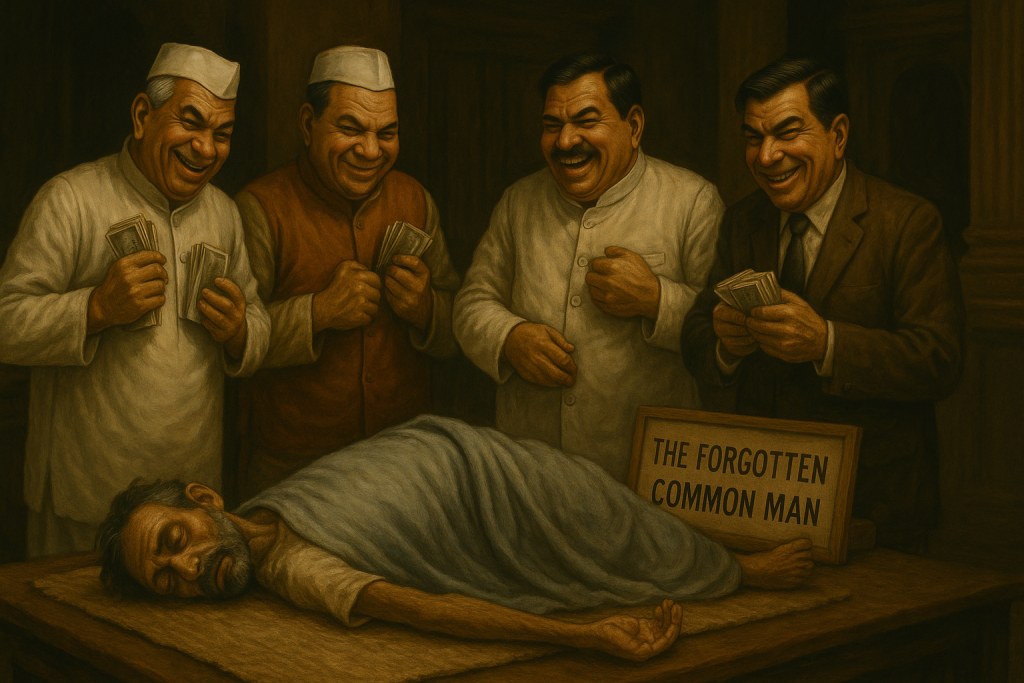
Predating the fire or just after the discovery of fire, there were no organised religions. Perhaps one worshiped the forest which gave them food and shelter or the rain which helped them cultivate their grain or the sun that made life blossom. Who created the organised religion and for what reason could only be defined looking at how the current world functions. Who would need the protection of divinity, cover of the holy, blessings of the almighty and the endorsement of the high priests the most ? Not a human dying from starvation or a war that he had no part to play with ;not a poor voter who has been taken on ride after ride by every government ; not a  migrant dying in the high seas.

Maybe it is the very leaders who lead humanity that really need the organised religions to organise the society and tame their thoughts to suit their tunes. Looking at Tutankhamun and an auction of the chattels of an ordinary dead human of our time, all one could conclude is that life has always favoured the rich and mighty. They would live gloriously while they are alive and even after their deaths. While those Toms, Dicks and Harrys will see their chattels sold, lands distributed, names forgotten before the dawn of another year, it will only be a Tutankhamun who will emerge from a hidden cave, sunken palace and be placed in a Royal museum with their wealth intact.

About the Writer

With a master’s in International relations, Dhanuka’s expertise is in Geopolitics and Geoeconomics, among other things. In addition to being the Executive Editor of The Asian Reviews magazine, he works as a guest writer in the Chicago-based Armenian Mirror-Spectator on Caucuses-related geopolitical issues and contributes as a columnist and a guest speaker to the Indian-based Force Security magazine.

He was a grassroots Politician, a political campaign Director, and a council member of a local government body in a small town in rural Sri Lanka. Before entering active politics, he led his foundation in supporting youth and the underprivileged. Currently, he consults youth groups on political activism and general political trends.

He is a poet, blogger, and an enthusiastic climate and social activist who strongly believes in making a better world for future generations. A patriotic Sri Lankan who is a father of a loving daughter.


Tutankhamun and the Chattels Read More »

Analyzing India’s Lower Life Expectancy: Systemic Failures and Societal Costs

India, a nation of over 1.4 billion people, has made remarkable strides in economic growth and technological advancement. Yet, its average life expectancy, approximately 70 years as of recent estimates, lags significantly behind many developed nations, where citizens often live 13–15 years longer. While India possesses a robust network of medical facilities, the lower life expectancy is not primarily due to a lack of hospitals but rather systemic issues, including corruption, inadequate governance, environmental degradation, and poor-quality food supply chains. This article critically examines these factors, highlighting how they undermine the value of human life and questioning why citizens must bear the cost of such systemic failures.

Systemic Corruption and Governance Failures

Corruption within India’s political and bureaucratic systems is a significant contributor to the nation’s public health challenges. Public funds allocated for healthcare, infrastructure, and environmental management are frequently misappropriated or siphoned off, resulting in underfunded public hospitals, inadequate sanitation systems, and lax regulatory enforcement. For instance, while India has a vast network of medical facilities, many public hospitals are understaffed, lack essential equipment, or are plagued by mismanagement. This forces citizens to rely on private healthcare, which is often unaffordable for the average person.

Moreover, regulatory bodies tasked with ensuring food safety, environmental standards, and public health are often compromised by political interference or bribery. This allows substandard practices to persist, from the sale of contaminated food to unchecked industrial pollution. The failure of politicians to prioritize transparent and accountable governance directly impacts the quality of life, contributing to preventable diseases and premature mortality.

Environmental Degradation and Pollution

India’s environmental crisis is a critical factor in its lower life expectancy. Air pollution, particularly in urban centers like Delhi, ranks among the worst globally, with particulate matter (PM2.5) levels frequently exceeding safe limits. According to the World Health Organization, air pollution is linked to respiratory diseases, cardiovascular conditions, and reduced life expectancy. Water contamination, driven by untreated industrial waste and inadequate sewage systems, further exacerbates public health risks, leading to diseases such as cholera, typhoid, and hepatitis.

Despite environmental regulations, enforcement is weak due to political and corporate collusion. Politicians often prioritize short-term economic gains over long-term sustainability, allowing industries to operate with minimal oversight. This systemic neglect of environmental standards disproportionately affects marginalized communities, who lack the resources to mitigate exposure to pollutants, further entrenching health inequities.

Poor-Quality Food Supply Chains

The quality of food available in Indian markets is another pressing concern. Adulteration, contamination, and the use of harmful additives are widespread due to lax regulation and enforcement. For example, milk, a staple in many Indian diets, is frequently diluted with water or mixed with harmful substances like urea or detergents. Similarly, vegetables and grains are often treated with toxic pesticides or stored in unsanitary conditions, posing long-term health risks such as cancer, kidney damage, and gastrointestinal disorders.

The Food Safety and Standards Authority of India (FSSAI) is tasked with ensuring food safety, but its effectiveness is hampered by underfunding, corruption, and political pressures. The average citizen, particularly those from lower-income groups, has little access to high-quality, uncontaminated food, leading to chronic health issues that shorten life expectancy.

Societal and Cultural Factors

Beyond systemic issues, societal attitudes and policy failures exacerbate the problem. Malnutrition, particularly among children and women, remains a significant challenge, with India ranking poorly on global hunger indices. While food security programs exist, their implementation is often marred by inefficiencies and corruption, leaving millions without adequate nutrition. Additionally, lifestyle diseases such as diabetes and hypertension are rising due to increasing consumption of processed foods, which are often cheaper and more accessible than healthier alternatives.

The lack of public awareness campaigns and preventive healthcare initiatives reflects a broader political indifference to citizen welfare. Instead of investing in education about healthy diets or pollution mitigation, resources are often diverted to populist schemes that prioritize political gains over long-term public health outcomes.

The Human Cost and Ethical Implications

The premature loss of 13–15 years of life expectancy is not merely a statistic but a profound societal tragedy. It represents lost potential, unfulfilled aspirations, and unnecessary suffering for millions of Indians. The systemic failures outlined above—corruption, environmental neglect, and inadequate food safety—reflect a governance model that undervalues human life. Citizens are forced to bear the consequences of decisions made by a political class that often prioritizes power and profit over public welfare.

Why should individuals suffer such a significant reduction in their lifespan simply because of their birthplace? This question demands a reevaluation of India’s priorities. A nation that aspires to global leadership cannot afford to neglect the health and well-being of its people. Addressing these challenges requires not only policy reforms but also a cultural shift toward accountability, transparency, and a genuine commitment to human dignity.

India’s lower life expectancy is a complex issue rooted in systemic corruption, environmental degradation, and poor food quality, rather than a lack of medical facilities. While the country has the potential to address these challenges, doing so requires political will, robust governance, and a commitment to prioritizing citizen welfare over short-term gains. Until these systemic failures are addressed, the average Indian will continue to face a diminished lifespan, a cost that no citizen should have to bear simply for being born in India. Concerted efforts to combat corruption, enforce environmental and food safety regulations, and invest in public health are essential to ensuring that every Indian can live a longer, healthier life.

Analyzing India’s Lower Life Expectancy: Systemic Failures and Societal Costs Read More »

Opening Gateways to Global Excellence: The Vision of the Global Academy for Transformative Education

The Global Academy for Transformative Education (GATE) is a distinguished autonomous educational wing of the Writers Capital International Foundation, committed to leading transformative and holistic educational reform on a global scale. Represented by its powerful acronym, GATE symbolizes a gateway to innovation, opportunity, and academic excellence, uniting a network of International Centres under a unified vision of redefining education for a diverse, interconnected world. Under the leadership of Prof. Preeth Padmanabhan Nambiar, President of GATE, the academy aspires to become one of the most reputed groups of institutions, fostering unparalleled learning, interdisciplinary collaboration, and global impact.

GATE serves as the central framework for the Foundation’s educational initiatives, currently including the International Centre for Foreign Languages and Literature, led by Prof. Nambiar, and programs such as INSPIRE (Innovative Strategies for Progressive Instruction and Educational Reform). With plans to establish additional International Centres in fields such as science, technology, medicine, and humanities, GATE is strategically positioned to achieve global preeminence. Designed for deliberate, authentic growth, it upholds a secular, inclusive identity, ensuring universal accessibility and the potential to evolve into a world-renowned university-like entity.

Mission and Vision

GATE’s mission is to empower educators, students, and communities worldwide through transformative educational practices that integrate holistic development, innovation, and global perspectives. By promoting student-centered pedagogies, interdisciplinary research, and equitable learning environments, GATE aims to set new standards for educational excellence. Its vision is to establish itself as a preeminent global institution, recognized as one of the most reputed groups of educational centers, driving systemic reform and preparing learners to address the challenges of a dynamic world.

The holistic principles envisioned by Prof. Preeth Padmanabhan Nambiar guide GATE’s philosophy, emphasizing the integration of intellectual, emotional, and social dimensions of learning. These principles ensure education is inclusive, culturally responsive, and empowering, fostering well-rounded individuals equipped for global citizenship. Through initiatives like INSPIRE, GATE translates this vision into practical strategies, equipping educators with innovative tools to transform classrooms worldwide.

Key Objectives

  1. Drive Educational Reform: Develop and disseminate innovative, holistic teaching methodologies that prioritize critical thinking, creativity, and global awareness.
  2. Establish a Prestigious Network: Create a constellation of International Centres in fields such as science, technology, medicine, and humanities, each contributing to GATE’s reputation as a global leader.
  3. Promote Global Collaboration: Build a worldwide network of educators, researchers, and institutions to share knowledge and advance interdisciplinary innovation.
  4. Ensure Universal Inclusivity: Design secular, inclusive programs that transcend cultural and regional boundaries, welcoming diverse learners and educators.
  5. Achieve Global Repute: Position GATE as one of the most respected educational groups, with a scalable framework that supports future university status while maintaining authenticity.

Leadership and Structure

GATE is led by Prof. Preeth Padmanabhan Nambiar, President, who provides strategic vision and oversight, ensuring alignment with the Writers Capital International Foundation’s mission. As the top authority, the President guides the development of GATE’s network of International Centres, each managed by a dedicated Director responsible for operational leadership and program execution. This hierarchical structure fosters cohesion while allowing each center to innovate within its field, contributing to GATE’s collective prestige.

Current and planned International Centres include:

  • International Centre for Foreign Languages and Literature: Directed by Prof. Nambiar, this center advances linguistic diversity, literary scholarship, and cross-cultural dialogue through research, publications, and educational programs, serving as a cornerstone of GATE’s interdisciplinary mission.
  • INSPIRE (Innovative Strategies for Progressive Instruction and Educational Reform): A flagship program launched on May 22, 2025, at KNC Innovative Global School, Mysuru, INSPIRE empowers educators with holistic, student-centered strategies. The inaugural session, attended by Principal Joseph Frank and Chairman Dr. K.N. Chandrasekhar, featured workshops on phonetic training, lesson planning, and social-emotional learning, exemplifying GATE’s commitment to practical reform.
  • Planned International Centres: GATE envisions establishing centers in key fields, including:
    • International Centre for Science and Innovation: Advancing research and education in physics, biology, and environmental sciences.
    • International Centre for Technology and Artificial Intelligence: Promoting ethical digital learning and transformative technologies.
    • International Centre for Medicine and Public Health: Fostering medical education and global health solutions.
    • International Centre for Humanities and Social Sciences: Exploring cultural, historical, and societal perspectives to enrich holistic education.

GATE’s organizational framework is designed for flexibility and scalability, enabling the integration of new centers under the President’s leadership. Directors report to the Director – General of Operations (DGO) who reports to the President, ensuring strategic alignment while fostering innovation within each center. Governed by the Writers Capital International Foundation, GATE leverages the Foundation’s global resources to enhance its impact and reputation.

Commitment to Holistic Education

GATE’s educational philosophy is grounded in the holistic principles envisioned by Prof. Preeth Padmanabhan Nambiar, which advocate for a balanced approach to learning that nurtures intellectual growth, emotional resilience, and social responsibility. These principles are operationalized through:

  • Personalized Learning: Tailoring education to individual learner needs, ensuring inclusivity and engagement.
  • Cultural and Global Relevance: Adapting pedagogies to diverse contexts, fostering cross-cultural understanding.
  • Interdisciplinary Synergy: Encouraging collaboration across fields to address complex global challenges.
  • Educator Empowerment: Equipping teachers with innovative tools and training, as demonstrated by INSPIRE’s focus on transformative practices.

This holistic approach ensures GATE’s programs elevate academic standards while cultivating ethical, empathetic leaders prepared for global impact.

Global, Secular, and Prestigious Identity

GATE is steadfastly committed to a secular, universally accessible identity, free from cultural, religious, or regional affiliations. Its name, devoid of specific connotations, reflects its role as a neutral platform for global education. By drawing participants from diverse backgrounds and fostering international partnerships, GATE ensures its programs resonate worldwide. The ambition to become one of the most reputed groups of institutions is driven by strategic leadership under Prof. Nambiar, a relentless pursuit of excellence, and a commitment to inclusive, transformative education.

Scalability and Path to Global Repute

GATE is engineered for sustainable, organic growth, balancing ambition with authenticity. Its current structure as an autonomous wing allows it to innovate and refine educational models, building a foundation for lasting prestige. Strategies to achieve global repute include:

  • Developing World-Class Centres: Establishing International Centres in science, technology, medicine, and humanities, each led by a Director and contributing to GATE’s reputation for innovation and excellence.
  • Forging Strategic Partnerships: Collaborating with leading universities, research institutions, and global organizations to enhance credibility and reach.
  • Promoting Thought Leadership: Publishing research, hosting conferences (e.g., leveraging the Foundation’s Global Nexus Series), and contributing to global educational discourse.
  • Scaling Toward University Status: Positioning GATE as a precursor to a future Global University for Transformative Education, with a phased approach that prioritizes quality and authenticity.

This scalability ensures GATE remains agile, innovative, and globally competitive, poised to redefine educational standards.

Synergy with Writers Capital International Foundation

GATE amplifies the Foundation’s mission to advance creativity, knowledge, and societal progress, complementing its programs in arts, literature, humanitarian projects, and the Global Nexus Series. By integrating education into the Foundation’s portfolio, GATE creates synergies with initiatives like the Nexus Review Journal and publishing efforts, leveraging the Foundation’s global network to enhance its impact and reputation. Prof. Nambiar’s dual leadership of GATE and key Foundation initiatives ensures strategic alignment and maximizes impact.

The Global Academy for Transformative Education (GATE), under the visionary leadership of Prof. Preeth Padmanabhan Nambiar, President, stands as a transformative force in global education. By uniting a prestigious network of International Centres—starting with the International Centre for Foreign Languages and Literature and expanding into science, technology, medicine, and beyond—GATE is dedicated to becoming one of the most reputed groups of institutions. With its holistic, inclusive, and innovative approach, GATE opens gateways to learning that empower communities, transcend boundaries, and shape a future of global progress, all while advancing the Writers Capital International Foundation’s commitment to a better world.

Contact Information

For more information about GATE and its International Centres, please contact:

Writers Capital International Foundation
Memorial office
Gambolina 42/3, Cap, Vigevano, Lombardia, Italy
Headquarters
#5050, Vijayanagar Stage 2, Mysore, Karnataka, India
Regional Office
40 Ichous Street – P. Phaliron, Athens, Greece

www.writerscapital.org
care@writerscapital.org 

Opening Gateways to Global Excellence: The Vision of the Global Academy for Transformative Education Read More »

Muerte Por Justicia: A Psychological Descent Into Darkness And The Haunting Quest For Redemption

Zunny Bracho’s Muerte por Justicia is a soul-wrenching odyssey that traverses the fragile boundary between trauma and transformation, victimhood and vengeance, madness and morality. In this piercing psychological thriller, the author dares to illuminate the darkest corridors of the human psyche—those shaped by childhood abuse, emotional abandonment, and a society that often fails its most innocent members.

NARRATIVE OVERVIEW

Set against the backdrop of luxury, power, and emotional neglect, Muerte por Justicia tells the story of Edward Robinson Jr., the son of a billionaire hotel magnate who is too consumed by his empire to notice the abyss forming in his child’s life. Raised in opulence yet starved of affection, Edward is left in the care of abusive tutors whose heinous acts trigger a cascade of psychological distortions.

As Edward grows, the trauma of his past mutates into a chilling persona. His brilliance becomes a weapon. His silence, a mask. His vengeance, a ritual. What unfolds is not merely the making of a serial killer, but the unraveling of a man sculpted by torment and sculptor of his own twisted sense of justice.

THEMATIC DEPTH

1. Child Abuse and Its Consequences
The novel is a searing indictment of the systemic failure to protect vulnerable children. Through Edward’s descent, Bracho demonstrates how early trauma can forge monsters, not by choice, but by sheer survival.

2. Justice and Moral Ambiguity
The title itself—Death for Justice—is a provocative meditation on vigilante morality. Edward does not kill indiscriminately; he hunts predators cloaked in respectability—teachers, coaches, mentors. He is both executioner and echo of his own violated innocence.

3. The Duality of the Human Psyche
Edward’s character is painted in chiaroscuro: part genius, part ghost, part victim, part villain. The author masterfully evokes sympathy for a murderer whose crimes, while unforgivable, are born from unspeakable cruelty.

4. Law vs. Conscience
The pursuit led by FBI agent Carl Miller is as much a legal chase as a spiritual confrontation. Miller’s eventual discovery of his own connection to Edward adds an existential weight to the investigation, challenging our perceptions of fate, family, and the burden of knowing.

LITERARY STYLE

Bracho’s prose is raw and immersive, infused with poetic cadence and cinematic clarity. The narrative voice balances empathy and tension, leading the reader through scenes of graphic realism, emotional devastation, and moments of eerie calm.

Dialogues are taut with intensity, especially in the courtroom sequences, where justice is not merely served but interrogated. The flashbacks are haunting and serve as emotional anchors, creating a timeline where every past wound bleeds into present violence.

AESTHETIC AND PHILOSOPHICAL POWER

Muerte por Justicia transcends the confines of conventional crime fiction. It is a philosophical inquiry dressed in thriller form—a lamentation for lost childhoods and a warning against the monsters society breeds in silence. The climactic moments, especially the final trial, are heavy with moral weight: How do we judge a killer who was once a helpless child begging for mercy?

And in that last scene—where Edward faces his execution—Bracho offers not resolution, but reflection. A mirror is held up to society: what justice do we claim when we ignore the roots of evil?

FINAL EVALUATION

Zunny Bracho has authored more than a novel; she has rendered a literary requiem for all forgotten children, a piercing critique of institutional apathy, and an unflinching portrait of a man shaped by horror and driven by a tragic sense of righteousness.

Muerte por Justicia is a brutal, brilliant, and unforgettable masterpiece—a must-read for those who seek literature that dares to challenge the conscience, elevate the soul, and disturb the silence.

Muerte Por Justicia: A Psychological Descent Into Darkness And The Haunting Quest For Redemption Read More »

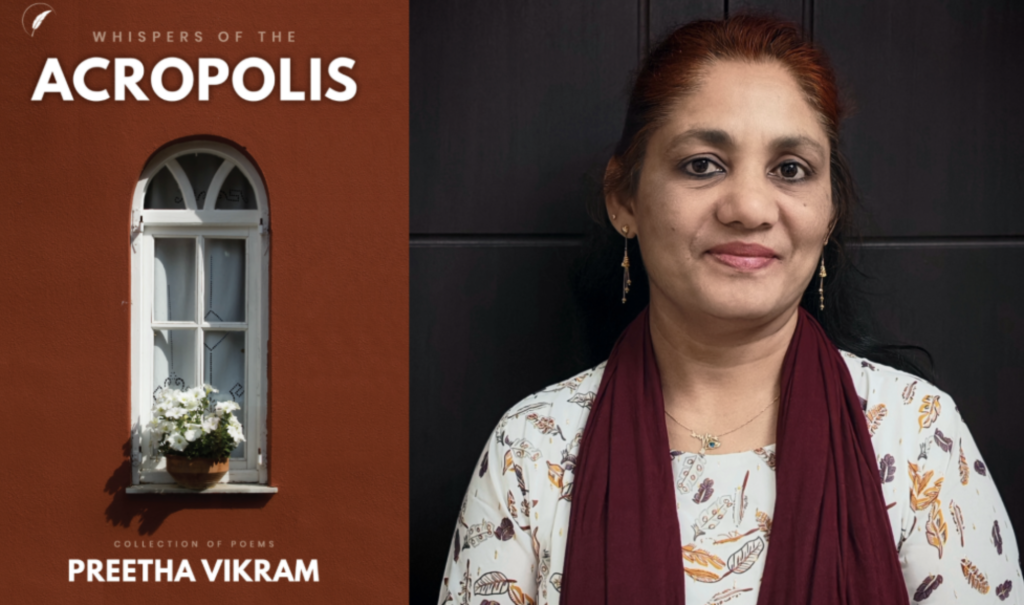
Book Review: Whispers of the Acropolis by Preetha Vikram: A Sacred Dialogue Between Spirit and Stone

Whispers of the Acropolis, a collection of profound, introspective poetry by Preetha Vikram, is not merely a book of verse—it is a pilgrimage of the soul, a dialogue with the divine, and a literary bridge between ancient wisdom and modern awakening. Rooted in the poet’s spiritual and emotional experience in Athens during the Global Vision Summit, this book blossoms from a personal journey into a universal offering of resilience, gratitude, and sacred introspection.

A Journey Carved in Silence and Light

In this volume, Preetha Vikram does not merely describe her visit to the Acropolis—she listens to it. And what she hears are whispers—not of ruin, but of endurance; not of the past, but of presence. These whispers take shape in verses that move between the mystical and the elemental, from Thank You, Universe to Rise of the Phoenix, echoing the vibrancy of self-discovery, cosmic interconnectedness, and the fragile beauty of being.

The poet weaves Greek antiquity and Eastern spiritual thought with effortless grace. In Echoes of Athens and Whispers of the Acropolis, she walks beside Socrates and through the shadow of Athena, but her steps are firmly those of a contemporary seeker—a woman attuned to the inner revolutions of mindfulness, personal transformation, and cosmic rhythm.


Themes of Transcendence and Transformation

Gratitude and Spiritual Attunement flow like lifeblood through the collection. The opening poem, Thank You, Universe, sets the tone: a litany of sacred affirmations that celebrate every moment, every cell, every breath. The language is luminous with humility, but also brimming with power—an invitation to the reader to see differently, to awaken.

The poems dwell deeply on resilience. In The Hit That Transformed Me, Breaking the Wall, and Rise of the Phoenix, Vikram explores not only pain but its alchemical conversion into wisdom. These are not poems of suffering—they are testimonies of rising.

Nature, too, is a recurrent presence—not as scenery, but as co-conspirator in the human story. Cleansing Rain, Wings of Harmony, and Touch the Sea After breathe with elemental truth, where water purifies, the sun awakens, and the sea listens like a patient oracle.

Greek motifs are interlaced with deep Eastern reflections. The Acropolis becomes not just a monument of marble, but a living metaphor—a place where human fragility meets timeless strength. Olives and Eternity is a particularly fine example of this synthesis, merging the tactile with the eternal.


Style: A Meditation in Free Verse

Preetha Vikram’s stylistic approach is marked by fluid, unpunctuated rhythms, repetitions that evoke mantras, and a language of quiet insistence. Her poetic form leans towards free verse, deliberately abandoning structural rigidity in favor of organic cadence—mirroring the journey of self-liberation her verses often describe.

There is a palpable musicality in her work. Phrases like “I rise, I soar,” “Thank you, Universe,” and “A soul reborn” return like refrains in a symphony of spiritual ascent. The tone remains warm, introspective, and gently prophetic—a voice speaking not at the reader, but with them.


Philosophical Undercurrents and Emotional Terrain

What makes this collection remarkable is its integration of philosophical disciplines:

  • Stoicism – accepting pain and responding with dignity;

  • Existentialism – questioning purpose in poems like My IKIGAI;

  • Eastern mysticism – seen in references to chakras, energy, karma, and the soul’s journey.

Emotionally, the work is vast. From the sorrowful acceptance in In Peace, I Rest to the fierce affirmation in Unbound and Eternal, Vikram journeys through grief, identity, healing, and joy. It is a body of work that could sit as comfortably beside Rumi or Tagore as it would alongside contemporary voices of self-reflection.


Conclusion: A Whisper that Becomes a Roar

Whispers of the Acropolis is a work of quiet power and transcendent clarity. It is a rare collection where each poem is both complete in itself and a thread in a larger, luminous tapestry. Preetha Vikram offers us not just poems, but portals—to healing, to understanding, to grace.

In a world often too loud to listen, these whispers ring true. They rise like dawn over the Parthenon—soft, sacred, and unforgettable.

Book Review: Whispers of the Acropolis by Preetha Vikram: A Sacred Dialogue Between Spirit and Stone Read More »

Beyond the Plotter-Pantser Paradigm

In the classroom, the discussion of writing methodologies often centres around a seemingly fundamental dichotomy: the structured approach of ‘plotters’ versus the improvisational style of ‘pantsers’. This classification, whilst useful as an initial framework, belies the nuanced reality of the creative writing process that most published authors actually employ.

Professional writers understand that effective storytelling rarely adheres to rigid methodological boundaries. Rather, it emerges from a personalised process that may draw elements from both approaches, adapting as necessary to serve the narrative at hand. The journey to discovering this individualised approach represents one of the most significant developmental milestones in a writer’s career.

‘I’ve been writing for 30 years,’ the late Hilary Mantel once remarked, ‘and I’m still discovering what works for me.’ This observation from a two-time Booker Prize winner illuminates an essential truth: despite the abundance of well-meaning advice in writing manuals and creative workshops, the most valuable insights emerge through personal practice and reflection.

Consider the contrasting approaches of two bestselling authors. J.K. Rowling meticulously plotted the Harry Potter series with detailed grids, timelines, and character arcs long before writing the opening chapters. Her colour-coded spreadsheets mapping out the complex narrative strands of Hogwarts have become almost as famous as the books themselves among aspiring writers. In direct contrast, Stephen King describes his writing process as archaeological rather than architectural: ‘Stories are found things, like fossils in the ground… The writer’s job is to use the tools in his or her toolbox to get as much of each one out of the ground intact as possible.’

Both approaches have yielded remarkable literary achievements, suggesting that success lies not in adhering to a prescribed methodology but in finding the approach that best aligns with one’s creative temperament and the demands of the particular narrative being crafted.

Many professional writers, having experimented with both extremes throughout their careers, ultimately settle into what the writing community has termed ‘plantsing’ – a hybrid approach that accommodates both structured planning and spontaneous discovery. This flexibility allows writers to adapt their process to different projects or even different stages within the same project. As Neil Gaiman explains: ‘I’m not really a plotter or a pantser. I’m more of a “let me tell you a story and find out what happens” person.’

What proves particularly instructive is how established authors frequently modify their approach throughout their literary careers. Philip Pullman, whose intricate His Dark Materials trilogy represents a masterclass in world-building, observes: ‘I’m not interested in techniques. I’m interested in stories… The techniques look after themselves.’ This evolution in methodology shouldn’t be interpreted as inconsistency but rather as professional growth – a refinement of craft in response to accumulated experience.

A comprehensive survey of contemporary novelists would likely reveal as many different writing processes as there are writers. Some begin with character sketches, others with setting or theme. Some write chronologically, others skip between pivotal scenes. Some require absolute silence, others the ambient noise of a busy café. The consistent element across these diverse approaches is authenticity – each writer has discovered the process that enables them to access their unique creative voice.

Toni Morrison’s oft-quoted advice to ‘write the book you want to read’ transcends matters of technique to address the more fundamental question of authorial purpose. This deceptively simple guidance invites writers to move beyond prescriptive methodologies to engage with their deepest creative instincts. The writer who dares to experiment – plotting one chapter, pantsing another, and perhaps employing a different approach entirely for a third – develops not merely technical versatility but a more profound understanding of their own creative rhythms.

When Samuel Beckett advised writers to ‘fail better’, he was acknowledging the inherently experimental nature of the creative process. Each draft represents not a definitive statement but a hypothesis – an attempt to translate nebulous ideas into coherent narrative. This perspective liberates writers from the paralysing pressure of immediate perfection, encouraging instead a process of continuous refinement through which authentic voice emerges.

For emerging writers, perhaps the most valuable skill to cultivate is not plotting or pantsing but discernment – the capacity to recognise which approach best serves both the current project and their own creative temperament. This may mean outlining extensively for complex narratives with multiple viewpoints while adopting a more exploratory approach for character-driven pieces. It might involve detailed planning for the narrative’s structural framework whilst allowing characters to develop organically within that structure.

The enduring debate between plotting and pantsing ultimately dissolves in the face of this more essential truth: effective writing emerges not from rigid adherence to external guidelines but through patient self-exploration and creative integrity. Through this process of discovery, writers develop that singular voice which, once found, becomes their most valuable professional asset – a literary fingerprint that cannot be replicated or mistaken for any other.

Pramudith D Rupasinghe

About the Author

Pramudith D RupasinghePramudith D Rupasinghe is a Sri Lankan writer and humanitarian. His literary works predominantly unfold in settings beyond his native Sri Lanka, for which he earned the name ‘Writer Without Borders. His work of fiction, ‘Bayan,’ set in pre-conflict Ukraine, won the Golden Aster Prize for Global Literature in 2020 and was longlisted for the 2023 Paris Book Festival. Rupasinghe’s works have been translated into several languages, including Sinhalese, Burmese,  German, Spanish, Russian, Polish, Bulgarian and French. He has also dedicated two decades to humanitarian work, drawing inspiration for his writing from his missions to Africa, Europe, Southeast Asia, and the Middle East. He is known for his thought-provoking narratives that delve into the human psyche, cultural identities, and global experiences.


Beyond the Plotter-Pantser Paradigm Read More »

The Twinned Mortality: Truth and Fiction Share a Lifespan Where One’s Death Resurrects the Other

In the ever-shifting landscape of human knowledge, both truth and fiction possess curious lifespans, evolving and transforming through time’s passage. What begins as accepted truth can fade into mythology, while yesterday’s fanciful fiction might become tomorrow’s lived reality. This dance between fact and fantasy reveals not fixed categories but a continuous spectrum where truths and falsehoods exchange places with remarkable fluidity.

Consider how historical ‘facts’ once held as absolute truths now provoke disbelief. For centuries, medical texts documented with absolute certainty that women’s wombs could detach and wander through the body, causing ‘female hysteria’—a ‘truth’ defended by the greatest physicians across cultures. The miasma theory of disease transmission, attributing illness to ‘bad air’ rather than microorganisms, guided public health policies for centuries before being thoroughly discredited. These weren’t merely opinions but firmly established ‘truths’ that eventually crumbled beneath the weight of new discoveries. And often, the truth lies inside the lie itself, and vice versa.

Literature offers compelling examples of fiction that transcended its imaginary boundaries to become prophetic through sheer coincidence rather than deliberate speculation. As you’ve mentioned, my novel ‘Bayan’ portrayed political scenarios in Ukraine that later materialised with unsettling accuracy. The book, written in 2014, depicted circumstances that preceded Russia’s annexation of Crimea and the Donbas conflict—fictional narratives that subsequently played out on the world stage without any speculative intent from the author. This transformation from fabrication to historical record demonstrates the peculiar lifecycle where fiction outlives its fictional nature through pure accident.

Morgan Robertson’s novella ‘Futility’ (later renamed ‘The Wreck of the Titan’) provides perhaps the most striking example of accidental prophecy. Published in 1898, it described the sinking of a supposedly unsinkable ocean liner called the Titan after striking an iceberg in the North Atlantic. Fourteen years later, the Titanic sank in shockingly similar circumstances. Robertson’s fictional vessel bore remarkable similarities to the actual Titanic in size, speed, and passenger capacity—despite being written years before the Titanic was even designed. The fictional ship even lacked sufficient lifeboats, just as the real Titanic would. This wasn’t speculative fiction attempting to predict the future; it was pure coincidence that transformed fiction into a disturbing premonition.

Edgar Allan Poe’s only complete novel, ‘The Narrative of Arthur Gordon Pym of Nantucket’ (1838), includes a scene where shipwreck survivors, stranded on a lifeboat, resort to cannibalism and eat a cabin boy named Richard Parker. Forty-six years later, a real shipwreck occurred involving survivors who, after drawing lots, killed and ate a cabin boy—whose name was Richard Parker. This macabre convergence of fiction and reality occurred without any possible causal connection, demonstrating how fictional narratives can eerily materialise in reality through pure coincidence. Later Yann Martel’s Booker winning novel, not a total coincidence, uses the name Richard Parker to The Royal Bengali, the tiger, one of the two main characters in the novel. Therefore, the relationship works bidirectionally. 

Historical accounts once treated as unquestionable fact gradually transition into recognised fiction or myth. The extensive writings about the court of King Arthur were long treated as historical chronicles before being understood as largely fictional. Marco Polo’s detailed accounts of his travels, once considered reliable geographical documentation, now contain elements historians recognise as embellished or fabricated. Ibn Battuta’s travel writings, while valuable historical documents, include geographical impossibilities and timeline contradictions that reveal the presence of fictional elements presented as factual observation.

Ancient medical texts offer compelling examples of ‘non-fiction’ that gradually became obsolete. Galen’s anatomical writings, considered medical gospel for over a millennium, contained fundamental errors resulting from his reliance on animal rather than human dissection. His incorrect descriptions of human liver shape and uterine structure were taught as absolute medical fact until Andreas Vesalius demonstrated their falsehood in the 16th century. What began as authoritative medical documentation slowly transformed into medical mythology.

Historical chronicles frequently underwent similar transformations. Geoffrey of Monmouth’s ‘Historia Regum Britanniae’ (History of the Kings of Britain) was long considered authentic British history before gradually being recognised as a creative blend of myths, legends and fabrications. Its accounts of King Lear and Cymbeline provided Shakespeare with material but represented fiction masquerading as historical record. The boundary between documented history and imaginative storytelling often becomes apparent only across centuries.

Even carefully documented ethnographies and travel accounts frequently contain elements that transition from accepted fact to recognised fiction. John Mandeville’s 14th-century travel accounts were considered factual geographic references for centuries before being recognised as largely imaginary. Similarly, numerous anthropological accounts from the colonial era described cultural practices that were either fundamentally misunderstood or occasionally invented outright by observers who believed they were producing objective documentation.

This transience suggests that both truth and fiction serve as temporal vessels rather than eternal categories. They function as containers holding human understanding at particular moments, subject to reexamination and redefinition as our perspective shifts. All knowledge exists in historical context, making its categorisation as ‘fact’ or ‘fiction’ contingent rather than absolute.

Perhaps most fascinating is the moment of transition—when fiction crosses into fact by sheer coincidence or truth dissolves into mythology through evolving understanding. These threshold events often mark significant shifts in human knowledge. When archaeological discoveries revealed that Heinrich Schliemann’s excavation of Troy had discovered a real city behind what many had dismissed as Homeric fiction, it transformed our understanding of the relationship between myth and history. Similarly, when medical texts documenting the efficacy of bloodletting transitioned from accepted medical fact to recognised pseudoscience, it marked a fundamental shift in medical epistemology.

The labels themselves—‘fiction’ and ‘non-fiction’—reveal our problematic tendency toward binary categorisation. Reality operates in gradients rather than absolutes. Historical accounts invariably contain interpretive elements that introduce subjectivity into supposedly objective records. Even meticulously documented journalism includes framing choices that shape meaning beyond raw facts. Meanwhile, fiction frequently incorporates genuine historical events and sociological insights that provide genuine illumination of reality.

This transience needn’t inspire the nihilistic dismissal of all knowledge claims. Rather, it invites intellectual humility—recognising that today’s certainties may become tomorrow’s quaint misconceptions. The most robust approach involves holding multiple possibilities simultaneously, maintaining receptivity to evidence that might transform our understanding. This perspective allows us to engage meaningfully with both factual accounts and fictional narratives, recognising their potential to exchange places through the strange alchemy of time and circumstance.

Pramudith D Rupasinghe

About the Author

Pramudith D RupasinghePramudith D Rupasinghe is a Sri Lankan writer and humanitarian. His literary works predominantly unfold in settings beyond his native Sri Lanka, for which he earned the name ‘Writer Without Borders. His work of fiction, ‘Bayan,’ set in pre-conflict Ukraine, won the Golden Aster Prize for Global Literature in 2020 and was longlisted for the 2023 Paris Book Festival. Rupasinghe’s works have been translated into several languages, including Sinhalese, Burmese,  German, Spanish, Russian, Polish, Bulgarian and French. He has also dedicated two decades to humanitarian work, drawing inspiration for his writing from his missions to Africa, Europe, Southeast Asia, and the Middle East. He is known for his thought-provoking narratives that delve into the human psyche, cultural identities, and global experiences.


The Twinned Mortality: Truth and Fiction Share a Lifespan Where One’s Death Resurrects the Other Read More »

POPE FRANCIS – THE COMPASSIONATE SHEPHERD

The wolf of Gubbio was feared and deplored by everyone in the Italian province of Perugia. The terrifying wolf attacked everyone who came its way until one day the ferocious beast encountered St Francis of Assisi. The saint addressed the beast, ‘Brother Wolf!’ Francis was the first ever man to look tenderly into the eyes of the beast. The brotherly gaze of the saint transformed the wild animal. The legend says that the wolf never harmed anyone again…

Eight centuries later, for the first time in history, a pope ascended the Chair of St Peter, taking the name Francis, after the legendary eco saint. The choice of the name itself was a declaration – an assertion that mercy, tenderness, profound humanity, and universal fraternity were about to rule. As Pope Francis himself said once, elucidating his stance, “The Church is a forgiving mother, who welcomes all people with an attitude of understanding, clemency, and forgiveness.”

When white smoke emerged from the chimney of the Sistine Chapel on 13th March 2013, hardly anyone expected the new pope to be a non-European. Thwarting all speculations and presumptions, the name was announced: Cardinal Jorge Mario Bergoglio from Argentina!

Elected as the 266th pope, Francis was the first non-European pope in over 1,300 years after Gregory III from Syria. He was also the first Latin American pontiff and the first Jesuit to be elected as a pope.

It was just the beginning of many surprises God had in store for the world through the unconventional pope. To the astonishment of all, from the open window of St Peter’s Basilica, the new Pope bowed to the people and sought their blessings and prayers as a sign of profound humility.

A fortnight after his election, in a homily during the Chrism Mass offered for French student priests of the Church of St. Louis, Pope Francis mentioned the iconic analogy, “shepherds with the smell of the sheep,” which would later become the trademark of his papacy.

It was an indirect announcement of the track he was going to choose during his epoch-making papacy. The world soon witnessed the papacy being made much more human, more accessible, and less remote.

In one of the major interviews given to the Italian Jesuit priest and journalist, Fr Antonio Spadaro, when asked about speaking to a large crowd like that of the World Youth Day, Pope Francis said, “I manage to look at individual persons, one at a time, to enter into personal contact with whomever I have in front of me. I’m not used to the masses.”

Later, Fr Spadaro commented on this remark: “Whenever he is among a crowd of people Pope Francis’ eyes actually rest on individual persons.”

This statement sums up the motive behind the decisions and actions of Pope Francis. He looked at individual persons. He encountered souls. When one looks at an individual person, one can see the depth of the soul, who needs divine and human compassion, understanding, and acceptance. Here is the clue to his unparalleled compassion towards the outcasts and people on the peripheries like the migrants, the LGBTQ people, the homeless, the war-affected, and everyone who is less fortunate.

Once, during a 2013 conference, he responded to a question about homosexuality by saying, “Who am I to judge?” When asked about his phrase later, the Pope clarified that his comments simply meant everyone was deserving of God’s love and mercy.

During his 2017 visit to Canada, in a TED Talk delivered in Vancouver, Pope Francis used the term ‘Revolution of tenderness.’ “Tenderness is not weakness; it is fortitude. It is the path of solidarity, the path of humility” he said. He projected “tenderness” as a core Christian virtue, emphasizing its importance in fostering compassion, humility, and a more just and loving world, where the less fortunate and marginalized people are accepted and included.

The vision of tenderness is also reflected in his vision of the Church. He once defined, “Church to be seen as a field hospital, not a fortress.” He envisioned a Church that is synodal, inclusive and focused on service to the world, a place for everyone, including those who are marginalized or on the fringes of society. Pope Francis urged the Church to go out of parochial confines and embrace its global diversity, responding to the call of his divine Master: “Go to the ends of the earth.” His famous dictum ‘Go out into the streets’ resounded his vision of a compassionate church that reaches out.

Ferreting out the foundation of his profound concern and compassion for migrants, we encounter his ancestry, who migrated from Italy to Argentina during the fascist regime of Italian dictator Benito Mussolini. Young Bergoglio had heard the sad plight of migrants from his parents and grandparents. Pope Francis himself had later revealed how his grandparents and his father narrowly escaped a deadly shipwreck, which he believed was providential.

He strongly advocated for migrants because he saw in them the Church’s own pilgrimage throughout history. Often, he identified the hapless odyssey of migrants with the flight of the Holy Family into Egypt. “An encounter with a migrant is an encounter with Christ” he once said.

In the Gospels, we see that self-righteous people were the ones whom Jesus slammed the most. Everyone who acknowledged their sins with humility received the compassion of Jesus, the Good Shepherd. In his teachings, Pope Francis repeatedly called faithful to be humble and contrite of heart. He often defined himself as a sinner.

He once said, “I am a sinner. This is the most accurate definition. It is not a figure of speech, a literary genre. I am a sinner. This reminds us of the first pope Saint Peter, who declared at the sight of Jesus, “Lord, I am a sinner!”

In one of his earlier interviews, the Pope revealed that he still goes to confession every two weeks. “The mere fact that I now dress all in white has not made me any less sinful or holier than before,” he told Jesuits during his Mozambique visit.

Like a true successor of St Peter, who wept bitterly after realizing his fault in denying his divine Master, Pope Francis never hesitated to say sorry when he felt he had been wrong. On January 22, 2018, while flying back to Rome after visiting Chile and Peru, he begged forgiveness from a victim of clerical sexual abuse. He said: “Juan Carlos, the first thing I want to do is apologize for what happened to you and apologize in the name of the Pope, and in the name of the universal church.”

Pope Francis closely followed Jesus, who traversed to the peripheries, saying, “I have not come to call the righteous, but sinners”. He surprised everyone when he unconventionally washed the feet of young prisoners, including two women and two Muslims on Holy Thursday in 2013. He continued to kneel before prisoners and people of lower status, on every Holy Thursday that followed, setting an example of profound humility.

Like his saint whose name he bore, Pope Francis always had a preferential love for the poor. Calling the Church to renew its focus on the poor, he stated that loving the poor is not a task of a few but the mission of the entire Church. One World Day of the Poor, every year, he made himself available to dine with the poor people of Rome at the Vatican.

“If we want to help change history and promote real development, we need to hear the cry of the poor and commit ourselves to ending their marginalization,” he said in his message on World Day of the Poor in 2017. In his speeches, he lashed out against escalating economic inequality and called for a more just distribution of wealth and a renewed focus on the poor.

Pope Francis, who believed that the Church is essentially a welcoming house of the Father, was a great champion and advocate of ecumenism. His ecumenic vision was based on what he defined as the ‘ecumenism of blood’. “The blood of martyrs unites Christians,” he said. Emphasizing the importance of dialogue, encounter, and synodality, he stated that Christian unity is a vital part of sharing the Gospel with the world.

The interreligious stance of Pope Francis was equally significant. Believing that interreligious dialogue is a vital way to promote peace, respect, and harmony, he called for tolerance and acceptance of diversity. His epoch-making passage through the Tunnel of Friendship in Jakarta connecting the Istiqlal Mosque to the Our Lady of the Assumption Cathedral was an iconic example of his sincere attempts to maintain peace and harmony among religions in a world that is torn by strife based on religious differences. He had several heartwarming meetings with the leaders of the world religions in and out of the Vatican. During his visit to Indonesia in 2024, Pope Francis met with representatives of Indonesia’s six officially recognized religions, including Islam, Buddhism, and Hinduism, and signed a document called “Human Fraternity” to promote interfaith harmony.

A champion of global peace and human brotherhood, Pope Francis always maintained an anti-war stance. He was often seen reiterating his trademark statement, “War is always, always, always a defeat,” arguing that no one benefits from it, and everyone loses. He defined war as a “crime against humanity”. He was often seen pleading for peace and ceasefire in war-torn regions such as Gaza, Ukraine, and Sudan. He repeatedly called for humanitarian aid in war-torn areas and prayed for humanitarians who risked their lives.
One of the remarkable revolutions brought about by Pope Francis in the administrative realms of the Vatican was redefining women’s role in the Church. He always emphasized the importance of women’s participation in the Church and has called for greater recognition of their talents and gifts.

To solidify his stance, he once made a radical statement: “The Church is woman!” He went on to elucidate further, “I see women blessed with charisms, and I do not want to limit the discussion of women’s role in the Church to the topic of ministry.”

A man of his word, he appointed more women to key positions in the Vatican including Sr. Simona Brambilla whom he appointed as Vatican’s first female prefect, and Sister Raffaella Petrini whom he named as the first woman governor of the Vatican City State.

In September 2024, despite being confined to a wheelchair, Pope Francis ventured on the longest apostolic journey during his papacy abroad to Southeast Asia and Oceania, which included Indonesia, Papua New Guinea, Timor-Leste, and the Philippines. The historic apostolic journey was founded on the core values he often highlighted: faith, fraternity, and compassion. Hundreds of thousands of people thronged wherever he went. He met with the leaders of the nations as well as religious leaders, discussing hot topics like global challenges, peace, and harmony between religions.

During his papacy, Pope Francis wrote four encyclicals, which include the groundbreaking encyclical on earth and environment, ‘Laudate Si.’ His first encyclical ‘Lumen Fidei’ was published in the same year of his ascension to the papal throne. In Lumen Fidei, the Pope highlighted the celebration of the Christian faith as the guiding light of a ‘successful and fruitful life’.

His second and most discussed encyclical ‘Laudate Si’ was released in 2015, highlighting the ecological crisis and calling for the protection and preservation of the earth, our common home. The name itself was derived from the Canticle of his favorite saint Francis of Assisi, the lover of nature, the encyclical echoed the eco saint’s vision for maintaining peace with the environment.

The third encyclical, ‘Fratelli Tutti, released in 2020, highlighted fraternity and social friendship. It was a heartfelt call to universal brotherhood as members of the human family.

After discussing faith, earth, and fraternity, Pope Francis chose love as the theme of his fourth encyclical, ‘Delexit Nox’ which means ‘He loved us’. This encyclical was focused on the Human and Divine Love of the Heart of Jesus Christ.

Finally, giving a glance at his recently launched autobiography, ‘Hope’, one would not fail to notice its candid splendor. His status as pope did not hinder him from accepting his weaknesses and shame as he puts it.

Standing high on the aura of the Supreme Pontiff does not hold him back from admitting that “Melancholy has always been a companion in my life.” Such a frankness and humility that stunned the world! As if in a confessional, he admits his mistakes of ignoring a housemaid who had cared for his family when he was younger.

Reading through these lines, we understand why the remorseful Peter was preferred by the Lord over his other disciples. Saying sorry to the Lord is the greatest gift one can have. Weeping for one’s shortcomings will move the Lord’s compassionate heart, who will extend his heart to embrace as he did to Peter, the first pope.

To sum up the great, legendary, and in a way revolutionary life of Pope Francis, our eyes fall upon the word ‘compassion.’ All his actions were guided and moved by compassion. His call to reach out to the peripheries and embrace the poor, the outcasts, and the miserable stemmed from this boundless compassion. As we look at the compassionate face of Pope Francis, urging us to accept the most miserable and hated of people, we hear the words of our Lord, “I came to call sinners…”

He was a true shepherd, who went out of his comfort zones in search of the lost sheep. He wanted to gather everyone, even the most hated, into the bosom of the merciful Father. His legacy will remain as a unique period of tenderness, compassion, and inclusiveness. Wherever there are wars and conflicts, his voice will echo, calling for peace and brotherhood. Wherever there is discrimination, his voice will resound with a heartfelt invitation of acceptance and fraternity.

Thank you, dear Papa! You have left us an undying legacy. You have made the world a better place to live with your heartfelt call to return to tenderness. You made outcasts feel accepted and loved. You taught us to value our common home, the earth. Thank you, Good Shepherd!

Abhilash Fraizer

About the Author

Abhilash Fraizer is an Indian author, poet, novelist, journalist, translator and advertising copy writer hailing from Kerala. A Post Graduate in English Language and Literature, Abhilash has authored 14 books and has written numerous poems, stories and articles for various international and Indian journals. His latest work is ‘Father, a collection of poems’, published globally by Wipf & Stock Publishers, Oregon, USA. His other renowned works in English include ‘The End of Wars’, a novel and ‘Everlasting Things are Incomplete’, a collection of poems. Dalamarmaram (The Rustle of Leaves), Paravakalude Vazhi (The Way of Birds), Raamazhayude Theerathu (On the banks of Night Rain), Sajalam (Aqueous) and Prapancha gaatha (The Ballad of the Universe) are some of his noted works in Malayalam, the official language of Kerala.

‘Prapancha gaadha’ won Kreatiff Silver Award for the second-best Novel in 2020. A recipient of multiple accolades, Abhilash has been awarded with KCBC (Kerala Catholic Bishops’ Council) Media Commission’s ‘Yuva Prathibha Award’ in 2014. His poem ‘Between the Islands’ was voted and enlisted among the best 100 poems in a global contest held by Poemhunter.com. A screen writer as well, Abhilash has written scripts for noted Sight and Sound Shows including ‘I Believe’ and ‘Ammamaram’, staged in a major venue in Kochi and were watched by over 50,000 people. He has also written scripts for various television programs and lyrics for about 50 songs, which have been recorded for various albums. He lives in Ernakulam, Kerala with his wife Sunitha and two sons Ezek and Izan.

POPE FRANCIS – THE COMPASSIONATE SHEPHERD Read More »

The Right Space: Crafting one’s own inner world for Fiction Writing

When most of us think about the perfect writing environment, we always tend to look at the physical attributes: the ergonomic desk, the selected stationery, the ambient lighting, and perhaps that quintessential cup of coffee or a pot of tea. Well, these tangible elements surely facilitate the creative process, but they represent the sheer manifest content of what writers truly seek; but there is much more in the latent end of that.

The notion of ‘right space’ extends beyond the commonly understood physical limitations and penetrates the psychological sphere. Virginia Woolf’s ‘a room of one’s own’ supports the idea that ‘the room’ exists within one’s mind. For fiction writers especially, whose craft demands immersion in imagination and exploration of emotions, establishing a tranquil mental space becomes not just beneficial but essential. This mental sanctuary, accounting for perhaps most of what makes up an effective writing environment, serves as the true foundation upon which creative work flourishes, regardless of whether one writes at a fancy desk in a cozy hotel room, or during a commute on a crowded train.

The psychological dimensions of a writing space have been explored by numerous authors across generations. Japanese novelist Haruki Murakami describes his writing process as entering a different mental plane, stating in his memoir ‘What I Talk About When I Talk About Running’: ‘I’m not a person who can work well in noisy surroundings. I’m the kind who doesn’t need anything else when I write. I just need to be alone, in a kind of trance.’ This trance-like state exemplifies the mental space that supersedes physical requirements. Similarly, British author Zadie Smith has spoken about the necessity of creating ‘internal silence’ amidst external chaos. In her essay collection ‘Changing My Mind,’ Smith reflects on writing parts of her acclaimed novels in cafes and public spaces, noting that the ability to psychologically withdraw from immediate surroundings becomes a cultivated skill. American writer Jonathan Franze worked in a sparsely decorated office wearing noise-cancelling headphones—not merely to block sound, but to signal to his consciousness the transition into a creative mental territory. I have done most of my writing at cafes. Whether they are busy places in the heart of a South Asian city, or else peaceful places in Europe does not matter. My creative process triggers in the cafes. I have all adjustable tables, and multiple writing spaces in my houses in all the countries I share my year, but those tables are serving as beds for my laptop and notebooks. They have not done anything substantial when it comes to my creative process. These diverse approaches from writers across continents including, my own experience, underscore a universal truth: the physical writing environment serves as a gateway to the psychological space where creation occurs. Often, the mental space is the one that creates the perceptual set, as our brain does not differentiate what is imagined and what is real.

The cultivation of this mental landscape requires deliberate practice and often evolves throughout a writer’s career. Pitchaya Sudbanthad, a contemporary Thai author, wrote his debut novel, ‘Bangkok Wakes to Rain,’ in various locations across multiple continents, ranging from peaceful libraries to vibrant street food markets. ‘The constant changing of physical spaces,’ he notes in interviews, ‘forced me to anchor my writing not in location but in mental discipline.’ This sentiment echoes across cultures and eras. I am no exception, for the last two decades, I have been travelling in over fifty countries, and I always have a writing project with me—transit airports have witnessed me completing chapters. Russian novelist Fyodor Dostoevsky wrote some of his most notable work amid personal turmoil and challenging circumstances, demonstrating that internal sanctuary can withstand external adversity. American poet Mary Oliver frequently composed while walking through natural landscapes, carrying only minimal writing materials, allowing the rhythm of movement to shape her mental space. In today’s connected world, where diverse distractions compete for attention, the crafting of psychological space has become profoundly challenging, yet more vital than ever. Writers now must not only find physical quietude but also digital silence, creating boundaries that protect the fragile mental territory where imagination is birthed.

Mindfulness practices have emerged as valuable tools for contemporary fiction writers seeking to establish this essential mental space. British novelist Jeanette Winterson incorporates meditation into her daily writing routine, stating that ‘clearing the mind before writing allows characters to speak without the author’s ego intervening.’ Chinese-American author Yiyun Li describes in her memoir ‘Dear Friend, from My Life I Write to You in Your Life’ how periods of focused contemplation help her access the emotional depth required for fiction. Even Ernest Hemingway, writing in a pre-digital era, practiced his own form of mindfulness through his disciplined approach of stopping each day’s writing session at a point where he knew what would happen next—a technique that allowed his subconscious to remain engaged with the narrative during non-writing hours. During one of our chats, Somali-Eritrean writer Sulaiman Addonia told me that his writing happens in a subconscious state where he does not see the world judging him. So, he allowed that mental stage to set in, creating a creative space within. These can be diverse in the methods but share a common purpose: to create the psychological conditions conducive to sustained creative work. For today’s writers, techniques borrowed from mindfulness traditions offer structured approaches to establishing mental boundaries in environments increasingly hostile to focused attention.

The relationship between physical and psychological space manifests differently across cultures, influenced by varied philosophical traditions and material circumstances. Indian author Arundhati Roy famously took years to write her second novel, ‘The Ministry of Utmost Happiness,’ creating what she called ‘internal architecture’ before committing words to page. This concept reflects Eastern philosophical traditions that emphasize internal preparation and contemplation. Meanwhile, German writer Jenny Erpenbeck describes her writing process as requiring ‘emotional emptiness’—a state she achieves through rigorous scheduling and physical ritual. Nigerian novelist Chimamanda Ngozi Adichie transitions between continents and works in various environments, yet maintains that her true writing space exists in what she calls ‘emotional memory,’ a psychological territory she can access regardless of location. These diverse approaches reveal that while cultural contexts may shape how writers conceptualize their process, the fundamental need for psychological space transcends geographical boundaries. The universal challenge for contemporary fiction writers lies in reconciling traditional needs for mental sanctuary with modern realities that increasingly blur the boundaries between work, leisure, and creative endeavour.

In our current era, where productivity is often equated with constant output and digital connectivity has redefined presence, fiction writers face unprecedented challenges in establishing the mental space essential to their craft. The Finnish author Sofi Oksanen notes that “fiction requires a different kind of time—not the fragmented attention of social media, but deep, uninterrupted immersion.” This distinction highlights perhaps the most significant contemporary obstacle to creating psychological writing space: the fragmentation of attention and the commodification of time. Spanish novelist Javier Marías, before he died in 2022, spoke of writing as ‘a form of resistance against the acceleration of modern life,’ suggesting that the act of creating fiction has become inherently countercultural. For today’s writers across continents, establishing mental space often requires deliberate resistance against societal pressures toward constant productivity and connectivity.

The ideal environment for writing fiction is internal—a carefully built and guarded space within one’s mind. The physical aspects of my writing space—from the desk to the coffee cup—act as tools and rituals that help me access the boundless world of my imagination. As American author George Saunders once told: ‘Don’t worry about the room. Make room in your mind, and the words will find their place.’

Pramudith D Rupasinghe

About the Author

Pramudith D RupasinghePramudith D Rupasinghe is a Sri Lankan writer and humanitarian. His literary works predominantly unfold in settings beyond his native Sri Lanka, for which he earned the name ‘Writer Without Borders. His work of fiction, ‘Bayan,’ set in pre-conflict Ukraine, won the Golden Aster Prize for Global Literature in 2020 and was longlisted for the 2023 Paris Book Festival. Rupasinghe’s works have been translated into several languages, including Sinhalese, Burmese,  German, Spanish, Russian, Polish, Bulgarian and French. He has also dedicated two decades to humanitarian work, drawing inspiration for his writing from his missions to Africa, Europe, Southeast Asia, and the Middle East. He is known for his thought-provoking narratives that delve into the human psyche, cultural identities, and global experiences. 


The Right Space: Crafting one’s own inner world for Fiction Writing Read More »