Writers International Edition

Articles

The Healing Power of Fiction: Confronting Our Constructed Reality

Fiction possesses a remarkable ability to heal us in a world increasingly constructed of narratives. As we navigate lives shaped by social media personas, political storytelling, and corporate mythmaking, literature offers us both escape and confrontation with the truth. Fiction paradoxically becomes one of our most reliable tools for making sense of our fabricated realities.

When we immerse ourselves in stories, we aren’t merely retreating from reality—we engage with it through a different lens. Fiction creates a safe distance from which to examine painful truths that might otherwise be too raw to process directly. This psychological buffer allows us to confront difficult emotions, traumatic experiences, and existential questions.

Consider how dystopian novels like “1984” or “The Handmaid’s Tale” provide frameworks for understanding authoritarian control and manipulation of truth. These fictional worlds illuminate patterns in our own society that might otherwise remain invisible to us. Through stories, we develop a vocabulary for experiences that defies easy categorization in our everyday discourse.

Japanese novelist Haruki Murakami once noted that even the strangest fiction must retain a core of believability, a certain resonance with reality. Emotional authenticity, not factual accuracy, is the focus of this reality. A well-crafted story resonates because it speaks to something true within us, even as it presents impossible scenarios or fantastical elements.

Our modern existence increasingly blurs the line between authentic experience and constructed narrative. We curate our lives for social media, presenting polished versions of ourselves that become fictions of their own. Political discourse relies more on compelling narratives than factual accuracy. Corporate branding creates mythologies around products and services. We live surrounded by fictions masquerading as reality.

Fiction helps us reclaim agency within this landscape. By consciously engaging with invented worlds, we develop critical faculties that help us identify the constructed nature of our supposed “real world.” Reading fiction enhances our empathy by allowing us to inhabit perspectives different from our own, and this empathic capacity becomes a tool for piercing through the falsehoods that divide us.

There’s something profoundly healing about recognising the fictions we’ve internalised. Many of us operate according to narratives we’ve absorbed unconsciously—about success, relationships, identity, and purpose. Fiction can make these implicit stories explicit, allowing us to examine and revise them. A character’s journey might illuminate our own self-deceptions or reveal alternatives to the stories we’ve been living by.

Art therapists have long recognised the therapeutic power of fictional storytelling. Creating or engaging with narrative allows us to externalize internal conflicts, making them more manageable. We can project aspects of ourselves onto characters, working through our own struggles through their fictional journeys. This process provides emotional catharsis and cognitive clarity.

Fiction’s healing capacity extends to collective trauma as well. Societies process historical wounds through literature, film, and other narrative arts. Stories help communities integrate painful histories into their collective identity without being defined solely by suffering. They offer frameworks for reconciliation and renewal.

In our hyper-connected yet isolated world, fiction also provides a sense of connection. Reading a novel is an intimate experience, a communion between writer and reader across time and space. We recognize our own struggles in fictional characters, realizing we’re not alone in our confusion, pain, or yearning.

Perhaps most importantly, fiction reminds us that alternative realities are possible. If our present reality feels constraining or false, stories show us that different worlds can be imagined and created. This imaginative capacity is essential for personal and social transformation.

The poet Muriel Rukeyser wrote that “the universe is made of stories, not atoms.” If our reality is indeed constructed of narratives, then engaging with fiction isn’t escapism—it’s a vital engagement with the very fabric of existence. By reading, writing, and sharing stories, we participate in the ongoing creation of meaning.

Fiction transcends mere escapism; through stories, we can confront the fictions imposed upon us, challenge narratives that no longer serve us, and pen new possibilities for our individual and collective future.

Pramudith D Rupasinghe

About the Author

Pramudith D RupasinghePramudith D Rupasinghe is a Sri Lankan writer and humanitarian. His literary works predominantly unfold in settings beyond his native Sri Lanka, for which he earned the name ‘Writer Without Borders. His work of fiction, ‘Bayan,’ set in pre-conflict Ukraine, won the Golden Aster Prize for Global Literature in 2020 and was longlisted for the 2023 Paris Book Festival. Rupasinghe’s works have been translated into several languages, including Sinhalese, Burmese,  German, Spanish, Russian, Polish, Bulgarian and French. He has also dedicated two decades to humanitarian work, drawing inspiration for his writing from his missions to Africa, Europe, Southeast Asia, and the Middle East. He is known for his thought-provoking narratives that delve into the human psyche, cultural identities, and global experiences. 

The Healing Power of Fiction: Confronting Our Constructed Reality Read More »

How powerful is a Tea Shop

The Kremlin, the White House, and Buckingham Palace are places that resemble a basic factor of civilization, namely the concept of Power. Each of those locations is a center of power that can not only change its inhabitants and the country they are located in, but the whole of humanity in split seconds. The same magnitude is held by the Vatican, Mecca, and Sacred Tooth Relic Temple of Kandy, but in an entirely different context. Wall Street, the London Stock Exchange, and Beijing Financial Street carry the power of commerce. As each locality seems to have an influence larger than its physical size, it begs the question of what a Tea Shop holds in terms of power.

A proper description of what kind of a Tea shop is subject to the discussion is needed as a prelude. In most parts of Asia, one will not miss a small boutique where people sit, read a newspaper, or play a game while enjoying a cup of tea. In the not-so-distant past, each village had one such entity where you could also buy your groceries. The most important thing about such tea shops is that they functioned as the place where people gathered to talk, make conversations, reveal messages, pass news, exchange ideas, seek clarifications, give opinions, engage in heated debate, and argue on many topics from religion to politics. There was a spicer side that dealt with the teashop’s surroundings with its visitors having a knack for a little gossip about the village dwellers and local celebrities. While the establishment’s primary purpose was to make profits, it gave rise to a well-sustained ecosystem that included everyone in a village. It was the postman’s break point, a policeman’s information center, and the local hub of trade. Undoubtedly, a teashop owner enjoyed an enormous civil power, yet without the ecosystem of its visitors, those powers meant nothing.

Although times have changed and the tea shops have evolved from their ultra traditional outlooks becoming more chic, clean, and perhaps changed their palate, none of their functionalities have changed. Tea shops are still a central hub of communications where People still gather to carry out civilizations.

While one has to agree wholeheartedly that no Tea shop in the world could push the red button to fire a nuclear missile, announce a strict religious decree, impose a new tax, or declare wars, the tea shops really do hold the power to change the outcome of any such decisions. The crowd that gathers is who pays tax, who would take a gun and go to war, who would donate to the religious establishments, pray to the gods the leaders say are true, and perhaps start a revolution. No, they are not just the foot soldiers who carry out the orders, but an integral and powerful part of that power chain. What they talk, the opinions they create, the arguments they make reach not just the households but an entire network of grassroots.  

High on a cuppa, two ordinary people could give birth to a revolutionary idea that can easily ignite a nation’s patriotism, nationalism, or even racism. Perhaps a shared grievance could become a rallying call for a nationwide strike, a concentrated boycott movement, or an armed rebellion. A scribbled note in a tea shop could be the lyrics of a song that touches the hearts and minds of a generation. Conversations made, arguments sustained, debates deliberated, lyrics sung, notes scribbled, anger expressed, emotions shared among the ordinary folks in a teashop thus carry a weight that outweighs brewing a storm inside a teacup instead creating a butterfly effect which could cause a violent storm. In Chaos Theory, it is said that a butterfly flapping its wings in one place could, in theory, alter atmospheric conditions that eventually lead to a tornado or hurricane in another location. That is the magnitude of power a Teashop and its patrons hold. One has to look at a teashop in the same spirit, merit, mindset, and relevance. The pillars of power rest on national parliaments, presidential places, political party headquarters, militant garrisons, tech hubs, and wealthy financial centers, all come down to what takes place inside a teashop. 

Times have changed and the inhabitants of teashops have evolved. Whether they carry a Mamoty on the shoulder or a sleek laptop, or whether they drink a sugary plaintea or a fancy Matcha iced latte, it will be the teashops and their visitors who will decide how the world functions and the direction of the civilisation. Any ruler, political or otherwise, who fails to comprehend the intricate, unparalleled, unique nature of this power center is prone to end up being just another footnote of history. 

About the Writer

With a master’s in International relations, Dhanuka’s expertise is in Geopolitics and Geoeconomics, among other things. In addition to being the Executive Editor of The Asian Reviews magazine, he works as a guest writer in the Chicago-based Armenian Mirror-Spectator on Caucuses-related geopolitical issues and contributes as a columnist and a guest speaker to the Indian-based Force Security magazine.

He was a grassroots Politician, a political campaign Director, and a council member of a local government body in a small town in rural Sri Lanka. Before entering active politics, he led his foundation in supporting youth and the underprivileged. Currently, he consults youth groups on political activism and general political trends.

He is a poet, blogger, and an enthusiastic climate and social activist who strongly believes in making a better world for future generations. A patriotic Sri Lankan who is a father of a loving daughter.

How powerful is a Tea Shop Read More »

Carl Sagan: The Visionary of Science and Cosmic Thought

Carl Sagan (1934–1996) was undeniably one of the most significant scientists and thinkers of the 20th century. An astronomer, astrophysicist, cosmologist, and author, he dedicated his life to promoting science and advancing critical thinking, inspiring millions of people to gaze at the stars with awe yet seek truth through logic and scientific inquiry.

Sagan, a pioneering researcher in astrobiology and the study of planetary systems, played a key role in the development of NASA missions, such as the Voyager program, which carried the famous “Golden Record”—a collection of human expressions meant for extraterrestrial civilizations. He studied the atmospheres of Venus and Mars, introduced the concept of the “greenhouse effect,” and highlighted the possibility of life beyond Earth.

Sagan believed that science should not be confined to academic circles but rather be accessible to everyone. His book Cosmos (1980) became an international bestseller and was adapted into a television series of the same name, which captivated audiences of all ages worldwide for decades. Even today, this series remains one of the most iconic, making scientific concepts understandable to the general public. His work Pale Blue Dot (1994) serves as a poignant reminder of our place in the universe, our humility and also greatness, as well as our responsibility to protect our unique planet.

Beyond being a brilliant scientist, Sagan was also a staunch advocate for peace, environmental protection, and human rights. He defended rationalism against superstition and warned against the dangers of pseudoscience and public manipulation. His deep concern for humanity’s future is reflected in his book The Demon-Haunted World (1995), where he cautioned against the potential decline of critical thinking in society.

Carl Sagan left us in 1996, leaving behind an invaluable legacy. His impact continues to inspire new generations of scientists, thinkers, and intellectuals. His legacy is not only in his scientific discoveries but also in his passion for truth, knowledge, and understanding the universe.

As he famously wrote:
“Somewhere, something incredible is waiting to be known.”


Carl Sagan’s Prophecy

The words of Carl Sagan ring as true today as they did thirty years ago when he wrote them shortly before his passing:

“I have a foreboding of an America in my children’s or grandchildren’s time—when the United States is a service and information economy; when nearly all manufacturing industries have slipped away to other countries; when awesome technological powers are in the hands of a very few, and no one representing the public interest can even grasp the issues; when people have lost the ability to set their own agendas or question those in authority; when, clutching our crystals and nervously consulting our horoscopes, our critical faculties in decline, unable to distinguish what feels good from what is true, we slide, almost without noticing, back into superstition and darkness…”

As humanity advances through an era of extreme technological evolution and globalization, Carl Sagan’s words are more relevant than ever. Three decades ago, the distinguished astronomer and thinker warned of a world where technological power is concentrated in the hands of a few while critical thinking and scientific logic fade in favor of mass conformity. Today, his predictions do not only apply to America but to the entire planet, which functions as a “global village.”

Sagan clearly foresaw the shift of manufacturing to other countries, a phenomenon that now affects the whole world. Economic dependence on multinational corporations and tech giants has created inequalities and a loss of control over local economies. Nations no longer maintain self-sufficiency in production and rely on decisions made by a few major companies.

His concerns about the concentration of technological power have also been fully validated. Today, global giants like Google, Meta, Tencent, and Alibaba control the flow of information and data worldwide. Technological knowledge and resources are held by a select few, while governments struggle to impose regulations to protect public interests.

Sagan warned that society would lose its ability to question authority and hold those in power accountable, leading to the erosion of critical thinking. This prediction extends far beyond the United States. Misinformation, conspiracy theories, and a lack of education in critical reasoning have created a global society that blindly consumes and absorbs information without processing it. People often choose to believe what “feels right” rather than seeking truth.

One of the most alarming phenomena is the resurgence of superstition and the rise of pseudoscience. From conspiracy theories that touch on every aspect of daily life, we see a growing trend of returning to pre-scientific beliefs and doctrines. These ideas, wrapped in an aura of mystery that disguises their lack of evidence, spread faster than ever through social media, creating a new form of obscurantism.

The loss of critical thinking and the concentration of power in the hands of a few have weakened democracy. In many countries, citizens’ frustration with the political system has led to the rise of authoritarian regimes that control information and restrict freedoms. Democracy remains fragile and requires continuous support through education and the promotion of scientific thought.


A Global Challenge Ahead

Overall, Sagan’s work serves as a warning about the dangers of scientific ignorance and the retreat from critical thinking. It underscores the importance of education and awareness in maintaining a healthy and progressive society.

While Sagan used America as an example, his warning is directed at all of humanity. Our world stands at a critical crossroads. Will we continue to promote science, education, and critical thinking, or will we regress into an era dominated by superstition and ignorance?

How we manage technology, information, and science will determine whether we move toward a brighter future or slide backward—into a modern and far more destructive age of “superstition and darkness.” A new kind of witch hunt with disastrous consequences for all humanity.

This choice—to embrace light over darkness—is a collective one, and the future of humanity depends on it, as we all also highlight at Writers Capital International Foundation. Fortunately, true leaders are still here and it is our duty to embrace their vision; one of them, undeniably being the Founder and President of WCIF, Prof. Preeth Padmanabhan Nambiar, poet, educationist and ardent humanitarian, whose vision of one world and the Heritage Village “ Lovedale”[1] resonate deep within a lot of people across the world.

The question is: Will we heed his warning in time?


Sources

Carl Sagan’s prophetic statement comes from his book The Demon-Haunted World: Science as a Candle in the Dark, published in 1995.

Sagan highlights the paradox of a society increasingly dependent on science and technology while its citizens lack an understanding of these fields. He warns that this situation is a “recipe for disaster,” as the combination of ignorance and power can lead to severe consequences.

Additionally, Sagan expresses concern about the decline in the quality of media content, the lack of meaningful information, and the spread of superstition and pseudoscience. These observations emphasize the need to promote critical thinking and scientific literacy in society.

Bibliographical References

  • The Demon-Haunted World: Science as a Candle in the Dark (1995)
  • Pale Blue Dot: A Vision of the Human Future in Space (1994)
  • Cosmos (1980)

About the Author: Irene Doura-Kavadia

Linguist specializing in Contrastive and Computational Linguistics (MA/MSc), author, and translator. Founder and CEO of the Academy of Languages, Translation & Informatics, Secretary-General of the Writers Capital International Foundation (under the UN Civil Society umbrella), and Editor-in-Chief of Writers’ International Edition. Board Member of the World Philosophical Forum (Greece), Language & Global Communication Ambassador at Who is Who International Academy & Awards, Executive Member of Women Leaders, Founder of the Women’s Network for Cooperation and Support, and Member of multiple international literary, educational, and linguistic committees. She also serves as a Jury Member and Director for foreign authors in literary competitions at Accademia Tiberina, Rome, an Executive Member of Cattedra delle Donne (under the UN auspices), and a Jury Member for the Sergio Camellini International Excellence Award in Modena, Italy. Additionally, she is a journalist at Crown Legacy in Asia, llenic Mdia Group, Greece and an Education Advisor for the Municipality of Palaio Faliro, Athens.


[1] For information on the Lovedale read here : https://www.writersedition.com/?s=Lovedale

Carl Sagan: The Visionary of Science and Cosmic Thought Read More »

Politics of Relationships

“Each relationship between two persons is absolutely unique. That is why you cannot love two people the same. It simply is not possible. You love each person differently because of who they are and the uniqueness that they draw out of you.”

William P. Young,

Hundreds of such beautiful quotes are scattered all over the usage among us humans. Irrespective of what each of them stands for or its truthfulness, the nature of relationships and everything around them is subject to change. It has been on a constant evolution from its inception. The times, society, climate, and rise of religions and cultures all impacted the very definition of what relationships meant. In the era of information humanity lives in, relationships have reached a completely strange plateau. A new reality called virtual space has emerged turning the whole thing upside down.

The most basic component that governs a relationship is the forming of one. There have been tens of traditional ways of meeting a potential partner ranging from classic Victorian practices to 21st centry chic ways. Out of the buffet of relationships forming, a few could be highlighted for comparison’s sake. From volunteering for a social cause to hanging out at a dog park to flirting over a bar counter to introductions through mutual friends to a dancing class, attending a social event, working out at a gymnasium to yoga class have been commonly used by relationship seekers to meet a partner. The rise of big tech paved the way for dating through social media in this century. All of the above are tested and proven methods. One can not ignore relationships born out of accidental events, too. In some cultures, relationships are arranged by the parents’ initiative through the services of matchmakers with the end objective of marriage.

The classical era of relationships is either reaching its lifespan or seems to be unable to survive the rise of a new phenomenon. This so-called new trend is causing further diminishment in the value, usage, and effectiveness of the old-school methods. Post-2010 saw the rise of a new titan in the sphere of relationships –  namely, Dating Apps. From Tinder to Bumble to Grinder to Bado, hundreds of Dating apps are there catering to different interests, demographics, and relationship goals. From cold Alaska to Ouagadougou in the hot Burkina Faso to tropical Colombo to the tiny Pacific island of Vanuatu, every human settlement is using dating apps to connect with one another. While marriages in many population centers are rapidly decreasing, the number of users of dating apps is increasing a fewfold every single year. That is a self-explanatory situation and seems to have an inverse correlation.

While the user experience is on an individual basis, depending on intent, context, and culture, one has to give credit for its role in revolutionizing the world as we know it. It begs the question of why a person would opt to go online instead of a more authentic and meaningful in-person moment. Irrespective of cultural constructs and societal norms, even in the most conservative countries where traditional relationships are the order of the day, dating apps have taken the lead. But why?  Among the many possible reasons, there seems to be an undeclared political landscape that governs the relationships in the virtual spaces. Not necessarily the much-contested politics of gender but an intense competition for supremacy among individuals beyond gender. Something we could identify as “Politics of Relationships”.  What is the nature of the virtual space that resembles the powerplays in the physical world, though? 

In this space, the social security number, passport details, and marriage certificates are not prerequisites to prove who a person really is, allowing an individual to become anyone at all. Everyone projects who they want to be, and they make up stories to suit their interest to match their profile and to make headway to the relationship objective. You could be Shakespeare, Angelina Joli, Andrea Bocelli, Rajini Kanth, or simply your childhood hero. Who is behind the face could always be far from reality. There is no doubt that there are tens of those who go by their real details and are their real self. However, the need to present a higher version of oneself as an achiever, go-getter, successful human, and someone worthy of another’s time and attention is fundamental to this.

Potraying who you think you are as a way to get who you fancy or what you fancy needs more than a fake profile or cropped-up pictures. In this battle for supremacy, one needs to iron out doubts, consolidate power, and allow one’s influence to grow in the other’s universe. A regular sales pitch, upselling, over promising, sugar coating, sweetening are all common tactics used time and again by most of the relationship seekers. Irrespective of one’s intention of either scamming someone, tying a knot at some point in life, or simply going to bed, this powerplay is in full swing.

What are the principles relating to a sphere of activity concerning power and status in a relationship between a woman and a man or otherwise? What goes inside the mind of a man or a woman, what do they plan to achieve, and how do they assess their counterparts? If mind games are high-end play, there are a lot of factors one needs to take into consideration carefully. An easy yet erroneous way to sum up this would be to call it manipulation and throw it down the gauntlet. But this power politics, it is not the gender, the wealth, and the social status that decides the winner. Surely, they play a distinct role of their own merit but are not necessarily the deciding factors. Rather, the psychological endurance, tolerance, arsenal of words, and stories in hand are all that matters. The charm, rhythm, and not losing the focus and losing the way is fundamental. Winning at any cost or a tactical loss for a strategic win are observed within the dating app users.

Virtual space is undoubtedly a walk into Mordor. Surviving the unknown amidst uncertainties is a Herculean task. Simply because one will find every type of individual just like a real society lurking freely. There are the creepy, the nice, the dangerous, the adventurous, the lying, the cheating, the desperate, the needy, the clingy, the pretentious, the romantic, the lost, you name it. Wandering in this mysterious universe where many fates crisscross while all of them lead to the very same destination is a thing that only virtual beings would understand. Behind every virtual mask, there is a story stemming from real life. Those stories vary from sad to childhood traumas, and some have no idea why they even exist. Seeking validation and recognition to win control over a mutual space ungoverned by normal rule brings the individuals to pursue the basic rules of politics. An undeclared call to action driven by the need for supremacy, control, and power. In this space, the traditionally established patriarchal laws do not work. No one cares whether one is a conservative, traditionalist, or an open-minded libertarian. It is one’s choice, and one can find birds of a feather flocking together even in this domain. It has its own set of rules and norms, which are individually based. Although an ungoverned space, it is intended to end up in a safe space and walk like gentlemen and women even if a common ground is unable to be established. 

If one looks at relationships in a general perception, the popular narrative is that women are in demand. That is either a common misconception or a half-truth. The level of needs of each of the genders differs. At the onset, men want physical pleasure, and there is high competition for that among men. Within that playfield, women are in very high demand. But if one cares to look into the space expansively, a different truth emerges. Comparatively, a higher number of women are out there looking for stable relationships that could end up in some kind of commitment. The contenders for that segment will be fewer men, whereas so many women could be competing with each other. So this tendency tilts the balance where men are in demand within that playfield. Will end this with a quote from the American author Ambrose Bierce.

“ Politics: A strife of interests masquerading as a contest of principles. The conduct of public affairs for private advantage “

The new meaning for relationships has essentially come down to ‘ interests masquerading as a contest of principles”. The time of Romeo courting Juliet is history from another era. 

DHANUKA DICKWELLA

About the Writer

With a master’s in International relations, Dhanuka’s expertise is in Geopolitics and Geoeconomics, among other things. In addition to being the Executive Editor of The Asian Reviews magazine, he works as a guest writer in the Chicago-based Armenian Mirror-Spectator on Caucuses-related geopolitical issues and contributes as a columnist and a guest speaker to the Indian-based Force Security magazine.

He was a grassroots Politician, a political campaign Director, and a council member of a local government body in a small town in rural Sri Lanka. Before entering active politics, he led his foundation in supporting youth and the underprivileged. Currently, he consults youth groups on political activism and general political trends.

He is a poet, blogger, and an enthusiastic climate and social activist who strongly believes in making a better world for future generations. A patriotic Sri Lankan who is a father of a loving daughter.

Politics of Relationships Read More »

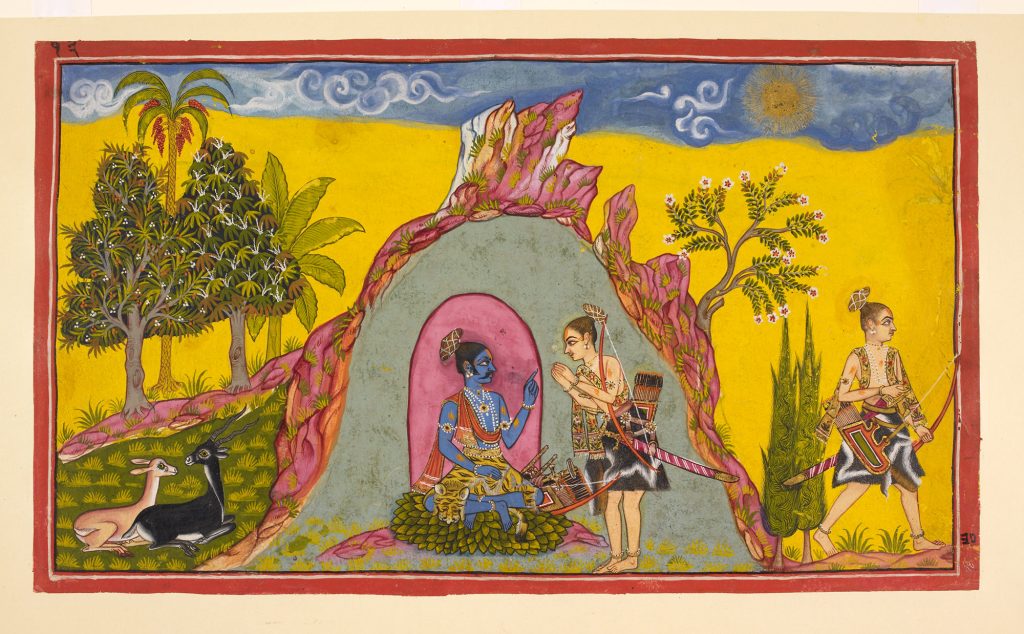
What if Valmiki did not Write Ramayanaya 

For most of the last century, Sri Lankans did not question Ramayana. A major part of the Baby Boomers, Xennials, and Millennials have read what was written by the great poet Valmiki. Sri Lankans even wished for the eventual defeat of Ravana in the middle of the story while keeping their fingers crossed to see Rama defeat the evil king. All the while they wholeheartedly forgot one very important thing. The evil king Valmiki pianted, was the ruler of their land, an ancestor from another time.

It is fair to say that the internet generation was the one who was responsible for shaking-up this narrative upside down. They alone reminded the Sri Lankans that as a nation, we were cheering the wrong camp wearing the wrong hat. An infinite number of YouTubers, bloggers, and social media personalities brought the lost fame, valor, adoration, and praise for the very soul they once chastised. Ever since, Ravana is a badge an absolute majority is wearing with great pride. “ Until the lions have their historians, tales of the hunt shall always glorify the hunter “ was proven right in the Sri Lankan context. Today the lions have their historians telling their version of the tale. Hunters keep a close watch in disbelief. There are tens of songs, films, and dramas praising King Ravana. Those creations are watched by an entire generation of Sri Lankans with so much passion and appreciation. Mandodari is no evil queen any longer. The songs about her devotion and love for her King are sung in many mouths. Ravana’s family remains mainstream heroes among Sri Lankans instead of the evil clan that was portrayed by the devotees of his nemesis.

If someone rewrote Ramayanaya today there are newer and interesting facts you could add to twist the old tale. Let’s start from Nashik, the holy city in Maharashtra. If Lakshmana was to cut the nose of  Ravana’s sister Shurpanakha in Nashik, it could only mean one thing. The region was by proxy or directly ruled by Ravana’s dynasty. How is this possible if Shurpanakha had to cross an ocean and travel 1900 + kilometers? According to the Geological history, both India and Sri Lanka were part of the Gondwana supercontinent. Surely it began breaking apart due to many reasons at some point but may have been well connected by this time. Now the very idea of Nahsik or the entirety of Maharashtra was either a tribute state or directly ruled by the Ravana dynasty could be a fact many Raman devotees and the  Indian patriots may not be able to stomach. Nonetheless, the logical possibility could not be ruled out concerning this.

The Brhamaveda mentions celestial weapons such as Brahmastra which reminds us of modern-day nukes. Prasvapna reminds us of the modern-day laser-guided weapons. Gandharvastra is similar to psychotronic weapons that caused the infamous Havana Syndrome. Although there is a high degree of divinity assigned to those ancient ones, it is fair to say that a civilization such as the one we are in today where technology is harnessed for both creation and destruction could have what existed back in the time of Ravana. The Rama-Ravana war was indeed a war where humanity used weapons of mass destruction. It not only wiped out an entire era where archeological evidence had been destroyed but could have been the reason for Sri Lanka to exist in the form of an Island with served land connection to the Indian subcontinent. Remember the earlier argument of  Ravana ruling until Nashik !

This Nuclear encounter could be one reason why we have a Ramayanaya in the form of a legend dipped in mythology. The destruction probably wiped out the otherwise rich, diverse civilization that existed in the Gondwana supercontinent or however they called it. The remaining humans kept the legend alive according to their understanding giving a sense of mysticism and divinity to facts they could not quite comprehend.

If one follows the Ramayana trails established in Sri Lanka there is a very famous mountain that goes by “Lake Gala”. The literary meaning is the Rock where the aim was taken from. It is said that long-distanced weapons, probably intercontinental missile type was launched from this. Then there is the Yahangala mountain rock where King Ravana was laid to rest after he was allegedly killed. The surprising fact is that no big tree grows here reminding an ancient site where a nuke was detonated.

To agree with everything Valmiki wrote would be an insult to our intelligence and if one tries to explain Ramayana solely through a religious lens, one would miss out on some of the most intriguing details. Modern theories could find different meanings in this particular legend. But who is ready to start a healthy dialogue without giving rouse to political and religious tensions? Only the writers could engage in such a healthy argument. 

DHANUKA DICKWELLA

About the Writer

With a master’s in International relations, Dhanuka’s expertise is in Geopolitics and Geoeconomics, among other things. In addition to being the Executive Editor of The Asian Reviews magazine, he works as a guest writer in the Chicago-based Armenian Mirror-Spectator on Caucuses-related geopolitical issues and contributes as a columnist and a guest speaker to the Indian-based Force Security magazine.

He was a grassroots Politician, a political campaign Director, and a council member of a local government body in a small town in rural Sri Lanka. Before entering active politics, he led his foundation in supporting youth and the underprivileged. Currently, he consults youth groups on political activism and general political trends.

He is a poet, blogger, and an enthusiastic climate and social activist who strongly believes in making a better world for future generations. A patriotic Sri Lankan who is a father of a loving daughter.

What if Valmiki did not Write Ramayanaya  Read More »

CHRISTOS DIKBASANIS: A LITERARY JOURNEY INTO INFINITY

Christos Dikbasanis, born in Thessaloniki in 1961, is a poet, scholar, and writer whose work seamlessly bridges the realms of literature, theology, and cultural inquiry. A graduate of the Theological School of Aristotle University of Thessaloniki (AUTH), he pursued advanced studies in religious scholarship, earning a Master’s degree (MTH) in Religious Studies. His academic background deeply informs his literary pursuits, infusing his work with philosophical introspection, existential depth, and a profound reverence for the mysteries of the universe.

A MULTIFACETED LITERARY CAREER

Dikbasanis’ literary footprint is vast and varied, encompassing poetry, essays, short stories, and scholarly studies. His evocative compositions have found a place in both national and international literary landscapes, with his poetry and essays appearing in renowned anthologies and literary journals. His words transcend the printed page, finding new life on the stage through theatrical adaptations of his poetry. His ability to capture human emotion and universal truths through verse has made his work resonate beyond linguistic and cultural barriers.

As a testament to his influence, Dikbasanis has been featured in esteemed publications such as the Great Encyclopedia of New Greek Literature by Hari Patsi and the journalistic registry Who’s Who. His poetry has been translated into English, Spanish, and Italian, expanding his literary reach across borders.

His latest poetry collection, Journey to Infinity, published by Writers International Edition, is a testament to his fascination with the cosmos, existential philosophy, and the boundless nature of human introspection. His writing often explores themes of time, loss, longing, and the metaphysical connections between human consciousness and the universe.

A LIFETIME DEDICATED TO LITERATURE AND CULTURE

Dikbasanis is a committed member of several literary organizations, including the Thessaloniki Writers’ Association (ELTH), the International Society of Greek Writers (DEEL), and the Greek-Cyprus Cultural Association (SPEK). These affiliations highlight his dedication to fostering intellectual exchange and strengthening literary ties within Greece and beyond.

His love for humanity, space exploration, nature, anthropology, mythology, and the history of religions informs his work, creating a rich tapestry that reflects both scientific curiosity and spiritual depth. His poetry does not merely contemplate the vastness of space; it examines the intimate emotions that define human existence.

A UNIVERSAL SEA: A REFLECTION OF EXISTENTIAL LONGING

Dikbasanis’ poem, A Universal Sea, captures the essence of his poetic vision. The imagery of “black waves,” “dying stars,” and “space-time like a hungry vortex” speaks to the eternal struggle between presence and absence, longing and loss. The poet becomes a solitary voice in the cosmos, simultaneously calling out and fading away into the silence of the universe.

He writes:

“Now the vast sea of ​​infinity
misspells my name
on the sand of its bottom”

These lines encapsulate the inevitable passage of time, the erasure of identity in the grand scheme of the cosmos, and the poet’s deep existential musings. It is a meditation on the ephemeral nature of dreams, love, and human existence itself.

A LEGACY OF RECOGNITION AND INSPIRATION

Over the years, Dikbasanis has received numerous national and international literary awards, cementing his place as a formidable voice in contemporary poetry and scholarship. His legacy is not just in the accolades but in the lasting impact of his work—a poetic journey that invites readers to gaze into the infinity of the universe and reflect on their place within it.

Through his contributions to literature and culture, Christos Dikbasanis continues to inspire, bridging the celestial and the human, the scholarly and the poetic, the past and the boundless future.

CHRISTOS DIKBASANIS: A LITERARY JOURNEY INTO INFINITY Read More »

JENNY SAKORAFA: A MULTIFACETED ARTIST BRIDGING THE WORLDS OF THEATER, LITERATURE, AND POETRY

Jenny Sakorafa is a distinguished Greek artist whose diverse talents span the realms of theater, poetry, literature, and music. A graduate in Theater Studies from the Faculty of Philosophy at the National and Kapodistrian University of Athens, she has cultivated a deep understanding of dramaturgy and performance. Her formal training in acting at the Veaiki Drama School and the Central Stage Drama School further solidified her artistic foundation, earning her a recognized acting diploma from the Greek Ministry of Culture.

Her passion for artistic expression extends beyond theater into the world of music. Having studied dance and attended the Musical High School of Pallini and the National Conservatory, Jenny has performed in numerous concerts, demonstrating her multifaceted artistic abilities.

A THEATRICAL JOURNEY ACROSS STAGES AND SCREENS

Jenny Sakorafa’s career in theater has been marked by performances in a wide range of productions, from historical dramas to contemporary plays. Her dedication to the craft was recognized early when she received a Performance Prize for her role in “Domna Visvizi – The Lady of Ainu” (2002), a play that brought to life one of Greece’s unsung heroines.

Beyond acting, she has played an integral role in children’s theater, taking responsibility for theater studies and direction. Through her work, she has helped shape young minds, introducing them to the beauty and discipline of theatrical expression.

Jenny’s artistic reach extends into film, television, and radio, where she has worked on numerous projects, further establishing herself as a versatile performer.

A CELEBRATED POET: AWARDS AND INTERNATIONAL RECOGNITION

Parallel to her theatrical career, Jenny has distinguished herself as an acclaimed poet. Her work has been recognized in multiple international competitions, affirming her talent in capturing the human experience through verse.

Her accolades include:

  • “Sappho” Poetry Award at the 9th World Poetry Competition of the Hellenic Amphictyony (2020)
  • “Originality Award” at the 1st World Poetry Competition (2021) for her poem on Greece’s Call to 1821-2021… Cradle of Spirit, Culture, and Peace
  • 2nd Poetry Award at the 20th World Poetry Competition of the Hellenic Amphictyony (2022)
  • Gold Book Award at the Panorama International Book Awards 2023 in India for her poetry collection Stigmes…
  • 1st Poetry Award at the 12th World Poetry Competition (2024)

Her poetry, rich in emotional depth and cultural reflection, captures fleeting moments of beauty and struggle, resonating with readers worldwide.

AUTHORSHIP: PLAYWRITING, FAIRY TALES, AND NOVELS

Jenny Sakorafa is also a gifted writer whose works span various literary genres, including theater, children’s literature, poetry, and novels. She has penned several plays that explore diverse themes:

  • One Hour
  • The Man from the Marsh
  • Jean’s B.D.

Her contributions to children’s literature reflect her deep understanding of storytelling and imagination, with titles like:

  • The Enchanted Water Lily
  • Rainbow
  • The Four Seasons

Not only has she written these fairy tales, but she has also illustrated them herself, demonstrating her creative vision beyond the written word.

Her poetry collection, Stigmes…, received international recognition, winning a Gold Book Award in 2023.

In the realm of fiction, her novel A Well Full of Birds has further solidified her place as a literary talent capable of weaving intricate narratives that captivate readers.

A LIFE DEDICATED TO THE ARTS

Jenny Sakorafa’s artistic journey is a testament to her unwavering passion for creativity. Whether on stage, behind the scenes, in the pages of a book, or through the rhythm of poetry, she continues to inspire audiences and readers with her profound storytelling and dedication to artistic excellence.

Her contributions to theater, poetry, and literature stand as a celebration of culture, philosophy, and the human experience. With numerous accolades to her name and an ever-expanding repertoire, Jenny remains a beacon of artistic brilliance in the Greek and international literary landscape.

JENNY SAKORAFA: A MULTIFACETED ARTIST BRIDGING THE WORLDS OF THEATER, LITERATURE, AND POETRY Read More »

FER DE LA CRUZ: A VOICE OF POETIC RESISTANCE AND COSMOPOLITICAL VERSE

Hailing from the culturally rich land of Yucatán, Mexico, Fer de la Cruz is a poet, literary scholar, and translator whose work bridges the ancient and the contemporary, the lyrical and the political. A prolific writer, he has authored more than twenty books, encompassing poetry in its diverse forms—lyrical, satirical, and children’s verse—alongside narrative works and literary translations. His poetry, infused with a deep ecological consciousness and a reverence for indigenous traditions, interrogates humanity’s relationship with language, nature, and identity.

His latest poetry collection, “Pero el mar no es de fiar” (2023), showcases a selection of new and previously published poems, reinforcing his place as one of the most thought-provoking poetic voices from Latin America. However, his literary pursuits are not confined to poetry alone. As a translator, he has embarked on an ambitious and groundbreaking project: a Spanish verse translation of the Popol Wuj, titled “El Popol Wuj desde el antropoceno”, offering a cosmopolitical perspective on the foundational text of the K’iche’ Maya civilization.

A PIONEER OF POETIC EXPRESSION IN YUCATÁN

Fer de la Cruz’s impact on the literary and cultural landscape of Yucatán extends beyond his written work. As a founding faculty member of the School of Creative Writing at the State Center of Fine Arts, he has nurtured and mentored a new generation of poets and writers. His commitment to democratizing poetry led him to introduce open-mic poetry readings to Yucatán, hosting a weekly event from 2008 to 2013, providing a platform for emerging voices in the region.

His poetry has transcended borders, with invitations to participate in numerous poetry festivals in France, Cuba, the United States, and various parts of Mexico, where his readings resonate with audiences drawn to his evocative and socially conscious verse.

ACADEMIC PURSUITS: POETRY, ORALITY, AND COSMOPOLITICS

Currently pursuing a PhD in Spanish at the University of California, Irvine, Fer de la Cruz is deeply engaged in exploring the intersections of indigenous poetics, orality, and cosmopolitics. His dissertation, “Múul kuxtal: Cosmopolítica y oralidad en la poesía maya contemporánea,” examines the evolving role of contemporary Maya poetry as a site of resistance, cultural reclamation, and ecological philosophy. With a master’s degree from Ohio University, he brings a unique transdisciplinary approach to his academic and creative work, positioning him at the vanguard of scholarship on indigenous literatures.

CH’AJ: THE DROPLET AS A METAPHOR FOR LIFE

Among Fer de la Cruz’s many poetic contributions, “Ch’aj: Drop of Life” stands out as a powerful meditation on water—its sanctity, its exploitation, and its enduring essence. Through these verses, he delves into the forgotten language of nature, questioning the human tendency to devalue what sustains us.

“Nothing”

In this poem, Fer de la Cruz explores the linguistic erasure of water, contemplating how different beings might name a single body of water—from the fish and the jaguar to the rain and the sun—only for humanity to reduce it to “nothing.” The poem exposes the violence of naming and misnaming, as natural spaces are dismissed as mere waste or puddles, revealing how language itself can contribute to environmental degradation.

“Drop of Life”

Here, the poet traces the journey of a droplet—ch’aj in Yucatec Maya—through time and space, highlighting how it remains indifferent to human destruction yet continues its inevitable cycle of renewal. The refrain of “ch’aj”, repeated rhythmically, evokes the continuity of water despite contamination and displacement, a poetic invocation of resilience and sacred interconnectedness.

Through these verses, Fer de la Cruz revives the voices of the elements, urging readers to listen to what nature has always spoken, yet humans have failed to hear.

A LEGACY OF RESISTANCE AND RECLAMATION

Fer de la Cruz’s work embodies a profound commitment to poetic resistance. Whether through his translations of ancient texts, his original poetry, or his academic endeavors, he continues to challenge dominant narratives, reclaiming indigenous knowledge and cosmologies that have been systematically silenced.

In an era of climate crisis and cultural homogenization, his voice emerges as a bridge—between past and present, between word and world, between erasure and remembrance. Through his poetry, the water speaks again, and in listening, we are reminded of what it means to belong to the earth.

FER DE LA CRUZ: A VOICE OF POETIC RESISTANCE AND COSMOPOLITICAL VERSE Read More »

JYOTI NAIR: AN EDUCATOR, POET, AND CHAMPION OF LITERARY EXPRESSION

A passionate educator and an ardent lover of literature, Jyoti Nair has carved a niche for herself in the world of poetry and storytelling. Holding a postgraduate degree in Political Science, she seamlessly integrates her academic expertise with her artistic pursuits, inspiring students and literary enthusiasts alike.

A Multifaceted Educator And Cultural Organizer

Beyond the classroom, Jyoti is a dynamic cultural organizer, deeply involved in curating and choreographing eventsthat celebrate artistic expression. Her contributions to the International Children’s Theatre Festival stand as a testament to her dedication to nurturing young talent and fostering a love for performance arts. Additionally, she has conducted seminars for teachers, imparting knowledge and innovative teaching techniques that enrich the educational landscape.

As the Chief Editor of her school magazine, she plays a pivotal role in encouraging creative expression among students, shaping young minds to explore literature beyond textbooks.

A Literary Journey Through Poetry And Prose

Jyoti Nair’s literary voyage is adorned with numerous accolades and publications. She has actively participated in virtual poetry events, earning recognition for her evocative verses. Her poems have been featured in prominent literary platforms such as Plethora Blogazine and magazines published by Chrysanthemum Chronicles, showcasing her ability to craft words that resonate with readers.

Anthologies and Notable Contributions

Her work has been featured in several esteemed poetry and prose collections, each exploring profound themes of divinity, nostalgia, culture, and human emotions:

  • ‘The Aniconic Cosmic Dancer: Verses of the Divine’ – A poetic tribute to the ethereal dance of the cosmos.
  • ‘Letters to the Flautist: The Unaddressed Epistles’ – A collection of poetic letters, rich in metaphor and emotional depth.
  • ‘Poems from the Kitchen’ – A celebration of culinary experiences intertwined with poetic musings.
  • ‘Monochrome Verses’ – A beautifully curated coffee table book featuring her poetry, capturing the essence of emotions through words and visuals.
  • ‘When Goddesses Walked the Earth’ – A short story anthology published by Chrysanthemum Chronicles, weaving narratives inspired by mythology and strong female figures.

Jyoti has also ventured into the realm of audio poetry with her contribution to ‘A Call From Beyond’, an Audio Poetry Anthology that amplifies poetic expression through voice and sound.

Her international reach extends to ‘Love & Longing’, an anthology published by Kavya Kumbh Publishing Consultants (KKPC), demonstrating her ability to transcend geographical and cultural barriers through her words.

A Voice That Resonates Beyond Borders

Jyoti Nair’s literary contributions echo with themes of spirituality, nostalgia, and human experiences, making her work universally relatable. Whether through written or spoken word, she continues to enrich the literary world with her profound insights and artistic finesse.

As she continues to explore new avenues in poetry and prose, Jyoti remains a beacon of inspiration—a writer, an educator, and an artist whose passion for literature knows no bounds.

JYOTI NAIR: AN EDUCATOR, POET, AND CHAMPION OF LITERARY EXPRESSION Read More »

ANNA D’AURIA: THE RESILIENT VOICE OF WOMEN, CHILDREN, AND PEACE

Anna D’Auria, a distinguished Italian author and educator, stands as a literary luminary whose works echo with themes of resilience, equality, and hope. With a deep passion for classical literature and a profound sense of social responsibility, Anna has dedicated her career to championing the rights of women and children through her powerful narratives and poetry.

A SCHOLARLY BACKGROUND AND LITERARY EXCELLENCE

Anna’s academic foundation in classical studies informs her distinct approach to storytelling. As a Latin and Greek teacher in the province of Naples, she masterfully integrates the motifs of ancient civilizations with contemporary social issues. This unique synthesis has earned her widespread recognition, including participation in the prestigious Sanremo Writers 2023 and the Turin Book Fair.

Her literary achievements have garnered nominations for the Premio Strega Poesia in both 2023 and 2024 for her poetry collections I Colori di Kiev and Cristalli. L’anima delle Donne. These works are a testament to her ability to weave lyrical artistry with poignant social commentary.

A CATALYST FOR SOCIAL CHANGE

Anna’s commitment to social causes extends beyond her writing. Actively collaborating with organizations such as Lions, Fidapa, and Word Woman Talent System, she advocates for peace, freedom, and the eradication of violence. Her writing serves as both a mirror and a call to action, addressing pressing global issues such as sexism, child marriage, and the impacts of war.

In her award-winning novel Mala Jin. Tulipani nel Cemento, Anna captures the struggles and sacrifices of Kurdish women, shedding light on their courage amidst adversity. This groundbreaking work has been celebrated at conferences, schools, and even the Italian Chamber of Deputies, underlining its impact on both literature and activism.

A LEGACY OF ACCLAIMED WORKS

Anna’s literary repertoire is vast and impactful, with each work addressing a different facet of the human experience:

  • “La Rosa Bianca di Izmir” delves into the harrowing issue of child brides, winning accolades like the Litterae Fiorentine Critics’ Award.
  • “Trema la Vita” explores the resilience of women rebuilding their lives post-disaster and has been adapted into a theatrical production in Brindisi.
  • “I Colori di Kiev” advocates for peace amidst the turmoil in Ukraine, earning prestigious honors such as the Borghi della Lettura Prize and the Pino Daniele Award.

Her upcoming novel, Nayef e Norah. L’Amore non tace, set to debut at Sanremo Writers 2025, narrates the poignant story of twin siblings divided by the Palestinian-Israeli conflict. This deeply introspective work highlights themes of familial reconciliation, the human cost of division, and the enduring hope for peace.

HONORS AND INTERNATIONAL RECOGNITION

Anna’s contributions to literature have been widely recognized by esteemed institutions, including the Treccani Publishing House and the International Universum Academy in Lugano, which named her Honorary Academic. Her works have been translated into Romanian and featured in international journals, further expanding her influence.

She has received numerous awards, including the International Oscar Wilde Award, the Grand Award for Excellence, and multiple accolades for her novels and poetry collections. Her works often inspire educational initiatives, such as high school writing competitions, ensuring that her literary legacy continues to shape future generations.

THE WRITER AS AN ADVOCATE

Through her roles as testimonial, patron, and jury member at cultural events across Italy and beyond, Anna embodies the transformative power of literature. Whether through her poetic advocacy for peace in Ukraine or her stories of women’s resilience, her voice resonates with a universal call for justice, compassion, and unity.

Anna D’Auria’s literary journey is a testament to her unwavering dedication to both art and humanity. Her stories and poetry transcend borders, inspiring readers to confront societal injustices and dream of a better world. As she continues to write, teach, and advocate, Anna remains a beacon of hope and a champion of voices too often unheard.

Her works remind us that literature is not just a reflection of society—it is a powerful tool to shape it. Through her eloquence and empathy, Anna D’Auria leaves an indelible mark on the world of letters and beyond.

ANNA D’AURIA: THE RESILIENT VOICE OF WOMEN, CHILDREN, AND PEACE Read More »