Writers International Edition

Articles

biography of Professor Obrillant Damus

A Life in the Service of Knowledge: The Academic Formation and Scholarly Trajectory of Professor Obrillant Damus

Among the sociologists and educators who have shaped contemporary Haitian intellectual life, Professor Obrillant Damus occupies a distinctive position. His career, spanning linguistics, sociology, and education, illustrates a sustained engagement with the social conditions of Haiti as well as with the broader francophone academic world in which he was trained. This article presents a biographical and academic account of Professor Damus, tracing his educational formation, the scholarships and honors that marked his early career, his doctoral and postdoctoral research, and the institutional roles he currently holds at the State University of Haiti, the University Quisqueya, and Laval University in Québec. In doing so, it situates his individual trajectory within the wider context of Haitian higher education and its historical ties to the francophone academic networks of France and Canada.

Origins and Early Educational Formation

Obrillant Damus was born in Petit-Goâve, a coastal commune in the department of Ouest, Haiti, a region historically associated with commerce, agriculture, and a strong tradition of communal life. It was in this setting that his early formation took place before he pursued higher education at the State University of Haiti, where he enrolled in the Department of Applied Linguistics. His performance within this department distinguished him early, culminating in a certificate of excellence awarded by the Haitian Students Association in recognition of his standing as laureate of the department’s admission contest.

This early distinction proved consequential for the remainder of his academic career. The recognition secured him a four-year scholarship, sponsored by the French government and spanning the years 2001 to 2005, which allowed him to pursue advanced study without the financial constraints that limit the trajectories of many Haitian students. The scholarship functioned as more than a financial mechanism; it inaugurated Damus’s long-standing relationship with French academic institutions, a relationship that would define much of his subsequent scholarly formation.

Graduate Studies Across the Caribbean and Metropolitan France

In 2006, Damus received a further grant from the French government, this time to pursue graduate study at the University of the West Indies and Guiana (Université des Antilles et de la Guyane, UAG). This stage of his education situates him within a network of Caribbean scholarship that bridges Haiti with the francophone Antilles, a region whose universities have long served as intermediaries between Haitian intellectual life and the institutions of metropolitan France.

During his time at UAG, Damus received the support of Pascal Saffache, then Dean of the College of Humanities and Social Sciences, whose backing was instrumental in Damus’s subsequent scholarship from the French Embassy in Haiti. This scholarship enabled him to complete a second master’s degree, referred to in the academic nomenclature as the M2, at the University of Paris 8, an institution recognized for its tradition of critical sociology and its historical association with post-1968 French intellectual movements.

His master’s thesis, submitted within the Master’s program in Sciences of Education and Training, specializing in Education Throughout Life, addressed questions situated at the intersection of medical ethnology and anthropology. The thesis was upheld with an honors mention, achieving a grade of 18 out of 20, a result that in the French academic grading system signifies work of exceptional distinction. The thesis was further recognized by Cancéropôle Île-de-France, an organization dedicated to cancer research within the Île-de-France region, which acknowledged both the quality of Damus’s analysis and its potential relevance to the scientific study of illness and care.

International Recognition and the Francophonie

The year 2008 marked a significant moment of public recognition in Damus’s career. During the commemoration of the International Day of the Francophonie in March of that year, the International Organization of the Francophonie (Organisation Internationale de la Francophonie, OIF) awarded him a literary prize. The ceremony was notable for the presence of Abdou Diouf, then Secretary General of the Organization, as well as the attendance of French President Nicolas Sarkozy. This recognition situates Damus not merely as an academic researcher but as a participant in the broader cultural and literary life of the francophone world, an identity that complements his sociological and linguistic scholarship.

Doctoral Research: Solidarity and Cancer in Haiti

Between 2008 and 2011, Damus undertook doctoral research in sociology, a period that represents the methodological and theoretical culmination of his earlier training in linguistics, medical anthropology, and education. His doctoral thesis, titled Solidarity and Cancer in Haiti, was defended at the University of Paris 8 on December 7, 2011, and was upheld with the mention Très Honorable, the highest distinction awarded within the French doctoral system.

The subject of the thesis, examining the social structures of solidarity that emerge around the experience of cancer within Haitian communities, reflects a broader concern that runs throughout Damus’s scholarship: the manner in which illness, vulnerability, and care are mediated by social and cultural frameworks rather than being reducible to purely biomedical categories. This orientation toward the sociology of illness, informed by his earlier work in medical ethnology, positions his doctoral research as a bridge between the fields of medical anthropology and sociology proper, and reflects an effort to understand Haitian social life through the lens of shared vulnerability and collective response to suffering.

Postdoctoral Study under Michel Maffesoli

Following the completion of his doctorate, Damus undertook postdoctoral study at the Centre d’Étude sur l’Actuel et le Quotidien (CEAQ), housed at Paris 5 Sorbonne, under the coordination of Michel Maffesoli, a sociologist whose work on the sociology of everyday life, postmodernity, and the sociology of the imaginary has exerted considerable influence on French sociology since the late twentieth century. Maffesoli’s theoretical concerns, particularly his attention to the affective and communal dimensions of social life, resonate with the themes present in Damus’s own research on solidarity, ritual, and vulnerability. This postdoctoral period consolidated Damus’s position within the intellectual lineage of French sociology while allowing him to further refine his analysis of Haitian social phenomena through frameworks developed in dialogue with Maffesoli’s school of thought.

Academic Positions and Institutional Affiliations

Damus holds professorial appointments at two of Haiti’s principal institutions of higher education. At the State University of Haiti, he serves as professor of anthropology and is assigned to the Institute of African Studies and Research of Haiti. He taught and supervised research for many years in the master’s program in history, memory, and heritage. He co-led the doctoral seminar “Epistemology of the Social Sciences” at the postgraduate studies office of the State University of Haiti. He was a member of the research laboratory LADIREP, whose full designation, Langage, Discours, Représentations, indicates a sustained institutional focus on the relationship between language, discourse, and social representation, a focus consistent with Damus’s own training in applied linguistics and his later sociological work.

At the University Quisqueya, a private institution recognized for its contributions to Haitian higher education, Damus served as coordinator of the doctoral program in education, a role that places him at the center of doctoral training and curriculum development within the field. He also served as director of the university’s educational research center. 

Beyond Haiti, he holds the position of associate professor at the University of Sherbrooke (School of Law, Center for Contemporary Religious Studies) in Québec, Canada, an appointment that reflects the continuation of his engagement with francophone academic networks beyond both Haiti and France, extending his scholarly reach into the North American francophone context. He is a member of the supervisory committee for doctoral students at the Center for Contemporary Religious Studies at the University of Sherbrooke. He is the national representative of the UNESCO Chair in Education and Health. He is a member of the Athens Institute for Education and Research. He is an associate member of the UNESCO Janus Korczak Chair in Social Pedagogy (Maria Grzegorzewska University). He is a member of the Laboratory of Linguistics, Language Engineering, and Language Teaching at the University of Rennes 2. He is a member of the Scientific Advisory Board of the Observatory of the French Language of the International Organization of La Francophonie (OIF Representation for the Americas, representative for the Caribbean).

Taken together, these appointments describe a career that operates simultaneously within multiple institutional and national frameworks: the public university system of Haiti, the private university sector represented by Quisqueya, and the international francophone academic community represented by University of Sherbrooke. This multiplicity of institutional roles is consistent with the broader pattern of his formation, which from its earliest stages was shaped by movement between Haitian, Caribbean, French, and eventually Canadian academic contexts.

Research Program and Intellectual Contributions

The range of Damus’s research interests reflects the interdisciplinary character of his formation. His documented areas of research include the rituals surrounding birth, the sociology of solidarity, disability, nursing rituals, the social and cultural dimensions of rape, local and indigenous knowledge systems, ontological vulnerability, prostate cancer, culturally specific diseases, the relationship between Creole and French within Haitian linguistic life, education oriented toward love and peace, and the social practice of breastfeeding.

He also works on exciting and innovative topics such as regenerative and restorative pedagogy, education for regenerative and restorative global citizenship, and education for global consciousness. Published by UNESCO and The University of Sherbrooke Press, his work on these topics has led him to develop the concept of regenerative and restorative Francophonie, which is featured in the International Organization of La Francophonie’s new quadrennial report on the French language around the world.

Professor Obrillant Damus has a growing body of international experience. In fact, he has served as a lecturer and visiting professor at several foreign universities (Laval University, University of British Columbia, Rennes 2 University, Maria Grzegorzewska University, Federal University of Rondônia,etc.). He has won several academic writing competitions organized by UNESCO. In particular, he has collaborated on multiple occasions with UNESCO’s “The Futures of Education” team in the education sector, as well as with the natural sciences sector (LINKS, Local and Indigenous Knowledge Systems).

He edits the journal “Anthropologie des Savoirs des Suds” published by Éditions de l’Université de Sherbrooke, as well as the “La Documentation haïtienne” series published by Éditions l’Harmattan (Paris). 

The academic trajectory of Professor Obrillant Damus illustrates the interconnections between Haitian, Caribbean, French, and Canadian institutions of higher learning, and demonstrates how individual scholarly formation can be shaped by, and in turn contribute to, these transnational academic networks. From his early distinction in applied linguistics at the State University of Haiti, through his graduate studies in the French Antilles and Paris, to his doctoral research on solidarity and cancer and his subsequent postdoctoral work under Michel Maffesoli, Damus’s career reflects a sustained inquiry into the social dimensions of vulnerability, care, and language within Haitian society. His current appointments at the State University of Haiti, the University Quisqueya, and Laval University position him as a figure whose influence extends across national boundaries while remaining rooted in the study of Haitian social life. His scholarship, taken as a whole, constitutes a significant contribution to the sociology of illness, the sociology of solidarity, and the study of language and education within the francophone Caribbean world.


A Life in the Service of Knowledge: The Academic Formation and Scholarly Trajectory of Professor Obrillant Damus Read More »

story of Wang Jibing

Wang Jibing: The “Delivery Poet” Who Earns China’s Highest Literary Prize

There is a particular kind of light that falls on a man waiting at a red signal, engine idling, food growing cold in the box behind him, and somewhere in that light a line of verse arrives uninvited. This is how Wang Jibing has written most of his poems. Not at a desk. Not in the hush of a study lined with books. But between orders, between elevators, between the small immovable delays that make up the working day of a delivery rider in Jiangsu province.

Wang was born in 1969 into a poor household in a village in Pizhou. He left school after junior high, and the years that followed him were the years that follow so many in that part of the world who are given labour instead of leisure. He dredged sand from riverbeds. He worked construction. He collected waste. He carried, in whatever sense a body can carry, the weight of a life that had no obvious place in it for poetry. And yet in the evenings, after the sand had been dredged and the day accounted for, he would find some scrap of a table, in some shed barely large enough for it, and there he continued to write. Not because anyone was waiting to read him. Because something in him needed to set the day down in words before it disappeared.

In 2019, at fifty, Wang became a food delivery rider. It was, on the surface, simply another manual trade, one more uniform to wear in a life that had already worn several. But something in that particular work, the waiting, the traffic lights, the elevators that rise and fall without hurry while a rider stands inside them thinking of nothing and everything, gave his writing a new register. He began to compose poems in these intervals, on his phone, between the ordinary tasks of delivering someone else’s dinner. In 2022, one of these poems, “People in a Hurry,” was shared by a fellow admirer of poetry and found its way to millions of readers. A man on a scooter had, without meaning to, become a voice for a generation of workers who move through cities unseen.

This month, that voice reached the country’s highest literary threshold. Wang Jibing’s poetry collection, translated as Low Flight, has been named among the winners of the ninth Lu Xun Literature Prize, one of the most prestigious honours in Chinese letters, awarded once every four years by the China Writers Association. The prize carries the name of Lu Xun, a writer remembered for looking without flinching at the century he lived through. It has, for decades, been understood as an arena for professional writers, for those whose lives were arranged around literature rather than around survival. This year, that arrangement loosened. Alongside Wang, a market vendor who has tended a general goods stall for eighteen years was nominated for a collection of essays. A shift, quiet but unmistakable, has entered the way a nation decides whose life is permitted to become literature.

What makes Low Flight more than a curiosity, more than the story of an unlikely man in an unlikely place, is the labour behind it. To complete the collection, Wang did not simply mine his own days for material. He sought out some hundred and forty fellow delivery riders, paying small sums from his own pocket so that they might answer his questions, so that their days too might be set down somewhere permanent. He wanted the book to hold not one man’s exhaustion but the shared and largely invisible exhaustion of an entire trade, the small griefs and endurances of the more than ten million riders who move through Chinese cities each day carrying other people’s meals while their own lives go mostly unrecorded. “I am one of them,” he has said. “I face pressure, and I have moments when I break down.” The poems do not ask to be admired for overcoming this. They simply ask to be read as true.

Asked what winning meant to him, Wang did not reach for triumph. He said that on the day of the announcement, what he wanted most was to return to his scooter and continue his rounds, because it is only in staying grounded, in remaining close to the actual weight of the actual day, that a clear mind for writing can be found. There is something here worth sitting with quietly. He did not treat the prize as an arrival, a door through which he might now pass into some other life. He treated it as confirmation of a discipline he had already been practising in silence for years, the discipline of noticing.

He has described the honour as something closer to a signpost than a summit. Not proof that ordinary people must now become poets, but proof that any life, however plain its surface, carries within it the possibility of being expressed and understood. This is, perhaps, the quiet argument his whole body of work has been making without raising its voice. That literature does not begin where hardship ends. That it often begins exactly there, in the gap between one delivery and the next, in the pause at a red light, in the tiredness that a man carries home and somehow transforms, before sleep, into a line worth keeping.

An English edition of Low Flight is expected to reach American readers by the end of this year. Wang is already at work on a collection of essays. Whatever comes of it, something has already shifted. A door that literature kept narrow for a long time has, for one delivery rider from Jiangsu, opened. And through it, perhaps, others will begin to see that the ordinary hours of their own lives, the waiting, the weariness, the small unremarked persistence, were never as far from poetry as they seemed.


Writers Capital International Foundation www.writerscapital.org | care@writerscapital.org

Wang Jibing: The “Delivery Poet” Who Earns China’s Highest Literary Prize Read More »

BIOGRAPHY OF DR ANAMIKA NATH

The Scalpel and the Verse: The Life and Work of Dr. Anamika Nath

There is a particular kind of courage in choosing to look at the body as both wound and testimony, and then to turn from that examination table to a blank page and write of butterflies. Dr. Anamika Nath, forensic physician and poet, has spent her life moving between these two rooms, one lit by clinical necessity, the other by something closer to grace, and in Bruises and Butterflies, her most recent poetry collection, the two rooms finally open into each other.

Dr. Anamika is a faculty member in Forensic Medicine, an active medical researcher, and the author of three books, the latest of which, Bruises and Butterflies, is her most personal collection yet. Where her earlier work, including Bones and Blossoms, explored womanhood, resilience, identity, trauma, and death, this new collection sharpens that focus further, drawing directly on the two vantage points from which she has spent her life observing the human condition: the examination table and the page.

She was born in Agartala, Tripura, and grew up in a household shaped by books, close family ties, and the unhurried rhythms of ordinary life. Monsoon afternoons, family games, and her grandparents’ recollections of a country they had left behind but never fully set down are among her earliest memories. Her family and teachers, she has said, shaped her values more than anything else in those years, instilling in her honesty, kindness, perseverance, and a lasting commitment to learning, qualities that gave her the confidence to later pursue both medicine and literature at once.

Her interest in writing began early and by accident. In the third grade, after a visit to a village fair with her grandfather, she came home and wrote her first poem, titled The Park. It was a small, unremarkable start by most measures, but it marked the beginning of a lifelong habit. Among her earliest literary influences was Rudyard Kipling, particularly his poem If, whose themes of resilience, humility, and steady character stayed with her well into adulthood. Alongside literature, her work as a doctor and the lives of the people she has encountered through it have shaped her writing just as significantly.

Her path into medicine was driven initially by an interest in crime thrillers and a wish to pursue something outside the conventional track. Forensic Medicine offered a combination of scientific rigor, investigation, and the pursuit of truth that appealed to her, along with the chance to build a distinct identity within the field. In practice, the work has done more than shape a career. It has deepened her understanding of humanity, reminding her, case after case, that every file represents a human story rather than a purely medical or legal one, and reinforcing for her the importance of empathy, dignity, and honesty.

She began writing poetry seriously during the COVID-19 pandemic. Watching the scale of loss around her at the time brought a stark question to mind: what if she died before fulfilling her own ambitions. Rather than settling into despair, that thought pushed her toward consistency, and she began writing and sharing her work in earnest from that point on. Her poems draw largely from three sources: the experiences of women, the human stories she encounters through her forensic practice, and the people closest to her, whose influence runs through her treatment of love, loss, resilience, and hope.

Bruises and Butterflies brings these threads together directly. She describes the collection as growing out of the two defining facets of her life, medicine and poetry: as a forensic doctor she witnesses pain, loss, and human resilience, and as a poet she searches for hope and beauty within those same experiences. Asked to summarize the book in a single sentence, she calls it the meeting point of the science of her profession and the soul of her poetry, the best of both. Her hope for readers is a simple one: that they recognize something of themselves in the poems, and come away with the sense that even deep wounds can coexist with beauty and hope.

Balancing a full medical career with a serious writing practice has not been easy. The greatest challenge, in her own account, has been finding the time and consistency to write around the demands of clinical work. Writing, in turn, has become her way of slowing down and reconnecting with herself outside that pressure. She names the most memorable moments of her literary career not as her awards, but as messages from readers she has never met, telling her that a particular poem reached them at a difficult moment. That kind of response, she has said, means more to her than any prize.

The recognition has nonetheless been substantial. She won the Delhi Poetry Slam Contest in 2023, placed second at the Rabindranath Tagore International Poetry Award in 2024, and received both the Verse of Silence Pamphlet Prize and the Deepti Srivastava Memorial Award in 2025. She has been longlisted for the Wingword Prize three years running, from 2023 to 2025, and was a finalist at the Lucky Jefferson Contest in 2025. She currently serves as Poetry Editor at The Boundless Press, alongside a body of national and international recognition in medical science conferred by forensic academies. The cover of Bruises and Butterflies was unveiled at the Global Vision Summit 2026 in Athens, an occasion she has described as surreal and humbling, a reminder that work rooted in personal experience can still travel far beyond where it was written.

Away from medicine and writing, she finds a similar kind of steadiness in travelling to the mountains, photographing everyday life, and spending time with her children. These are the moments, she says, that let her slow down and see the world with fresh eyes.

Her advice to poets who hesitate to share their work is direct: write honestly from lived experience rather than borrowed style, since an authentic voice is what ultimately sets a writer apart, and the only way forward is to take that first step. Asked how she would like to be remembered, she does not reach for a grand answer. She hopes simply to be remembered as an ordinary person who stood for truth, with compassion in her heart, integrity in her work, and honesty in her words, a description that, read against the collection she is now publishing, feels less like an aspiration than an accurate account of the life she has already lived.

The Scalpel and the Verse: The Life and Work of Dr. Anamika Nath Read More »

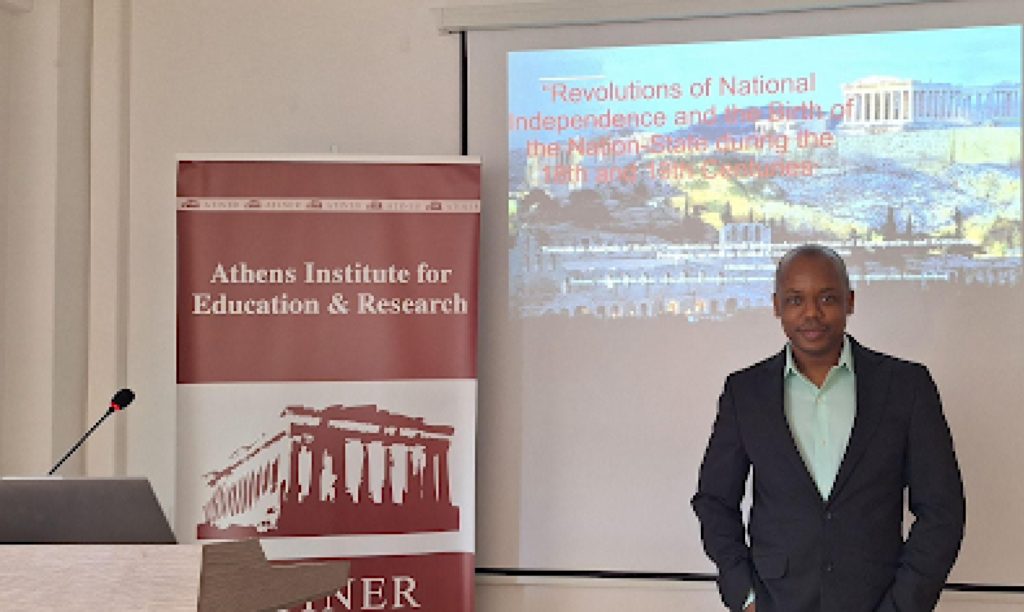
Haiti And The Greek War Of Independence: Presentation By Obrillant Damus At The Athens Institute Conference

Haiti And The Greek War Of Independence: Presentation By Obrillant Damus At The Athens Institute Conference

The Athens Institute, established in 1995 as an independent, world-wide body of academics and researchers, organizes small academic meetings while also promoting research and producing publications. Over 1000 such academic events have been organized since 1995 attended by scholars from all over the world. Besides the publication of over 200 books, a series of conference papers have also been published as well as the introduction of a series of e-journals.

For Greece’s national anniversary marking the War of Independence of 1821 against over 400 years of Ottoman rule, the Athens Institute held its 3rd Special Event under the auspices of the Athenian Academic Periodical, titled “Revolutions of National Independence and the Birth of the Nation-State during the 18th and 19th Centuries” on Monday, March 30, 2026.  The topic chosen is very appropriate as it refers to the struggle for independence that reshaped the ideas of sovereignty, citizenship and identity not only on a local scale but on a global one as well through the political, social and cultural dimension that it expressed. This transition from empires to sovereign states was filled with wars and conflicts, ideologies and international interventions as well as the influence of transatlantic revolutionary ideas. It was a time when the ‘Old World’ was coming to an end and the ‘New World’ beginning.

The date of March 25th for celebrating the Greek War of Independence is deeply symbolic as it combines both religious meaning and national identity.  It was not chosen to mark the exact beginning of the war for independence as uprisings had started much earlier in various parts of the Peloponnese, but because it symbolically blends faith and freedom. March 25th is the day of the Annunciation in the Orthodox Christian calendar, the moment when the Archangel Gabriel announces to the Virgin Mary she will give birth to Jesus Christ. This symbolizes good news and hope as well as a new beginning for humanity. By linking the war of independence to this day, the uprising was portrayed as a spiritual rebirth of Greece, unifying scattered uprisings and strengthening the connection between Greek identity and Orthodox Christianity. It turns the revolution into not just a political revolt, but a moral and spiritual mission.

The lecture by Obrillant Damus (Full Professor, State University of Haiti, Haiti, Visiting Professor, Laval University & adjunct professor, University of Sherbrooke, Quebec) threw light on another aspect of the Greek War of Independence as it referred to the benefits gained from Haiti’s ‘regenerative and restorative pedagogy’, which refers to ‘a set of methods and knowledge aimed at regenerating ourselves, regenerating others, and repairing the past and the present with a view to human, ecological and planetary sustainability.’ (Damus, 2024). This knowledge is important as it helps the oppressed to overcome the traumas that they experienced under suppressive regimes such as that of the Ottoman Empire. These traumas and experiences are passed on from one generation to the next and therefore it is important for both sides, the oppressed and the oppressor, to understand this and to come to terms with it. This is the difficult part.

Greece benefited from Haiti’s regenerative and restorative pedagogy because Haiti not only sent a shipment of coffee that could be sold for the buying of arms, but also moral support by sending 100 volunteers to fight alongside the Greeks in their fight for freedom, who unfortunately lost their lives on the way to Greece. This supportive act bolstered the self-confidence, the self-esteem, and the determination of the Hellenes to put an end to centuries of Ottoman ‘cultural genocide or ethnocide, physical genocide, the destruction of the Byzantine heritage, and the destruction of religious architectural heritage.’ (Excerpt from Obrillant Damus’s lecture titled “Towards an Analysis of Haiti’s Contribution to Greek Independence in Terms of Regenerative and Restorative Pedagogy, as well as Global Citizenship Education”, Athens Institute on March 30, 2026)

Learn more: Damus, Obrillant (2024).  Regenerative and restorative pedagogy: the foundation of new contract for cognitive justice, UNESCO-Prospects. 

Sam Zylberberg, 2019 : https://jeretiens.net/le-genocide-grec-pontique-1914-1923/.

Haiti, being the first “Black” republic, set an example for others to follow as its independence in 1804 after a 12-year fight against France marked a turning point for those under colonial rule and slavery. The success of their fight led to the support of other national struggles such as the Greek War of Independence in 1821, ” universalizing human rights and citizenship” (Excerpt from Professor Obrillant Damus’s lecture at the Athens Institute on March 30, 2026)

Although Greece was still fighting for its freedom against Ottoman rule, the 1st National Assembly convened at the township of Epidaurus, where a Decree was signed in January 1822 abolishing slavery. This made Greece the first country in modern Europe to abolish slavery on its soil and globally the second only to Haiti. Such examples of moral and material support set a standard for others to follow. 

Haiti responded to the call for help sent on August 20, 1821, by the Greek intellectual Adamantios Korais, a member of the Philhellenic Committee of Paris. The rest of Europe preferred to ignore this plea as they did not want to disturb the status quo.

On January 15, 1822 (the 19th year of Haiti’s independence), Jean-Pierre Boyer, Haitian military officer and president of Haiti from 1818 to 1843, replied to Korais’ letter.  A part of his letter was directed to the Greek citizens, giving them the moral strength to continue their struggle. 

“Citizens! Convey to your co-patriots the warm wishes that the people of Haiti

send on the behalf of your liberation. The descendants of ancient Hellenes look

forward, in the reawakening of their history, to trophies worthy of Salamis. May

they prove to be like their ancestors and guided by the commands of Miltiades,

and be able, in the fields of new Marathon, to achieve the triumph of the holy

affair that they have undertaken on behalf of their rights, religion and motherland.

May it be, at last, through their wise decisions, that they will be commemorated

by history as the heirs of the endurance and virtues of their ancestors.”

Source: https://200years.mfa.gr/en/recognitions-first-period-revolution-en/haitien/#:~:text=15%20January%201822.,leader%20of%20an%20independent%20State

It can be said that Jean-Pierre Boyer was also influenced by the ancient Greek officers and statesmen such as Leonidas, Miltiades and Themistocles, who had also given their lives for the freedom and independency of their country against the Persian invasion. Such examples are interconnected as one influences the other. 

“The regenerative and restorative pedagogy implemented by the New State of Haiti helped to curb the processes of identity destruction (identicide)—whether state-sponsored, religious, or linguistic—in Greece. The moral and political support Greece received from Haiti served as fertile ground for the country’s de-Ottomanization (strengthening of Christianity, reduction of the process of cultural mixing, particularly in the areas of language, music, and cuisine). It is worth noting here the role of the Orthodox Church in preserving the Greek language and culture in the face of centuries-long Ottoman oppression.) 

Source: Excerpt from Professor Obrillant Damus’s lecture at the Athens Institute on March 30, 2026. 

In conclusion, the political, social, and cultural dimensions of struggles for independence continue to shape nations long after formerly oppressed peoples have secured their freedom and sovereignty. The former ruling power must likewise undergo a process of adjustment to the new geopolitical reality, so that tensions between the two sides may gradually evolve toward a balanced coexistence. In the absence of such adaptation, these tensions risk escalating into renewed conflict, as evidenced in various regions of the contemporary world. At the same time, newly independent states, to preserve and fully realize their freedom, must remain vigilant and committed to its defense, demonstrating resilience in the face of emerging challenges and adversities.

Despena Dalmaris

__________________________________________________________________________

About the Author

Despena Dalmaris is an educator and literary professional serving as Chief Coordinator of Australia. She has extensive experience in English language instruction across Papua New Guinea and Sydney, with expertise in individualized teaching and preparation for international examinations, including Cambridge and Michigan certifications. She is an executive member of Writers Capital Foundation and serves as Editor of Writers International Edition, contributing to the advancement of global literary initiatives.
Haiti And The Greek War Of Independence: Presentation By Obrillant Damus At The Athens Institute Conference Read More »

When Certain Encounters Redefine a Lifetime: A reflection on Silla Maria Campanini and the journey we continue to share

In life, we come across a number of people. However, certain encounters can change the entire direction of life. The meeting with Silla Maria Campanini is one such incident. It was not an encounter that announced itself with clarity or intent. It arrived quietly, almost anonymously, and revealed its meaning only with time. Looking back now, it is evident that this meeting was not accidental. It was necessary.

The Beginning: A Foundation Born in Uncertainty

The early days of Writers Capital International Foundation were marked by uncertainty, restraint, and resolve. The foundation was not built on abundance. It began with struggle, with faith, and with the last pennies available in my savings. There was vision, but there was also vulnerability. The question was not whether the work was meaningful, but whether it could survive.

It was during these fragile initial days that Silla appeared. Even now, I cannot clearly recollect how we met. There was no planned introduction, no deliberate search for collaboration. She emerged from nowhere, as though she had always been meant to be there. It did not take long to realise how important this connection was going to be. Her presence carried with it a sense of assurance, a quiet confirmation that the path ahead, though difficult, had a direction.

With Silla entering the foundation, it felt as though something aligned naturally. What was once an effort to hold things together slowly began to find form. Not through force or ambition, but through steadiness.

Building a Cultural Bridge

Soon after, our programmes began to take shape. What followed was remarkable. A large number of talented individuals, particularly from Italy, started joining the foundation. Writers and artists came forward with sincerity and commitment. This was not recruitment in the conventional sense. It was resonance. A cultural bridge began to form organically, anchored in trust and shared values.

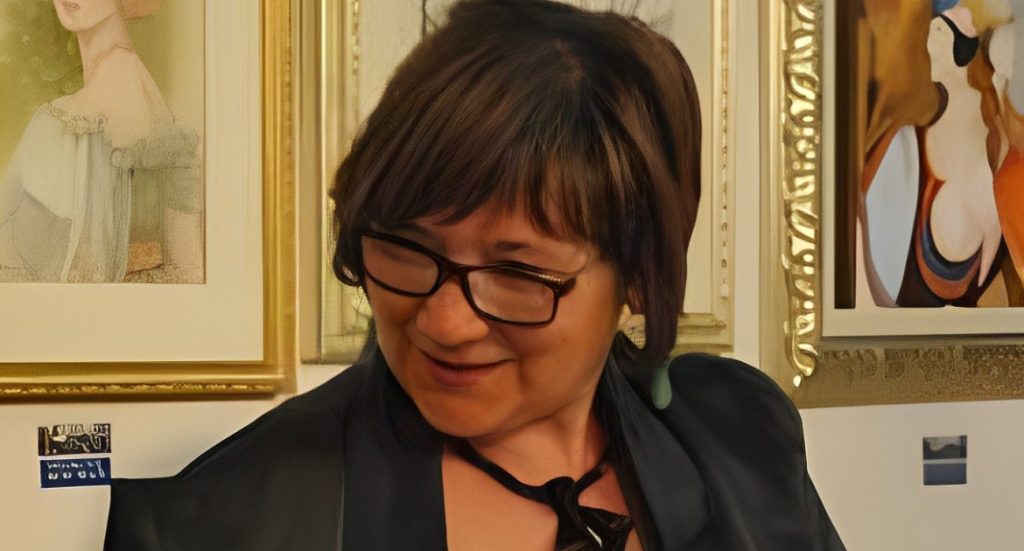
During this period, Alfredo Pasolino, a renowned artist and critic, joined us. Elderly in years but profound in spirit, he surprised me with a depth of affection that felt unmistakably paternal. His love was boundless, uncomplicated, and deeply human. He later became the President of the Foundation, while Silla took on the role of Vice-President. Even today, our memorial office address in Italy stands in his name. It is not merely an address. It is a reminder that the foundation was shaped as much by relationships as by ideals.

Alongside him, Pasquale Solano played a crucial role through his active presence and commitment. These individuals did not contribute from a distance. They stood within the foundation, strengthening it through participation and belief.

Silla the Artist: Depth Beyond Form

Silla Maria Campanini’s artistic journey stands independently as a significant contribution to contemporary art. Born in 1954 in a village in the province of Bologna, her early life was shaped by earth, landscape, and colour. Her journey from technical consultancy to teaching, and later to becoming a distinguished image educator, reflects an evolution rooted in discipline and intuition.

Her recognition in 2016 as a member artist of the art and culture department of the Belgrade Academy of Sciences and Arts acknowledged a body of work that was already mature in thought and expression. Her exhibitions, both personal and collective, across national and international platforms, placed her work within galleries, museums, and public spaces that continue to engage viewers deeply.

Her art does not conform to trends. It inhabits a metaphysical space where fantasy, symbolism, and the collective unconscious intersect. Her paintings move beyond time and geography, engaging with dramatized inner forms and unspoken emotional structures. As Alfredo Pasolino once observed, her works resonate with the stormy peaks of an undulating soul. They do not explain themselves. They invite presence.

Loss, Silence, and an Unseen Bond

Beyond her public journey lies a deeply personal grief. There is no greater pain for a parent than witnessing the passing of a child while they themselves remain. Silla endured such a loss when her daughter Serena passed away at a very young age. This loss left a quiet, enduring pain within her, one that never sought attention, yet was always present.

Though I never met Serena, though she would perhaps have been of my own age had she lived, I developed for her a love similar to that of my own sister. For us, she was and remains an angel. We believe she is still there, unseen yet present, blessing us. One of the most important recognitions instituted by the foundation, the Child Prodigy Award, bears her name. It stands not as a memorial of sorrow, but as a continuation of life and promise.

A Bond Beyond Definition

Our connection was never linear. There were ups and downs, moments of closeness and periods of silence. Though I often referred to Silla as a sister, her presence was deeply motherly. And like a mother, she corrected me when necessary. There were times when silence lasted for months. Yet, like a mother and son finding their way back after a disagreement, we always returned to each other. Without negotiation. Without explanation.

There are certain things that language cannot contain. Certain connections operate beyond logic. During difficult phases of my life, she would appear suddenly, as though she knew. At other times, I sensed the same pull towards her. In this life of forty-six years, I can say this without hesitation: there has been no other connection like this. And it continues still.

A Presence That Endures

Silla Maria Campanini continues to inspire the world of art through her work, her teaching, and her quiet integrity. For me, her role has been far more intimate. She has been direction during uncertainty, correction without harshness, silence without distance, and presence without demand.

Some encounters pass through our lives as moments. Others become part of our inner structure. Silla belongs to the latter. This article stands not as celebration alone, but as record. A record of a bond shaped by struggle, faith, loss, and trust. One that time has not diluted, and circumstances have not undone.

On her birthday, this reflection is offered with seriousness and gratitude. For her presence in my life. For her role in the foundation. And for a connection that continues, quietly and unwaveringly, as it was always meant to.

When Certain Encounters Redefine a Lifetime: A reflection on Silla Maria Campanini and the journey we continue to share Read More »

New-Zealand Maoris Struggle- A fight Beyond Haka

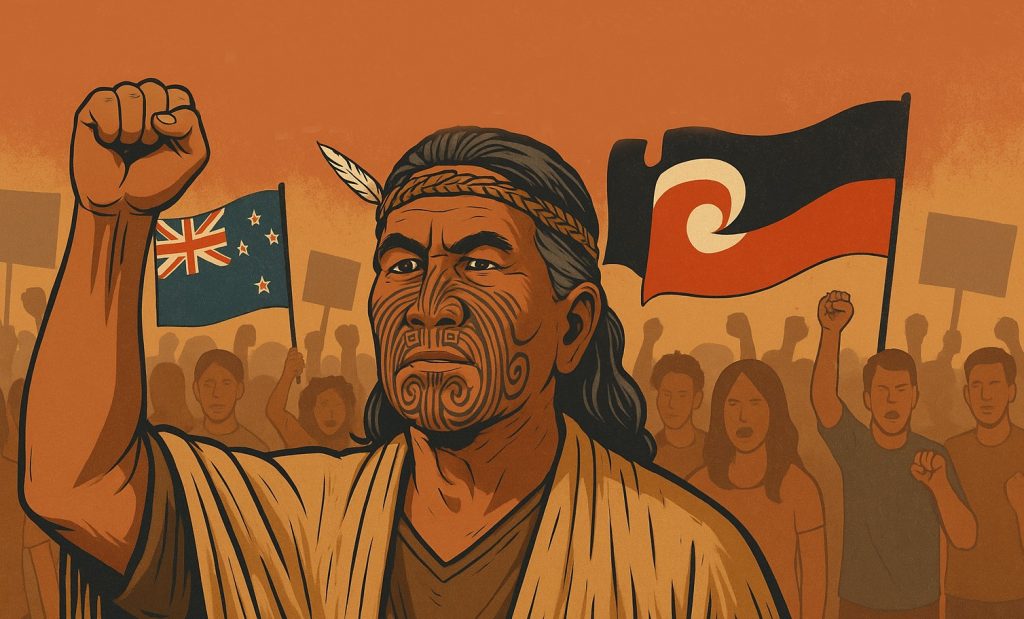
When a young member of the New Zealand parliament made a Haka at her inauguration in November 2024, she became a global sensation. Known as Hana-Rawhiti Maipi-Clarke, the MP for Hauraki Waikato of New Zealand has been in the spotlight ever since. She was instrumental in making a feisty stand against the repressive policies of the New Zealand’s conservative coalition government who had been steadily reversing the rights of the indigenous Maoris, the first nation of New Zealand. This article is aimed at making awareness of what has been going on in the land of the Kiwis concerning its first nations.

Neocolism is far from a myth. It has always been underway in every part of the globe despite the strong resistance, push back and backlash. After 200 years, one could see a classic example of a despicable act against New-Zealand’s first nation, namely the Marois by two populist parties who are part of the rightwing governing coalition.

Marois are an ancient civilisation that dominated the Polyensian regions for thousands of years. They are a warrior nation that inhabited tens of many tiny Islands across the Pacific. It was the Maroir’s that discovered and settled in Aotearoa, what was later called as New Zealand by its European settlers. Those first nation people settled in  the two Islands hundreds of years before the many European colonial  conquerors landed in that region. 

In 1840 the Maori elders signed a Historic agreement with the British crown known as the Treaty of Waitangi. As it is common for many documents of Colonial rule, this treaty of peace and friendship  too had two distinctly different interpretations.The Maorian  version clearly stipulated that their sovereignty was well preserved. The Maori text says that “ Rangtira” have “Tinrorangatiratanga” which translate to absolute authority of the Maoris over their lands,resources, homes and Taonga or treasured possessions.However the English version had a slight hiccup. According to that version the “ Rangtira” ceded to her Majesty the Queen of England of all rights, power and sovereignty. What else one could expect from a colonial power who would stop at nothing in looting a land that never belonged to them in the first place.

Maroian’s rights were to be protected as agreed but there is hardly any corner of the world where Colonists have ever respected their commitments to the wellbeing of the locals. Their lands were either confiscated or forcefully acquired which led to the infamous New Zealand wars where thousands of Maoris were subjected to inhumane atrocities, death and displacement. As is the case of every first nation in the world, Maorians became strangers in their own lands. Despite the Treaty of Waitangi, Marois ended up being in the bottom of every socio-economic indicator. Not only becoming the group with the least economic opportunity and access to education, health but also as the community with lowest life expectancy. Among the nations of the global north, New Zealand has one of the highest incarceration rates. Guess who accounts for 52% of that ! Despite being just 17 % of the population, it is the Maoris that overwhelmingly dominate the prison population. That percentage is an indication of the socio-economic inequality in New Zealand society where Maoris are stuck in a vicious cycle.

Against this backdrop a huge protest movement erupted during the 1970s known as hīkoi, which put the spotlight on their struggle. After decades of a long fought battle, the consequential governments adopted a number of progressive policies in support of their cause. 

  • The establishment of the Waitangi Tribunal in 1975
  • The return of some Māori land
  • The Māori language becoming an official language in New Zealand in 1987
  • Establishment of the Māori Health Authority – Te Aka Whai Ora
  • National ban of smoking 

With the defeat of the Labour government the Maorians rights  became a bone of contention in the New Zealand political arena and reached a peak towards last year. Two nationalistic, rightwing populist parties were up in arms against those very rights. Namely, New Zealand First, commonly abbreviated to NZ First or NZF founded and led by Winston Peters and ACT New Zealand, also known as the ACT Party or simply ACT, led by David Seymour. Both ACT and NZ First have been two political forces determined in undermining the rights of New Zealand’s  historically repressed group. Both men ride the wave of populism fueled by nationalism, an unfortunate  social product of our time. The duo made a stand against the special status given to the Marois by the crown.They claim that those special status were divisive and discriminatory against the majority. The government consequently revoked some of the most important  rights the Maoris won through a long fought battle. 

  • Repeal of Oranga Tamariki Act section 7AA that will have a huge impact on children under state protection
  • De Establishing of the Māori Health Authority which will deteriorate what is already terrible condition in Maori Health 
  • Lifting the National smoking ban that could be catastrophic to the Maoris health
  • Revoking the usage of Maori language as a national language is discriminatory at all accounts

Just reading through those revisions, one could feel how far the current government under the influence of Nationalistic coalition parties were willing to go. As a matter of fact it was  not just to undermine the progress the New Zealand society has made in national reconciliation but also in pushing the first nations down to the bottom of social hierarchy.The populists did not want to stop just there. Their final goal was to introduce another dangerous bill that would have turned New Zealand’s delicate social fabric in tatters. Their bill known as “Treaty Principles Bill” was aimed at redefining ‘The Treaty of Waitangi’. Sugar coated with the statement  “ Equal rights for all confirming in law that all New Zealanders have equal rights, as promised by the Treaty of Waitangi”, the bill was to rewrite history destroying what was left for the Maoris. That interpretation was supposed to take away the special protection and acknowledgment of Maori’s right to land. If passed it would have opened the doors for a consistent, systematic neocolonial exploitation adventure by the  greedy corporations.

These racially charged policies would have torn New Zealand’s tolerant social fabric for good.

But the world did not fail the Maoris in New Zealand. Tens and thousands marched across New Zealand against the bill and there was an outpouring of global solidarity with the Maoris. If the nationalists were successful that would have set precedent  to an unprecedented wave of assaults across the globe against the indigenous populations and their rights in every corner of the world. The democratic world came together and took a stand against New Zealand’s right wing conservative government backed by the two racist populists parties and did everything at their capacities to stop this madness from taking place. Finally on the 11th of April 2025, the Maoris Haka was finally heard and respected. 

As citizens of the world it is time we all  make a Global Haka against the despicable anti democratic, neocolonist  agendas creeping under our societies in the guise of democracy.  Once they are done with the first nations and marginalized groups, that success would be repeated a few foils higher in all those lands that were once safe heavens for the colonists. 

About the Writer

With a master’s in International relations, Dhanuka’s expertise is in Geopolitics and Geoeconomics, among other things. In addition to being the Executive Editor of The Asian Reviews magazine, he works as a guest writer in the Chicago-based Armenian Mirror-Spectator on Caucuses-related geopolitical issues and contributes as a columnist and a guest speaker to the Indian-based Force Security magazine.

He was a grassroots Politician, a political campaign Director, and a council member of a local government body in a small town in rural Sri Lanka. Before entering active politics, he led his foundation in supporting youth and the underprivileged. Currently, he consults youth groups on political activism and general political trends.

He is a poet, blogger, and an enthusiastic climate and social activist who strongly believes in making a better world for future generations. A patriotic Sri Lankan who is a father of a loving daughter.

New-Zealand Maoris Struggle- A fight Beyond Haka Read More »

When Healing Turns to Harm: The Grim Face of Medical Negligence in Kerala

When Healing Turns to Harm: The Grim Face of Medical Negligence in Kerala

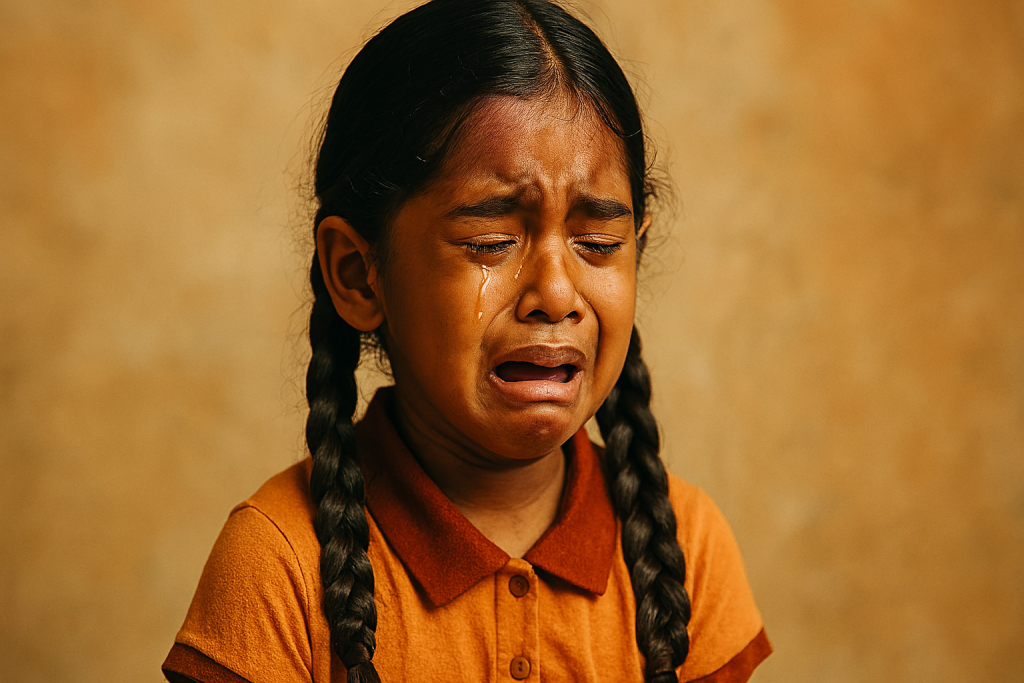
In a disturbing case that has shaken Kerala’s conscience, a nine-year-old girl from Pallassana in Palakkad lost her right forearm due to alleged medical negligence. What began as a simple fracture ended in an unthinkable tragedy—a young child maimed for life because a system meant to heal instead turned careless, complacent, and cruelly indifferent.

This is not an isolated incident. It reflects a deeper rot within sections of Kerala’s public healthcare machinery, one that seems to repeatedly fail the very citizens it swore to protect. The latest tragedy demands not just sympathy but swift, uncompromising justice—and this time, accountability must not be buried under bureaucratic whitewash.

The Horrific Sequence of Negligence

The nine-year-old’s story reads like a nightmare of neglect. The child fractured her arm while playing and was taken to the Palakkad District Hospital. Doctors, after conducting an X-ray, identified two fractures and sent her home after applying a plaster cast. When the girl cried out in unbearable pain and her fingers began to discolor, her distressed mother returned to the hospital seeking help. Instead of investigating further, doctors reportedly dismissed the concerns as “normal pain” and sent the child away again.

By the time the parents rushed her to Kozhikode Medical College, it was too late. Doctors there informed the family that amputation was the only option left—the blood supply to the limb had been completely cut off due to improper treatment and delayed intervention. A harmless childhood injury had been allowed to spiral into a life-altering catastrophe.

The mother’s anguished statement says it all: “Had the doctors at district hospital examined her properly when we went the second day complaining of severe pain, my daughter’s arm could have been saved.”

A Disturbing Pattern of Negligence

Sadly, this case is far from isolated. Across Kerala, a series of recent disturbing medical negligence incidents expose systemic loopholes and a shocking lack of accountability, often leaving patients to suffer permanent damage or death.

In Alappuzha Medical College Hospital, a 58-year-old woman had two toes amputated without her or her family’s consent during surgery for a diabetic foot infection. The patient was shocked to learn about the amputation only the following day, prompting complaints and an expert committee probe. Authorities denied negligence, citing severe infection and poor circulation as the cause.

In another tragic instance, an elderly woman succumbed to rabies despite treatment, after a chain of inadequate medical care exposed fatal gaps in timely intervention.

At Thiruvananthapuram’s General Hospital, a surgical guide wire was left inside a woman’s chest for more than two years following thyroid surgery, only discovered after she developed serious complications. The surgeon later admitted the mistake, but the patient continues to suffer long-term health effects.

Similarly, in Kozhikode Medical College, a surgical instrument was left inside a woman’s abdomen after a C-section in 2017. The error remained undetected until 2022, sparking protests and fierce demands for justice.

These cases, together with the harrowing loss of a young girl’s arm in Palakkad, reveal a pattern of repeated avoidable medical harm inflicted on vulnerable patients who depend on the public health system for care.

The Hollow Comfort of “Expert Committees”

What faith can the public have when the recurring response to such incidents is the formation of “expert committees”—often composed of members from the same system being accused? Experience suggests these committees frequently shield the medical establishment rather than serve victims’ interests.

Kerala’s people deserve more than placatory reports written to absolve negligence. The judiciary must intervene decisively to ensure an independent, transparent, and judicially monitored investigation comprising external medical, legal, and human rights experts. Only this can restore public trust and deliver real justice.

A Call for National and International Intervention

The loss of a child’s limb to preventable medical negligence is a grave violation of human and children’s rights. India’s National Commission for Protection of Child Rights (NCPCR) must urgently intervene, enforcing accountability and ensuring victim rehabilitation. International child rights organizations and medical ethics watchdogs should also spotlight these failings.

No child should suffer lifelong disability from a treatable injury due to a system’s incompetence. No parent should endure such cruel helplessness. These failures demand global attention and action.

Time for the Judiciary to Act

Justice delayed in such cases is justice denied—and worse, justice mocked. The Kerala High Court must take suo motu cognizance, demand compensation, and establish strict judicial oversight over investigations. All responsible parties—doctors, administrators, and oversight bodies—must face criminal and professional consequences.

Healthcare negligence cannot be brushed aside behind white coats and procedural excuses. Behind every incident lies immeasurable human pain. A child will grow up without an arm, a woman lost toes without consent, others live with foreign objects inside them—all scars of a broken system.

The judiciary must act where the medical establishment has failed, ensuring these tragedies ignite systemic reform rather than fading into forgetfulness. Only then can Kerala reclaim its moral standing in public healthcare.

“The negligence to be established must be culpable or gross and not merely based upon an error of judgment. A medical practitioner is not liable simply because a treatment did not succeed or because there was a difference in medical opinion. The doctor must exercise the degree of skill and care that is reasonably expected of a competent professional in that field. Even death or an unfavorable outcome cannot be considered medical negligence per se unless there is proof that the medical treatment fell below accepted standards or involved gross carelessness.”
— Supreme Court of India

This legal distinction, while important for protecting genuine medical judgment, has often become a loophole by which doctors escape accountability in clear cases of medical negligence, leaving victims and their families without justice or adequate redress.

The future that now lies ahead for this little girl is daunting and filled with challenges far beyond her years. The loss of a limb in childhood brings not just physical limitations, but also deep psychological wounds—she may struggle with anxiety, depression, lowered self-esteem, and social isolation as she copes with a dramatically altered body image and the many barriers to independence her disability will bring. Daily activities that once seemed effortless will require constant adaptation, and her journey through school, friendships, and even play will inevitably be marked by both emotional and practical hurdles.

What support system will be put in place for her rehabilitation—physical, psychological, and social? Will she have access to quality prosthetics, counseling, and educational accommodation? Who will address the trauma inflicted on her young mind, and how will her family be supported through their own anguish and sense of loss? Will society take responsibility beyond financial compensation to ensure she’s not merely a statistic in another report, but a child whose full potential is fiercely protected?

Above all, will this tragedy serve as the catalyst for systemic reforms and true accountability—or will the suffering of this little girl, like so many before her, simply fade from public memory with nothing learned and nothing changed?

When Healing Turns to Harm: The Grim Face of Medical Negligence in Kerala Read More »

One Man, One Global Misery

In the winter of a second inauguration, a singular figure returned to the centre of global gravity. The formalities were observed; the oath was taken; the bells rang. Yet what followed – a flaring of executive will, a string of sweeping decrees and a rhetoric that treated international institutions as rivals rather than partners – has bent the arc of many fragile systems toward strife. This essay maps that deformation: the institutional ruptures, the market shocks, the human dislocations, and the political contagion that, together, make a crisis of a world once committed to shared rules.

A Presidency That Reordered the Rules of the Game

Presidencies leave marks in law and habit; some reform, some conserve, some corrode. The second-term project in plain view has been to reassert unilateral prerogative – to treat multilateral agreements as optional, to convert executive instruments into blunt policy tools, and to make the language of emergency routine policy. Within days of inauguration, a series of executive orders signalled an administrative intention to withdraw from long-standing multilateral commitments and to recalibrate the United States’ posture toward the institutions meant to manage transnational problems. The consequences of those gestures are not merely symbolic: treaties and agreements are coordination devices. When a principal signatory withdraws, the governance lattice weakens and the incentives for collective action fray.

At the United Nations General Assembly, the rhetorical form of that recalibration was plain and theatrical: a combative address that publicly contested the legitimacy of certain global efforts and that framed climate action and migration as instruments of deception or erosion of national sovereignty. The speech was widely reported and widely criticized; its tone underscored a preference for unilateral denunciation over quiet coalition-building.

Trade as Shock: The “Liberation Day” Doctrine and Global Markets

Policy can bend markets overnight. In April 2025, an administration-declared national emergency was used to authorise a broad, reciprocal tariff regime – the so-called “Liberation Day” measures – that placed duties across a swath of imports and invited retaliatory counters. The executive architecture used civil emergency authorities to install industrial policy by decree. That choice produced a fast, measurable result: global markets reeled in immediate response, with equities plunging and investors rushing to safe havens as the scale and unpredictability of trade barriers became clear. International institutions and multilaterally negotiated trade norms, long stabilisers of postwar commerce, found themselves under acute stress as supply chains were rerouted, costs rose, and trust in predictable rules diminished.

The macroeconomic effect was not merely charted as daily volatility; major multilateral agencies and market strategists warned of recessionary spillovers. Commodity prices, currency relationships and manufacturing footprints adjusted; countries that depended on preferential access or integrated supply lines – especially smaller exporters – faced outsized disruption, and global growth forecasts were revised downward in consequence. Where tariffs were pitched as a recipe for national rebirth, the proximate result was fragmentation: businesses and states recalibrated around contingency rather than cooperation.

The Legal and Institutional Turn Against Rights

Domestic measures carry outward effects. Under the second-term policy sweep, immigration enforcement was hardened sharply: asylum restrictions tightened, detention capacity expanded, and administrative architectures were mobilised to accelerate removals. Rights organisations warned that the administration’s legal instruments and enforcement priorities risked institutionalising forms of mass detention and deportation that set new precedents for due-process truncation. Courts have been drawn into that churn—some rulings expanded executive latitude, others delayed implementation – but the aggregate effect was to normalise more coercive migration management. The human consequence has been rapid: communities thrown into legal precarity, families under strain, and noncitizens facing expedited removal regimes.

Parallel to immigration actions were measures that compressed civic space: press access has been constrained by novel credentialing rules and aggressive legal strategies; watchdogs documented lawsuits and regulatory pressure aimed at critical media outlets and international broadcasters. The effect – documented by press-freedom organisations—was not only to chill reporting inside the United States, but to model a posture that foreign leaders could emulate when seeking to silence dissent.

Foreign Policy of Flux: Escalation, Bargains and the Limits of Bilateralism

Foreign policy under the second-term mantle did not adhere neatly to one predictable script. In some theatres, the administration shifted toward transactional bilateral bargaining; in others, rhetoric escalated into public rebuke. On Ukraine, for instance, a series of messaging shifts—toggling between pressure for concessions and commitments of limited support – complicated allied calculations and exposed fissures in coalition strategy. In the Middle East, the administration’s effort to reassert U.S. influence produced a mix of diplomatic initiatives and unpredictable posture changes that, in several instances, intensified the operational difficulties faced by humanitarian organisations and multilateral mediators. The pattern is familiar: when a global anchor behaves unpredictably, regional actors hedge; hedging often begets escalation, not calm.

Climate, the Commons, and a Retreat from Collective Stewardship

Perhaps the most consequential arena for future generations is the global commons. The administration’s executive dismantling of prior climate commitments – coupled with public denunciations of climate science and clean-energy policy – has had a chilling effect on cooperative mitigation. Formal notification of withdrawal from the Paris framework began a process that, until it ran its course, removed a central driver of international emissions planning and finance. The diplomatic signal was immediate: partners recalibrated their investments and their strategies for cooperation in a world where the second-largest historic emitter signalled withdrawal. The scientific timeline for emissions reductions is narrow; institutions and markets do not easily recover the lost time when primary actors renounce coordinated obligations.

Democratic Erosion and the Contagion of Authoritarian Tactics

The architecture of liberal democracy relies on norms, not just legal texts. Erosion occurs when norms fray—when checks are weakened, when dissent is delegitimised, when instruments of state are normalised for partisan ends. Scholars and institutions following democratic health have charted worrying signals: centralisation of power, pressures on independent agencies, litigation and administrative strategies that constrain opposition, and a public language that blurs civic dissent with disloyalty. Comparative analysts emphasise the contagion effect: when powerful democracies employ authoritarian-adjacent tools, less-resilient polities may import the methods as expedient precedents. In short, democratic backsliding at scale is not a self-contained national problem; it is a transmissible political virus.

The Human Ledger: Pain Measured in Persons, Not Percentages

It is easy to speak in indices and day-traders’ losses; the ledger of human suffering is different. Children separated from caregivers, workers who lose livelihoods when supply chains rupture, journalists whose access is removed, patients whose care is tightened by funding shifts – all of these are discrete, lived harms. The abstraction “global instability” becomes concrete in the life of a factory town in Lesotho losing preferential access, in a refugee camp whose aid flows are interrupted, and in a newsroom that faces closure after legal pressure. Human-rights reports, civil-society briefs, and on-the-ground journalism together record a cascade of hardship that follows from the convergence of the policies described above.

How a Single Center of Power Becomes a Global Vector

Why does one leader’s policy set radiate beyond borders? Three mechanisms explain the vector of harm:

  1. Structural leverage. The United States retains outsized weight in finance, trade, security and norm formation; when Washington shifts, global equilibria move.
  2. Normative signalling. Public repudiation of cooperative norms lowers political costs for copycats in weaker democracies.
  3. Operational spillovers. Domestic policies (immigration enforcement, regulatory rollback) and foreign posture (aid cuts, bilateral bargaining) produce cross-border externalities that exacerbate humanitarian and security risks.

Taken together, these channels transform national policy choices into global dynamics.

The Moral Geography of Risk

If we accept that actions have reach, then the moral geography of governance becomes unavoidably planetary. Choices made at the centre – about trade, about obligations to refugees, about whether to honour or abandon climate commitments – have differential but cumulative effects upon the poorest and the most exposed. That asymmetry is the core of the claim that a single leader can be a threat to “entire humanity”: not in the literal sense of unilateral omnipotence, but in the sense that concentrated power, deployed without regard for shared institutions, can multiply vulnerability across the planet.

This is not an argument of inevitability; it is an argument of exposure. Systems that depend on cooperation are fragile to coordinated withdrawal. Where the inclination is to use emergency powers, to bypass deliberative channels, and to treat negotiation as weakness, the system’s ability to self-correct shrinks. The moral question then is whether those with capacity will heal the stitches before the fabric tears further.

The Opportunity of Rebellion

There is a literary cadence that fits this moment: the country that once prided itself on underwriting global commons now plays at its undoing; a leader’s voice, carried on the air, becomes a signal flare that warns allies and invigorates adversaries. The practical consequences are stark and measurable – market shocks, diplomatic recalibration, human-rights reversals, and a loosening of democratic norms. The moral consequences are slower, insidious, and perhaps more costly: the erosion of trust, the shrinkage of civic imagination, the normalisation of fear as policy currency.

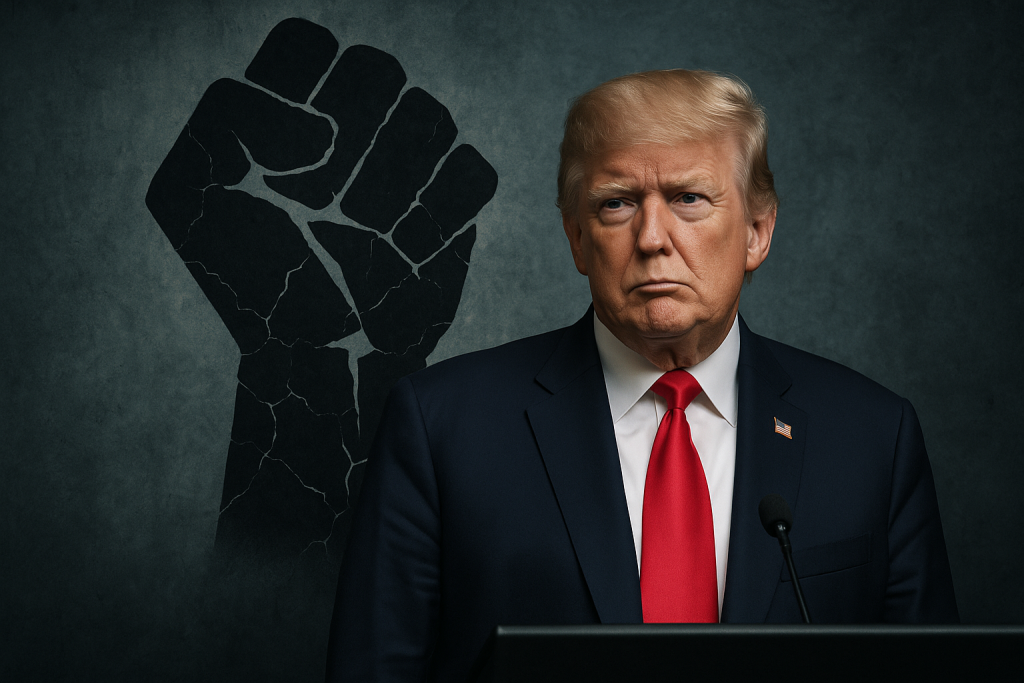
More than a challenge, this moment has become an opportunity for the world to break free from the iron fist of the United States, which for decades has silently ruled through its dominance of finance, security, and diplomacy. The turbulence unleashed by Trump has stripped away illusions and revealed the fragility of over dependence on a single power. Now is the time for nations to reimagine their futures – to cultivate self-reliance, strengthen regional partnerships, and build new frameworks of cooperation rooted not in fear or coercion, but in mutual respect and trust. The crisis thus bears within it the seed of reform, a chance to reshape global order into one that truly belongs to all humanity.

One Man, One Global Misery Read More »

The Psychology of Lying: A Wound Deeper than Words article by Preeth Padmanabhan Nambiar

The Psychology of Lying: A Wound Deeper than Words

I was listening one evening to a casual exchange between my wife and my elder daughter. It began like any other story, a recollection of days gone by, a fragment from memory stitched together with laughter and warmth. My wife narrated, in striking detail, an incident from my daughter’s childhood: the first visit to a salon, the nervous tears, the attempt to soothe her with ice cream, and the tender patience with which the moment was handled. Yet as I listened, I realised that the scene was not hers to tell. It was mine. It was I who had held my little one close in that salon, I who had watched her resist the unfamiliar scissors, and I who had pacified her with the promise of sweetness. The memory was carved into me, but it had been gently repainted, as if my presence had been replaced by another hand upon the canvas.

At first, I thought it was a slip, a harmless substitution. But the more I listened, the more I noticed such retellings, the subtle shifting of roles, the small additions, the borrowed details. Not malicious, not intended to harm, yet something in them disturbed me. They were stories transfigured by what many call “white lies.” Later, I discovered the same pattern in a close friend and colleague: a habit of narrating with embellishments, of slipping in fictions, perhaps to make me happy, perhaps to make herself feel significant. It took me years to unravel the pattern. When I did, I found myself not merely confused but wounded. For to realise that someone with whom you share the deepest intimacy has built their fabric of closeness upon threads of untruth is profoundly unsettling.

This personal experience opens a larger question: Why do people lie? And why, even when lies are small and seemingly harmless, do they leave behind a sense of betrayal?


The Roots of Deception

Psychologists have long studied lying, uncovering its layers with scientific patience. At its simplest, lying is the deliberate distortion of truth, an intentional act of saying something one knows to be false. Yet the motivations are complex. Researchers outline several psychological drivers:

  1. Self-Protection: The most common lies are born of fear. A child denies breaking a vase, an adult conceals a mistake at work, both are attempts to escape punishment or blame. The instinct to lie here is bound to survival.

  2. Self-Enhancement: Another root is the desire to appear greater than one is. People inflate achievements, alter details of their past, or exaggerate stories to earn admiration. In these cases, lies are an instrument of pride.

  3. Altruism or “White Lies”: Sometimes lies are spoken with the intention of sparing another’s feelings. A friend says you look well even when you are visibly unwell, or a parent invents a comforting story to soothe a child. These are framed as kindness, yet their ethical standing remains debatable.

  4. Habitual Compulsion: For some, lying becomes second nature. Psychologists describe this as pseudologia fantastica, where lying is almost compulsive, blending imagination and reality until even the liar struggles to separate them.

  5. Power and Manipulation: Lies can also be tools of control. Politicians, con artists, or abusers use deception to shape the perceptions of others and maintain dominance.

In each of these lies, whether small or large, intentional or casual, there is a psychological gain. One secures protection, admiration, ease, or power. But each lie also costs something profound: trust.


The Fragile Fabric of Trust

Trust is the unseen thread that binds human relationships. It is not built in a single moment but layered through countless exchanges where truth is shared. The moment a lie is uncovered, that thread frays. The wound it inflicts is not only the falsehood itself but the collapse of certainty.

A spouse who lies about something small leaves behind a lingering doubt. If she could alter one story, could she not alter another? A friend who repeatedly hides truth, even for one’s supposed benefit, creates a sense of instability. Do I truly know this person at all? Psychologists note that betrayal trauma often arises not from the scale of the lie but from the identity of the liar. When lies come from strangers, they irritate. When they come from those closest, they devastate.

The pain of lies lies not merely in deception of others but in self-deception. A person who lies frequently begins to weave falsehood into the fabric of their identity. Over time, they live a life that is half-constructed, half-invented. What begins as a strategy to protect or please ultimately erodes authenticity, leaving a hollow sense of self.


The Psychology of the “White Lie”

Defenders of lying often appeal to the concept of the “white lie.” They argue that small untruths can smooth the edges of human interaction. Is it not kinder to praise a poor performance than to wound with blunt honesty? Is it not more compassionate to hide one’s disappointment than to expose another to pain?

Psychology, however, offers a sterner view. Studies reveal that recipients of “white lies,” when they eventually discover the truth, often feel more betrayed than if they had been told the harsh fact at once. Furthermore, habitual white liars often underestimate how easily their deceptions are detected. Even without confrontation, the body knows: tone, expression, and gesture betray insincerity, leaving behind unease.

The question, then, is not whether lies can sometimes soothe, for they can, but whether they ever truly serve. A comfort purchased at the price of reality is fragile comfort.


The Trauma of Discovering Lies

My own confrontation with lies in intimate relationships was not a dramatic revelation but a slow dawning. The trauma was not in the individual falsehoods but in the pattern, in the recognition that the ground beneath me had been less solid than I thought. Many who experience betrayal describe this same sensation, as though the map of one’s life suddenly shifts, familiar territories marked as false.

Psychologically, this creates cognitive dissonance: the painful clash between the image of the person one loves and the reality uncovered. Such dissonance can lead to anxiety, depression, or even a complete rupture of relationship. What is most striking is that the liar may have lied for trivial reasons, without malice. Yet the wound inflicted is grave.


Why We Must Resist Lying

The ancient dictum “सत्यं वद, प्रियम् वद, मा न ब्रूयात् अप्रियम्” — speak the truth, speak what is pleasant, and do not speak what is unpleasant — captures the fine balance between honesty and compassion that Indian philosophy so deeply values. Truth is upheld as the highest virtue, yet the sages remind us that truth must be tempered with sensitivity. One must not hurl truth like a weapon that wounds, nor disguise falsehood in the name of kindness. At times, silence or a gentle rephrasing may be wiser than a blunt declaration that inflicts needless suffering, an approach we might today call diplomacy. Yet this is never a sanction for lying, for falsehood erodes the integrity of the speaker and weakens the sacred fabric of trust. Instead, this teaching calls us to let truth flow with tenderness, so that it preserves its purity while also nurturing harmony in human relationships.

In the end, the psychology of lying shows us less about deception and more about truth: how essential it is for the flourishing of the human spirit. To lie is to betray not only another but oneself. Every falsehood, however small, chips away at integrity, corrodes trust, and leaves the soul fragmented.

There is a haunting passage I once wrote, and it has returned to me with renewed force:

I would pardon a person who kills me by stabbing, but if you are planning to tell me a lie, you better kill me. 

This is not exaggeration. A lie is not a deception of another alone, but a betrayal of one’s own self. A wound from a knife scars the body; a wound from a lie scars the very ground on which human connection stands. To lie is to forsake truth, and without truth, there can be no authentic love, no enduring friendship, no society that does not rot from within.

The Psychology of Lying: A Wound Deeper than Words Read More »

Hope and Despair

‘A little more persistence, a little more effort, and what seemed hopeless failure may turn to glorious success.’ ~ Elbert Hubbard

Desmond Tutu, a Bishop from South Africa, says accurately: ‘Hope is being able to see that there is light despite all of the darkness.’ Unlike Faith that is built on things not seen, Hope is built on Faith. Without Faith there is no Hope. Based on Faith in a promise grows Hope to see the fulfillment of the promise one day. Faith is built on past experience and a well established Truth, while Hope looks into the future with confidence rooted in unshakable Faith. ‘…Hope involves optimism, motivation and strategy.’ It is essential in life to keep our environment optimistic. Be it home, workplace or classroom, an optimistic ambience is a prerequisite to harmonious and fruitful progress. Hopeful optimism breathes like fresh air through rooms and living quarters. To create such an environment a certain strategy is needed: While giving feedback of any sort or while communicating, if language is carefully chosen and positive expressions used, the result is marvelous. If children are involved, a realistic and hopeful example of daily living will impress them for life. Let the children know that life consists of all sorts of events. How we face them, how we deal with them and how we grow out of them, defines those events as either good or bad. Hope and optimism possess the power to turn a bad event into a good memory. It’s good to remind oneself when passing through a difficulty that the current situation is temporary and at the end of the tunnel the sun beckons with a warm smile to hope for better times. Reminding friends or family members of former achievements once thought impossible to reach, can render fresh hope for future achievements though they might be even tougher than previous ones. 

In absence of hope there is despair, misery, hopelessness and depression. Raymond Williams, a Welsh academic and novelist, said, “To be truly radical is to make hope possible rather than despair convincing.” It doesn’t cost anyone anything to boost themselves and those around them with a little extra hope to dispel despair. In the face of steadfast hope and optimism despair and depression pack off and flee, as they can’t stand in front of Hope built on Faith, their arguments not being backed by steadfast Truth. Thus their slippery assertions will dissolve into thin air. But give doubt and despair an ear – just part of an ear – and their pessimistic arguments will pierce your heart asunder, threatening your very existence and survival. Therefore awareness is essential to discern the voices all around. Are they hopeful, edifying and elevating or are they breathing negativity resulting in death? Despair is like a dark prison cell. All around only thick gray mouldy walls. Nothing to motivate or to encourage: Nothing but despair everywhere. Unless one possesses the key called Hope, there’s no way to escape from the prison cell called Despair! Hope fits exactly into the keyhole of the heavy lock. Maybe the lock is already rusty due to a lengthy overstay at the prison cell Despair. Some oil of courage needs to be applied and the key will turn around to snap this hefty lock. Aching joints need to be flexed; a deep breath taken to clear a foggy mind. Summoning the last speck of inner determination, the prisoner of Despair needs to heave up his weighty body and take the step of Faith combined with Hope into the sunlight of another new morning of freedom from Despair and Depression. Let me quote Bernard Williams here who was an English philosopher and author who was knighted in 1999: “There was never a night or a problem that could defeat sunrise or hope.” 

There’s no need to hope for something that is already received. Why would someone have to hope for something that is already achieved? To hope without evidence of a solution needs courage and faith in the Supreme. Hope works through patience while being joyful in hoping. Anxious anticipation is not hopeful expectation. A hopeful outlook triggers positive vibrations that in the course of waiting keeps an individual on a sure track to inherit the result of steadfast Hope. In springtime a farmer tills the land and sows his seed full of hope, looking forward in good hope to receive the wages of his tireless labour in the form of a plentiful harvest in autumn. He needs to dare to throw out his seed. It’s connected with risk. Yet every year come Spring, we watch the farmers sowing their precious seed, prayerfully hoping for a blessed harvest.

The ultimate goal though of souls on the earthly plane is liberation from the cycle of birth and death. This liberation is beyond the freedom attained through Hope from the prison cell called Despair. Liberation includes a realisation of reality and transcending the limitations of the physical plane where one needs to surrender attachment to desire, even including hope. Hope associated with despair ultimately fosters resilience involving expectation and desire. However liberation from hope through acceptance for whatever is as the will of the Supreme, can lead to true bliss. 

About Johanna D.S. Chittranjan (Johanna Devadayavu)

Poet | Philanthropist | Co-Founder of Laharinagar

Johanna D.S. Chittranjan, known in literary and spiritual circles as Johanna Devadayavu, is a revered poet and humanitarian of Swiss origin who has lived in South India for over forty years. A woman of gentle strength and profound introspection, she has dedicated her life to cultivating love, peace, and spiritual awareness through poetry and compassionate action. Together with her late husband, Lawrie Devadayavu, she co-founded Laharinagar, a serene spiritual retreat nestled in the verdant landscape of South India. More than a sanctuary, Laharinagar is a living embodiment of their shared vision—where harmony with nature, meditative silence, and human connection converge. It continues to inspire seekers, poets, and pilgrims from around the world. Johanna’s poetry is a quiet revolution—her voice emerges from a soul attuned to the rhythms of the earth and the divine heartbeat of humanity. Her work is marked by simplicity, emotional depth, and luminous imagery drawn from her lived experiences. In her verses, she embodies multiple facets of human existence: the devoted wife, nurturing mother, reflective grandmother, diasporic soul, nature lover, and spiritual pilgrim.

Her published works include:

  • Flight of a Turtledove – A lyrical celebration of inner peace, nature’s wisdom, and the healing essence of love.

  • Hope Beyond Perplexity – Poetic reflections that offer solace and insight amid life’s confusions.

  • The Call of the Turtledove for Universal Peace: Meditations on Love Divine – A contemplative volume echoing the spiritual call for harmony and compassion.

  • Turtledove of Sundered Skies – A deeply personal and poetic tribute to her late husband, suffused with devotion and remembrance.

Through these works, Johanna offers readers a pathway back to what is essential—stillness, sincerity, and soul. Her pantheistic sensibilities and unwavering faith in the goodness of life flow naturally into her poetry, which serves as both sanctuary and guide for the weary and the awakened alike. A quiet force of benevolence, Johanna Devadayavu continues to inspire through her written word and her lived presence. Her journey is one of transcendence through tenderness, and in every flight of the turtledove, one hears the echo of her heart—soft, unwavering, and eternally serene.

Hope and Despair Read More »