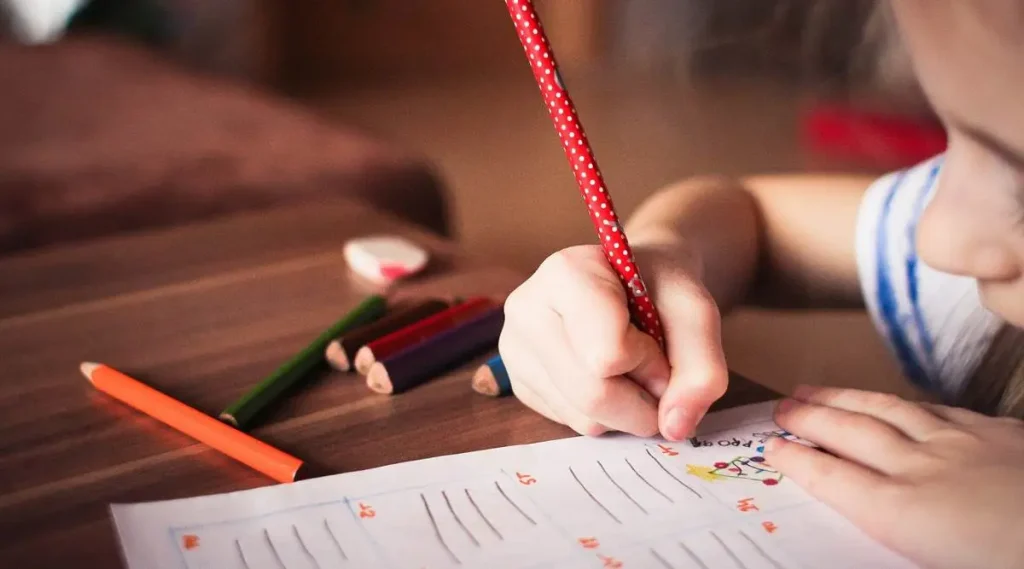
“Tara has a very good handwriting,” her teacher told me, as I left my daughter at the school gate.
I have not actually seen Tara’s handwriting. What I have noticed is her interest in the English language and in expressions. On our short journeys together, I often hear her trying out some difficult word she has been reading, sounding it out, then asking me if she got it right. A great deal of that credit belongs to Ms Karen, a good friend of mine, an Anglo-Indian and the principal of the school where Tara studies, whose own ease with the language has clearly found its way into how Tara has come to hold it. But the compliment somehow did not make me smile.
It should have. A parent is supposed to smile at that sentence. Instead I found myself asking a question the teacher had not asked and probably had no reason to: good handwriting, measured against what, useful for what. Tara is not failing at anything. But I am no longer certain that handwriting is the thing worth measuring, at least not the way we still measure it.
What the Research Actually Shows
I want to be careful here, because the stronger version of this argument is wrong. Handwriting in the first year or two of school does something typing does not. A child who traces the shape of a letter with her own hand builds a memory of that letter that a child tapping a key does not build in the same way. Several studies on early literacy support this, and children taught to write by hand in their earliest years tend to recognise letters and begin reading sooner than children taught primarily on a keyboard.
There is also the often-cited research on note-taking, which found that university students who wrote lecture notes by hand remembered the material better than students who typed the same notes. I know this research well, and I do not think it settles the question the way it is usually made to settle it. Later attempts to repeat those note-taking findings have produced mixed results, and a study about university students taking lecture notes tells us very little about what a ten-year-old gains from another year of cursive drills in the fourth or fifth grade. Even so, the early literacy findings deserve to be taken seriously, and I have no interest in arguing them away to make a tidier case.
What concerns me is everything after those first two years. Cursive continues to be drilled, penmanship continues to be graded, and handwriting continues to be treated as a skill worth refining well past the point where its early benefits have already been collected. This is the stretch I keep returning to when I speak with teachers, and I have said the same thing to rooms of them that I am saying here: the hours spent perfecting a cursive loop in the fourth grade are hours not spent on the skill that child will actually use for the rest of her life, which is typing.
What Is Already Changing Elsewhere
Some school systems have already started to act on this, in their own way. A number of American states quietly dropped their cursive requirements over the last decade, only to have some of them reinstated after parents and legislators pushed back, less on the evidence than on a feeling that something was being lost. Finland, which is looked to often enough in these conversations, moved years ago toward teaching keyboarding earlier and treating cursive as optional rather than compulsory.
None of these decisions were made lightly, and none of them were made without argument on both sides. But they suggest that the question I am asking here is not a private worry of mine, and not particular to one country’s classrooms either. It is being asked, unevenly and with different answers, in school systems far from Tara’s, by people who have looked at the same evidence and reached different conclusions about how much of it to act on and how quickly.
What Children Are Actually Being Prepared For
Think about what Tara, and every child like her, is being prepared for. She will sit exams on a computer before she finishes school, in most systems already moving that way. She will apply for everything she wants, college seats, scholarships, her first job, through forms that reward speed and accuracy at a keyboard. She will write, correspond, and think through a keyboard for almost all of her working life, and the fluency she builds in that skill compounds every year she has it, the way any skill practiced early becomes effortless later, requiring no conscious attention at all.
Her cursive, by comparison, will be tested by almost nothing beyond a signature, and even that is disappearing from more transactions every year as digital verification replaces it. Continuing to grade penmanship well into adolescence is not really about tradition, or at least not only about tradition. It is inertia, a curriculum built for a world that has already changed shape while the timetable stayed the same, and inertia on its own has never been a good enough reason to keep doing anything.
What I Tell Teachers Instead
What I tell teachers instead is straightforward, even if school systems built around old habits find it hard to act on. Start keyboarding earlier, and treat it as a measured skill the way reading fluency is measured, not as a once-a-week visit to a computer lab that exists apart from the rest of the school day. Let typing speed and accuracy matter the way spelling already matters, tracked the same way, supported the same way when a child falls behind.
Bring digital tools into ordinary classwork across every subject, geography, mathematics, language, instead of keeping them cordoned off in a separate period called computer class, as though technology were something a child visits rather than something she already lives inside every hour she is not in school. None of this means dropping handwriting instruction in the early years, where it earns its place and where I would defend it against anyone who tried to remove it. It means letting go of the idea that more handwriting practice, indefinitely extended, keeps paying the same returns it paid when a child was six.
I think of the teachers I have spoken to in these sessions, many of whom agree in the room and then go back to classrooms where the timetable, the exam board, and the parents expect cursive worksheets regardless of what anyone in the room believes about typing. Changing a curriculum is slower than changing a mind, and I do not underestimate how much slower. Textbooks have already been printed, exam formats have already been fixed years in advance, and a teacher who wants to spend an extra hour a week on keyboarding is often the same teacher being asked to cover a syllabus that has not made room for it. But somebody has to keep asking the question out loud, in rooms full of the people who set the timetable, or the timetable simply repeats itself for another generation because nobody interrupted it.
I still do not know what I will do with the compliment the teacher gave me at the gate. I will probably let Tara keep it, since the hours she has put into her handwriting are real, whatever else is true about the world she is growing into, and a child’s effort deserves to be named even when a parent is quietly asking himself harder questions about what that effort was for.
But I noticed, walking away from that gate, that I was more interested in what she was reading aloud on our last walk home, the words she was still learning to trust herself with, than in how neatly she had written any of it down. If I had to choose, today, which of the two to spend more of her school hours on, I already know which one I would choose. I am simply not sure the timetable has caught up with me yet.
Preeth Padmanabhan Nambiar
In Short: A conversation with his daughter’s teacher about her excellent handwriting leads the author to question whether schools still emphasise penmanship well past the age where it serves any developmental purpose, at the expense of typing and digital fluency children will actually need for the rest of their lives.