Writers International Edition

Preeth Padmanabhan Nambiar

The Concept of Manas in Ayurveda: A Holistic Approach to Mental Wellbeing

Abstract

Ayurveda, the traditional Indian system of medicine, offers a unique perspective on mental health. This article explores the concept of Manas (mind) in Ayurveda, examining its characteristics, functions, and its role in maintaining overall health. Drawing from classical Ayurvedic texts and Indian philosophical schools, the article highlights the interconnectedness of mind, body, and spirit in achieving well-being.

Keywords: Ayurveda, Manas, Mind-Body Connection, Mental Health, Sāṃkhya, Yoga, Upanishads

Introduction

समदोषः समाग्निश्च समधातु मलक्रियाः। प्रसन्नात्मेन्द्रियमनाः स्वस्थः इत्यभिधीयते ॥
“Sama Dosha Sama Agnischa Sama Dhatu Mala Kriyaaha|
Prasanna Atma Indriya Manaha Swastha Iti Abhidheeyate” – Sushruta Samhita

One is in perfect health when the three Doshas, digestive fire (digestion, assimilation and metabolism) all the body tissues & components (Dhatus) (the entire physical body) all the excretory functions (the physiological functions of urination and defecation) are in perfect order with a pleasantly disposed and contented mind, senses and spirit.

The ancient Indian system of medicine, Ayurveda, emphasises a holistic approach to health, encompassing the interconnectedness of mind, body, and spirit. Unlike the reductionist approach of modern medicine, which often treats the mind and body as separate entities, Ayurveda views them as functioning in a complex and interdependent relationship. This article delves into the concept of Manas (mind) in Ayurveda, exploring its characteristics, functions, and its role in maintaining health.

The Centrality of Manas

The term “Manas” refers to the mind in Ayurveda. Unlike the Western concept of mind as a physical organ located in the brain, Manas is considered a subtle and invisible entity. However, its presence is evident in all sensory and motor functions. Charaka Samhita, a foundational Ayurvedic text, defines Manas as the “controller of the senses” (indriyapati) [1]. It acts as the bridge between the external and internal environment, processing information received through the senses (jnanendriya) and directing motor responses (karmendriya) [2]. Without Manas, perception wouldn’t be possible.

Manas: The Seat of Pleasure and Pain

Ayurveda recognizes Manas as the source of both positive and negative emotions. It is the seat of Sukha (pleasure) and Dukkha (misery) [3]. Understanding the state of Manas is crucial because a balanced Manas is considered the ultimate source of health. An imbalanced Manas, on the other hand, can contribute to both physical and mental disorders. Sushruta Samhita states, “Prasanna Atma Indriya Manaha Swastha Iti Abhidheeyate” (a content mind is indicative of good health) [4]. This highlights the importance of a balanced Manas for overall well-being.

Philosophical Underpinnings of Manas

The concept of Manas in Ayurveda draws from various Indian philosophical schools, offering a deeper understanding of its nature and function:

  • Sāṃkhya Philosophy: This philosophy posits two ultimate realities: Purusha (self) and Prakriti (primordial nature). Prakriti consists of three Gunas (attributes): Sattva (purity), Rajas (activity), and Tamas (inertia). The mind (Manas) evolves from the Sattva aspect of these Gunas and interacts with the senses to create experiences [5]. The balance of Gunas within Manas determines its state. An imbalance can lead to mental disharmony.
  • Yoga Philosophy: Yoga emphasizes the control of thought waves in the mind. It identifies Manas as a component of the citta (mind apparatus) along with Buddhi (intellect) and Ahankara (ego) [6]. Manas receives impressions from the external world, while Buddhi interprets them and Ahankara creates a sense of ownership. Yoga practices aim to control the fluctuations of Manas and achieve a state of mental clarity. Patanjali Yoga Sutra defines Yoga as “cittavṛtti nirodhaḥ” (cessation of mental fluctuations) [7]. By calming Manas, Yoga promotes mental well-being.
  • Upanishads: These ancient texts differentiate between Manas and the true Self (Atman). While Manas is an instrument of perception, the Atman is the unchanging and eternal observer. The ultimate goal, as outlined in the Chāndogya Upanishad, is to realize the Atman and transcend the limitations of the mind [8].

Maintaining a Balanced Manas

Ayurveda emphasises the importance of maintaining a balanced Manas for overall health. This can be achieved through various practices:

  • Diet and lifestyle: Following Ayurvedic principles of diet and lifestyle that promote balance of the Doshas (Vata, Pitta, Kapha) can positively impact the mind. Each Dosha has a corresponding mental state. For example, imbalanced Vata can lead to anxiety and restlessness, while imbalanced Pitta can lead to anger and irritability. Following a diet and lifestyle that pacifies the dominant Dosha can help promote mental well-being.
  • Yoga and pranayama: Yoga practices and pranayama (breath control techniques) can help calm the mind and reduce stress. Yoga postures (asanas) can release physical tension, while pranayama can regulate the nervous system and promote mental clarity.
  • Meditation: Meditation helps train the mind to focus and achieve inner peace. By cultivating mindfulness and observing thought patterns without judgment, meditation can help regulate emotions and promote mental well-being.
  • Self-awareness: Developing self-awareness is crucial for understanding how your thoughts, emotions, and actions impact your mental state. Through practices like journaling or reflection, individuals can identify patterns and triggers that contribute to an imbalanced Manas.

Treatment of Manas Imbalances through Graha Chikitsa

Ayurveda recognizes the mind-body connection and emphasises mental well-being for overall health. Graha Chikitsa, also known as Manasa Roga, is a specialised branch of Ayurveda specifically dedicated to treating mental health conditions. It offers a comprehensive approach that addresses the root causes of mental imbalances and promotes holistic healing.

Understanding the Cause: Doshic Imbalances and Manas

Ayurveda posits that mental illnesses arise from imbalances in the three Doshas: Vata, Pitta, and Kapha. These Doshas govern various physiological and psychological functions.

  • Vata Dosha, associated with air and space elements, governs alertness, creativity, and movement. When imbalanced, it can manifest as anxiety, restlessness, and fear.
  • Pitta Dosha, associated with fire and water elements, governs digestion, metabolism, and emotions. Imbalances can lead to anger, irritability, and aggression.
  • Kapha Dosha, associated with earth and water elements, governs stability, structure, and growth. Imbalances can manifest as depression, lethargy, and attachment.

Graha Chikitsa practitioners diagnose mental health conditions by evaluating a patient’s physical and mental state. This holistic assessment helps identify the specific Doshic imbalances contributing to the mental distress.

Treatment Approaches in Graha Chikitsa

Graha Chikitsa offers a diverse range of treatment modalities to address mental health concerns. These approaches aim to restore balance within the mind and body, promoting overall well-being. Here are some key treatment methods:

  • Meditation and Yoga: These practices form the cornerstone of Ayurvedic psychiatry. Meditation helps calm the mind, reduce stress and anxiety, and improve focus. Yoga postures (asanas) promote physical and mental relaxation, enhancing emotional well-being.
  • Ayurvedic Massage Therapy: These massages, using medicated oils, balance the Doshas and promote relaxation. They are particularly beneficial for conditions like anxiety and depression.
  • Shirodhara: This therapy involves pouring a stream of warm oil onto the forehead. It has a calming effect on the mind, alleviating stress and anxiety.
  • Panchakarma: This detoxification process helps eliminate toxins from the body, which can contribute to mental health issues. Panchakarma can be beneficial for treating depression, anxiety, and other conditions.
  • Herbal Medicines: Graha Chikitsa utilizes specific herbal formulations based on the identified Doshic imbalance. These natural remedies can help manage symptoms and promote mental clarity.

Graha Chikitsa, with its focus on natural therapies and lifestyle modifications, offers a valuable approach to mental healthcare. By addressing the root causes of mental imbalances and promoting a holistic approach to well-being, Graha Chikitsa can significantly contribute to mental health and emotional well-being. Further research exploring the efficacy of these interventions alongside controlled clinical trials would be beneficial for integrating Graha Chikitsa into mainstream mental healthcare.

Psychosomatic Disorders: Insights and Management through Ayurveda and Yoga

In the contemporary age of rapid modernization, the prevalence of psychosomatic disorders has become increasingly evident. Modern lifestyles, characterized by relentless schedules and incessant demands, have led to a surge in stress-related ailments that afflict both the mind and body. This phenomenon underscores the profound interconnection between mental well-being and physical health, as elucidated by ancient Ayurvedic wisdom.

According to Ayurveda, the mind (Mana) and body (Sharir) are intricately linked, with disturbances in one invariably affecting the other. The revered sage Acharya Charaka expounded on this symbiotic relationship, asserting that prolonged physical ailments can precipitate mental disorders, and vice versa. This holistic perspective underscores the holistic nature of health, wherein equilibrium between the doshas (biological energies), agni (digestive fire), dhatus (tissues), and malas (waste products) is indispensable for overall well-being.

In the modern context, stress emerges as a predominant factor contributing to psychosomatic disorders. The relentless pursuit of success, coupled with the pressures of daily life, has fueled an epidemic of stress-related ailments worldwide. Ayurveda identifies stress, alongside emotions like anxiety, fear, anger, and depression, as potent catalysts for psychosomatic disorders. The erosion of mental equilibrium, exacerbated by the frenetic pace of modern life, precipitates a cascade of physiological responses that manifest as physical illness.

Acharya Sushruta elucidates the profound impact of mental factors on health, highlighting the pivotal role of Satvabala (mental strength) in mitigating stress-induced disorders. Ayurveda posits that when the equilibrium of Sharirika (physical) and Mansika (mental) doshas is disrupted, disease ensues. Stress, being a potent disruptor of this equilibrium, precipitates psychosomatic disorders by deranging the delicate balance between body and mind.

The management of psychosomatic disorders in Ayurveda encompasses a multifaceted approach aimed at restoring harmony between body and mind. Therapeutic modalities such as Yoga, Meditation, Pranayama, and Sadvritta (code of conduct) play pivotal roles in this endeavor. Yoga, with its emphasis on asanas (physical postures), pranayama (breath control), and meditation, offers profound benefits for both mental and physical well-being. By harnessing the power of breath and mindfulness, individuals can cultivate resilience and alleviate the burden of stress-induced disorders.

The holistic principles of Ayurveda underscore the importance of addressing the root causes of psychosomatic disorders, rather than merely treating symptoms. By harmonizing the body, mind, and spirit, individuals can embark on a journey towards lasting health and vitality. Through the integration of ancient wisdom and modern science, the management of psychosomatic disorders offers a paradigm of holistic healing that transcends conventional approaches.

The Integration of Ayurveda and Modern Science in Mental Health Research

The increasing influence of Western medicine in India has led to a growing emphasis on scientific validation for traditional healthcare systems like Ayurveda. While standardised approaches offered by modern science are crucial, it’s important to acknowledge the value of cultural perspectives on health and well-being.

The Challenge of Cultural Bias

Every culture possesses its own unique understanding of various aspects of life, including relationships, food, and health. The concept of Manas (mind) in Ayurveda is a prime example. Understanding Manas necessitates viewing the mind through an “Indian” lens, considering its historical and philosophical context. However, the dominance of Western scientific thought can lead to the dismissal of Ayurvedic concepts as “unscientific” or simply “irrational.”

This bias is particularly evident in the Indian medical field, where some modern doctors criticise Ayurveda for its lack of standardised clinical trials and mechanistic explanations. This can discourage students from exploring the potential benefits of Ayurveda, hindering its integration into mainstream healthcare.

Moving Forward: A Bridge Between Two Worlds

The criticism of Ayurveda need not be a roadblock to progress. Instead, it can be a catalyst for collaboration and integration. Here’s how we can bridge the gap:

  • Cross-cultural research: Studies investigating the effectiveness of Ayurvedic interventions for mental health conditions, alongside mechanistic research exploring the physiological correlates of Ayurvedic practices, can provide valuable evidence for integration.
  • Clinical trials: Well-designed clinical trials comparing Ayurvedic treatments with conventional therapies or placebos can establish the efficacy of Ayurvedic approaches for specific mental health conditions.
  • Open-mindedness: Encouraging open-mindedness within the medical field is crucial. Modern medical professionals can benefit from understanding the philosophical underpinnings and holistic approach of Ayurveda. Similarly, Ayurvedic practitioners can incorporate evidence-based practices from modern medicine.

By fostering collaboration and open-mindedness, we can create a space where both Ayurveda and modern science can contribute to a more comprehensive understanding of mental health and well-being. This integrated approach can lead to the development of more effective and culturally-sensitive treatment options for a wider range of patients.

Conclusion

The concept of Manas in Ayurveda offers a unique and valuable perspective on mental health. It emphasises the interconnectedness of mind, body, and spirit, highlighting the importance of a holistic approach to well-being. Understanding the Ayurvedic perspective on Manas can contribute to a more comprehensive understanding of the mind and its role in mental health.

Treatment and Integration

Graha Chikitsa, a specialised branch of Ayurveda, offers a diverse range of treatment modalities for mental health concerns. These natural therapies and lifestyle modifications, including meditation, yoga, massage, and herbal remedies, aim to address the root causes of mental imbalances and promote overall well-being. Further research exploring the efficacy of these interventions and investigating the physiological mechanisms underlying Ayurvedic practices is needed for a more robust integration with modern mental healthcare.

The dominance of Western scientific thought can lead to a dismissal of Ayurvedic concepts. However, this should not be a barrier to progress. By fostering collaboration and open-mindedness, modern science and Ayurveda can complement each other. Cross-cultural research, well-designed clinical trials, and a willingness to understand each other’s philosophical underpinnings can pave the way for a more integrated approach to mental health. This integration holds the potential to develop more effective and culturally-sensitive treatment options for a wider range of patients.

The Future of Manas

The concept of Manas in Ayurveda holds promise for the future of mental health research. By delving deeper into this ancient wisdom and integrating it with the advancements of modern science, we can create a more holistic and effective approach to promoting mental well-being for all.

References

  1. Charaka Samhita
  2. Sushruta Samhita
  3. Ayurvedic concept of Manas (mind) in perception of knowledge https://www.researchgate.net/publication/349281713_MANAS_MIND_AND_MANOVIKARA_MENTAL_DISORDER_IN_AYURVEDA_A_REVIEW
  4. Concept of Manas (Psyche) in Ayurveda https://nimhans.ac.in/wp-content/uploads/2020/10/8.-Concept-of-Manas-Psyche-in-Ayurveda_125-131.pdf
  5. Yoga Darshana
  6. Patanjali Yoga Sutra I.2
  7. Chāndogya Upanishad X.2, XI.1.
  8. Advanced Center for Ayurveda in Mental Health & Neurosciences, Bengaluru – CCRAS http://ccras.nic.in/content/advanced-center-ayurveda-mental-health-neurosciences-bengaluru
    Role of Ayurveda in Mental Health : An appraisal of CCRAS Research contribution(Background papers) https://www.ncbi.nlm.nih.gov/pmc/articles/PMC3705701/

About the Author

Preeth Nambiar (born 1978) is a multifaceted Indian figure: poet, journalist, educator, and humanitarian. His work exemplifies a unique blend of Eastern and Western thought. Rooted in Indian philosophy from his studies at Sringeri Math, one of the prominent centres of philosophy in India to promote the doctrine of non-dualism, Nambiar embarked on Ayurvedic studies, ultimately seeking a more holistic approach to well-being. This holistic perspective permeates his mystical and contemplative poetry collections which explore the depths of nature, life, and humanity. Nambiar’s dedication extends beyond the written word. He served as a teacher & Department Head (University of Cambridge, Maps International, Maldives) and founded the Writers Capital International Foundation, a prestigious organization fostering cultural understanding through literature (reaching over 87 countries). His influence extends further through educational endeavors and international diplomacy. Nambiar’s unwavering commitment to a holistic approach to life is evident throughout his career, inspiring others through his writing and leadership.

The Concept of Manas in Ayurveda: A Holistic Approach to Mental Wellbeing Read More »

"On My Own" by Nina Ntoura

Book Review: “On My Own” by Nina Ntoura

Women writers have long been at the forefront of literature, offering unique perspectives and voices that enrich the literary landscape. In this tradition, Nina Ntoura emerges as a powerful voice, weaving together themes of self-discovery, resilience, and social justice in her collection “On My Own.”

Nina Ntoura’s “On My Own” is not merely a collection of poems and quotes; it’s a profound exploration of the human experience, delving deep into the complexities of life, identity, and the pursuit of one’s true self. Through her poignant verses and thought-provoking reflections, Ntoura invites readers on a journey of self-discovery and empowerment.

Nina Ntoura, a socially conscious artist born in Athens, channels her strong social sensitivity into her art. Her compositions are marked by profound meanings, often intertwined with mystical elements, echoing her deep connection to life’s mysteries. Ntoura’s love for ballads and her fearless creation of her own lyrics reflect her courage to express herself authentically and fearlessly. Her advocacy for justice, support for individual passions, and unwavering optimism shine through her work, inspiring readers to embrace their true selves and pursue their dreams with resilience.

Nina’s poems in “On My Own” traverse a vast emotional landscape, from introspective reflections on self-discovery to powerful declarations of resilience and hope. Through verses like “On My Own” and “To Be Yourself,” she captures the essence of independence and the journey towards self-acceptance. The raw emotion in pieces like “Living Dead” and “Struggle…” resonates deeply, reflecting the universal human experience of grappling with challenges and striving for personal growth.

Ntoura’s exploration of relationships and human connection is equally compelling. In poems like “By Your Side” and “May We Meet Again,” she celebrates the profound bonds of friendship and love, emphasizing the importance of support and companionship in life’s journey. Through her verses, she highlights the transformative power of genuine connection and the enduring strength it provides.

Moreover, Ntoura’s social commentary is incisive and impactful. In poems such as “Teens” and “World,” she addresses societal issues with empathy and insight, urging readers to embrace unity, compassion, and understanding. Her advocacy for the marginalized and vulnerable, as seen in pieces like “Save a Life” and “Nightbloods,” reflects her commitment to social justice and humanitarian values.

Themes of self-discovery, resilience, love, social justice, and the human experience permeate “On My Own.” Ntoura’s introspective exploration of identity and empowerment resonates deeply with readers, inspiring reflection and introspection. Her advocacy for social change and compassion underscores the transformative power of art in fostering empathy and understanding.

Nina Ntoura’s “On My Own” is a captivating testament to the resilience of the human spirit and the transformative power of self-expression. Through her evocative poetry and profound insights, Ntoura invites readers to embrace their true selves, forge meaningful connections, and strive for positive change in the world. With its depth of emotion and timeless wisdom, “On My Own” is a masterpiece that will resonate with readers long after they turn the final page.

Book Review: “On My Own” by Nina Ntoura Read More »

The Injustice of Innocence: A Cry from India’s Prisons

Kerala, often hailed as “God’s Own Country,” is not the paradise it’s often romanticized to be. Instead, it’s a state torn by the tumultuous reign of violent Communists and pseudo-secular Congress leaders — a place where educated youth find themselves trapped in a cycle of despair. Faced with limited opportunities and a bleak future, many are forced to abandon their homeland in search of greener pastures, leaving behind a population that relies on humble livelihoods such as driving autorickshaws to make ends meet.

One among them was Ratheesh a youth who like many others drove an autorickshaws to find his livelhood. His autorickshaw was more than just a means of transport; it was a symbol of hope for his family — a lifeline in a world fraught with uncertainty. But one fateful day in September 2014, the threads of their lives unraveled before their eyes.

Ratheesh was accused of a crime he never committed — a robbery that shook the town to its core. The weight of false accusations bore down on his shoulders as he was dragged away by the very hands meant to protect him. Behind the cold, steel bars of a prison cell, he endured unimaginable suffering — both physical and emotional — as he was subjected to the cruelty of injustice.

As Ratheesh languished in captivity, his family’s world crumbled around them. His wife, burdened with the weight of shame and fear, struggled to make ends meet, while their children grappled with the harsh reality of their father’s absence. Days turned into weeks, and weeks into months, yet there seemed to be no end in sight to their suffering.

But just when hope seemed lost, a glimmer of light appeared on the horizon. In 2020, the truth came to light — an unexpected confession unveiled the innocence that had been buried beneath layers of deceit and corruption. With the weight of false accusations lifted from his shoulders, Ratheesh emerged from the darkness of his captivity, his spirit bruised and broken.

Yet, as he stepped back into the embrace of his family, he realized that the scars of his ordeal ran deep. The trauma of his wrongful imprisonment lingered like a shadow, casting a long shadow over their once bright future. After enduring years of pain and injustice, Ratheesh’s spirit could bear no more — overwhelmed by the relentless onslaught of despair, he made a decision to end his life, to escape the clutches of a system that had failed him at every turn. And as he took his final breath, he became yet another victim of a ruthless police department and a court system that questioned the very meaning of innocence.

The incident is not just an isolated one. Statistics paint a damning picture of the state of India’s prisons, revealing that a staggering 68 percent of inmates are mere undertrials — individuals who have not been convicted by any court of law. Among them, a disproportionate number hail from the socio-economically marginalized sections of society, with more than 65 percent belonging to the SC, ST, and OBC categories. Illiterate and barely literate, they stand at the mercy of a system that has long turned a blind eye to their plight.

This isn’t a new phenomenon. For decades, Indian jails have been inundated with the cries of the innocent, their voices drowned out by the cacophony of corruption and negligence. Forty years ago, the Supreme Court issued a scathing indictment of the prevailing state of affairs, deeming the high prevalence of undertrials in jails a “crying shame on the judicial system.” Yet, despite the passage of time, the plight of these forgotten souls has only worsened, with their numbers swelling year after year.

In 1978, undertrials accounted for 54 percent of India’s inmate population. By 2017, this figure had risen to a staggering 68 percent, a grim testament to the failure of the system to uphold the principles of justice and fairness. And while the Indian judicial system espouses the principle of “innocent until proven guilty,” the reality is far removed from this lofty ideal.

For the majority of undertrial prisoners, the road to justice is fraught with insurmountable obstacles. Illiterate and impoverished, they lack the means to secure bail or avail themselves of competent legal representation. As a result, they languish in jail for years, their lives on hold as they await the elusive promise of a fair trial.

But who is responsible for this travesty of justice? The answer lies in the very structure and functioning of the justice delivery system itself — a system that lacks the accountability to rectify its own failures. In countries like the US, the UK, and Germany, laws exist to compensate individuals for miscarriages of justice. Yet, in India, the victims of wrongful imprisonment are left to fend for themselves, their sense of justice forever shattered by years spent behind bars.

In the eyes of society, an undertrial prisoner is no different than a convict, their innocence tarnished by the damning finger of public opinion. For them, imprisonment is not just a deprivation of liberty, but a stain on their very humanity — a mark that society refuses to erase.

As the sun sets on another day in Kerala, the cries of the innocent echo through the corridors of India’s prisons, a poignant reminder of the urgent need for reform. It is time for the voices of the voiceless to be heard, for justice to be served, and for the promise of a better tomorrow to become a reality for all. The question is who is the real killer of Ratheesh? The rotten system of judiciary in India, the inhuman department of poilice in Kerala or a society that includes even the one who write this?

The Injustice of Innocence: A Cry from India’s Prisons Read More »

Confronting the Reality of Food Poisoning: An Open Letter to Prime Minister Modi

On March 1, 2024, I purchased three packets of Patanjali Noodles for my children, hoping for a wholesome and safe meal option (as advertsied by the company. Regrettably, soon after consuming the noodles, my daughters experienced severe stomach pain and vomiting sensations, necessitating urgent medical attention in the wee hours of the night. Despite our initial belief that such symptoms might be attributed to other factors, this distressing incident has recurred, affecting all three of my daughters in a similar manner.

Following the distressing incident, I promptly raised the matter with the Consumer Helpline authority, seeking intervention and justice for my children’s suffering. In response, I received assurances from Patanjali that they were conducting a thorough investigation into the matter. However, my hopes for accountability were dashed when subsequent communications from the company declared their internal investigation had concluded, deeming the food safe. With this dismissive response, it seemed that once again, the voices of concerned consumers had been silenced, perpetuating a cycle of impunity and neglect in addressing such critical food safety concerns.

Dear Prime Minister, I write to you today with a heavy heart and a sense of urgency that cannot be overstated. Our nation is facing a crisis of food safety that demands immediate and decisive action from the highest levels of government. The recent findings reported by Indian government officials, revealing that almost a quarter of food samples tested did not meet our country’s food safety standards, are deeply troubling and indicative of a systemic failure that imperils the health and well-being of our citizens, especially our children.

As a concerned citizen and a parent, I cannot remain silent in the face of such egregious negligence. The prevalence of food products dangerous, particularly for children, on the Indian market is nothing short of a national tragedy. Brands like Patanjali, which wield significant influence and power, have been implicated time and again in cases of food adulteration and contamination, leading to countless cases of illness and even death among our youth.

It is unconscionable that in a country as vast and diverse as ours, where millions of families struggle to put food on the table, the very sustenance meant to nourish our bodies and minds is tainted by greed and disregard for human life. The fact that such incidents continue to occur with alarming frequency speaks to a failure of governance and regulatory oversight that cannot be ignored.

The statistics paint a damning picture of the magnitude of this crisis. Thousands of children across our nation fall ill or lose their lives every year due to the consumption of unsafe food products. These are not just numbers; they represent precious lives cut short, dreams left unfulfilled, and families torn apart by preventable tragedy.

As a leader entrusted with the well-being of our nation, you have a moral and ethical responsibility to protect the most vulnerable among us. Yet, by turning a blind eye to the rampant violations of food safety standards and the impunity with which unscrupulous actors operate, you are complicit in perpetuating this cycle of suffering and death.

It is not enough to simply offer condolences to grieving families or to rely on internal investigations conducted by the very entities implicated in these crimes. We demand accountability, transparency, and meaningful action to address the root causes of this crisis and to ensure that those responsible are held accountable for their actions.

Prime Minister, the time for empty promises and half-measures has long passed. The lives of millions of children hang in the balance, and we cannot afford to wait any longer for meaningful change. I implore you to heed the cries of the people and to take decisive action to overhaul our food safety infrastructure, strengthen regulatory enforcement, and hold accountable those who prioritize profit over human life.

The future of our nation depends on it.

Sincerely,

Preeth Padmanabhan Nambiar

Confronting the Reality of Food Poisoning: An Open Letter to Prime Minister Modi Read More »

The Paradox of Belief: Exploring the Modern Scientist’s Conundrum

Introduction: Where Cosmos and Curiosity Collide

In the vast expanse of the cosmos, where galaxies pirouette and black holes sing their gravitational songs, humanity stands at the precipice of wonder. We gaze upward, seeking answers to questions that transcend our earthly existence. Science, with its empirical rigor and relentless curiosity, beckons us toward enlightenment. Yet, within the very heart of scientific inquiry, a paradox unfurls—a paradox that challenges our understanding of belief and disbelief.

The Dichotomy of Belief: Cosmic Enigmas and Earthly Wonders

Extraterrestrial Life: A Cosmic Enigma

The notion of extraterrestrial life has tantalized human minds for centuries. From ancient myths to modern science fiction, the possibility of sentient beings beyond our blue planet has fueled our collective imagination. Scientists, too, have joined this cosmic quest. They peer through telescopes, analyze spectroscopic data, and ponder the Drake Equation—a formula that estimates the number of intelligent civilizations in our galaxy.

The Fermi Paradox: Silence in the Cosmic Choir

Yet, despite our technological prowess, we find ourselves in the grip of the Fermi Paradox. Named after physicist Enrico Fermi, this paradox asks: If the universe is teeming with life, where are the extraterrestrial civilizations? The cosmic silence persists, and our SETI (Search for Extraterrestrial Intelligence) endeavors yield no conclusive results.

Earthly Miracles and Ancient Wisdom

While our telescopes scan distant stars, we often overlook the miracles unfolding on our own planet. Ancient traditions—such as Ayurveda, Traditional Chinese Medicine, and indigenous healing practices—have long recognized the interconnectedness of life and nature. They celebrate the healing power of herbs, the energy flow within our bodies, and the rhythms of the seasons.

The Skepticism Within Modern Science

However, modern science sometimes casts a skeptical eye upon these ancient wisdoms. The reductionist paradigm prevails—the belief that understanding the smallest parts will reveal the whole. In this pursuit, we dissect cells, unravel DNA, and map neural networks. Yet, we risk missing the forest for the trees—the intricate web of life that transcends mere molecules.

Bridging the Gap: A Symphony of Disciplines

A Holistic Approach

Perhaps the conundrum lies in our approach. Can we bridge the gap between empirical science and ancient wisdom? Imagine a dialogue where telescopes converse with herbalists, quantum physicists share insights with energy healers, and microbiologists sit alongside shamans. Such interdisciplinary conversations could enrich our understanding of existence.

As we gaze at the stars, let us not forget the Earth beneath our feet—the cradle of life, the canvas of miracles. The paradox of belief persists, but perhaps therein lies our greatest opportunity—to blend reason with reverence, skepticism with awe, and science with soul. May our quest for knowledge lead us to the cosmic dance of understanding.

References: Guiding Our Cosmic Journey

  • “Cosmos” by Carl Sagan: A poetic exploration of the universe’s wonders.
  • “The Tao of Physics” by Fritjof Capra: A bridge between Eastern mysticism and modern physics.
  • “The Web of Life” by Fritjof Capra: An exploration of interconnectedness in living systems.
    Conclusion: Stars and Soil

Preeth Nambiar

The Paradox of Belief: Exploring the Modern Scientist’s Conundrum Read More »

the need of new age technology in writing

Embracing the Digital Quill: A Literary Odyssey in the Age of Technological Alchemy

In the intricate tapestry of literary evolution, writers emerge as the perennial messengers of change, their words echoing through the corridors of time. As we navigate the ever-shifting currents of a digital revolution, this era invites us not merely to cast aside preconceived notions of the world but to immerse ourselves deeply in the transformative tide that it brings.

At the helm of this literary odyssey stands the Writers Capital Foundation, an avant-garde institution that strides boldly into the future. With a discerning eye on technological advancements, the foundation deftly employs sophisticated tools to forge seamless connections with the world. This vision finds its embodiment in the Panorama International Arts and Literature festivals, events that transcend the conventional and serve as living proof of literature’s global reach. Through the omnipotent force of technology, these festivals transcend physical constraints, permeating every nook and cranny of the globe.

Venturing into the intricacies of the Panorama experience, a fascinating revelation surfaces—past Panorama delegates consistently occupy top echelons in search engine results. This isn’t mere serendipity; it’s a testament to the festival’s profound impact, not just on shaping reputations but sculpting futures. Unlike the transient excitement that often accompanies physical events, Panorama festivals are meticulously crafted for enduring change. Each one serves as a carefully curated introduction to the world, a portal through which writers step into the global literary stage.

In an era where the world is at our fingertips, writers find themselves standing at the precipice of a monumental digital shift. The key lies not just in the convenience of having work and information accessible worldwide on the web; it’s a crucial step in reaching billions. This process, facilitated by technology, demands more than a perfunctory approach—it calls for a visionary outlook, a profound understanding of the interconnectedness of words in the digital realm.

The clarion call resounds with unwavering clarity—writers, do not confine yourselves to the limitations of traditional concepts. The future beckons, and the change it heralds is not to be met with trepidation but embraced wholeheartedly. This article unfolds as an exploration, a journey into the ever-evolving landscape of literature, inviting writers to take their place at the vanguard of this digital revolution. It beckons them to wield their pens not just as instruments of prose and poetry but as conduits for transformative narratives in the age of technological alchemy.

Embracing the Digital Quill: A Literary Odyssey in the Age of Technological Alchemy Read More »

Moonlit Musings: Navigating the Patchwork of Emotions

“A dreamer is one who can only find his way by moonlight.” – Oscar Wilde

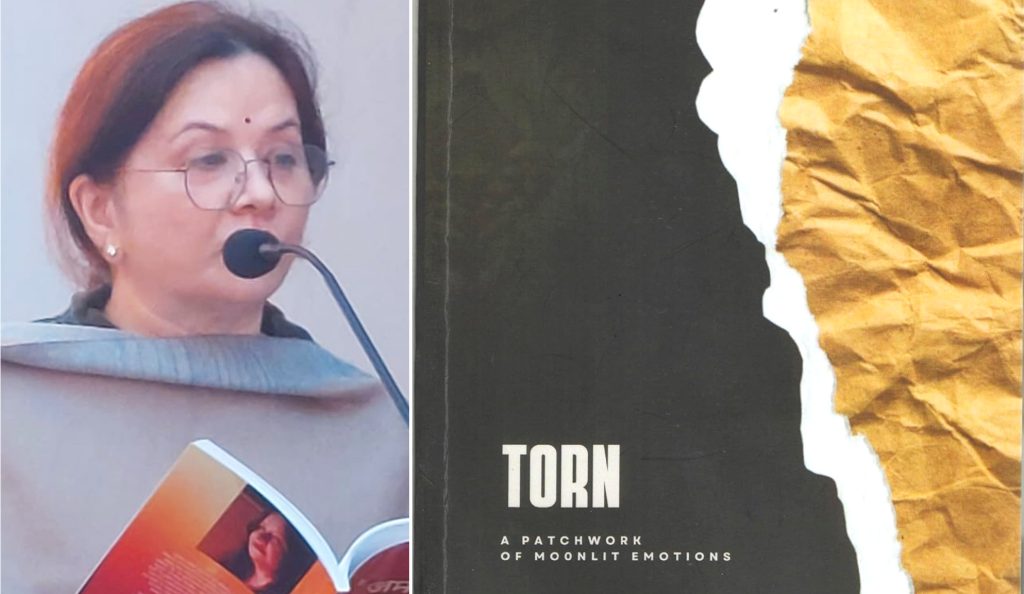
“Torn: A Patchwork of Moonlit Emotions” by Poonam Chawla Sood is an exquisite collection of poetry that ventures deep into the complex tapestry of human emotions, weaving a narrative that is both confessional and observant. The title itself, “Torn,” serves as an apt introduction, reflecting the ephemeral yet stark nature of life’s conditions. Each poem, a thread in this intricate tapestry, skillfully stitches together the fabric of wisdom, love, care, resistance, strength, and mettle.

Sood’s verses transcend mere words; they are portals into the depths of the human experience. Drawing inspiration from Robert Frost’s notion that a poem begins as a lump in the throat, a sense of wrong, a homesickness, a lovesickness, “Torn” resonates with readers, offering numerous “aha” moments. Sood’s unique blend of realism and imagination creates a collection that not only speaks to the intellect but also intertwines with the reader’s heart, leaving an indelible mark.

The preface beautifully sets the tone by delving into the symbolism of the moon—an enduring muse for artists and storytellers throughout history. Depicting the moon as a symbol of the feminine, Sood explores its metaphorical connections to the cycles of womanhood and its universal impact on nature, astrology, ocean waves, and emotional tides. Aligning the poems with the eight phases of the moon, the collection reflects the nuanced shifts in mental states and emotions, offering readers a guided journey through life’s various phases.

Throughout the collection, Sood navigates the diverse landscapes of human emotion with grace and eloquence. From the darkness of new moon nights to the slices of positivity, moments of hope, rays of brightness, and the confrontations with unforeseen tragedies, each poem captures a distinct facet of the human experience. It becomes an earnest effort to bridle the eclipse, an invitation to reflect on autumn memories shed by deciduous moments and breathe light into the shadows.

The reader embarks on a moonlit poetic journey, where emotions, phases, and moods are intricately woven into the elliptical orbit of the moon. Sood’s verses serve as companions, guiding through the varied terrain of human existence. The collection is more than a compilation of poems; it is an exploration of the human spirit, a testament to the enduring power of poetry to illuminate the complexities of our shared humanity.

In conclusion, “Torn” is a poetic masterpiece that transcends its written form. Poonam Chawla Sood’s ability to navigate the intricacies of human emotion with authenticity and finesse makes this collection a captivating and enriching literary experience. Each poem is a patchwork square in the quilt of human existence, offering solace, reflection, and a profound connection to the shared journey of life.

Order your copies here:
Amazon Flipkart

Review by
Preeth Padmanabhan Nambiar

Preeth Nambiar, an Indian poet, journalist, and educationist, is a visionary leader in spreading humanitarian values through creative expression. The former department head of Cambridge University International General Certificate of Secondary Education ESL in the Maldives, he returned to India with a mission to imbibe values through the medium of education and literature. As the founder of the Writers Capital International Foundation, he has created a global platform for unity and understanding which is now spread across 87 countries. His eloquent poetry reflects a blend of narration and mysticism, while his short stories captivate with their poetic essence. Advocating holistic education, he considers instilling universal values in the new generation must be a major aim of education. Through his organization, he organizes influential festivals and promotes minimalism and compassion. 

Moonlit Musings: Navigating the Patchwork of Emotions Read More »

Echoes of Humanity: Navigating War’s Emotional Terrain

“Being Human in a War Zone” by Meher Pestonji is a poignant and compelling collection of fourteen stories that intricately weave the lives of ordinary citizens facing extraordinary challenges in war-torn regions. The narratives span across diverse cultures, including Afghanistan, America, Ukraine, Sudan, Syria, and Tibet, offering readers a glimpse into the mental and physical landscapes of individuals grappling with the complexities of life amidst conflict.

The author, Meher Pestonji, a seasoned Indian social worker, freelance journalist, and writer, brings a unique blend of empathy and journalistic precision to her storytelling. Born into the Parsi community in India, Pestonji’s own experiences and dedication to social causes since the 1970s undoubtedly shape the depth and authenticity of her narratives.

The stories delve into the lives of characters like Dariya, Macy, Nabeel, and Romeo, each dealing with personal struggles in the midst of war-like situations. Whether it’s a daughter striving to save her mother, a mother worrying about her son’s safety, or individuals seeking new beginnings, Pestonji masterfully portrays the human condition in the face of adversity.

Meher Pestonji’s extensive career in activism is palpable in the themes explored within the stories. From fighting for rape law changes in the 1970s to advocating for the housing rights of slum dwellers, children’s rights, and anti-communalism campaigns, Pestonji’s commitment to social justice resonates in her literary work.

The collection reflects Pestonji’s evolution as a writer, with each story serving as a canvas where the hues of human resilience and vulnerability are painted with finesse. Her narrative style is deeply rooted in her personal and journalistic experiences, creating a compelling fusion of storytelling and social commentary.

Among Pestonji’s notable works are “Mixed Marriage and Other Stories,” “Pervez,” “Sadak Chhaap,” and others, showcasing a consistent commitment to weaving stories that reflect the human experience in all its complexity.

In “Being Human in a War Zone,” Meher Pestonji succeeds in humanizing the often-overlooked stories of individuals caught in the crossfire of conflict. The collection is a testament to the resilience of the human spirit and an invitation for readers to empathize with the diverse lives affected by the ravages of war.

Preeth Padmanabhan Nambiar

Echoes of Humanity: Navigating War’s Emotional Terrain Read More »

A Melodic Journey into the Divine: A Review of “The Song Divine” by Dr Srilakshmi Adhyapak

The Bhagavad Gita, a timeless and revered scripture of ancient Indian wisdom, stands as an extraordinary synthesis of spiritual discourse and profound poetry. Composed in the form of a sacred dialogue between Prince Arjuna and Lord Krishna on the battlefield of Kurukshetra, it encapsulates the essence of life’s dilemmas and the eternal quest for truth and liberation.

The poetry in the Bhagavad Gita possesses a captivating beauty that transcends the boundaries of time and language, drawing readers into the ethereal realm of divine expression. Each verse weaves together eloquent words, rich metaphors, and evocative imagery, inviting us on a philosophical odyssey through the complexities of duty, righteousness, and the paths to self-realization. Its poetic brilliance is not only a testament to the wisdom of the ancient sages but also an eternal source of inspiration for seekers on the path of spiritual awakening and inner transformation.

The earliest attempt at translation of the Bhagavad Gita dates back to the late 18th century when Sir Charles Wilkins translated the Gita into English prose. However, it was the poetic translations of the 19th and 20th centuries that truly captured the imagination of readers worldwide. Renowned scholars, poets and seers like Swami Vivekananda, A.C. Bhaktivedanta Swami Prabhupada, and Swami Sivananda offered their poetic renditions, bringing the profound wisdom of the Gita to a global audience. Dr Srilakshmi Adhyapak’s book shedding light into the greatest of the spiritual wisdom of the East serves as the most contemporary work on the same.

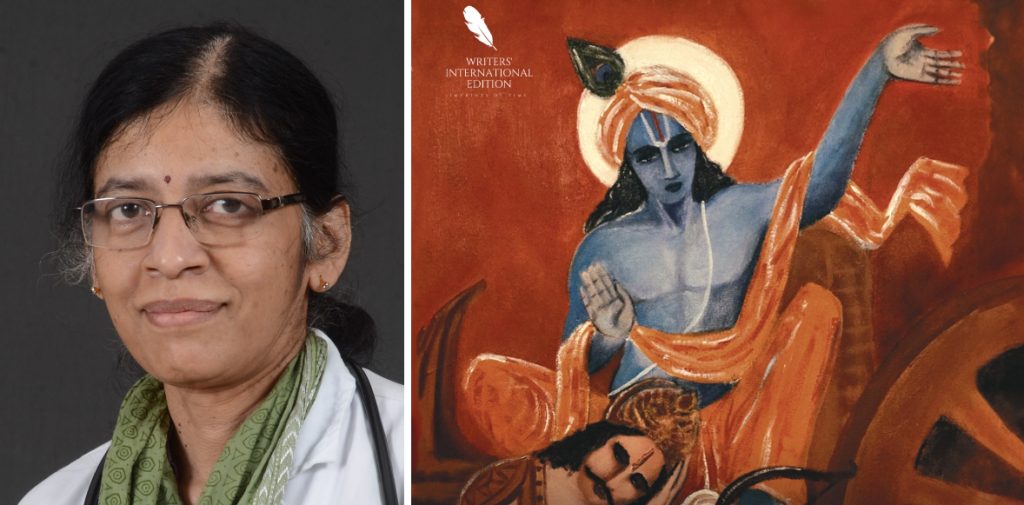
“The Song Divine,” a collection of captivating verses by Dr. Srilakshmi Adhyapak, transports readers to an ethereal realm where poetic expression dances with emotions and intertwines with profound insights. Dr. Adhyapak, a distinguished medical doctor and esteemed professor, infuses her poetry with a unique perspective derived from her experiences in both the scientific and spiritual domains, creating a tapestry of emotions, wisdom, and spiritual truths.

From the very beginning, the invocation sets the stage for a spiritual journey, inviting readers to bow before the all-pervading Lord supreme. The cosmic consciousness, symbolized by a majestic serpent coiled upon a divine seat, awakens and fills the world with serpentine blessings, silencing evil and enveloping the virtuous with celestial bliss. With this poetic symphony, the stage is set for the protagonist, a prince burdened by duty and facing an impending battle.

Through the prince’s inner turmoil and search for guidance, we witness the divine intervention that occurs at a critical juncture. The Lord, in His divine presence, offers solace and imparts wisdom, reminding the prince of his valiant glory and urging him to embrace steadfastness in duty. The chapters that follow delve deeper into the Lord’s teachings, exploring themes of devotion, action, discipline, and the interplay between knowledge and action on the path to salvation.

Dr. Adhyapak’s words resound with spiritual wisdom throughout each chapter, weaving a tapestry of profound insights and timeless truths. The transformation of the prince unfolds before our eyes, reflecting the struggles, dilemmas, and eternal quest for meaning and liberation that define the human condition. Each poem within “The Song Divine” is like a precious gem, shining with its unique brilliance and revealing a facet of the divine truth.

The beauty of Dr. Adhyapak’s words carries readers away, immersing them in the melodic rhythm of her verses. Her keen insight, profound knowledge, and unwavering devotion guide readers on a spiritual pilgrimage, igniting contemplation and illuminating their path with timeless wisdom. “The Song Divine” serves as an invitation to embark on a transformative odyssey toward the eternal truth.

Being in an organisation that brings hundreds of writers and others in the field of creative expression, I personally meet a number of people on a daily basis. However, rarely do we find a poet like Dr. Srilakshmi Adhyapak who is an exceptional individual who has established herself as both a prominent medical doctor and a profound spiritual being.

As the head of the Department of Cardiology at St. John’s Medical College, she has displayed exemplary expertise and dedication to the field of medicine. Beyond her medical achievements, Dr. Adhyapak’s spiritual journey has found expression in her book, “The Song Divine,” where her poetic verses beautifully weave together profound insights and wisdom.

“The Song Divine” is a mesmerizing collection of poetry that combines the scientific and spiritual realms, offering readers a captivating journey into the depths of human existence and our connection with the divine. Dr. Srilakshmi Adhyapak’s eloquent verses resonate with spiritual wisdom, reflecting the struggles and yearnings of the human spirit. Embrace this divine song, allow it to ignite contemplation within you, and let its timeless wisdom guide you towards self-realization and liberation.

Buy the book here: https://amzn.eu/d/cbVcnGV

Preeth Nambiar

ABOUT THE AUTHOR

Preeth Nambiar, an Indian poet, journalist, and educationist, is a visionary leader in spreading humanitarian values through creative expression. The former department head of Cambridge University International General Certificate of Secondary Education ESL in the Maldives, he returned to India with a mission to imbibe values through the medium of literature. As the founder of the Writers Capital International Foundation, he has created a global platform for unity and understanding. His eloquent poetry reflects a blend of narration and mysticism, while his short stories captivate with their poetic essence. Advocating holistic education, he considers instilling universal values in the new generation must be a major aim of education. Through his organization, he organizes influential festivals and promotes minimalism and compassion. 

A Melodic Journey into the Divine: A Review of “The Song Divine” by Dr Srilakshmi Adhyapak Read More »

Imagined Realities: A Poetic Pilgrimage through ‘Dakshina Kashi’

Indian women poets have long been a powerful force in the realm of literature, using their words to express their unique perspectives, challenge societal norms, and unveil the depths of their emotions. Their poetry reflects a diverse range of experiences, capturing the essence of womanhood, love, identity, and social issues. Among these talented voices, Meera Vineeth emerges as a promising addition. With her collection “Dakshina Kashi,” Meera showcases her lyrical prowess and introspective depth, adding a fresh and captivating voice to the rich tapestry of Indian women poets.

In her masterful collection of poetry, “Dakshina Kashi,” Meera Vineeth Kodakadath weaves a tapestry of emotions, reflections, and vivid imagery, taking readers on a transformative journey through life’s complexities. With fifty thought-provoking poems, Meera explores the depths of human experience, offering a parable of her own personal odyssey and inviting readers to join her in this introspective exploration.

Through her verses, Meera captures the essence of poetry as a song of the heart, pulsating with emotions of pleasure, grief, and passion. She delicately dances between the fluid realities of life and the realms of the imagination, creating a mesmerizing blend of the tangible and the ethereal. Her words carry an air of contemplation and introspection, urging readers to delve deeper into their own thoughts and feelings.

Meera’s poetry is characterized by its profound ability to reflect varied emotions, vividly and artfully expressed. With each poem, she offers glimpses into her innermost thoughts and experiences, transporting readers into a world of wonder and self-discovery. Sometimes abstract and enigmatic, her verses challenge readers to unravel the intricacies of her mind and emotions, opening up a space for introspection and understanding.

One of Meera’s defining qualities as a poet is her ability to effortlessly bridge the gap between the real and the imagined. Through her words, she paints vibrant scenes and creates evocative metaphors that resonate with readers. Her ability to juxtapose the richness of history, spirituality, and mythology in her poems adds depth and layers of meaning to her work. She skillfully intertwines cultural symbolism, allowing readers to explore the intersections of memory, tradition, and contemporary life.

Meera’s poems are not only deeply reflective but also profoundly meditative. She uses her verses as a conduit for exploring inner turmoil, existential questions, and the pursuit of solace and peace. Throughout the collection, she guides readers through moments of contemplation, gently urging them to reflect on their own lives and search for meaning within.

With a lyrical and captivating writing style, Meera’s words flow like streams of a boundary-free river, touching the hearts of readers and resonating long after the poems are read. Her imagery is vibrant and chromatic, evoking a vivid sensory experience that transports readers to the landscapes of her imagination. Whether she is describing the serene course of the River Periyar or exploring the enigmatic mysteries of life, her words leave a lasting impression.

“Dakshina Kashi” is Meera Vineeth Kodakadath’s second collection of poems, and it solidifies her place as a poet of exceptional talent and introspective depth. Through her verses, Meera invites readers to embark on a journey of self-discovery, where emotions flow freely and thoughts find solace in the power of words. Her poems touch the essence of what it means to be human, urging readers to embrace life’s challenges with resilience and seek the beauty that lies within.

This collection will undoubtedly leave a lasting impact on readers, as they reflect on Meera’s words, immerse themselves in her imagery, and find their own echoes in the tapestry she weaves. “Dakshina Kashi” is a poetic masterpiece that shines a light on the nuances of human existence and the enduring power of the written word.

Preeth Padmanabhan Nambiar

About the author

Preeth Nambiar, an Indian poet, journalist, and educationist, is a visionary leader in spreading humanitarian values through literature. As the founder of the Writers Capital International Foundation, he has created a global platform for unity and understanding. His eloquent poetry reflects a blend of narration and mysticism, while his short stories captivate with their poetic essence. Advocating holistic education, he considers instilling universal values in the new generation must be a major aim of education. Through his organization, he organizes influential festivals and promotes minimalism and compassion. Preeth Nambiar’s contributions have garnered international recognition, including the YMG Gandhi International Award and the World Icon of Peace Award.

Imagined Realities: A Poetic Pilgrimage through ‘Dakshina Kashi’ Read More »