Writers International Edition

Reviews

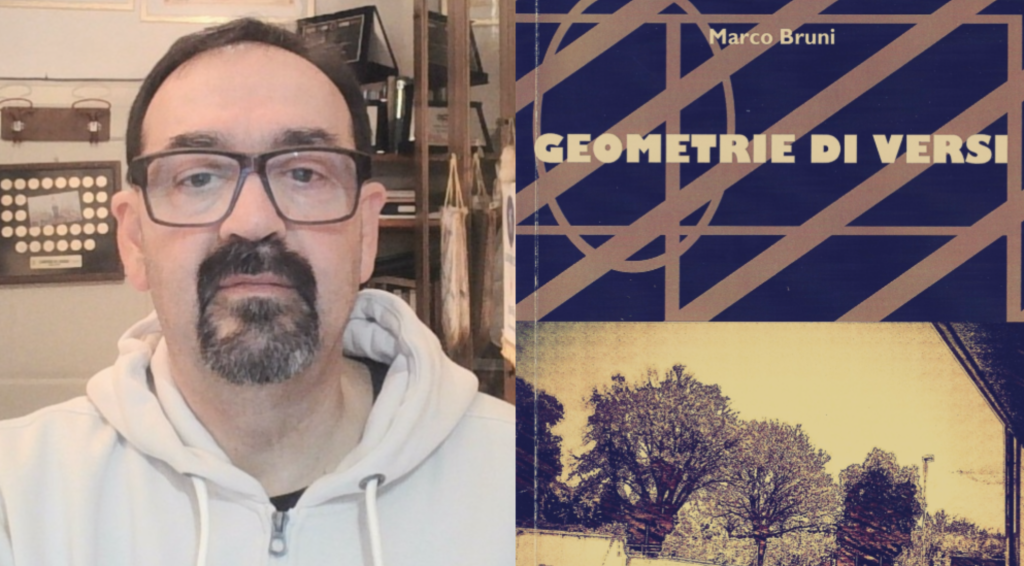
Book Review: Geometrie di Versi by Marco Bruni – A Poetic Exploration of Time, Spirituality, and Human Experience

Geometrie di Versi by Marco Bruni, published in 2015 by Pier Luigi D’Orazio Editore, is a profound and introspective collection of Italian poetry that navigates the complexities of human existence, time, and spirituality. Curated by Pasqualina Genovese D’Orazio with a preface by Franco Donati, this work stands as a testament to Bruni’s lyrical craftsmanship and his ability to weave personal and universal themes into a cohesive poetic tapestry. Dedicated to his wife Laura and daughter Arianna, the collection is imbued with a deep sense of love and purpose, serving as both a personal reflection and a philosophical inquiry.

Thematic Depth and Structure

The collection is structured as a labyrinthine journey, as Donati aptly describes in his preface, guiding readers through a challenging yet rewarding exploration of life’s existential questions. Bruni’s poetry is anchored in the concept of time as a relentless force—a “martello” (hammer) that shapes human experience with its unyielding rhythm. Poems such as “Naufraghi di cartapesta” and “Rive d’amore” vividly capture this theme, portraying time as both a destructive and transformative entity that leaves behind “orme sulla sabbia” (footprints on the sand) erased by the wind.

Bruni’s work is deeply spiritual, with recurring references to divine purpose and human redemption. In “Battiti,” he writes, “ogni uomo è un pezzo del disegno / che Dio ha voluto Suo” (every man is a piece of the design / that God willed His own), suggesting that individual lives gain meaning within a divine mosaic. This spiritual dimension is balanced by a grounded awareness of human frailty, as seen in poems like “Rimorsi,” where the poet grapples with regret and the weight of past mistakes.

The collection also explores love, memory, and nature. Poems such as “Al mio angelo” and “Lacrime d’amore” evoke tender devotion, while “Dolci ricordi” and “Immagini e ricordi” paint nostalgic vignettes of Bruni’s childhood and personal history. Nature serves as a vivid backdrop, with imagery of the sea, stars, and autumn leaves enriching the emotional resonance of the work, as seen in “Dove vive il mare” and “Autunno.”

Stylistic Brilliance

Bruni’s poetic style is marked by its lyrical intensity and rich intertextuality. Donati notes influences from Italian literary giants such as Montale, Leopardi, and Pascoli, as well as modern voices like De Gregori. These influences manifest in Bruni’s meticulous attention to rhythm, metaphor, and imagery. For instance, in “Alba,” the delicate description of dawn—“tremulo e incerto bagliore di vita spunta” (a trembling and uncertain glimmer of life emerges)—captures a fleeting moment with precision and grace.

The title Geometrie di Versi reflects the structural elegance of the collection, where each poem is a carefully crafted piece of a larger whole. Bruni employs a variety of forms, from free verse to more structured compositions, creating a dynamic interplay between form and content. His language is both accessible and evocative, inviting readers to engage with the text on multiple levels.

Strengths and Reflections

One of the collection’s greatest strengths is its ability to balance personal intimacy with universal appeal. Bruni’s reflections on love, loss, and faith resonate broadly, while his specific references to places like Massa Marittima (“Le mura di Massa,” “Novembre massetano”) ground the work in a tangible sense of place. The preface by Donati enhances the reader’s experience by providing a thoughtful framework for interpreting the collection’s themes, encouraging readers to seek out its literary allusions and philosophical depth.

However, the density of certain poems may pose a challenge for readers unaccustomed to Bruni’s intricate style or the philosophical weight of his themes. The recurring motif of time’s inexorability, while powerful, can at times feel heavy, though this is mitigated by moments of hope and redemption that punctuate the collection.

Conclusion

Geometrie di Versi is a remarkable achievement in contemporary Italian poetry, offering a rich exploration of the human condition through a lens of lyrical beauty and spiritual insight. Marco Bruni’s ability to interweave personal memory, literary tradition, and existential inquiry makes this collection a compelling read for those who appreciate poetry that challenges and uplifts. As Donati suggests, Bruni’s work is a gift—a call to reflect on life’s mysteries and find meaning in its fleeting moments. This book is highly recommended for readers seeking a poetic journey that is both intellectually stimulating and emotionally resonant.

Book Review: Geometrie di Versi by Marco Bruni – A Poetic Exploration of Time, Spirituality, and Human Experience Read More »

Book Review: Il corpo e l’essenza by Anna Rita De Fulviis – A Sensory Symphony of Love, Nature, and the Human Spirit

Il corpo e l’essenza (The Body and the Essence), Anna Rita De Fulviis’ evocative poetry collection, published in October 2023 by Imago Comunicazione srl, is a vibrant tapestry of sensory imagery, emotional depth, and cosmic reflection. Comprising 66 poems across 94 pages, this Italian-language collection explores themes of love, nature, loss, and spiritual transcendence, rooted in the poet’s Abruzzo heritage and universal human experiences. Dedicated to her son, Davide, and framed by Seneca’s stoic wisdom, the book is a synesthetic journey that engages the senses, as noted in the preface by On.le Pino Bicchielli. While its vivid metaphors, musicality, and emotional sincerity captivate, minor editorial inconsistencies and occasional overreliance on familiar imagery slightly temper its impact. Nevertheless, Il corpo e l’essenza is a luminous celebration of life’s beauty and pain, ideal for readers of lyrical poetry and those seeking a profound connection with the natural and divine.

Overview and Structure

Il corpo e l’essenza (ISBN: 978-88-945764-6-7) is a compact paperback featuring 66 poems, a preface by On.le Pino Bicchielli, a presentation by the author, and a biographical note. The collection, edited by De Fulviis herself, includes a table of contents (pages 90–91) listing poems alphabetically, such as Armonia, Estate, Il fuoco dell’amore, and Nascita della luna. The book’s design, handled by Imago Comunicazione srl, incorporates photographs by Diego Pomanti and Microsoft Bing-generated images inspired by selected poems. Published in October 2023 with a first reprint in March 2024, it reflects De Fulviis’ prior accolades, including awards from Piramide (1990) and Oltre Aniene (1997/1998).

The poems are untethered by rigid sections, flowing freely between themes: love (Il fuoco dell’amore, Respiri dell’anima), nature (Il bosco, Oceano), loss (Fiumi di sangue, L’angelo della morte), and spiritual unity (Armonia, Il silenzio della terra). Seneca’s epigraphs, such as “È grande chi sa essere povero nella ricchezza” (It is great to know how to be poor in wealth), set a contemplative tone, while the dedication to Davide anchors the work in personal intimacy. The preface praises the poems’ sensory power, likening them to melodies that awaken touch, smell, and sight, while the presentation compares De Fulviis to poets like Alda Merini, Pablo Neruda, and Emily Dickinson for her raw, passionate voice.

Strengths

1. Sensory and Synesthetic Imagery

De Fulviis’ poetry is a sensory feast, as Bicchielli notes, inviting readers to “listen, touch, and smell” her words. In Armonia, she paints nature as a Monet-like canvas: “Armonia / è il colore dei fiori, della natura / che colora con il suo pennello / il campo dalle mille sfumature” (Harmony / is the color of flowers, of nature / that paints with its brush / the field of a thousand shades). The poem’s invocation of Fibonacci’s golden ratio ties earthly beauty to cosmic order, showcasing her ability to blend the tangible and metaphysical. Similarly, A24 captures a starry night on the Rome-L’Aquila highway, where “mani s’intrecciano, si stringono / bocche si congiungono, si baciano” (hands intertwine, clasp / mouths join, kiss) under the Milky Way’s arc, evoking a timeless romance.

Her synesthetic approach—merging sound, sight, and touch—shines in Il bosco: “Nel carezzevole / profumo di bosco / tutto prende coscienza: / versi, canti, suoni” (In the caressing / scent of the forest / everything gains awareness: / verses, songs, sounds). This sensory fusion creates vivid, immersive experiences, making the collection a standout in contemporary Italian poetry.

2. Emotional and Spiritual Depth

De Fulviis writes with unguarded vulnerability, exposing her heart, as the presentation notes: “Anna non si nasconde dietro le parole, ma si espone, si confessa, si dona” (Anna does not hide behind words, but exposes, confesses, gives herself). In Argentea luna, she grapples with unrequited love: “Silenzi colmi di un amore illusorio… Non devi mai sapere che in quelle notti… che solo io ti ami” (Silences filled with an illusory love… You must never know that in those nights… only I love you). The poem’s tender secrecy resonates universally, capturing love’s quiet ache.

Spirituality permeates the collection, blending Christian, pantheistic, and cosmic elements. Dominus envisions four kings at the world’s poles, lamenting human idolatry: “Umanità sconvolta / presi dall’idolatria… senza la Croce al centro del Cuore” (Humanity distraught / caught in idolatry… without the Cross at the heart’s center). Meanwhile, Il silenzio della terra elevates silence to a cosmic melody: “Il silenzio delle stelle / diventa: luce, vita” (The silence of the stars / becomes: light, life). This spiritual breadth, rooted in her Abruzzo upbringing, offers solace and invites reflection on life’s mysteries.

3. Celebration of Nature and Love

Nature is a vibrant protagonist, from the “profumo di bosco” (forest scent) in Il bosco to the “oasi di bellezza” (oasis of beauty) in Oceano. In Estate, summer’s harmony bridges heaven and earth: “La tua armonia / è un ponte: tra cielo e terra” (Your harmony / is a bridge: between sky and earth). De Fulviis’ eco-conscious reverence recalls Neruda’s elemental odes, grounding her work in the physical world while aspiring to the divine.

Love, both human and universal, is the collection’s heartbeat. Il fuoco dell’amore ignites passion: “Ti guardo negli occhi: / sento il fuoco dell’amore / si accende e si diffonde / nell’essenza del mio cuore” (I look into your eyes: / I feel the fire of love / ignite and spread / in the essence of my heart). The poem’s sensory progression—from eyes to embrace to kiss—culminates in a cosmic “urlo eterno” (eternal cry), blending physical and spiritual ecstasy. This intensity, paired with tender dedications to family (Flash back, Rinti pastore tedesco), makes love a unifying force.

4. Musicality and Lyrical Flow

De Fulviis’ language is melodic, with a rhythm that mirrors nature’s pulse. In Respiri dell’anima, the repetition of “Le lingue… Le bocche… Le mani” (The tongues… The mouths… The hands) mimics lovers’ synchronized breaths, creating a hypnotic cadence. Her use of anaphora, as in Diverrei: “Diverrei… Luna, stelle… Sole… lago” (I would become… Moon, stars… Sun… lake), builds emotional momentum, echoing the Cantico dei Cantici’s ardent repetition. The presentation likens her words to “note per comporre melodie armoniose” (notes to compose harmonious melodies), a fitting description of her lyrical craft.

5. Personal and Cultural Authenticity

Born in Abruzzo to a devout family, De Fulviis infuses her poetry with regional and personal resonance. Poems like A24 and Rinti pastore tedesco evoke Abruzzo’s landscapes and her childhood, while Flash back honors her mother’s nurturing presence: “Voce gentile… arrive delicatamente / il mattino, per un dolce risveglio” (Gentle voice… arrives delicately / in the morning, for a sweet awakening). Her awards from Roman literary circles underscore her established voice in Italian poetry, while her comparison to Merini and Leopardi situates her within a rich tradition of introspective lyricism.

Areas for Improvement

1. Editorial and Formatting Issues

The collection suffers from minor editorial oversights, likely due to its small-press production. Stray characters like “$1$” and “$2$” appear on pages 2, 3, 9, 12, 31, 33, 39, 43, 51, 57, 73, 83, 90, and 93, disrupting the reading flow. Typographical errors, such as “antrice” for “autrice” (page 5) and “Mepuro” for “Mapuro” (page 92), and inconsistencies in pagination (e.g., page 94’s fragmented text) suggest a need for rigorous proofreading. Blank pages (e.g., 21, 53, 61, 85) and misaligned page numbers further detract from the book’s polish.

2. Repetition of Themes and Imagery

While love and nature are central, their frequent recurrence—moons, stars, fires, seas—can feel repetitive. Poems like Argentea luna, Luna blu, and Nascita della luna revisit lunar imagery, while Il fuoco dell’amore and Respiri dell’anima echo similar erotic motifs. Greater thematic variety, perhaps exploring urban life or historical narratives, could diversify the collection’s scope and showcase De Fulviis’ range.

3. Overreliance on Conventional Metaphors

De Fulviis’ metaphors, though vivid, often lean on familiar tropes: “fuoco dell’amore” (fire of love), “luna argentea” (silvery moon), “cuore dolente” (aching heart). These can feel predictable, slightly diminishing originality. Incorporating regional Abruzzese idioms or experimental imagery could enhance distinctiveness, especially given her unique perspective.

4. Limited Formal Experimentation

The poems predominantly use free verse with short, declarative lines, creating a consistent but occasionally monotonous rhythm. For example, L’alba and Notte follow similar structures, with minimal enjambment or stanza variation. Exploring forms like villanelles, sonnets, or prose poetry could add dynamism, particularly since her awards suggest formal versatility.

5. Underdeveloped Narratives in Some Poems

Certain poems introduce compelling ideas but lack closure or depth. In Io lo so, the anticipated reunion—“un giorno accadrà / che io e te avvinghiati” (one day it will happen / that you and I, entwined)—remains abstract, leaving readers wanting context. Similarly, Nell’hic et nunc evokes a transcendent flight but ends abruptly: “Cielo e Terra si sfiorano” (Sky and Earth touch). Subtle narrative hints or stronger resolutions could deepen emotional impact.

Personal and Cultural Insights

De Fulviis’ Abruzzo roots ground her work in a rugged, spiritual landscape, evident in references to starry skies (A24) and pastoral memories (Rinti pastore tedesco). Her Catholic upbringing informs poems like Dominus, which critiques human greed through biblical imagery, while her pantheistic reverence in Armonia and Il silenzio della terra reflects Abruzzo’s nature-centric ethos. Her comparison to Merini and Neruda highlights her passionate, feminine voice, while echoes of Leopardi’s melancholic hope resonate in poems like Orme. Personal tributes to her son, parents, and childhood friend Giuseppe add intimacy, making the collection a bridge between individual and collective experience.

Impact and Audience

Il corpo e l’essenza will captivate readers of lyrical poetry, such as fans of Merini, Neruda, or Mary Oliver, for its sensory richness and emotional depth. Its accessible language and short poems suit poetry enthusiasts, students, and those exploring Italian literature. The Abruzzo setting offers a fresh perspective in contemporary poetry, while universal themes of love, loss, and nature resonate globally. The collection’s meditative quality makes it ideal for mindfulness practices or literary discussions on eco-spirituality and human connection.

De Fulviis’ awards and Bicchielli’s endorsement enhance her credibility, positioning the book as a notable indie publication. Its call to embrace love and harmony aligns with modern quests for meaning, amplifying its relevance.

Conclusion

Il corpo e l’essenza by Anna Rita De Fulviis is a radiant ode to the body’s passions and the soul’s essence, weaving love, nature, and spirituality into a sensory symphony. Its vivid imagery, emotional sincerity, and Abruzzese authenticity create a compelling read, despite minor editorial flaws and repetitive motifs. De Fulviis’ voice—ardent, melodic, and unguarded—invites readers to feel the pulse of life and the cosmos. For those seeking poetry that ignites the senses and stirs the heart, this collection is a luminous, eternal embrace worth savoring.

Book Review: Il corpo e l’essenza by Anna Rita De Fulviis – A Sensory Symphony of Love, Nature, and the Human Spirit Read More »

Book Review: Twilight in the Woodland by Sangeeta Dey (Roy) – A Poetic Elegy for Nature and the Human Soul

Twilight in the Woodland, Sangeeta Dey (Roy)’s second poetry collection, published in July 2024 by WissenMonk Publications, is a heartfelt and evocative exploration of nature’s beauty, its degradation, and the intricate tapestry of human emotions. Comprising 65 poems across 184 pages, the collection is divided into two sections: “Mother Nature: Her Lullaby and Her Fury” and “Variegated Streams of Life.” Set against the lush yet imperiled landscapes of Northeast India, particularly Assam’s Barail hills and the river Luit (Brahmaputra), Roy’s poetry weaves a narrative of environmental lament, personal introspection, and resilient hope. While the collection’s sincerity, vivid imagery, and regional specificity shine, its occasional reliance on conventional metaphors and minor editorial inconsistencies slightly temper its impact. Nonetheless, Twilight in the Woodland is a compelling call to reconnect with nature and the self, ideal for readers who cherish eco-poetry and reflective verse.

Overview and Structure

Twilight in the Woodland (ISBN: 978-93-93815-59-0) is a paperback, featuring 65 poems, a foreword by poet and critic Basudhara Roy, a congratulatory message from Thai-tsho Daulagupu (Principal Secretary, NCHAC, Haflong), and a preface by the author. The book’s structure is clear, with a table of contents (pages 11–13) listing poems under two thematic sections:

  1. Mother Nature: Her Lullaby and Her Fury (18 poems, pages 15–67): This section focuses on nature’s dual role as a nurturing force and a victim of human exploitation. Poems like The Glaring Sun, O Luit!, and Concrete Jungleslament environmental destruction while celebrating the serene beauty of Assam’s hills, rivers, and forests.

  2. Variegated Streams of Life (47 poems, pages 69–200): This broader section explores human experiences—love, loss, hope, despair, and societal critique—often intertwined with nature. Poems such as Hope in the Twilight, Devi, and Poetry reflect personal and universal struggles, with a feminist and spiritual undertone.

Roy’s preface (pages 9–10) describes the title as a “musical cadence” capturing hope, anguish, and the “multiple labyrinths of nature and existence.” The foreword praises Roy’s ability to embody nature’s consciousness, while Daulagupu’s message highlights her literary enchantment. The book’s regional focus, particularly on Haflong and Jatinga in Assam’s Dima Hasao district, grounds its universal themes in a specific cultural and ecological context.

Strengths

1. Vivid Regional Imagery and Eco-Consciousness

Roy’s poetry is steeped in the sensory richness of Northeast India, particularly Assam’s landscapes. In The Vapoury Spread of Jatinga, she describes “swirling fog” and “cloud-capped hills” with “cottony fluffs,” evoking the misty serenity of the Barail hills. The river Luit, a recurring motif, is personified as a generous yet wounded entity in O Luit!: “O Luit, we have sung / And praised your immortal history… But, alas! How cruelly we have trammeled / Your charming flow.” These images not only celebrate nature’s beauty but also mourn its desecration, as seen in Concrete Jungles: “You hammered onto her delicate surface… You sliced her hills, / Narrowed her dales.”

The eco-conscious tone is urgent and poignant, addressing deforestation (In The Next Few Decades), pollution (The Aftermath of Mountaineering), and climate change (The Glaring Sun). Roy’s call to action—“Fervent plea… Let us all plant more trees” (The Wear and Tear of Earth’s Bosom)—resonates with global environmental concerns while remaining rooted in local realities, making the collection a vital contribution to eco-poetry.

2. Emotional and Spiritual Resonance

Roy’s poems navigate the human condition with raw sincerity, blending personal reflection with universal themes. In Hope in the Twilight, hope is a gentle yet resilient force: “Hope perched on my shoulder gently / And patted my tired back… Hope scribbled sunbeams on my shore.” This optimism, tempered by despair, creates a relatable emotional arc. Poems like In The Icy World of Despair and The Ache in Her Heart delve into loss and longing, with lines like “The garden of delightful lilies… evaporated in hostile flame of / Separation” evoking deep pathos.

Spirituality infuses the collection, often through nature or divine imagery. The Downpour portrays rain as a cleansing force guided by an “unseen figure,” while Ever Ready to Heed Thy Call expresses patriotic devotion to “mother India.” Roy’s Christian influences surface in True Essence of Christmas, where Christ’s sacrifice inspires “infinite love in the womb of ruthless hearts.” This spiritual depth broadens the collection’s appeal, offering solace to readers seeking meaning.

3. Feminist and Social Critique

The “Variegated Streams of Life” section shines in its critique of societal norms, particularly gender inequality. Devicontrasts the revered status of women in the Rig Vedic age with modern misogyny: “The misogynist is everywhere, / His lustful eyes, / His creepy thoughts… To throttle her views.” Roy challenges patriarchal hypocrisy, noting how men worship goddesses yet oppress women. Sermon celebrates Mother Teresa’s compassion, questioning rigid religious doctrines, while Me asserts individuality: “Let me be the me, I am, / With my limitations, my imperfections.”

Roy also critiques urbanization (The Flamboyant, Auburn City) and human greed (Manmade Space), lamenting the loss of empathy and nature in the “rat race.” Her voice, described in the foreword as “a woman’s language, deeply confrontative,” empowers readers to question societal constructs and seek authenticity.

4. Accessibility and Lyrical Simplicity

Roy’s language is clear and unpretentious, making the collection accessible to diverse readers. Her free verse, often conversational, invites engagement, as in In Conversation with The Plants: “The soil breathed so did the plants… They sang a thank you note in unison.” The poems’ brevity—most span one to two pages—ensures a brisk yet impactful read, ideal for casual readers or classroom use. Her metaphors, though sometimes conventional (e.g., “velvety bosom,” “feathery clouds”), are vivid and relatable, enhancing the collection’s emotional pull.

5. Cultural and Personal Authenticity

Roy’s connection to Assam’s Dima Hasao district, particularly Haflong and Jatinga, lends authenticity to her work. Poems like In The Yard of Fiangpui and The Vapoury Spread of Jatinga capture the region’s misty hills and cultural vibrancy, while St. Agnes’ Girls nostalgically recalls her school days, blending personal memory with universal themes of friendship. Her preface acknowledges her late parents and divine inspiration, adding a personal layer that resonates with readers. The foreword’s note on her Northeast Indian perspective positions the collection as a unique voice in Indian poetry.

Areas for Improvement

1. Editorial and Formatting Issues

The collection suffers from minor editorial oversights, likely due to its rapid publication timeline (noted in the preface). Stray characters like “$1$” and “$2$” appear on pages 2, 8, 14, 66, 88, 132, 142, and 201, disrupting the reading flow. Typographical errors, such as “Dimalfasao” instead of “Dima Hasao” (The Vapoury Spread of Jatinga, page 31) and inconsistent punctuation (e.g., “it’s” vs. “its”), suggest a need for thorough proofreading. Formatting inconsistencies, like misaligned page numbers or blank pages (e.g., pages 50, 76, 126), could be polished in a revised edition.

2. Repetition of Themes and Imagery

While nature and hope are central themes, their frequent recurrence—trees, rivers, clouds, twilight—can feel repetitive. Poems like The Glaring Sun, The Wear and Tear of Earth’s Bosom, and Entreaties revisit similar environmental pleas, with overlapping images of “green canopy” and “swirling mist.” Similarly, the human-nature connection in Silence and Secret Rendezvous treads familiar ground. Greater thematic variety, perhaps exploring urban resilience or historical narratives, could diversify the collection’s scope.

3. Overreliance on Conventional Metaphors

Roy’s metaphors, while evocative, often lean on familiar tropes: “velvety bosom” (Conviction), “feathery clouds” (Somewhere Afar), “claustrophobic shell” (Reverse Turn). These can feel predictable, reducing the poems’ originality. Experimenting with fresher imagery or blending regional idioms could enhance distinctiveness, especially given Roy’s unique Northeast Indian perspective.

4. Limited Formal Experimentation

The collection predominantly uses free verse with short, declarative lines, creating a consistent but somewhat monotonous rhythm. For example, The Raw Day and Hope in the Twilight follow similar structures, with minimal enjambment or stanza variation. Incorporating diverse forms—haiku, sonnets, or prose poetry—could add dynamism and showcase Roy’s versatility, especially after her debut collection Whispers in The Blue (2023).

5. Underdeveloped Narratives in Some Poems

Certain poems introduce compelling ideas but lack narrative closure or depth. In Facade, the speaker’s betrayal is vivid but unresolved: “I will try to find faithful melody… This time, I’ll devour the beauty of the flowers solely with my eyes.” Similarly, Yonder Sojourn hints at a mystical journey but ends abruptly. Providing subtle contextual hints or stronger resolutions could deepen emotional impact and reader engagement.

Personal and Cultural Insights

Roy’s identity as a Northeast Indian poet, based in Assam, infuses the collection with cultural specificity. Her references to Jatinga, Haflong, and the river Luit reflect a deep connection to Assam’s ecological and cultural heritage, aligning with the region’s literary tradition of celebrating nature (e.g., Navakanta Barua). Her feminist perspective, evident in Devi and Me, challenges patriarchal norms, resonating with contemporary Indian women’s poetry. The spiritual undertones—Christian (True Essence of Christmas), Vedic (Devi), and pantheistic (Silence)—reflect a syncretic worldview, likely shaped by Assam’s diverse religious landscape.

Roy’s personal reflections, such as her nostalgia for St. Agnes’ school (St. Agnes’ Girls) and tribute to her late mother (We Couldn’t Read You Then, ‘O Mother’), add intimacy, making the collection a bridge between individual and collective experience. The foreword’s note on her Northeast location underscores the “grim, urgent edge” of her environmental critique, given the region’s deforestation and climate challenges.

Impact and Audience

Twilight in the Woodland will appeal to readers of eco-poetry, such as Mary Oliver or Gary Snyder, and Indian poets like Kamala Das for its feminist and emotional depth. Its accessible language and short poems make it suitable for poetry enthusiasts, students, and environmental activists. The regional focus offers a fresh perspective in Indian English poetry, while its universal themes of hope, loss, and nature’s plight resonate globally. The collection’s meditative quality suits mindfulness practices, nature retreats, or classroom discussions on eco-literature.

Roy’s prior work (Whispers in The Blue) and endorsements from figures like Basudhara Roy and Thai-tsho Daulagupu enhance her credibility, positioning Twilight in the Woodland as a notable indie publication. Its call to plant trees and preserve nature aligns with global sustainability movements, amplifying its relevance.

Conclusion

Twilight in the Woodland by Sangeeta Dey (Roy) is a poignant and sincere ode to nature’s beauty and fragility, interwoven with human struggles and aspirations. Its vivid imagery, regional authenticity, and eco-feminist perspective create a compelling read, despite minor editorial flaws and repetitive motifs. Roy’s voice—both tender and urgent—invites readers to pause, reflect, and act to preserve the earth and their inner selves. For those seeking poetry that bridges the personal and planetary, this collection is a luminous, twilight-soaked journey worth taking.

Book Review: Twilight in the Woodland by Sangeeta Dey (Roy) – A Poetic Elegy for Nature and the Human Soul Read More »

Book Review: Poetic Waves of Poetry by Tamikio L. Dooley – A Lyrical Odyssey Through Water and Wonder

Poetic Waves of Poetry, Tamikio L. Dooley’s 2024 poetry collection, is a mesmerizing journey through the elemental and emotional landscapes of water—oceans, rivers, lakes, and rain—woven with human stories of solitude, connection, and transformation. Spanning 85 pages and comprising 43 poems, this self-published work immerses readers in vivid seashores, lighthouses, and streams, where waves crash not only against physical shores but also against the human spirit. Dooley, a multi-award-winning poet, employs lyrical simplicity and evocative imagery to explore themes of nature’s power, human resilience, and spiritual renewal. While the collection occasionally stumbles with editorial inconsistencies and repetitive motifs, its heartfelt sincerity, sensory richness, and universal appeal make it a compelling addition to contemporary poetry, particularly for readers drawn to nature-inspired verse.

Overview and Structure

Poetic Waves of Poetry is a compact yet expansive collection, self-published by Dooley in 2024, with all rights reserved. The book opens with a disclaimer noting that events, locales, and characters are fictional, drawn from the author’s imagination, with some details altered for anonymity. This sets the stage for a blend of personal reflection and universal storytelling, where the boundary between reality and metaphor blurs.

The collection is organized thematically around water in its myriad forms—seas, lakes, rivers, streams, and rain—presented in a loose narrative arc. The 43 poems, listed in a table of contents (pages 2–3), range from coastal scenes (Waves by the Lighthouse by the Sea, Seashore Sun) to inland waters (Isolated Lake, River Stones) and atmospheric phenomena (Opaque Rain, Raindrops on the Pines). Key recurring motifs include lighthouses, waves, and human encounters with nature, often imbued with spiritual or emotional significance. The poems vary in length, from half-page vignettes to two-page narratives, and are written in free verse with occasional prose-like structures.

The book concludes with an “About the Author” section (pages 81–85), detailing Dooley’s accolades, including the 2022 World Literary Award, 2023 National Poetry Stage Bangladesh Award, and a 2024 Honorary Doctorate from Friendship of People Magazine. This section underscores her prolific career and global recognition, enhancing the collection’s credibility.

Strengths

1. Vivid Imagery and Sensory Engagement

Dooley’s greatest strength lies in her ability to paint vibrant, sensory-rich scenes that transport readers to the water’s edge. Her descriptions of waves, in particular, are both dynamic and delicate, as seen in Waves by the Lighthouse by the Sea: “Waves by the lighthouse by the sea, they crash upon the seashore, leaving twinkles of snow, chiffon, daisy, powder, and porcelain memories.” The personification of waves as carriers of “memories” and the use of soft, tactile adjectives like “chiffon” and “porcelain” evoke a dreamlike quality, blending the physical and emotional.

Color plays a central role in her imagery, with hues like cobalt, sapphire, fuchsia, and teal animating the poems. In The Colors of Waves, the fisherman observes “blue, navy, and indigo, edged with silver” waves that shift to “peacock, azure, and stone,” reflecting both nature’s beauty and the speaker’s shifting emotions. Similarly, Fuchsia Waterfall uses “juicy rosy-fuchsia flavors” to merge scent, sight, and taste, creating a synesthetic experience. These vivid images make the collection accessible and immersive, inviting readers to feel the “icy raindrops” (Raindrops on the Pines) or hear the “tender murmurs” of the Ocean Breeze.

2. Emotional and Spiritual Depth

The collection balances human solitude with moments of connection, often framed by water’s transformative power. Poems like The Woman in the Water and Baptism, More Than Just a Drop of Water explore spiritual renewal, with water as a medium for purging shame and sin. In Baptism, the imagery of a man’s sins “dissipating” underwater, accompanied by “angelic voices singing,” elevates the act to a divine encounter. This spiritual thread resonates with readers seeking poetry that uplifts and heals.

Human interactions, though often fleeting, carry emotional weight. In Give a Glass of Water, a woman’s small act of kindness toward a homeless man reveals his “hope and wisdom” through a smile, only for his disappearance to leave her longing. Similarly, In the Mist of the Storm captures a poignant moment of shared sorrow between strangers in a coffee shop, their connection forged by rain and silence. These vignettes highlight Dooley’s ability to find universality in quiet, everyday moments.

3. Nature as a Narrative Force

Water is not merely a backdrop but a character in Dooley’s poetry, with agency and voice. In Nipatara Ocean, the crashing waves “whisper” to a heartbroken woman, saving her from despair through their rhythmic music. In Ocean Tides, the tides “yearn to flee” and “seek release,” mirroring human desires for freedom. This anthropomorphism imbues the natural world with emotional resonance, aligning the collection with eco-poetry traditions while remaining accessible to general readers.

The lighthouse, a recurring symbol, represents guidance and solitude. In The Lighthouse, a woman’s journey to the structure ends with her realization that “her destiny lay elsewhere,” suggesting self-discovery through nature’s presence. Similarly, The Little Boy at the Lighthouse uses the structure as a space for a child’s adventurous imagination, inspired by his father’s tales. These symbols anchor the collection’s themes, offering readers a familiar yet profound lens on human experience.

4. Accessibility and Universal Appeal

Dooley’s language is straightforward yet lyrical, making the collection approachable for both seasoned poetry readers and newcomers. Her free verse avoids dense metaphor, favoring clear, evocative descriptions, as in At the Edge of the Seashore: “The seashore is where I always go on crisp autumn mornings. I embrace it. As the air enters my lungs and the cool sweetness of coffee fills me, I stand and wait.” This conversational tone, paired with universal themes like love, loss, and wonder, broadens the collection’s appeal.

The brevity of many poems, such as Seashells and River Flowers, allows for quick, impactful readings, ideal for casual readers or classroom settings. The collection’s focus on nature also makes it a fitting companion for mindfulness practices or environmental discussions, aligning with contemporary interest in eco-conscious literature.

5. Author’s Credibility and Recognition

Dooley’s extensive accolades, detailed in the closing pages, lend authority to the collection. Her awards, including the 2023 Best Poetry Collection Award and the 2024 Gold Peace Medal, reflect her global impact as a poet and humanitarian. Her inclusion in anthologies like the Hyperpoem Book (featuring 1,700 poets) and her role as an Ambassador for the International Literary Association “Creative Tribune” highlight her influence. This context elevates Poetic Waves of Poetry from a self-published work to a significant contribution to modern poetry.

Areas for Improvement

1. Editorial Inconsistencies and Typographical Errors

The collection suffers from minor but noticeable editorial issues, likely due to its self-published nature. Typographical errors, such as “$w$ ashes” and “tow ard” in The Colors of Waves (page 6), “scached” (possibly “scathed”), and “ow $n$” in Stream Bayou (page 54), disrupt the reading flow. Formatting quirks, like the stray “$1$” on page 4 and inconsistent page numbering (e.g., page 3 listed on page 3), suggest a need for rigorous proofreading. These issues, while not pervasive, detract from the collection’s polish and could be addressed in a revised edition.

2. Repetition of Themes and Imagery

While water is the collection’s unifying motif, its constant presence—waves, tides, raindrops—occasionally feels redundant. Poems like Waves by the Lighthouse by the Sea, Ocean Tides, and Beautiful Coast revisit similar imagery of crashing waves and coastal scenes, with overlapping descriptors like “cobalt,” “sapphire,” and “icy.” This repetition risks diluting the impact of individual poems. Greater variety in settings (e.g., urban or desert landscapes) or perspectives could diversify the collection’s emotional range.

3. Underdeveloped Narratives

Some poems introduce compelling characters or scenarios but leave their stories unresolved, which may frustrate readers seeking closure. In Letters by the Seashore, a man writes letters to a woman but stops when she fails to return, with no indication of his motivations or their relationship. Similarly, The Woman in the Water ends with the mysterious disappearance of the woman and man, leaving readers to ponder the significance of their moonlit encounter. While ambiguity can be poetic, clearer narrative arcs or contextual hints could enhance emotional impact.

4. Limited Formal Experimentation

Dooley’s reliance on free verse and prose-like structures, while accessible, limits the collection’s formal diversity. Most poems follow a similar rhythm, with short, declarative sentences and minimal enjambment, as in River Stones: “Waves crashing on river stones provide a deep energetic cleansing and healing.” Experimenting with varied line lengths, stanza breaks, or forms like sonnets or haiku could add dynamism and showcase Dooley’s versatility, especially given her award-winning background.

5. Pacing and Emotional Variation

The collection’s focus on serene or melancholic tones—waves, solitude, quiet reflection—creates a meditative atmosphere but lacks moments of high emotional intensity or contrast. Poems like In the Mist of the Storm hint at deeper sorrow, but the collection rarely explores raw anger, joy, or humor. Introducing poems with varied emotional registers, such as the exuberance of Stream Boat’s adventure or the playful energy of The Lake Out Yonder, could balance the pacing and engage readers more dynamically.

Personal and Cultural Insights

Dooley’s identity as a multi-award-winning poet and humanitarian infuses the collection with authenticity and purpose. Her poems reflect a deep reverence for nature, possibly rooted in her global travels or cultural influences, though the text does not explicitly detail her background. The inclusion of Stream Bayou, with its nod to African dancers and “legends of the ancient forefathers,” suggests a connection to African or diasporic heritage, adding cultural depth. However, the disclaimer’s emphasis on fictional settings and characters creates a universal, almost mythic quality, allowing readers from diverse backgrounds to find resonance.

The collection’s spiritual undertones, particularly in Baptism, More Than Just a Drop of Water and Isolated Lake, align with Christian or broadly theistic themes of redemption and divine presence. Yet, Dooley’s focus on nature’s agency—waves that “whisper,” tides that “yearn”—also evokes animistic or pantheistic perspectives, broadening its appeal. Her humanitarian ethos, evident in her awards like the 2024 African Peace Ambassador Award, shines through in poems like Give a Glass of Water, which celebrates small acts of kindness.

Impact and Audience

Poetic Waves of Poetry will appeal to readers who enjoy nature-centric poetry, such as the works of Mary Oliver or Wendell Berry, with its focus on the sublime beauty of the natural world. Its accessible language and short poems make it suitable for casual readers, poetry enthusiasts, and educational settings, particularly for teaching imagery or eco-poetry. The spiritual and emotional themes resonate with those seeking solace or inspiration, while the collection’s brevity (85 pages) makes it an approachable entry point for poetry novices.

The book’s self-published status and Dooley’s global recognition position it as a unique offering in the indie poetry scene. Its inclusion in anthologies and Dooley’s awards suggest it could find a place in literary discussions about contemporary women poets or eco-conscious literature. The collection’s meditative quality also makes it a fitting companion for mindfulness practices, nature retreats, or coastal vacations.

Conclusion

Poetic Waves of Poetry is a lyrical love letter to water and the human spirit, crafted with sincerity and sensory brilliance by Tamikio L. Dooley. Its vivid imagery, spiritual depth, and universal themes create a soothing yet evocative reading experience, inviting readers to stand at the seashore and feel the waves’ embrace. While editorial inconsistencies and repetitive motifs occasionally temper its impact, the collection’s strengths—its accessibility, emotional resonance, and Dooley’s celebrated voice—make it a noteworthy contribution to modern poetry. For anyone seeking a poetic escape to the water’s edge, this collection offers a refreshing, soulful tide.

Book Review: Poetic Waves of Poetry by Tamikio L. Dooley – A Lyrical Odyssey Through Water and Wonder Read More »

Book Review: Language of the Wound is Love by Megha Sood – A Poetic Tapestry of Grief, Hunger, and Healing

Language of the Wound is Love, Megha Sood’s 2025 poetry collection published by FlowerSong Press, is a visceral and luminous exploration of personal and collective trauma, identity, and resilience. Through 60 poems organized into five thematic sections—“Language Lost,” “Language of the Wound is Love,” “Every Pain Has a Story,” “The Collective State of Disbelief,” and “Brotherhood”—Sood crafts a narrative that navigates the wounds of immigration, systemic injustice, grief, and global crises, while offering glimmers of hope and human connection. With her expansive language and unflinching sincerity, Sood establishes herself as a vital voice in contemporary poetry, blending the intimacy of personal experience with the urgency of social activism. While the collection’s intensity can occasionally overwhelm, its emotional depth, cultural resonance, and lyrical craft make it a powerful addition to the canon of immigrant and feminist poetry.

Overview and Structure

Language of the Wound is Love is a 110-page collection dedicated to Sood’s son, Siddharth, and edited by Candice Louisa Daquin. The poems, many previously published in prestigious journals and anthologies (e.g., Poetry Society of New York, NYPL, MS Magazine), are rooted in Sood’s experiences as a first-generation Asian-American immigrant, woman of color, and literary activist. The collection is framed by endorsements from notable poets and writers, including Stephanie JT Russell, Toni Ann Johnson, and Dr. Ravi Shankar, who praise its emotional range and advocacy for equity.

The book is divided into five sections, each exploring a facet of wounding and healing:

  1. Language Lost: Focuses on the alienation and identity struggles of immigration, with poems like “My Identity as a First-Generation Immigrant” and “Ghost in a Different Dimension.”

  2. Language of the Wound is Love: Delves into the physical and emotional topography of pain, addressing systemic racism and detention in poems like “Topography of a Wound” and “Planting Seeds in a Detention Center.”

  3. Every Pain Has a Story: Reflects on personal and collective grief during the pandemic, with pieces like “A Condolence Call” and “Insane ‘New’ Normal.”

  4. The Collective State of Disbelief: Confronts societal injustices, from environmental crises to political corruption, in poems like “The Beautiful Death Around Us” and “Time’s Up.”

  5. Brotherhood: Offers hope through unity and kindness, with uplifting poems like “Trails of Kindness” and “Brotherhood.”

This structure guides readers through a journey from loss and fragmentation to tentative redemption, mirroring the poet’s navigation of personal and global upheavals.

Strengths

1. Emotional and Cultural Resonance

Sood’s poetry is a raw, unflinching confrontation with the pain of displacement and marginalization. As a first-generation immigrant, she captures the dissonance of belonging nowhere fully, as seen in “My Identity as a First-Generation Immigrant”: “I curl my words as your name slips and falls off my tongue / Like a sin in this country, built on borrowed hopes and desires.” Her imagery—walnut skin, henna-tainted fingers, turmeric-laced recipes—grounds the poems in her Indian heritage, while her references to American streets and systemic racism bridge her dual identities. This cultural specificity, paired with universal themes of hunger and love, makes the collection accessible yet deeply personal.

The poems also address global crises with searing clarity. “How to Save a Child Fleeing War?” responds to the Ukrainian conflict with tender instructions: “Open your palms and hold gently as if you are nursing a wounded bird left astray.” Similarly, “Just Another Day, Just Another Rape” confronts caste-based violence in India, exposing societal complicity: “A society, that bootstraps itself, after falling from grace every damn time.” Sood’s ability to weave personal grief with collective trauma creates a tapestry that resonates across cultures and contexts.

2. Lyrical Craft and Imagery

Sood’s language is both expansive and precise, blending visceral metaphors with lyrical grace. In “Poem and Its Hunger,” she writes, “Hunger reeks from your soul, / and like water from a mother’s hair wrung after a bath, it brings out scented memories of something pure and sublime.” This sensory richness—evoking touch, scent, and memory—pervades the collection, making abstract emotions tangible. Her use of natural imagery, such as “thick cumulus straddling through open skies” in “Permanence” or “finches weaving a nest in the oak tree” in “Deciphering the Madness,” grounds the poems in the physical world, offering moments of solace amid chaos.

Her enjambments and line breaks enhance the emotional weight, as in “Language Lost”: “I call out your name in the dark incessantly, but my words fail me. / Every damn time.” The pause after “fail me” mirrors the speaker’s linguistic and emotional rupture. Sood’s varied forms—free verse, numbered sequences, and prose-like stanzas—reflect the multiplicity of her subjects, from the fragmented “Topography of a Wound” to the declarative “Rise.”

3. Social Activism and Empathy

As a literary activist, Sood uses her platform to advocate for justice, particularly for immigrants, women, and people of color. Poems like “Bullhorn,” inspired by George Floyd’s murder, channel collective rage: “Let us take our bullhorn and wildly declare to this world / that enough is enough.” Her critique of political corruption in “Time’s Up,” targeting Trump’s presidency, is scathing: “Your shameless smirk makes us gag and throw our heads back in shame.” Yet, Sood balances anger with empathy, as in “Trails of Kindness,” where she recalls her grandmother’s nurturing: “Warm supple hands of my succulents, holding water as kindness in their chick leaves.”

Her poems also humanize the dehumanized. In “Planting Seeds in a Detention Center,” she gives voice to detainees: “Grief thick as stone sits atop my chest / and tries to break every syllable of love that I hold softly in the folds of my tongue.” By citing statistics (e.g., 66.1% of ICE detainees have no criminal record), Sood grounds her poetry in data, amplifying its urgency.

4. Hope and Redemption

Despite its focus on wounds, the collection is not without hope. The final section, “Brotherhood,” emphasizes unity and resilience. In “Brotherhood,” Sood echoes Martin Luther King Jr.: “We are all the same / same heartbeats sliced and splintered into a million pieces.” Poems like “To Begin Something, Something Needs to End” celebrate nature’s healing power: “The air feels more scented. A face, a hand, or a touch matters more in this virtual world.” This shift from despair to possibility offers readers a cathartic resolution, reinforcing Sood’s belief in poetry as a shelter and a call to action.

5. Literary Recognition and Accessibility

The collection’s credibility is bolstered by its extensive publication history, with poems featured in outlets like WNYC, NYPL, and Stanford University’s “Life in Quarantine” project. Sood’s awards, including the 2020 Poetry Matters Project and NAMI NJ Dara Axelrod Poetry Award, affirm her stature. The inclusion of a detailed acknowledgments section and “About the Author” page enhances accessibility, providing context for her work and inviting readers to explore her broader oeuvre, such as My Body Lives Like a Threat (2022).

Areas for Improvement

1. Emotional Intensity and Pacing

The collection’s unrelenting focus on trauma—war, racism, rape, pandemics—can feel overwhelming, particularly in the first three sections. Poems like “Just Another Day, Just Another Rape” and “Winter Storm Moves Toward NYC” are gut-wrenching but risk desensitizing readers due to their cumulative weight. More varied pacing, with lighter or reflective poems interspersed earlier, could provide emotional breathing room, as seen in the gentler “Trails of Kindness” in the final section.

2. Repetition of Themes and Imagery

Certain motifs—hunger, wounds, grief, blood—recur frequently, sometimes to the point of redundancy. For instance, “Topography of a Wound” and “Language of the Wound is Love” both explore pain’s semantics, with overlapping imagery of gaping mouths and scarred skin. While repetition reinforces the collection’s thematic unity, tighter editing could streamline these echoes, allowing each poem to stand out more distinctly.

3. Editorial Inconsistencies

The OCR-provided document reveals minor editorial issues, such as inconsistent formatting (e.g., “$1$” on page 88, likely a scanning error) and typographical quirks (e.g., “scached” instead of “scathed” in “How to Save a Child Fleeing War?”). These do not significantly detract from the reading experience but suggest a need for meticulous proofreading in future editions. Additionally, the repeated cover page text (e.g., pages 5, 13, 110) feels redundant and could be consolidated.

4. Accessibility of Dense Language

Sood’s expansive language, while a strength, occasionally borders on dense or abstract, potentially alienating readers unfamiliar with poetic conventions. Phrases like “caliginous back of time” in “Deciphering the Madness” or “zoetic language” in “On Listening to Jericho Brown” are evocative but may require rereading to unpack. Simplifying some metaphors or providing a glossary for cultural terms (e.g., “havan kund,” “muezzin”) could broaden the collection’s appeal without sacrificing depth.

Personal and Cultural Insights

Sood’s identity as an Asian-American immigrant and woman of color shapes the collection’s emotional and political core. Her poems reflect the microaggressions and overt racism faced by immigrants, as in “Provenance of My Rage”: “Confronted by a stranger’s voice / that sends shivers to my bone; / laced with privilege, passed to him for generations.” Her feminist lens is equally sharp, addressing gendered violence in “Just Another Day, Just Another Rape” and societal expectations in “Love is Nothing but an Elegy for Acceptance”: “When our desires are judged by the sex that rests between our supple thighs.”

The collection also engages with global events, from the Ukraine war to the COVID-19 pandemic, grounding personal pain in collective crises. Sood’s references to Indian culture—turmeric, henna, lullabies—add authenticity, while her American settings (NYC, detention centers) highlight her hyphenated identity. Her activism, evident in poems like “Bullhorn” and her involvement with organizations like the National League of American Pen Women, underscores her commitment to equity, making the collection a call to action as much as a literary work.

Impact and Audience

Language of the Wound is Love will resonate with readers who appreciate poetry that confronts social issues with emotional honesty, such as the works of Claudia Rankine, Ocean Vuong, or Warsan Shire. Its blend of personal narrative and political critique appeals to immigrants, activists, and those grappling with grief or displacement. The collection’s accessibility is enhanced by its publication history and Sood’s public readings (e.g., WNYC, Dodge Poetry Festival), making it suitable for academic study, book clubs, or poetry enthusiasts.

The book’s emphasis on healing and brotherhood offers hope amid despair, aligning with Maya Angelou’s sentiment, quoted by Dr. Ravi Shankar: “We must support each other and empathize with each other because each of us is more alike than we are unalike.” Its inclusion in the LunarCodex Project, destined for the moon in 2025, underscores its cultural significance, ensuring Sood’s voice endures beyond Earth.

Conclusion

Language of the Wound is Love is a tour de force of poetic craft and social consciousness. Megha Sood’s ability to transform personal and collective wounds into art is both harrowing and inspiring, offering readers a mirror to their own pain and a window into others’ struggles. Her vivid imagery, cultural authenticity, and activist fervor make this collection a standout, despite minor editorial and pacing issues. From the hunger of a poem to the brotherhood of shared humanity, Sood’s work reminds us that love is the language of healing, even in a wounded world. This is a must-read for anyone seeking poetry that challenges, comforts, and calls for change.

Book Review: Language of the Wound is Love by Megha Sood – A Poetic Tapestry of Grief, Hunger, and Healing Read More »

Book Review: Desierto de amor by Mariangela Delfino Cavero – A Romantic Odyssey in the Sahara

Desierto de amor, a debut Spanish-language novel by Mariangela Delfino Cavero, transports readers to the sun-drenched dunes of Morocco’s Merzouga Desert and the vibrant streets of Málaga and Granada. Published in 2024 by Letrame Editorial, this romantic tale weaves love, loss, and cultural exploration into a heartfelt narrative inspired by the author’s travels. While its vivid settings and emotional depth captivate, the novel occasionally falters with pacing and editorial polish. Ideal for fans of cross-cultural romance, Desierto de amor offers a dreamy escape with a rich cultural tapestry.

Overview and Structure

The novel centers on Hassna, a young Berber girl of Arab descent living in Málaga, Spain. After losing her parents in a tragic plane crash at age eleven, Hassna navigates grief, displacement, and adolescence under the care of her uncle Manssur and his wife Lalla in Granada. Her journey takes her from a boarding school, where she bonds with her friend Rania, to a romantic connection with Hamid, a Berber guide inspired by Cavero’s real-life encounter in Morocco. Their love story, set against the Sahara’s golden sands, culminates in a traditional wedding, symbolizing a “desert of love.”

Structured chronologically, the novel blends Hassna’s personal growth with detailed cultural insights. Cavero’s preface outlines her inspiration from travels across Málaga, Granada, Fez, Chefchaouen, and Merzouga, grounding the fiction in real locations and customs. The narrative incorporates Moroccan wedding rituals, Berber-Arab cultural dynamics, and a fictionalized subplot based on a real tragedy in Imlil, adding depth but occasionally disrupting the romantic tone.

Strengths

1. Vivid Cultural Immersion

Cavero’s firsthand experiences infuse the novel with lush, authentic descriptions. The Sahara’s “golden sand” and “star-speckled nights” create a dreamy backdrop, while Málaga’s Malagueta beach and Granada’s Alhambra evoke Mediterranean charm. Detailed portrayals of Moroccan customs—such as the hotoba (engagement ceremony), henna rituals, and the exchange of milk and dates—offer an educational glimpse into Arab and Berber cultures. These elements double as a travelogue, fulfilling Cavero’s goal to inspire cultural exploration.

2. Emotional Depth

Hassna’s evolution from a grieving child to a resilient woman forms the novel’s emotional core. Cavero captures raw pain, as seen in Hassna’s reaction to her parents’ death: “Her small being drowned in an avalanche of uncontrollable feelings.” The complex dynamics between Hassna, Rania, and Hamid, particularly Rania’s poignant confession of love, add layers of sensitivity and depth, handled with restraint and authenticity.

3. Romantic Narrative

The romance between Hassna and Hamid is a classic love story with a cultural twist. Their chemistry, sparked in the desert and tested by misunderstandings, builds to a satisfying climax during their traditional wedding. Cavero’s lyrical prose shines in scenes like their Sahara honeymoon: “They rode for hours on dromedaries through the golden sands, where kisses and caresses melted into the lunar reflections.”

4. Personal Touch

Cavero’s preface and acknowledgments lend warmth and authenticity, grounding the fiction in her real-life inspirations. Her gratitude to her Moroccan guide, Hamid Tagchloui, and her daughter-in-law for designing the cover reflects the novel’s personal significance. This transparency enhances its appeal as a labor of love.

Areas for Improvement

1. Pacing and Length

Spanning over 200 pages, the novel suffers from uneven pacing. Early chapters dwell on Hassna’s grief and boarding school life, slowing the narrative, while romantic developments later feel rushed. Tangential details, such as lengthy descriptions of minor settings or customs, disrupt the flow. Streamlining these sections could sharpen the focus on the central romance.

2. Editorial Issues

Typographical errors, inconsistent formatting (e.g., repeated phrases like “Hermano mio” on page 188), and awkward phrasing—likely from OCR or proofreading oversights—detract from the experience. Terms like “pron+-” and “economics” (instead of “emerging”) suggest editing lapses. A revised edition could address these issues for a smoother read.

3. Character Development

While Hassna and Hamid are well-developed, secondary characters like Manssur and Lalla lack depth. Manssur’s abusive behavior toward Lalla is introduced but unresolved, and Rania’s complex feelings for Hassna emerge late, limiting their impact. Greater focus on these characters could elevate the emotional stakes.

4. Limited Accessibility

The novel’s reliance on Spanish and Arabic terminology, while immersive, may challenge readers unfamiliar with these cultures. A glossary or footnotes could enhance accessibility without compromising authenticity.

Personal and Cultural Insights

Cavero’s passion for travel enriches the narrative with meticulous details about Berber hospitality, the historical Arab-Berber interplay, and Moroccan landmarks like the Atlas Mountains. Social dynamics, such as the stigma faced by Hassna’s mother, Izza, for marrying above her class, and Lalla’s patriarchal constraints, ground the romance in a broader context, though these themes are underexplored. The inclusion of a real-life tragedy (the Imlil murders, fictionalized) feels jarring against the romantic tone, blurring the line between fiction and memoir.

Impact and Audience

Desierto de amor appeals to readers who enjoy romantic novels with strong cultural settings, such as fans of Paulo Coelho’s The Alchemist or Khaled Hosseini’s A Thousand Splendid Suns. Its travelogue-romance blend suits those interested in Moroccan culture or cross-cultural love stories. However, language-specific nuances and editorial flaws may limit its international reach unless addressed in translation. The novel entertains while educating, achieving Cavero’s aim to inspire cultural curiosity.

Conclusion

Desierto de amor is a heartfelt debut that marries a tender love story with a vibrant portrayal of Moroccan and Spanish culture. Mariangela Delfino Cavero’s evocative prose and personal connection to the settings create an immersive experience, despite pacing and editorial hiccups. Hassna’s journey from loss to love, set against the Sahara’s timeless beauty, resonates as a testament to human connection. With refinement, this novel could shine brighter, but it remains a compelling read for romantics and cultural enthusiasts.

Book Review: Desierto de amor by Mariangela Delfino Cavero – A Romantic Odyssey in the Sahara Read More »

Book Review: Little Heroes, Great Leaders – Empowering Children with Financial and Social Skills

Little Heroes, Great Leaders by Konstantina Kontomari, published by Paraskinio, is a transformative guidebook that equips parents and educators with practical strategies to foster financial literacy and social skills in children. Written in Greek, this book draws on Kontomari’s extensive background in economics, counseling psychology, and coaching to offer a holistic approach to nurturing young minds into responsible, confident, and visionary leaders. With its engaging narrative, actionable advice, and heartfelt anecdotes, the book serves as both an inspiring manifesto and a hands-on manual for raising children in an era of rapid economic and digital change.

Overview and Structure

The book’s core premise is that children, representing “25% of the population but 100% of the future,” are potential leaders who can shape a better world through early development of economic and social competencies. Kontomari emphasizes the urgency of financial education in a hyper-consumerist society where digital transactions and instant gratification dominate. The book is structured around key themes—vision, goal-setting, financial skills, responsibilities, emotional expression, self-awareness, confidence, teamwork, gratitude, communication, health, action, and love—each accompanied by vivid illustrations by Alexia Koliaraki that enhance its accessibility for young readers and families.

Kontomari introduces her proprietary “Dream – Decide – Do” method, a framework that encourages children to envision their aspirations, make deliberate choices, and take action to achieve them. Each chapter blends personal stories, practical exercises, and research-backed insights, making the content relatable and applicable. The book also includes reflective prompts, such as listing reasons for gratitude or identifying personal talents, to engage both children and adults in the learning process.

Strengths

  1. Practical Financial Education: Kontomari’s expertise as an insurance consultant and her certification from the Bank of Greece shine through in her clear, age-appropriate explanations of financial concepts. She addresses the shift from traditional to digital money, teaching children to distinguish between needs and wants, understand the value of work, and embrace saving as a lifelong habit. Her “three-box system” (labeled “consume,” “offer,” and “save”) is a standout feature, transforming saving into a fun, value-driven activity. By using transparent boxes adorned with colorful ribbons, children can visualize their progress, linking savings to their dreams and fostering patience and discipline.

  2. Holistic Social Development: Beyond finances, the book excels in cultivating social skills essential for leadership. Kontomari emphasizes responsibilities, emotional intelligence, teamwork, and communication, drawing on her training in NLP and counseling psychology. For instance, she advocates for assigning household chores to build accountability, citing studies from the University of Minnesota and Duke University that link early responsibilities to adult success. Her focus on emotional expression challenges stereotypes (e.g., “boys don’t cry”), encouraging children to manage feelings constructively.

  3. Inspirational Vision: The recurring theme of “vision” (or orama in Greek) is the book’s emotional heartbeat. Kontomari shares a poignant story of a young boy, Giannakis, whose dream of building a hospital inspired her son to find his own purpose. This narrative underscores her belief that children’s dreams, when nurtured, can have collective impact. Her call for parents to model their own vision is particularly compelling, urging adults to lead by example and inspire through authenticity.

  4. Cultural Relevance: Written for a Greek audience, the book addresses local challenges, such as the cultural tendency toward overconsumption and under-saving compared to countries like Germany, where saving is ingrained from childhood. Kontomari’s insights into the Greek family dynamic—where children, especially boys, were historically exempt from chores—offer a timely critique and a path forward for modern parenting.

Areas for Improvement

While Little Heroes, Great Leaders is a robust resource, it has minor limitations. The book’s dense content, while comprehensive, may overwhelm readers seeking a more concise guide. Some sections, such as the discussion on digital dangers, could benefit from deeper exploration, given the cited Kaspersky study highlighting parental concerns about online safety. Additionally, while the bilingual potential of Kontomari’s work is evident (given her global perspective), the book is currently available only in Greek, limiting its reach to non-Greek-speaking audiences. A translated edition could amplify its impact, especially considering the universal relevance of its themes.

Personal and Professional Insights Kontomari’s narrative is enriched by her personal journey as a mother and professional. Her gratitude toward her parents for fostering early independence resonates deeply, as does her acknowledgment of her son’s role in teaching her daily lessons. Her experience in the insurance industry informs her emphasis on financial security, while her volunteer work with “Hopeaholics” and the “Ark of the World” underscores her commitment to social good. These elements lend authenticity to her advice, making it both relatable and credible.

Impact and Audience

This book is an invaluable resource for parents, educators, and anyone invested in child development. Its blend of economic and social guidance fills a critical gap in traditional education, where financial literacy is often absent. Kontomari’s vision of raising “little heroes” who become “great leaders” is both aspirational and achievable, grounded in practical steps that families can implement immediately. The book’s interactive elements, such as goal-setting exercises and gratitude lists, make it a dynamic tool for family bonding and learning.

Conclusion

Little Heroes, Great Leaders is a heartfelt and meticulously crafted guide that empowers children to navigate the complexities of modern life with confidence, responsibility, and purpose. Kontomari’s blend of storytelling, research, and actionable strategies creates a compelling case for early financial and social education. While its depth may require selective reading for some, its universal message—that every child is a potential leader—resonates profoundly. This book is a must-read for those committed to raising resilient, visionary children in a rapidly changing world.

Book Review: Little Heroes, Great Leaders – Empowering Children with Financial and Social Skills Read More »

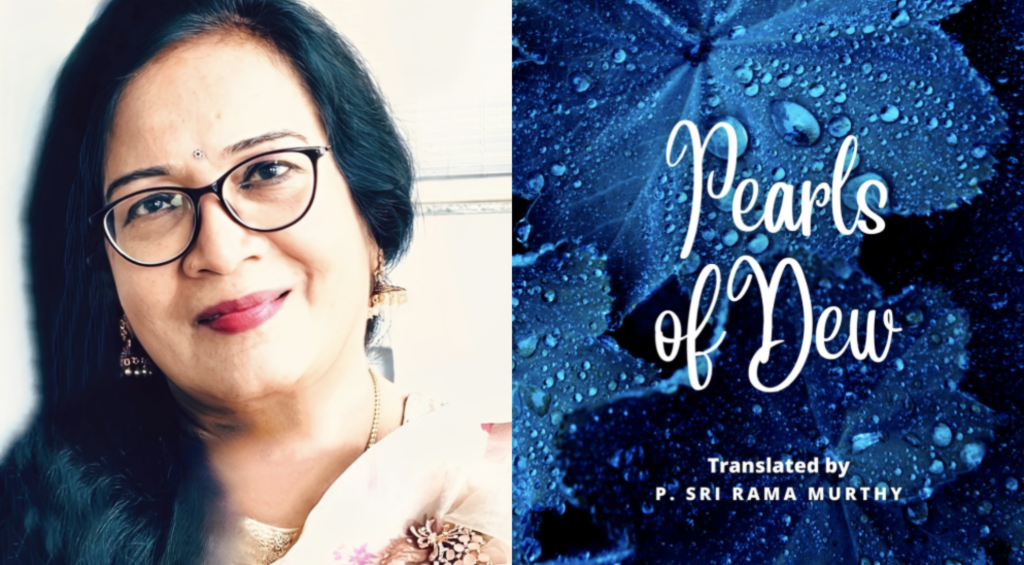
Book Review: ‘The Pearls of Dew’ by Ambika Ananth Translated from Telugu by P. Sri Rama Murthy

The Pearls of Dew, a collection of sixteen evocative short stories penned by the celebrated Indian author Ambika Ananth and translated with delicate fidelity by P. Sri Rama Murthy, is a profound journey into the subtle, oft-ignored nuances of human existence. Rooted in everyday life, yet transcending it with a rare philosophical poise, this anthology brings forth a spectrum of characters who stand at the threshold of struggle and grace, caught between the mundane cruelties of life and the saving graces of human compassion.

Ambika Ananth, known for her deep literary sensibilities and forays across genres and languages, brings to this collection a keen psychological insight and a lyrical fluidity that elevate her stories to timeless parables of the human condition. Originally titled Manchu Mutyalu in Telugu—a title which itself evokes the delicate impermanence of dew—The Pearls of Dew succeeds in carrying across linguistic boundaries the distilled tenderness, vulnerability, and resilience of her characters. The stories, in their English avatar, neither lose their rootedness in regional ethos nor their universal emotional appeal.

The foreword by GSP Rao, co-founder at Muse India, sets the tone for the anthology, describing Ambika not merely as a writer but as a compassionate chronicler of human frailty and nobility. He astutely observes how Ambika’s characters, though set against the harsh and often unjust realities of modern Indian society, emerge as emblems of selflessness and sacrifice. In the story Empathy, a father quietly gives away his newborn child to a grieving couple to save a mother from fatal heartbreak, a gesture so tender and self-effacing that it transcends the realm of fiction. In The One and the Only, a young man donates his eye to the daughter of a prospective employer, not merely as a transactional act but from a depth of compassion born of dire need and innate nobility. These acts, while rare even in life, become believable in Ambika’s narrative world where morality and humanity are not relics, but deeply embedded instincts.

Among the anthology’s most compelling stories is The Shattered Pearl, which lays bare the brutalization of innocence by a corrupt system. Here, a young boy, forced by poverty to become a street vendor, is mercilessly beaten and humiliated by a police officer. The culminating moment—his desperate retaliation—is not simply an act of violence, but the tragic transformation of a pure soul into what society hastily labels “criminal.” The narrative becomes a lament not just for the child, but for the soul of a society that fails its most vulnerable. The refrain of the old schoolmaster—“You are a pearl, my child…”—rings as both elegy and indictment.

Equally disturbing is Entertainment or Spoliation?, a chilling exploration of the psychological effects of violent digital media on children. Through the character of Vijay, a ten-year-old boy whose obsession with gory video games spirals into a subconscious act of murder, Ambika critiques the parental negligence masked as indulgence and the unseen consequences of digital overexposure. The story is a psychological masterstroke—slow-burning, methodical, and terrifying in its realism. Dr. Verma and Dr. Ramesh, who attempt to unravel the child’s trauma, provide a sobering voice of reason, highlighting how modern parenting, when divorced from emotional engagement, becomes a gateway to silent tragedies.

Each story in the collection is anchored in a core human emotion—longing, guilt, grief, resolve—and yet manages to touch upon complex social realities. Sensitivity and Sensibility unravels the subtle psychological torment of a pregnant woman poisoned by gossip that blames her unborn child for her father’s death. Beehive examines the torment of a woman who, after escaping domestic violence and rebuilding her life through an orphanage, is forced to confront the return of her abusive husband in a state of helplessness. Passion and Dispassion, Rootworm, and Romanticism delicately examine mid-life crises, loneliness, and the fragile constructs of marital and emotional identity.

The brilliance of this collection lies not in ornate storytelling, but in its restraint, authenticity, and quiet power. Ambika writes not to dazzle but to reveal—to lay bare the truth of human experience in its raw, unembellished form. Her protagonists are not heroes; they are everyday individuals—mothers, children, teachers, lovers—navigating a world that often offers little room for dignity. And yet, in their quiet acts of courage, we find what is most noble about humanity.

The translation by P. Sri Rama Murthy deserves commendation for its sensitivity and precision. In his Translator’s Note, he expresses the challenge and responsibility of preserving not only the meaning but the emotion of the original Telugu text. His work rises to that challenge with grace, ensuring that the stories resonate in English with the same poignancy as in their original language. His use of language is both accessible and expressive, retaining the cultural textures without alienating the non-Telugu reader.

The Pearls of Dew is a collection that demands a slow, meditative reading. Each story opens up a universe of emotion and reflection, challenging the reader to pause, consider, and feel. It is not a book that entertains in haste; it enriches in contemplation. In a world increasingly hungry for distraction, Ambika Ananth offers depth. In a world obsessed with noise, she offers silences that speak.

For lovers of literature that probes the human soul, that questions the morality of our systems, that elevates the everyday into the eternal, The Pearls of Dew is a rare and rewarding read. It is not just a collection of stories—it is an act of empathy, a quiet revolution, and above all, a celebration of life’s most enduring truths.

Book Review: ‘The Pearls of Dew’ by Ambika Ananth Translated from Telugu by P. Sri Rama Murthy Read More »

“Mannequin of Our Times”: The Poetic Anatomy of a Disquieted Age

In Mannequin of Our Times, Vandana Kumar delivers a poignant tapestry of contemporary existence, where love, memory, alienation, and yearning are sewn together with the precision of a seasoned poet and the vulnerability of a solitary soul. This collection does not merely whisper to the reader—it lingers, bruises, and ultimately elevates.

Vandana’s poems, though deceptively gentle in tone, slice through the veils of modernity to reveal the exposed nerves of everyday life. Her verses bear the air of lived experience, of a woman intimately acquainted with tenderness and its opposing forces—loss, entropy, and indifference. This duality forms the spine of the collection: the human desire for connection against the sterile facade of a world in performance, a world of mannequins.

The poems stretch across themes with organic grace. In “Colored Insane,” she portrays the quiet rebellion of being different in a society that thrives on small talk and standard greetings. The imagery is not just visual—it is emotional, tangible, and unnervingly accurate. One feels the constriction of societal molds and the delicate joy of refusing to fit in.

Elsewhere, in “The Final Rains,” there is a languorous sorrow that sits like water that will not dry, seeping into the fabric of her metaphors. The monsoon here is more than weather; it is memory, inertia, and a wistful resignation to that which overstays. She evokes domesticity not as comfort, but as a space haunted by delay and longing, where each raindrop writes itself into a film that may never be made.

Vandana’s language is modern and intimate, yet always poetic—eschewing ornate flourishes for a clarity that wounds and heals in equal measure. Poems like “To Meet Again” and “Under the Moonlight” inhabit the private geographies of love and loss with a meditative stillness. In her hands, a towel becomes an artifact of affection, a bent clothesline a metaphor for the weight of thought. She does not force emotion—it rises naturally from the terrain she cultivates.

“Pushing Doors” stands out as a philosophical rumination on life’s thresholds—both literal and metaphorical. Vandana masterfully conjures the doors we push, avoid, or never quite reach. The poem reflects her recurring preoccupation: not with dramatic climaxes, but with subtle, quiet moments where meaning is found or lost.

The Greek edition, ΜΑΝΕΚΕΝ ΤΗΣ ΕΠΟΧΗΣ ΜΑΣ, translated with deep sensitivity by Irene Doura Kavadia, does not merely carry the spirit of the original—it sings it in another tongue. The musicality, melancholy, and textured intimacy of Vandana’s voice are preserved with grace and emotional fidelity, bridging linguistic and cultural distances with rare poise.

This is not a book to be consumed in haste. It is a quiet companion, a mirror, and at times, a confessional. It belongs on the shelves of those who search for beauty not in ornament, but in the authentic pulse of human experience. Mannequin of Our Times is a poetic testimony to the silent stories we live, the wounds we carry like emblems, and the quiet defiance of staying soft in a world that often asks us to harden.

In a time where poetry often leans toward spectacle or abstraction, Vandana Kumar reminds us that the most profound revolutions begin in small, honest moments. Hers is the language of endurance and elegance—the kind that leaves an imprint long after the final verse has been read.

“Mannequin of Our Times”: The Poetic Anatomy of a Disquieted Age Read More »

Book Review: Alibi Muse by Vasiliki Dragouni – A Poetic Tapestry of Myth and Muse

Alibi Muse by Vasiliki Dragouni, published in 2024 by Writers’ Edition, Greece, is a mesmerizing bilingual poetry collection that intertwines Greek and English to explore the realms of inspiration, identity, and the divine. Spanning 104 pages, this work showcases Dragouni’s lyrical finesse, blending vivid imagery with philosophical musings to create a deeply resonant emotional landscape.

The collection begins with a heartfelt dedication: “To everything that inspires us and gives us the motivation to go one step further every day.” This sets a contemplative tone, inviting readers into a world where creativity and existence converge. The preface, “Meditation,” introduces Dragouni’s introspective voice, depicting a figure who “closed her eyes to the pretense of the world” and “signed her name on the credit edges of her mind.” This reflective thread weaves through the collection, encouraging readers to delve into their own inner worlds.

Dragouni’s poetry oscillates between the earthly and the ethereal, often drawing on mythological and natural motifs. Poems like “Sunshine Scenarios” and “Gaia Mother” personify nature as a vibrant, emotional entity, with lines like “Spring is quite brave / she wears her heart out loud” and “Her cries are the harsh screams of lost time.” These works reflect a profound reverence for the earth’s beauty and its struggles. Similarly, “A Sunshine Halo” and “The Sibyllian Smile of Fortune” invoke figures like Alcyone and the Sibyl, merging classical allusions with contemporary insights on fate and resilience.

The bilingual presentation is a highlight, with each poem offered in both Greek and English, enhancing accessibility and showcasing Dragouni’s linguistic versatility. Her work, as noted in her biography, has been translated into languages such as Italian, French, and Chinese, underscoring its global appeal. The translations preserve the rhythm and emotional depth of the originals, making Alibi Muse a testament to the universality of its themes.

Informed by Dragouni’s academic background in English Literature and International Studies, the collection carries a global perspective. Poems like “Muse in Winter” and “A Key-Shaped Hairpin” explore the elusive nature of inspiration, portraying the muse as both intimate and enigmatic, leaving “no footprints in the snow” or navigating a “tower garden” heavy with unspoken truths. These pieces capture the fleeting essence of creativity with striking clarity.

While the collection’s evocative imagery and emotional depth are its strengths, some poems, such as “Furies in the Mirror,” may feel abstract to some readers, requiring multiple readings to fully unpack. Yet, this complexity enriches the experience, inviting deeper engagement. Alibi Muse is a luminous exploration of the human condition, ideal for those who cherish poetry that bridges the personal and the mythical. Dragouni’s work is a radiant addition to contemporary poetry, offering both solace and inspiration.

Book Review: Alibi Muse by Vasiliki Dragouni – A Poetic Tapestry of Myth and Muse Read More »