Writers International Edition

Editor

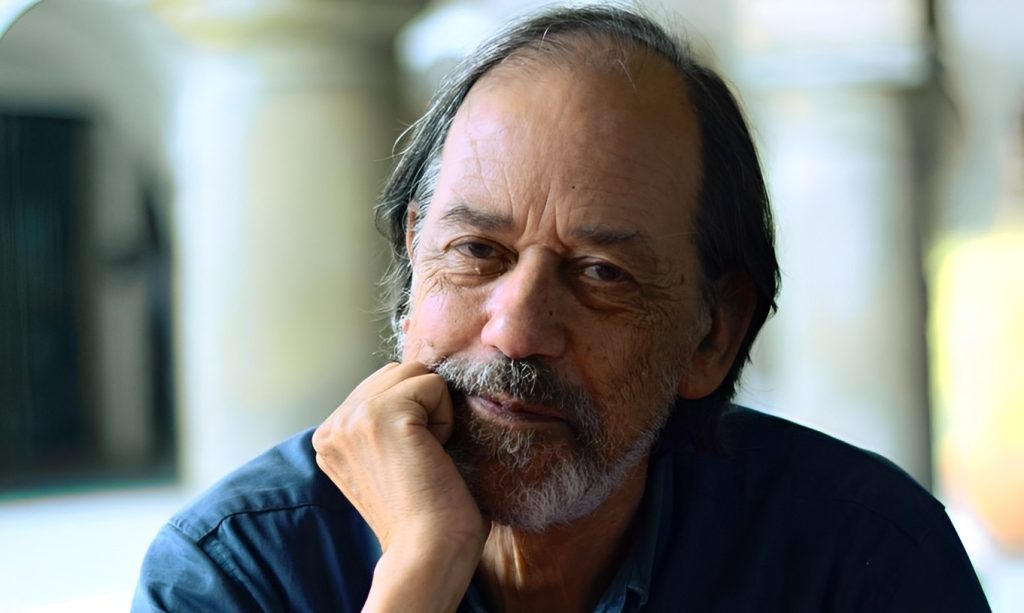
Breathing Life into Words: The Poetic Odyssey of Joan Josep Barceló i Bauçà

Joan Josep Barceló i Bauçà, a poet and artist hailing from Palma de Mallorca, Spain, has left an indelible mark on the world of literature with his enchanting verses and abstract imagery. Born in 1953, Barceló’s artistic pursuits have taken him across continents and cultures, shaping his unique perspective and contributing to his profound body of work.

Barceló’s academic journey was a rich tapestry woven across renowned educational institutions. He pursued his studies in humanities and sciences at the universities of Barcelona, the Balearic Islands, Madrid, and London. This diverse educational background provided him with a broad foundation, nurturing his multidimensional approach to creativity.

As a poet, Barceló has authored numerous books in both Catalan and Italian, receiving prestigious international awards and accolades throughout his illustrious career. His evocative poems have transcended linguistic boundaries, captivating readers around the world. Translations of his work into French, English, German, Portuguese, Greek, Spanish, Chinese, Korean, Albanian, Norwegian, and many other languages reflect the universal appeal and resonance of his words.

Barceló’s poetic style is characterized by surrealism and abstraction, offering glimpses into a dreamlike and mythical world. Within his verses, one can embark on a journey that traverses spiritual and carnal realms, with a profound longing for revolutionary change. His words become the breath of a new era, raw and visceral, invoking imagery of the earth, the boundless expanse of the ocean, and the ethereal landscapes of the polar regions.

Light and darkness intertwine within the tapestry of his language, and desire ignites like a spark of fire. In the pursuit of infinity, Barceló’s poetry transforms us into nomads, seeking tender moments amidst the chaos of existence. His words resonate beyond the confines of time, a mafic suicide of language itself, empowering poetry to surge with the intensity of life. Through this fiery essence, we are given the chance to live with heightened vitality and experience rebirth from the primal womb that nurtures us all.

Barceló’s artistic endeavors extend beyond the realm of poetry, embracing various forms of expression. His paintings have been exhibited in Italy and Spain, offering visual manifestations of his creative spirit. Through his artwork, he invites audiences to delve into the depths of his imagination, blurring the lines between reality and abstraction.

Furthermore, Barceló is committed to the dissemination and cultural promotion of numerous international events. His dedication to fostering artistic dialogue and creating platforms for exchange demonstrates his passion for nurturing creativity in others. By actively participating in the cultural sphere, Barceló contributes to the vibrant tapestry of artistic expression on a global scale.

In conclusion, Joan Josep Barceló i Bauçà’s life and work exemplify the transformative power of language and art. His poetry, rooted in surrealism and abstraction, invites readers into a realm where dreams intertwine with reality, and desire fuels the pursuit of revolutionary change. Through his words, he paints vivid landscapes of the earth, the ocean, and the polar realms, igniting the imagination and stirring the depths of our souls. Beyond his literary accomplishments, Barceló’s dedication to art and cultural promotion underscores his commitment to the creative spirit and his desire to inspire others to embrace the transformative potential of artistic expression.

Breathing Life into Words: The Poetic Odyssey of Joan Josep Barceló i Bauçà Read More »
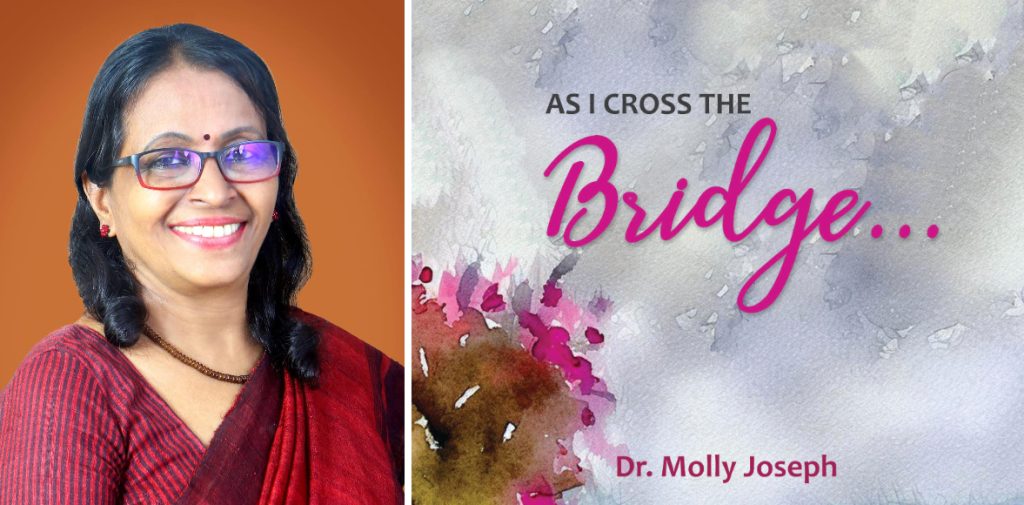
A Symphony of Words: Discovering the Brilliance of ‘As I Cross The Bridge’ by Prof. Molly Joseph

“Poetry is an echo, asking a shadow to dance.”  ~ Carl Sandburg

In “As I Cross The Bridge,” Prof. Molly Joseph presents readers with a sublime collection of poetry that is nothing short of an aesthetic delight. Each poem within this anthology flows like a cascading waterfall, immersing the reader in a whirlwind of sheer poetic beauty and intoxication.

Prof. Molly’s words not only captivate the mind but also stir a desire to journey deeper into the realms of metaphysical, spiritual, and ethereal bliss. As the anthology progresses, the simplicity of her poetic diction reaches mesmerizing levels, leaving the reader ensnared within the web of her artistry, much like the mythical Penelope of the postmodern era.

The poetess ingeniously portrays her thoughts and emotions as a flower pot, where every poem blossoms like vibrant flowers, each word germinating with an allegorical essence. One such masterpiece, “As I Cross The Bridge,” contemplates the unpredictability and uncertainty of human existence, likening life’s tumultuous journey to a boat floating over waves, navigating the broken bridges of circumstance. With each verse, the human experience is unveiled, evoking contemplation upon the existential terrains we traverse.

Prof. Molly’s subsequent poems bear an almost apocryphal essence, as their arresting simplicity reverberates like cascading waterfalls, refreshing and invigorating the reader’s soul. Works like “Sediments,” “Life Within Death,” “We are One,” and “Dance” are akin to goblets of invigorating wine, drawing the reader nearer to the revelatory world of postmodern literature envisioned by the eminent critic Ihab Hassan.

In “As I Cross The Bridge,” the poetess masterfully weaves words and flesh into an intricate matrix of human emotions and experiences. Each fiber of our being, every nerve, and feeling encountered during the boat-ride across the River Of Life is brought to life by her arresting and charming poetic cadence. Joseph assures us that amidst the broken bridges of life, there is always a boat to carry us through.

With “Valentine’s Day,” the poetess kindles the Lamp of Love in human hearts, yet beneath its radiance, the poem delves into the sweet sorrow and tenderness that inundates the human mind, turning the day of love into a revelatory, almost comic experience of existence.

As we journey through this poetic tapestry, pieces like “Covid,” “Ethics,” and “Mother India” resonate deeply within the reader’s psyche, eliciting profound emotions and introspection. The more simple and arresting the diction, the more entranced the reader becomes.

“We are one,” “Nature,” “November 1st,” “Dance,” “Moments,” “Mothering Woes,” and “Be Like the Sun,” among others, showcase Joseph’s ability to evoke a kaleidoscope of emotions, tugging at the very strings of the reader’s mind and soul. Each poem becomes a multicolored pulse, painting vivid portraits of the human experience.

The entirety of “As I Cross The Bridge” can be aptly labeled as Prof. Molly’s Creative Sacrament of her Heart and Soul. Within these verses, she bares her innermost thoughts and emotions, offering readers an intimate connection to her poetic legacy. Her ability to merge the ephemeral with the eternal, the metaphysical with the tangible, is a testament to her poetic prowess and depth of expression.

In conclusion, “As I Cross The Bridge” is a literary masterpiece that will undoubtedly leave a lasting impact on anyone who delves into its enchanting pages. Prof. Molly Joseph’s poetic brilliance shines brightly in this anthology, and her words will continue to resonate in the hearts of readers for generations to come.

A Symphony of Words: Discovering the Brilliance of ‘As I Cross The Bridge’ by Prof. Molly Joseph Read More »

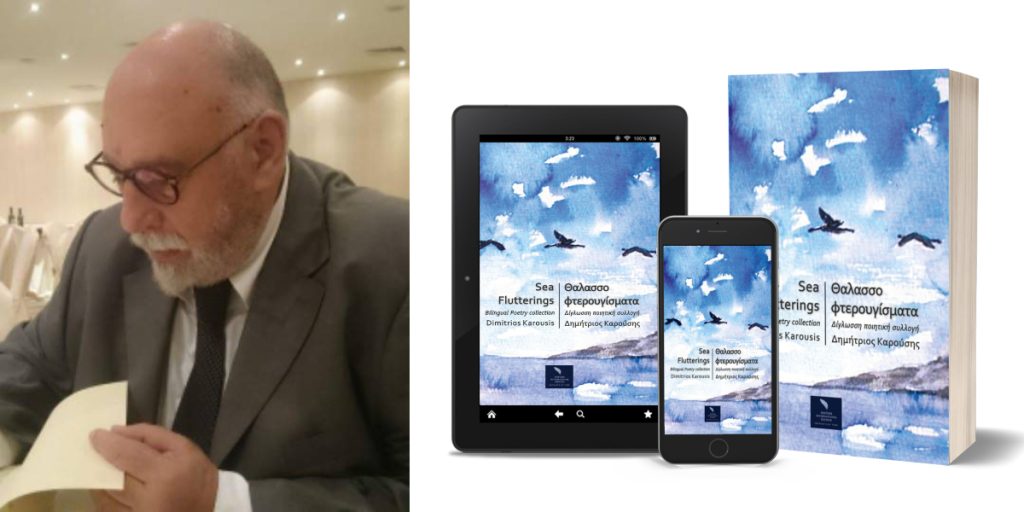
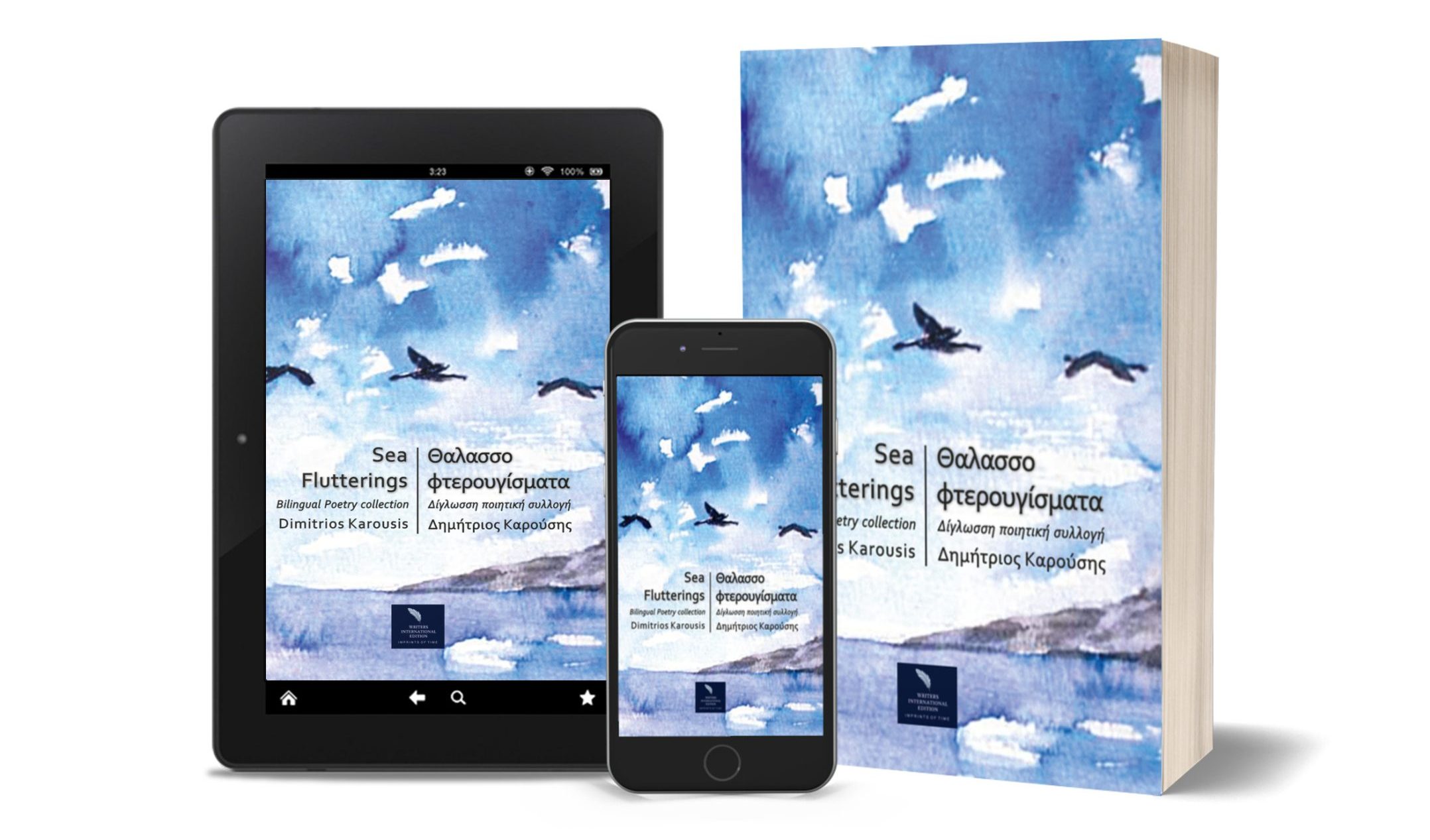
Oceanic Rhapsody: Exploring the Depths of ‘Sea Flutterings’ by Dimitrios Karousis

“Sea Flutterings” by Dimitrios Karousis is a captivating and enchanting bilingual poetry collection that continues to immerse readers in the mesmerizing world of the sea. As a sea lover and poet, Karousis draws upon his profound experiences to speak directly to the hearts of those who cherish the liquid element. Symbolizing the beginning of life, the eternal flow, and the generative force, the sea also represents the untamed nature of existence, presenting formidable obstacles in the form of insurmountable and ultimately fatal waves. Karousis guides readers on a journey akin to that of a skilled captain in the storm, reminding us of the need to overcome these challenges in our own lives.

Building upon the success of his previous work, “Flaming Sea,” which garnered acclaim both domestically and internationally, Karousis invites us once again to delve into the depths of poetic exploration with “Sea Flutterings.” This collection serves as a transformative escape from the stagnant waters of routine and everyday life, enabling the soul to take flight like a free bird, soaring far away into the boundless blue depths. Through its eloquent verses, the collection provokes deep introspection, evokes daydreaming, and provides nourishment for the mind. The fusion of the sea’s blue with that of the sky, both timeless and endless, magnifies the sense of wonder and possibility. Within this celestial canvas, Dimitrios Karousis captures his dreams, experiences, and concerns, mirroring the majesties of life and inviting readers to embark on their own personal voyages, overcoming difficulties with courage and dignity, and forging unique paths.

At the heart of “Sea Flutterings” lies a profound aspiration for a free and peaceful existence, where universal values such as justice, fraternity, equality, altruism, magnanimity, and forgiveness prevail. These values, when embraced, lead to spiritual upliftment, self-awareness, and ultimately contribute to the betterment of humanity for present and future generations. Karousis’ poetry, owing to his immense psyche, spiritual-philosophical background, and social sensitivity, possesses a subtle yet profound didactic quality. It serves as a guiding light, benefiting and instructing the new generation, while also setting an inspiring example for imitation.

Undoubtedly, “Sea Flutterings” will be embraced and cherished by readers, much like Dimitrios Karousis’ previous works. Its highly experiential subject matter touches upon various cognitive fields, making it a compelling prospect for literary research. The collection can be rightfully regarded as a philosophical essence, a visionary portrayal of life that conjures vivid imagery and opens up vast horizons of thought. Through its poignant verses, “Sea Flutterings” lays the foundations for introspection and action, urging readers to delve into the depths of their existence and contemplate life’s profound questions.

In conclusion, “Sea Flutterings” is a captivating and profound poetic voyage that takes readers on a transformative journey through the enigmatic realm of the sea. Dimitrios Karousis’ exquisite craftsmanship and profound insights allow his words to resonate deeply within the hearts and minds of his audience. This collection is a testament to his literary prowess and his ability to create a lasting impact through the beauty and power of his poetry.

Buy the book here: https://amzn.eu/d/9tTzI4a

Oceanic Rhapsody: Exploring the Depths of ‘Sea Flutterings’ by Dimitrios Karousis Read More »

Songs Divine," a collection of captivating verses penned by Dr. Srilakshmi Adhyapak

Unveiling “The Song Divine”: A Captivating Spiritual Journey by Dr. Srilakshmi Adhyapak

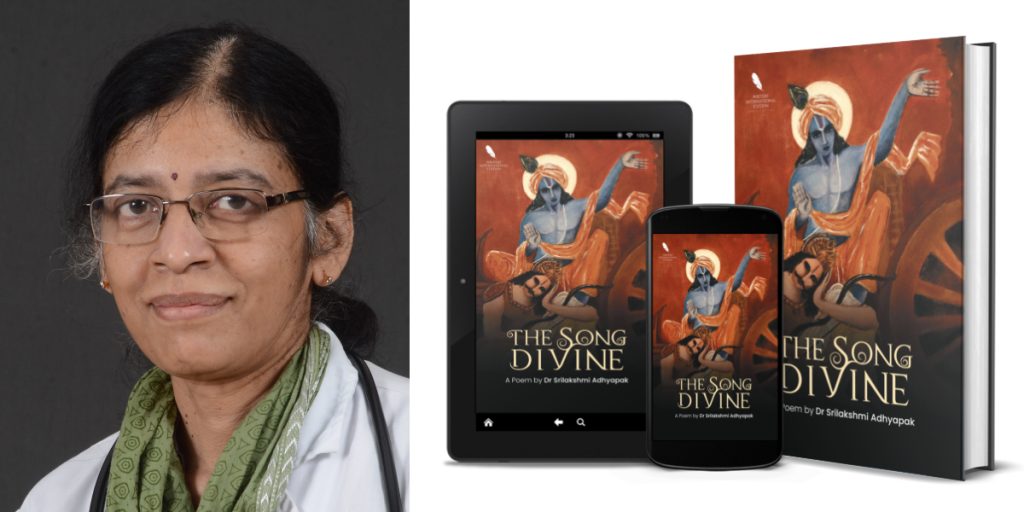
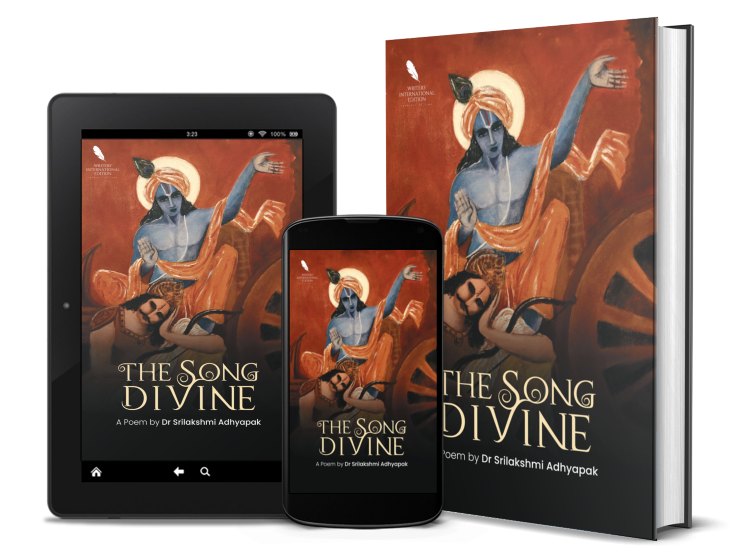
Athens, Greece: The Writers International Edition is preparing to release “The Song Divine,” a collection of captivating verses penned by the esteemed Dr. Srilakshmi Adhyapak. As a distinguished medical doctor and respected professor, Dr. Adhyapak brings a unique perspective to the realm of poetry.

In “The Song Divine,” Dr. Adhyapak takes readers on a spiritual journey, delving into the depths of human existence and our eternal connection with the divine. Through her poetic prowess, she weaves a tapestry of emotions, wisdom, and spiritual truths, inviting readers to explore the mysteries of life.

The book’s pages resonate with spiritual wisdom, touching on themes of devotion, action, discipline, and the interconnectedness of knowledge and selfless action rooted in devotion. Dr. Adhyapak’s verses reflect the struggles, dilemmas, and eternal quest for meaning and liberation that define the human condition.

Dr. Sreekar Balasundaram, renowned in both the medical field and the world of art, has contributed a captivating cover painting to complement the poetic journey presented in “The Song Divine.”

“The Song Divine” by Dr. Srilakshmi Adhyapak is an invitation to embark on a transformative odyssey, guided by the poet’s profound knowledge, unwavering devotion, and captivating words. Through its melodic rhythm and timeless wisdom, this collection of poems promises to ignite contemplation and illuminate the path towards the eternal truth.

“The Song Divine” will soon be available for readers to embark on a captivating exploration of science and spirituality, resonating deep within their hearts and leaving an indelible mark on their souls.

Unveiling “The Song Divine”: A Captivating Spiritual Journey by Dr. Srilakshmi Adhyapak Read More »

SOULMATE: Poem by Preetha VR

On the other side, grim and bare,
Devoid of a shining star,
The spectacles display the marathon,
Striving to finish it in short afar.

In the midpoint, I see the Moon, my friend,
Tickling me, “Hey Sun, do you remember me?”
My words reached the depths of the night,
I could feel its power, all around me.

My symphonic breath whispers stealthy from thee,
Oh, Moon, you have touched my heart,
Your glow has illuminated my path,
And I feel grateful for this special part.

So, I’ll keep running this marathon,
Through the highs and lows,
Knowing that with every stride,
I’ll reach where the Moonlight glows.

Poem by
Preetha VR

SOULMATE: Poem by Preetha VR Read More »

The Timeless Relevance of Mahavir’s Teachings: Emphasizing Non-Violence, Compassion, and Self-Discipline

Mahavir, also known as Vardhamana Mahavira, was an Indian sage and the founder of Jainism. Born in the 6th century BCE in the kingdom of Vaishali, Mahavir renounced his royal privileges at the age of 30 and spent the next 12 years meditating and seeking enlightenment. He attained enlightenment at the age of 42 and spent the rest of his life preaching his philosophy to the people of India.

The teachings of Mahavir are relevant in the world today because they emphasize the importance of non-violence, compassion, and tolerance towards all living beings. Mahavir believed that all living beings, whether humans or animals, had a soul and that the purpose of life was to achieve liberation from the cycle of birth and death. He preached that the path to liberation lay in living a life of non-violence, truthfulness, celibacy, and detachment from material possessions.

The principle of non-violence, or ahimsa, is perhaps the most important of Mahavir’s teachings. He believed that all life was sacred and that one should not harm any living being, including animals and insects. This principle has inspired countless individuals and movements throughout history, including Mahatma Gandhi’s nonviolent resistance movement in India and Martin Luther King Jr.’s civil rights movement in the United States.

Mahavir’s teachings on non-violence and compassion towards all living beings also have relevance in today’s world, where violence and cruelty towards animals is often rampant. The Jain philosophy of ahimsa extends not just to humans but to all living beings, and it advocates for a vegan lifestyle that avoids harm to animals in any form. This is an important message in a world where animal agriculture and exploitation are major contributors to climate change and other environmental problems.

Another important teaching of Mahavir is his emphasis on the importance of self-discipline and detachment from material possessions. In a world where consumerism and materialism are often prioritized over spiritual and moral values, Mahavir’s teachings remind us of the importance of living a simple and humble life, free from the distractions and temptations of material wealth.

Mahavir’s teachings also emphasize the importance of self-reflection and introspection, and the idea that true liberation comes from within. His philosophy encourages individuals to look inward and cultivate self-awareness, rather than relying on external sources of happiness and fulfillment.

In conclusion, the teachings of Mahavir are still relevant in today’s world, where violence, consumerism, and materialism are all too common. His emphasis on non-violence, compassion, self-discipline, and self-reflection can provide a much-needed guidepost for individuals seeking to live a more meaningful and purposeful life. As we continue to grapple with the challenges of our time, we can draw inspiration and guidance from Mahavir’s timeless teachings.

The Timeless Relevance of Mahavir’s Teachings: Emphasizing Non-Violence, Compassion, and Self-Discipline Read More »

‘Not in ideas, But in things’: A peep into the Poetics of Dr. Molly Joseph through her latest Book, Voice over the Waves

As a poet Dr. Molly Joseph, I believe, declares her credo in a short poem titled “Poet” in her previous anthology of poems Songs of Silence. She writes: “Life touches … / You script it out / immersing / not in ideas, but / in things / slowly / subtly / becoming / everyone/everything…” The desire not to immerse in ideas, but to be everyone and everything, slowly and subtly, signifies the poet’s desire for non-theoretical and non-judgmental participation in the life of things rather than her being a mere detached observer. This is true of Dr. Molly’s poetry too as it demands an immersive response from us, that is, her readers. The intensity of her poetry, leaving no alternative to the reader, demands enraptured immersion in its life. The reader enters the life of her poems, and becomes the poems s/he reads, slowly, subtly and unselfconsciously.

Such a response constitutes the opposite end of the reading spectrum which Toby Litt in his text Mutants (2016) terms as ‘disenchanted reading’, the kind of stylistic reading promoted mostly in academic poetry workshops. Litt calls stylistic reading as ‘reading done by a low-grade computer.’ One can add to it the fact that poetry itself compels the reader to respond in a certain way, and Dr. Molly’s poems elicit enraptured responses from us. This is despite the fact that the very typography of her poems draws our attention to their textuality, to the words and their very arrangement.

How does one respond to this kind of typographical arrangement that claims its poetic status? How does one respond to the dancing, playful words on a page, words polyvalent and gesturing tentatively into multiple directions, words – to borrow the very title of Dr. Molly book – that are ‘voices over waves’ containing sea-deep secrets that are transmogrified into silences and blank spaces on the page, each word prismatic like the rainbow-coruscating droplets in a misty spray when the fervent waves strike against a rock, words musical with their intermittently sustained and syncopated rhythms, words magical performing the miracle of the love of life on the page, words endeavouring to go beyond their own quiddities, and words that make us wonder at the richness of life beyond words, that life which the words themselves bring alive?

Dr. Molly Joseph’s poems come to us with such interesting queries and proposals. The poems cast their spell, enthral us with the life throbbing in them. The poem “Life” in the present anthology gives us ample evidence of the author’s preference for a pulsating life of becoming: “Life … How you pulsate / the vital / energy/coalescing/cascading / in an / upsurge / to upend / aspirations, / always / in the / tumult / of creative / confusion. . . life pulsates / unbeaten / in forms/variant / in shifting / shadows / that play / endless / hide and seek . . .” Apart from the dynamism of life, this poem conveys, the most significantly operative image in it is that of the throbbing, thrumming, continuously changing life that upends all aspirations. This is how, with a consummate economy of words, the poet underscores the mercurial nature of life. In suggesting that life is unpredictable, real and unreal (a shadow) at the same time, and is outside human control and structuration, the poet reminds the reader to give up their grand Faustian aspirations to control life. Thus, the deeper message is not obtrusive as the poet does not don the robes of a preacher.

Dr. Molly’s themes are varied; they are supratemporal though they refer firmly to the present times. For example, her love for nature does not exist in a temporal vacuum, rather it has a distinctly contemporary ring to it. She questions the very idea of progress we are so much besotted with in the poem “Hmm… Progress!” The very colloquial-sounding title ending with an exclamation mark itself announces the ironic aims of the poem. The poem lays bare the fact that what we call progress is pitted against nature and by pursuing this chimaera we are depriving green rights to future generations. The poem “Freedom” voicing similar concerns about the idea of progress weaves into its rich tapestry the intolerant and anti-democracy thrust of contemporary politics dominated by demagogues and rabble-rousers who nurse their vote banks by dividing the gullible with their desperate ‘isms’.

She yearns for oneness with nature as is evident from her poem “My Moon.” The poem begins with a sense of regret at the moon’s aloofness: “Oh, moon, my moon / up above you stand/refusing to land…” But it concludes with an entreaty: “O moon, / up above, / come down… / together / we can stretch / selfless, silent, smooth / over meadows we tread / mindscapes that spread…” She also knows that this is just a dream, but then poets are dreamers! However, this poem foregrounds how the human will has no way with or control over nature. Nature is what it is, beautiful and life-affirming but evanescent like the last flicker of the setting sun that lends its golden glow to the evening shadows in the poem “The Last Flicker.”

Feminist concerns reverberate in Dr. Molly’s poems. The poem “Woman” begins with a sense of wonderment: “Where else is a better poem / than you!” The woman is a poem that bears all the pain to give birth to a new life. This metaphor of a woman being a poem actually expresses the wonder of being a woman, a poem: “You need no acclaim, / space special doled out / since you are born special/unique, rising from ashes / resilient, rejuvenating, / with the seed power /of creation…” like the Mother Earth. Thus this metaphor of woman as a poem is a highly condensed trope in which creation, poetry (as creation), nature (as Mother Earth) and woman comingle. Another poem “When you give bath to your newborn…” is a beautiful, delicate poem which adds a spiritual dimension to a very quotidian act of a mother giving a bath to her newborn daughter. The mother messaging the neonate with coconut oil she has extracted herself from the grated coconut juice is a sculptor carving “out a future/beauty / of feminine / charm …” This poem appears to be symbolic of Dr. Molly herself sculpting new realities and universes with her words in her poems – her babies, in a way – like the mother carving out a future for her newborn daughter. In her poetic micro-worlds, Dr. Molly is able to weld memories, thoughts, and experiences with very keen observations on contemporary issues in a language bare and simple. The easy flow and uplifting lightness of her verses coax the readers to inhabit these micro-worlds, make these small universes their home and live in them.

I am sure the Voices above the waves will find an echo in the minds of the readers and they will respond with the same gusto with which these voices have been sculpted.

Prof. Swaraj Raj
Professor of English, SGGSWU University Fatehgarh Sahib,
Punjab, India

‘Not in ideas, But in things’: A peep into the Poetics of Dr. Molly Joseph through her latest Book, Voice over the Waves Read More »

Here are the easy ways to find out if your partner’s love is true or fake!

Love is a complex and multifaceted emotion that has been explored in literature, music, and art for centuries. At its core, love is an intense feeling of affection and connection towards another person. It can take many forms, including romantic love, familial love, and platonic love.

Love is often described as a powerful force that has the ability to bring people together and inspire them to do great things. It is a feeling that can be both exhilarating and terrifying, as it requires vulnerability and trust. While love can bring immense joy and happiness, it can also bring heartache and pain. Ultimately, love is a fundamental part of the human experience that has been celebrated and scrutinized throughout history.

Identifying fake love can be challenging, but it’s important to be able to recognize it in order to avoid getting hurt or being taken advantage of. Here are some key signs to look out for:

It’s all about them

If your partner only seems to care about their own needs and desires, and doesn’t take your feelings or needs into consideration, it could be a sign that their love is not genuine.

They don’t listen

Communication is key in any relationship, and if your partner consistently ignores what you have to say or doesn’t seem interested in your thoughts and feelings, it could be a sign that they’re not truly invested in the relationship.

They’re inconsistent

If your partner’s behavior is unpredictable and they’re hot and cold with their emotions, it could be a sign that they’re not truly invested in the relationship or are only interested in it when it’s convenient for them.

They’re controlling

If your partner tries to control your every move or make all the decisions in the relationship, it could be a sign that their love is not genuine and they’re more interested in having power and control over you.

They’re not supportive

A true partner will support your goals and dreams, but if your partner consistently puts you down or doesn’t show any interest in what you’re passionate about, it could be a sign that their love is not genuine.

They’re secretive

If your partner is hiding things from you or is not open and honest with you about their life, it could be a sign that they’re not truly invested in the relationship and may be hiding something from you.

They don’t want to commit

If your partner is not interested in committing to the relationship or is hesitant to take it to the next level, it could be a sign that their love is not genuine and they’re not truly invested in the relationship.

Remember, love should be a two-way street, and both partners should be invested in the relationship and each other’s well-being. If you notice any of these signs, it may be time to reevaluate the relationship and consider moving on.

Here are the easy ways to find out if your partner’s love is true or fake! Read More »

Mi último aliento: Poem by Alejandra Veruschka

Es pleno día y el sol ya no alumbra como antes,
las tinieblas envuelven el entorno de nuestra aldea.
Se aproxima una tormenta de arena, no se puede respirar,
se escucha como silbidos graves y agudos; allí fuera.

No recuerdo la edad que ahora tengo,
Solo veo frente a mí, un antiguo espejo
que refleja un rostro y un cuerpo demacrado.
Asustada, cierro los ojos para recordar el tiempo pasado.

Lo que ahora nos falta, un día sobró en nuestros días.
Hoy traemos en el aliento, incontables historias y agonías.
de esos días felices cuando respirábamos aire puro.
Pero fue más fácil para el ser humano crear, fábricas y llenarse
los bolsillos de dinero sin importar las consecuencias,
botando desechos químicos en nuestros ríos, bosques
y ciudades, contaminando el aire que se expandió por el planeta
con nubarrones de níquel y de lluvias ácidas.

Hace un tiempo, la naturaleza empezó a pasarnos factura,
los ríos están se secaron, los árboles desaparecieron,
las enfermedades se multiplicaron y nosotros quedamos sin aliento.

Regreso a mi sillón después de la turbulencia,
mis latidos se están apagando, ya casi no siento mi respiración,
sin embargo, tengo la esperanza de que un día el ser humano
vuelva respirar del aire puro que aliviaba al sol.

Alejandra Veruschka
D/Reservados, Bolivia

Alejandra Veruschka San Miguel Avalos, Lic. Contador Público, Escritor, poeta y Art, Plástico. Diplomado en Promotor de lectura
Miembro activo: Unión Monárquica Balear- España, Embajador distintas Org. Literarias internacionales. Reconocimientos internacionales por la trayectoria literaria. Fundador Presidente del Centro Cultural “Versos desde el Pilcomayo”
-Publicación, “Latidos desde el Pilcomayo” y las antologías “Los Reyes de la tertulia “(Bolivia 2019-2020-2021-2022). Antologías estudiantiles “Los Príncipes de la Tertulia ETG.” Bolivia 2020- 2021- 2022

Mi último aliento: Poem by Alejandra Veruschka Read More »

THE TRUTH, I’M COGNIZANT OF: Poem by Dr Bhawani Shankar Nial

The truth is known
fully well that
all that I claim
to be mine today,
all my affluence,
my prosperties, my landed
properties and
my great domain,
shall parish away one day.

It’s a truth that
everything shall pass away:
this soothing morning and
its great effects,
the great historical day,
the footprints of the first
glistening sun
of the free country and
the magnetic effect
of the night prelude to
the Great Freedom.

I know that,
my pride throne will not be
there from tomorrow,
there will be no kingdom and
its innocent subjects,
there will be no power,
no rivals to fight with,
and no sycophants
will be seen buzzing around
me from tomorrow morning.

I know the truth that
I know nothing, nothing at all
I knew nothing ever before.

But, I’m sure
I know why I born and
why should I die one day

I know the secrets
of my death
as my enemies
may get success one day
in their heinous conspiracy
against me.

Though they failed
many a times during
my short – stay with this body
they will definitely
get success one day,
the very day of my death.

Original Poem by
Dr. Bhawani Shankar Nial

Translated by
Dr.Tapan Kumar Rath

About the author

Bhawani Shankar Nial is a poet, editor, thinker and human rights activist. Originally an Odia poet of high repute, he also writes in Hindi. He is the author of three poetry collections in Odia (Srusti, Pachash Barshara Pachash Phasala, Jhiara Chitrakhata), two in Hindi and two in English (An Encounter with Death, Lockdown). He is the Chief Editor of The Mahuri, a widely circulated Odia literary magazine. His poetry embodies a hieroglyphic manifestation on variegated minutiae of human conditions and relationships. His poetic oeuvre is impregnated with multidimensional themes of love and longings at one hand and unmusical themes of bread, food, hunger etc. on the other. This anthology, a compilation of his poems on death consciousnessis, is Bhawani’s first poetry collection in English.


THE TRUTH, I’M COGNIZANT OF: Poem by Dr Bhawani Shankar Nial Read More »